
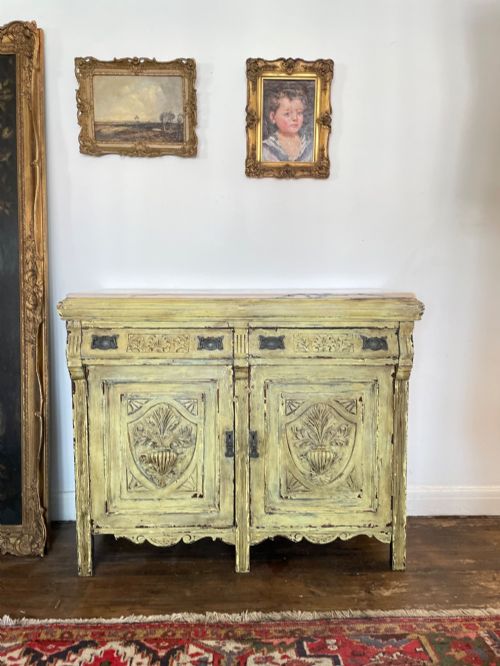
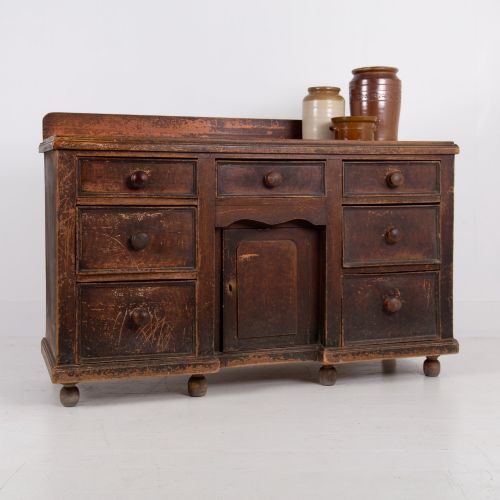
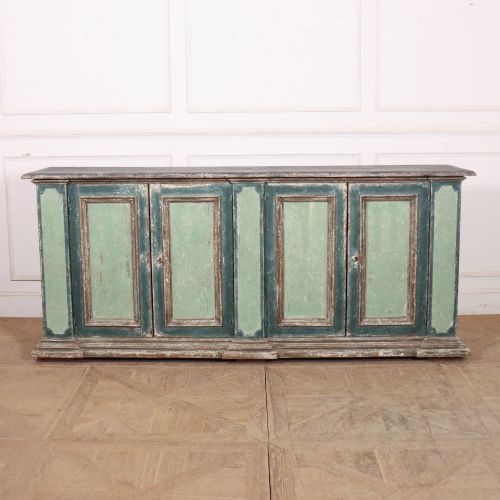
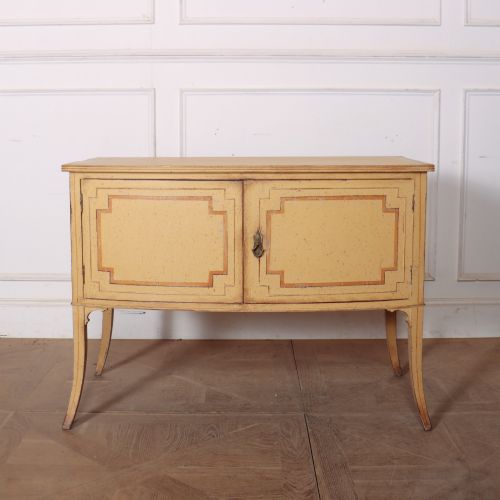
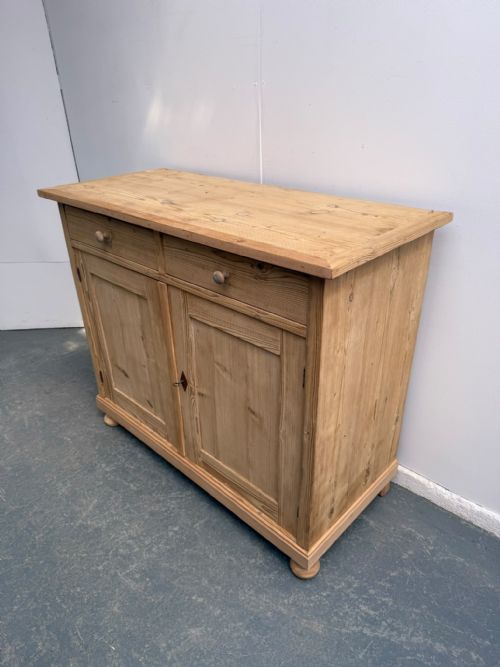
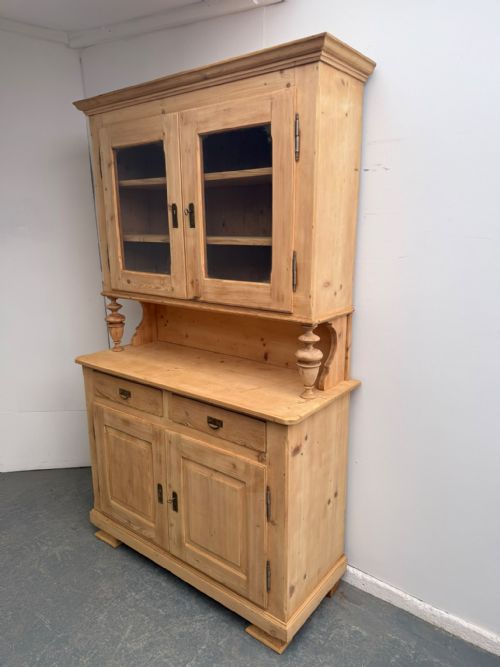
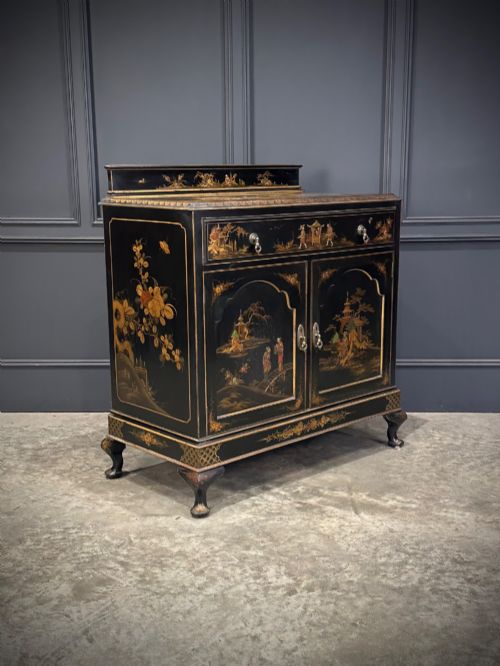
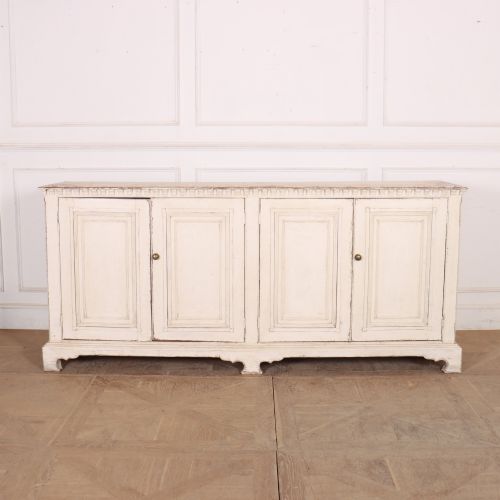
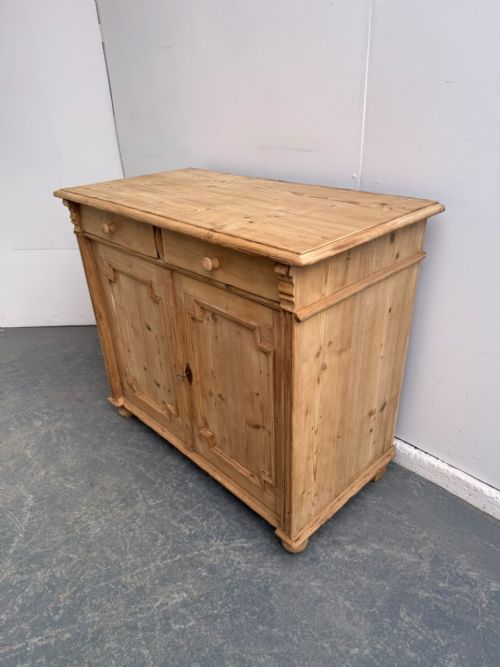
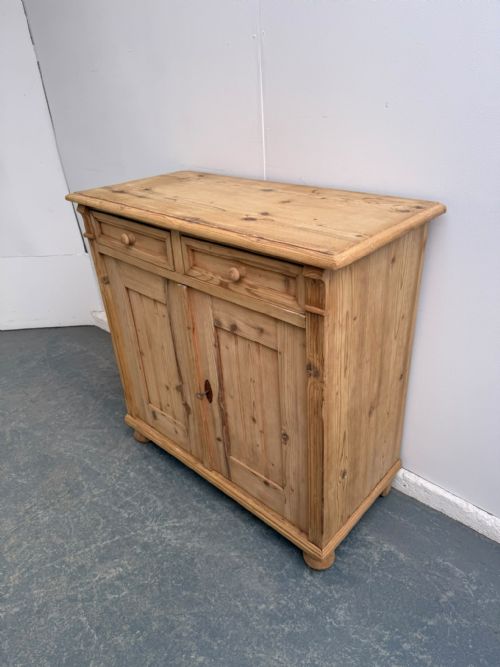
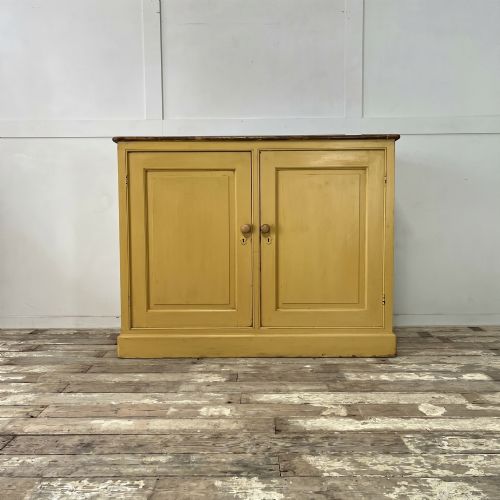
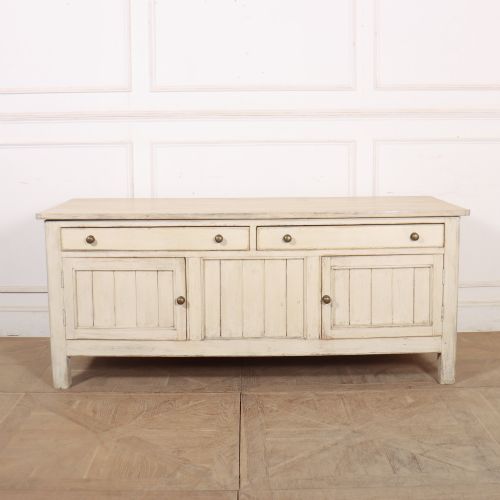
Vintage Painted Buffet
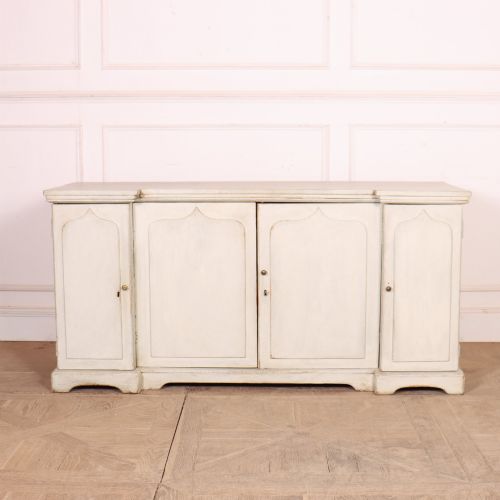
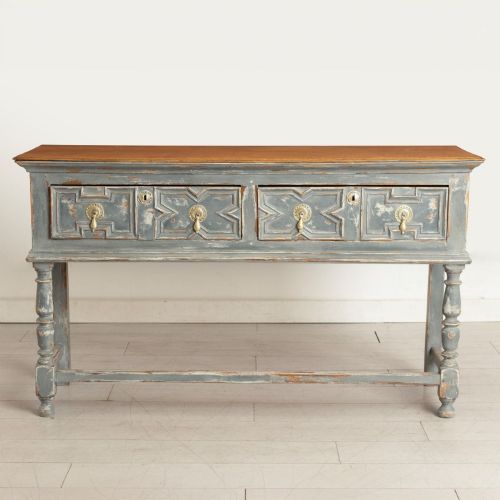
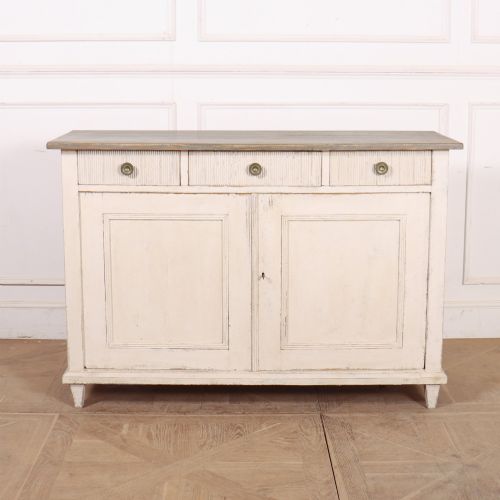
A vintage painted buffet brings robust utility and aged character to a room, offering generous storage paired with surface decoration.
Vintage Painted Buffet
A vintage painted buffet serves as a substantial storage solution for dining spaces and kitchens, combining cupboards, drawers, and display surfaces. When exploring this group, buyers frequently encounter heavy kitchen dresser bases, country sideboards, and provincial cupboards originating across the eighteenth, nineteenth, and early twentieth centuries.
The selection ranges from vernacular English country pine furniture to continental examples finished with distressed pigments. Regional styles include French provincial, Scandinavian country, and English farmhouse interpretations, each offering distinct proportions and door configurations.
Utility defines these items, designed originally for storing kitchenware, linen, or provisions. Their enduring appeal lies in how decades of domestic use have softened their painted surfaces and timber frames.
How they were made
Construction relies heavily on sturdy timbers such as pine, oak, and mixed woods, joined using traditional methods to withstand daily household demands. Cabinet makers built these pieces for longevity, incorporating solid plank tops, panelled doors, and dovetailed drawers.
Surface finishes involve layers of traditional paint, often applied directly over bare wood or older priming coats. Over generations, these painted skins acquire natural wear, chipping, and craquelure that reveal the underlying timber and earlier colour schemes.
Listings span the eighteenth, nineteenth, and early twentieth centuries, featuring pine, oak, and brass alongside painted wood finishes.
What varies in quality
The distinction between ordinary and exceptional examples rests in the integrity of the original construction and the preservation of authentic surface finishes. Pieces retaining undisturbed historic paintwork command greater interest than those stripped down or repeatedly repainted in modern times.
Proportion and scale also dictate worth, with balanced cabinetry, well-turned feet, and original brass or iron hardware elevating a piece. Finer examples display thoughtful joinery details and harmonious proportions that reflect the skill of regional vernacular craftsmen.
The Vintage Painted Buffet Glossary
- Dresser base
- A low sideboard or cabinet featuring lower cupboards and drawers without the upper plate racks. These units provide substantial surface space and enclosed storage.
- Enfilade
- A long sideboard or buffet, frequently of continental origin, designed with a linear sequence of doors. They offer extensive storage capacity along a dining room wall.
- Potboard
- An open slatted lower shelf incorporated into the base of traditional dressers. This tier was originally used for storing heavy earthenware pots and pans.
- Japanned
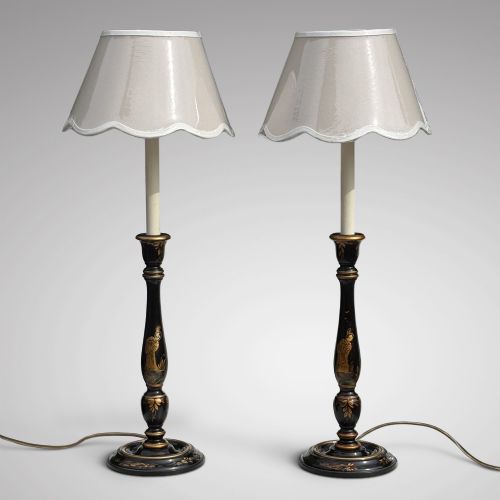
- A European imitation of East Asian lacquerwork, utilising dark varnishes and raised metallic decoration. It appears on sophisticated side cabinets from the early twentieth century.
- Tole-peinte
- Painted tin or metalware, often shaped into decorative columns or lamp bases. This technique introduces coloured floral and pastoral motifs to lighting fixtures.
Vintage Painted Buffet: Frequently Asked Questions
How do I clean a painted buffet?
Dust surfaces regularly with a dry, soft cloth to prevent grime accumulation. Avoid harsh chemical cleaners that can strip or soften historic paint layers.
For stubborn marks, wipe gently with a damp cloth using mild soap, drying the timber immediately afterward.
Can I use a buffet in a hallway?
These cabinets suit narrow corridors and entryways provided the depth matches the available floor space. They provide convenient surface drops for post and keys while hiding clutter behind closed doors.
Measure the clearance carefully to ensure doors and drawers open fully without obstruction.
How do I identify original paint?
Examine the surface under natural light for micro-cracking, uneven sheen, and wear around handles and edges. Multiple underlying layers visible through chips often indicate genuine age.
Modern synthetic paints tend to sit uniformly without the subtle tonal variations created by decades of friction.
What is the difference between a buffet and a sideboard?
Both terms describe low storage cabinetry used in dining areas, though regional terminology often dictates the preference. Buffets traditionally emphasise enclosed cupboards, while sideboards sometimes incorporate greater drawer space.
In practical terms, buyers use them interchangeably for storing tableware and linens.