

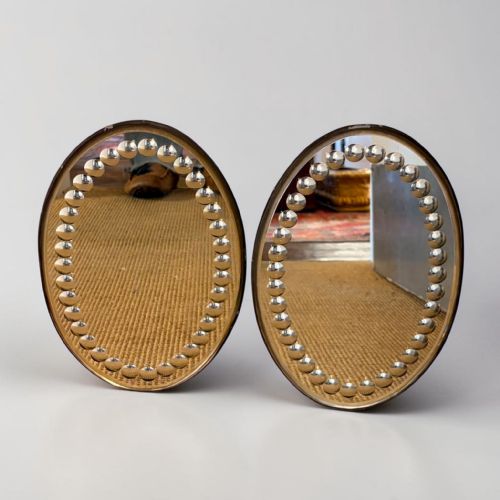
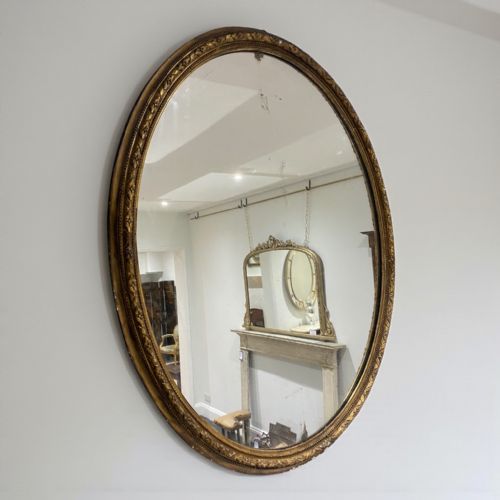
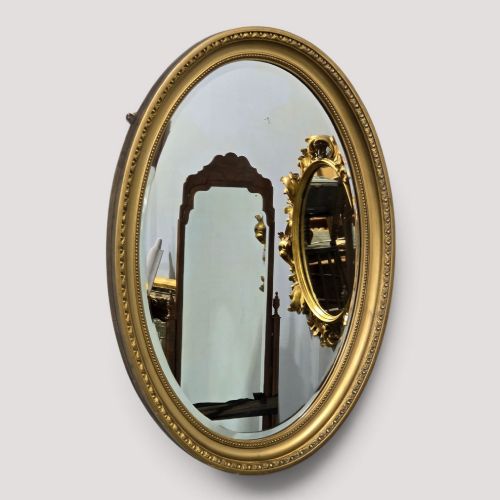
Vintage Oval Wall Mirror
A vintage oval wall mirror brings softness to a room, breaking the hard lines of panelling and furniture with curved glass.
Vintage Oval Wall Mirror
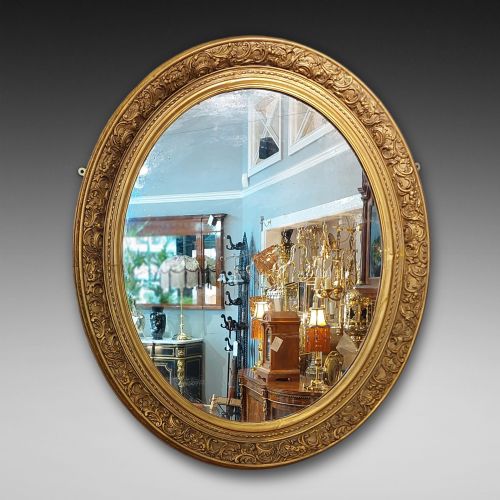
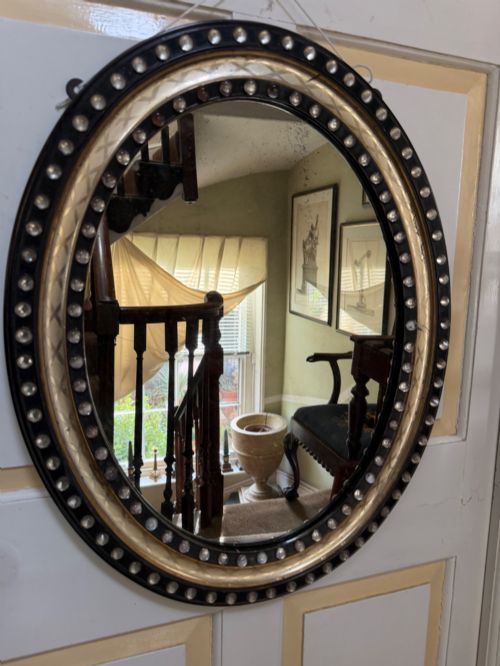
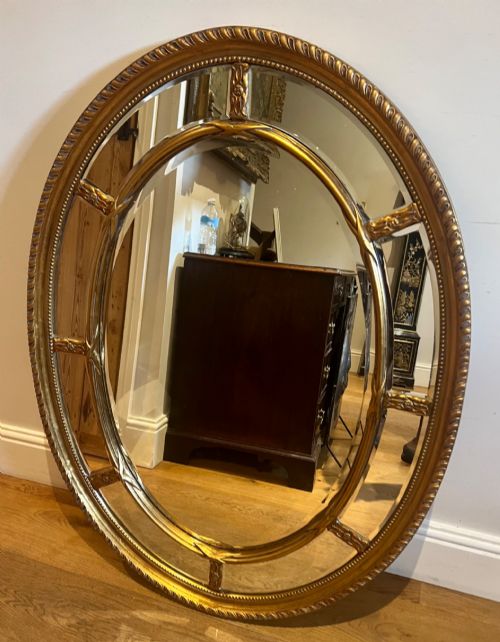
When you search for a vintage oval wall mirror, you are looking at wall-hanging looking glasses enclosed in frames shaped with curved ends, dating from the nineteenth and early twentieth centuries. These pieces span periods from Victorian and Edwardian to later decades, taking shapes that range from restrained timber framing to heavily decorated plaster mouldings.
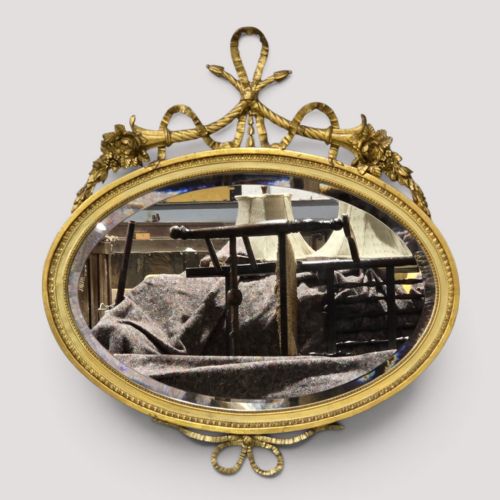
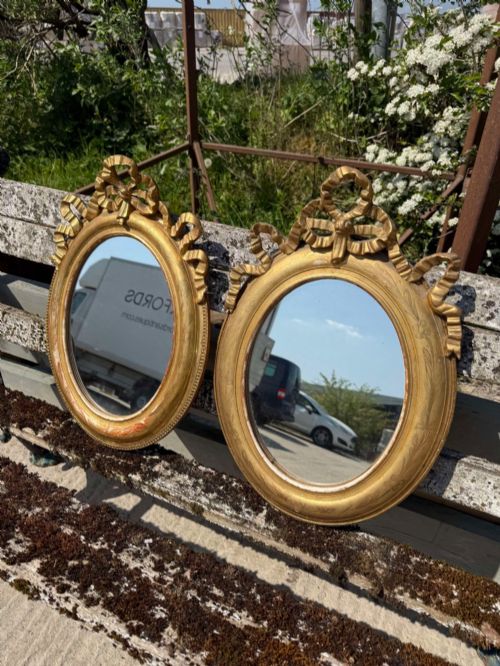
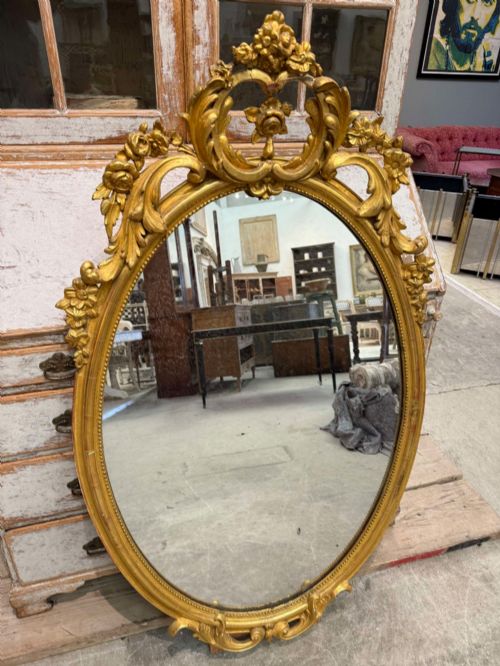
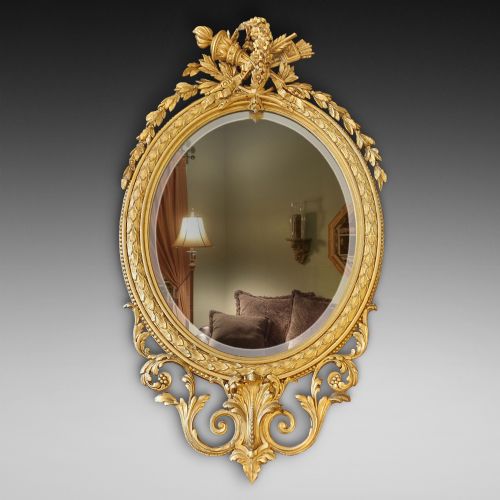
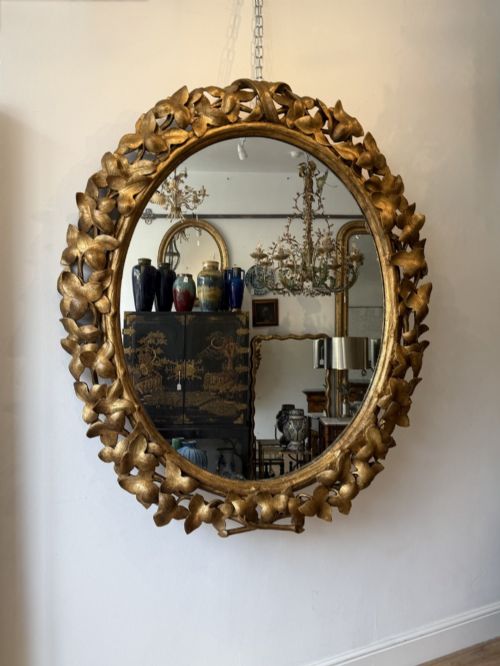
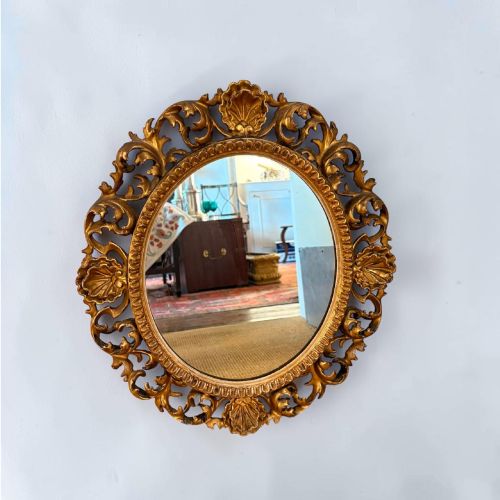
The version you are most likely to meet on this page is a gilt gesso or carved wood frame from the late nineteenth or early twentieth century. These mirrors often feature decorative flourishes such as floral motifs, scrolling foliage or parcel gilt finishes designed to catch the light in a hallway or principal room.
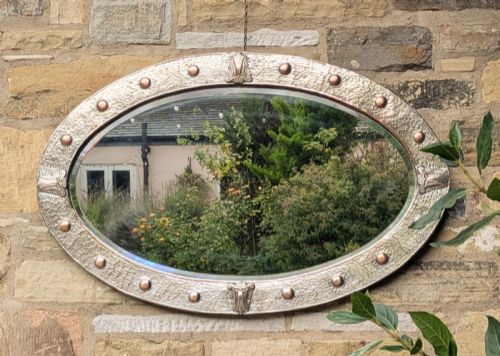
Originating from English country houses and continental workshops alike, these mirrors reflect diverse stylistic influences including Rococo Revival, French Neoclassical, and Arts and Crafts. Their proportions vary from compact dressing table glass to massive wall-hanging centerpieces.
Materials and construction
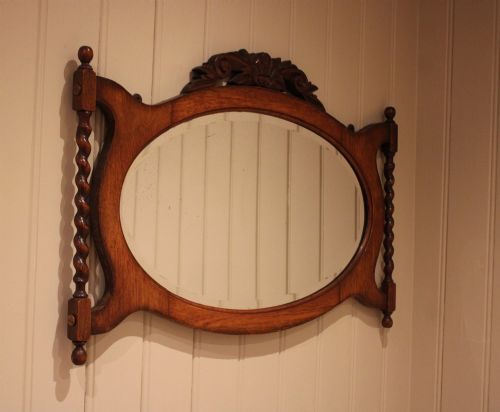
Frames are constructed from timber such as mahogany and oak, or formed using gesso and plaster applied over a wooden base to take crisp decorative moulding. Giltwood examples utilise thin layers of gold leaf applied to a prepared surface, whilst others receive painted finishes, simulated wood effects, or metal components in copper and brass.
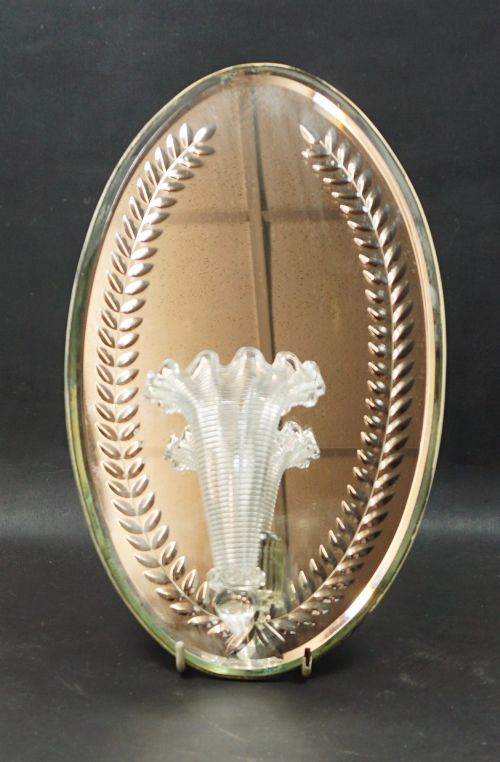
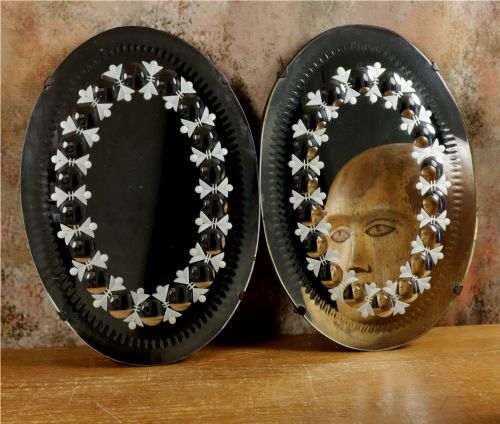
Glass plates are held securely within the rebate, often consisting of original mercury plate or early bevelled glass that displays the slight imperfections and soft reflection typical of historic manufacturing methods. Backing boards and original hanging fittings frequently survive to support the weight of the frame.
Vintage Oval Wall Mirror Retail Price Guide 2026
Typical asking prices for vintage oval wall mirror among the pieces listed under this phrase on Sellingantiques today, from the lower quarter to the upper quarter. They describe what is for sale here now, not the wider market.
Listings feature periods spanning from the eighteenth century through Victorian and Edwardian eras, utilising materials including giltwood, mahogany, copper, and gesso.
Quality differences
The standard of a vintage oval wall mirror is dictated by the depth and sharpness of the hand-carving or the crispness of the gesso moulding. Superior examples display intricate, well-defined details that retain their original gilding or polish, whereas lesser pieces show softer, shallower relief work or later repainting.
Integrity of the glass plate and the framing structure marks the division between ordinary and exceptional items. Pieces retaining original mercury glass plates and robust, unaltered timber or gesso construction hold greater cohesion and historical character than those with replaced glass or heavily restored frames.
Liberty and Co
The Vintage Oval Wall Mirror Glossary
- Gesso
- A plaster-like material applied to wooden frames and carved or moulded into decorative patterns before gilding or painting. It provides the smooth, receptive surface needed for intricate nineteenth-century ornamentation.
- Parcel Gilt
- A finishing technique where only specific raised portions of a frame are gilded with gold leaf, leaving the underlying wood or paint exposed elsewhere. This creates a restrained, two-tone visual effect.
- Mercury Plate
- An older mirror manufacturing process using a tin and mercury amalgam behind the glass, producing a characteristic mottled, shimmering reflection. It is prized by collectors for its soft, aged appearance.
- Giltwood
- Timber carved directly and covered in gold leaf, distinct from plaster or gesso mouldings. This material represents the higher end of frame manufacture across Georgian and Victorian periods.
- Bevelled Glass
- A mirror plate with edges angled and polished down to a thinner perimeter. This technique refracts light at the margins and indicates finer production standards.
Vintage Oval Wall Mirror: Frequently Asked Questions
Are these mirrors suitable for bathrooms?
Historic frames constructed from wood, gesso, and gold leaf are sensitive to high humidity and direct moisture. Steam in a bathroom can soften gesso, lift gilding, and cause silvering to degrade rapidly behind the glass.
Dry hallways, reception rooms, and bedrooms offer the stable environment necessary to preserve the original materials of a vintage wall mirror.
How do I clean old mirror glass?
Old glass and delicate frames should be dusted gently with a dry, soft microfibre cloth. Avoid spraying commercial window cleaners directly onto the glass, as liquid can seep behind the plate and damage the original backing or silvering.
If cleaning is necessary, apply a small amount of mild soapy water to the cloth rather than the mirror itself, keeping moisture well away from the frame joints.
What is the difference between gesso and carved wood?
Carved wood frames are shaped directly out of timber using chisels and gouges, showing the natural grain and fibre of the material upon close inspection. Gesso frames are built up using a plaster mixture applied over a simpler wooden carcass and moulded into intricate relief.
Gesso allows for sharper, more ornate repeating decorations than wood carving alone, though it is more prone to chipping if subjected to impact.