

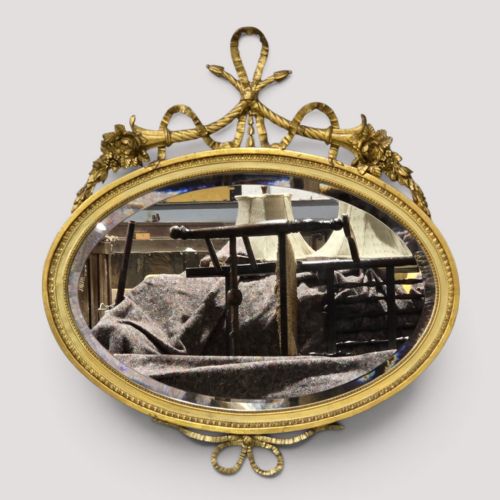
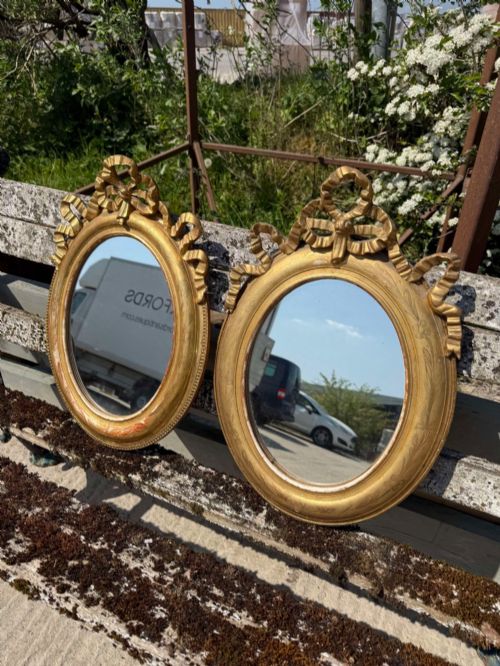
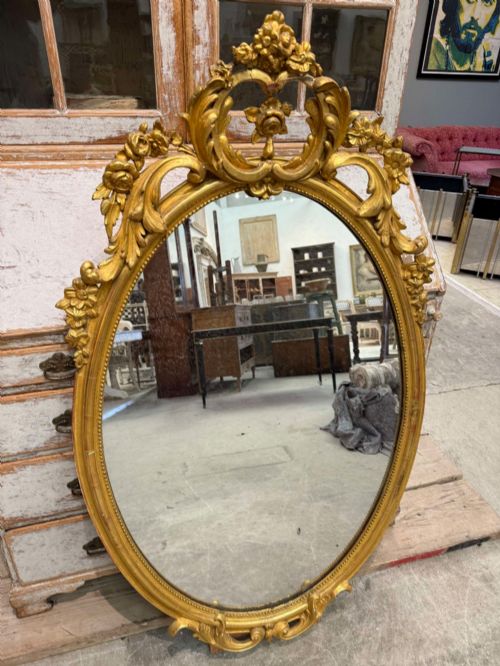
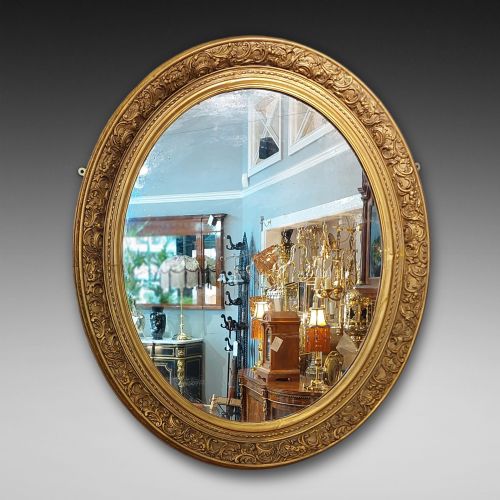
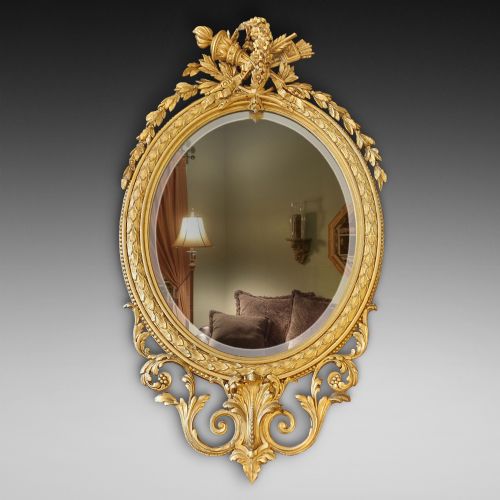
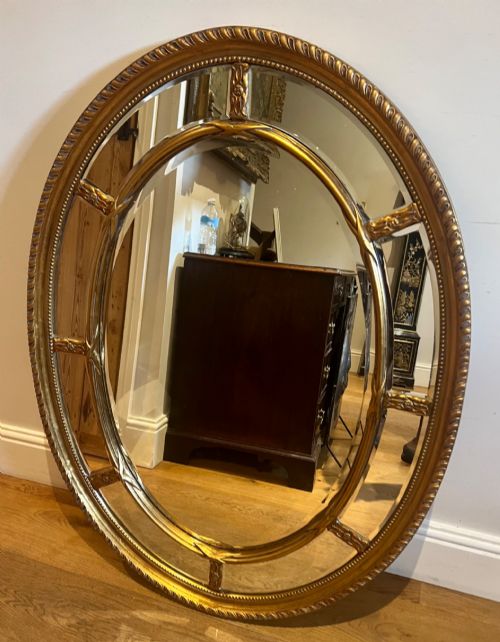
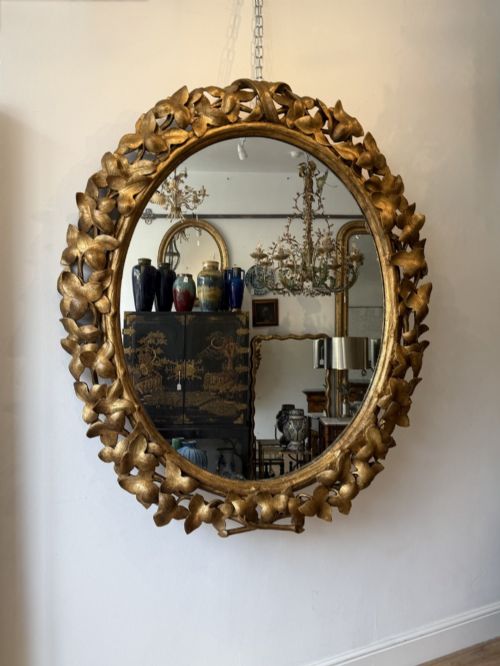
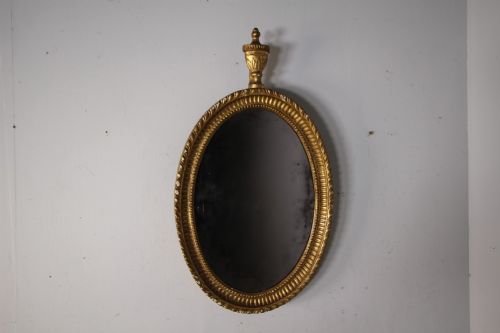
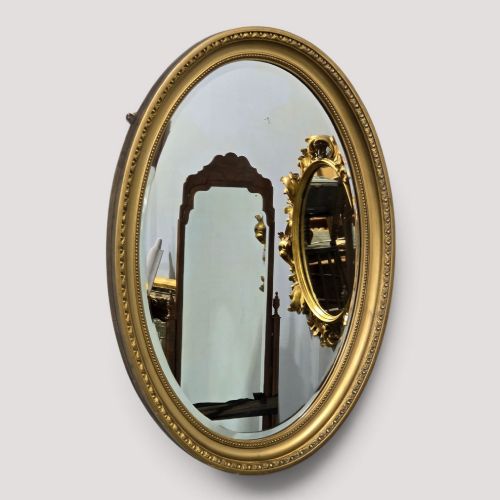
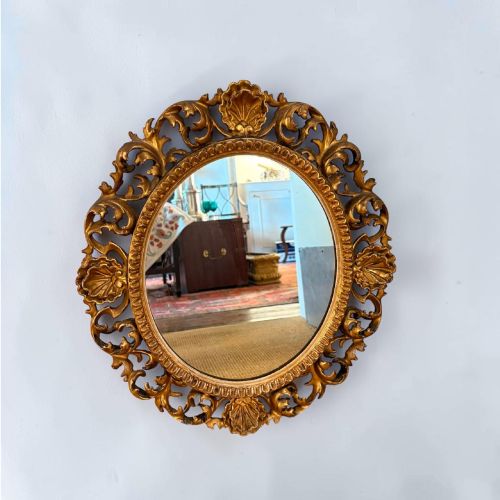
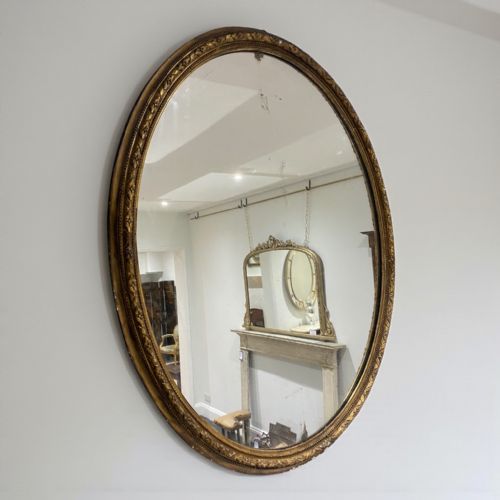
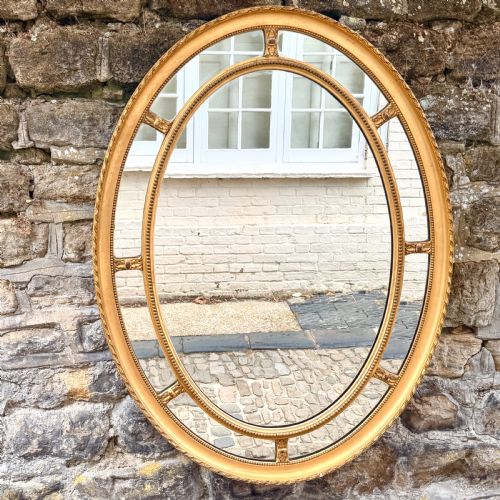
Vintage Oval Gilded Mirrors
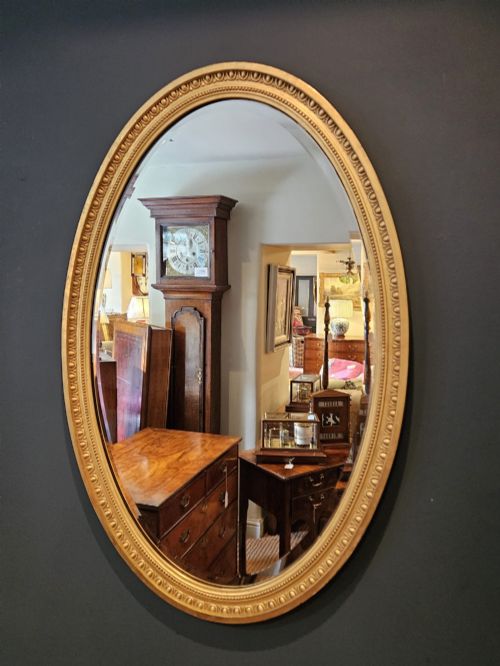
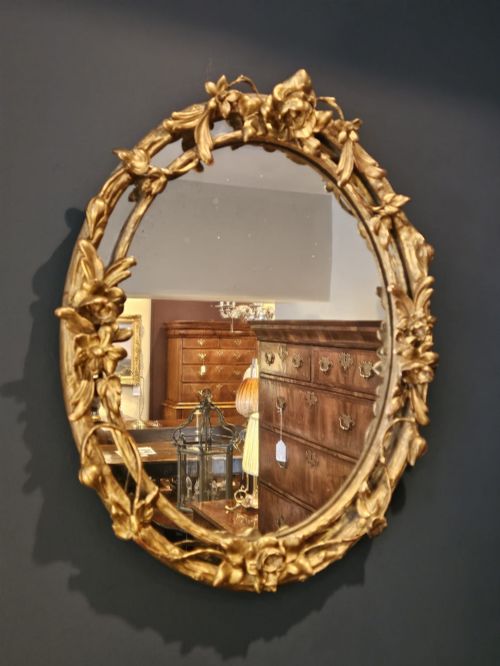
Vintage oval gilded mirrors bring light and classical proportion to a room, offering warm metallic reflection shaped in soft curves.
Vintage Oval Gilded Mirrors
Vintage oval gilded mirrors combine vertical reach with curved frames, spanning wall mirrors, overmantles, and dressing table pieces. They emerge from periods across the nineteenth and early twentieth centuries, drawing on earlier Georgian and French designs.
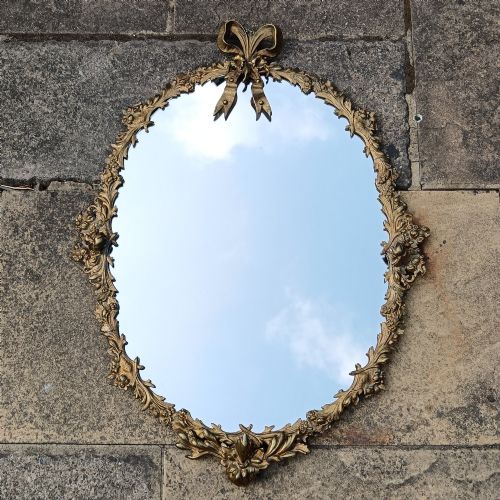
The pieces on this page lean heavily towards Victorian and Edwardian examples, alongside French chateau and Rococo revival styles. Buyers encounter everything from small boudoir looking glasses to massive overmantle centrepieces.
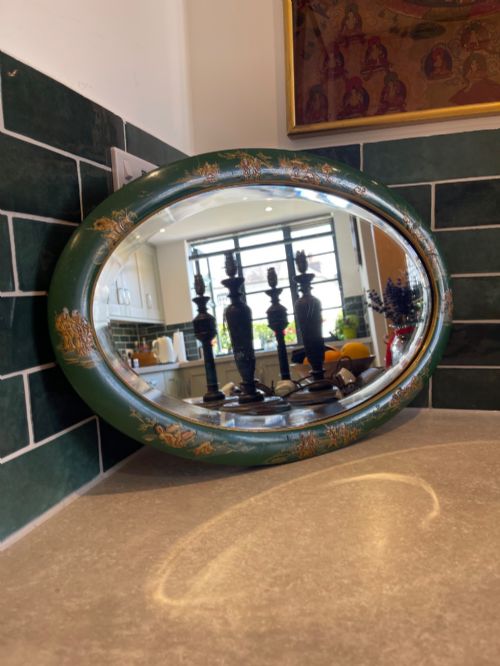
Makers utilised traditional forms like Adam, Chippendale, and Chinoiserie alongside ornate Victorian gesso work. Each piece brings a distinct regional character, whether English timber framing or French gilt bronze.
How they were made
Makers built the foundational frames using timber or carved wood, often layering composition or gesso to create intricate relief ornament. Gilding was then applied using gold leaf or metallic gilt finishes over the prepared surface.
Glass plates were silvered and fitted into the rebated frames, sometimes featuring bevelled edges to catch the light. Joinery methods varied from simple corner mitres to heavy braced structures designed to support large wall hangings.
Vintage Oval Gilded Mirrors Retail Price Guide 2026
Typical asking prices for vintage oval gilded mirrors among the pieces listed under this phrase on Sellingantiques today, from the lower quarter to the upper quarter. They describe what is for sale here now, not the wider market.
Listings span from the 1850s through to the 1920s, covering Victorian, Edwardian, and Georgian revival periods.
What varies in quality
The depth and crispness of the carved detail or moulded gesso separate standard output from finer atelier work. Hand-carved giltwood displays sharper undercut foliage and crisper scrolls than cast composition ornament.
The richness of the original gilding and the clarity of the underlying mirror glass dictate the visual presence of the piece. Superior examples retain their original surfaces with minimal retouching, whereas lesser items show heavy modern overpainting.
The Vintage Oval Gilded Mirrors Glossary
- Giltwood
- Wood that has been prepared and coated with thin sheets of gold leaf or metallic powder. This finish provides a warm, reflective surface characteristic of formal period frames.
- Gesso
- A plaster-like mixture applied to wooden frame bases to build up smooth surfaces for carving or moulding. It allows intricate relief ornament to be applied before gilding.
- Chinoiserie
- European decorative style imitating Chinese artistic motifs and landscapes. These mirrors often feature painted or lacquered black grounds with gilt figures and pagodas.
- Overmantle
- A large mirror designed specifically to hang above a fireplace mantelpiece. They often span considerable widths to balance the hearth below.
- Composition
- A moulded mixture of whiting, resin, glue and oil pressed into metal moulds while hot. It offered makers a faster alternative to hand-carving repetitive decorative motifs.
Vintage Oval Gilded Mirrors: Frequently Asked Questions
How do I hang a heavy antique oval mirror?
Heavy mirrors require secure fixings screwed directly into wall studs or masonry using appropriate weight-rated brackets. The original wooden backing and hanging rings should be inspected to ensure structural stability before mounting.
Position the mirror at eye level to maximise light reflection and balance the proportions of the surrounding furniture.
How should I clean a gilded frame?
Dust the frame gently with a soft, dry artist's brush or feather duster to remove surface particles. Avoid liquid cleaners, water, or chemical solvents, as these can dissolve old gesso and lift fragile gold leaf.
Glass panels can be wiped with a slightly dampened cloth using mild glass cleaner, taking care not to let moisture touch the surrounding gilt edge.
What is the difference between gesso and carved wood?
Carved wood frames are shaped directly out of solid timber using gouges and chisels, resulting in sharp, unique grain patterns. Gesso frames use a moulded plaster compound over a simpler wooden core to achieve ornamental relief.
Examining the back and corners helps determine whether the decorative elements are hand-carved or pressed composition.
Are these mirrors suitable for bathrooms?
High humidity and steam can damage antique gilding, gesso, and the silver backing of old mirror glass. Placing them in damp environments risks causing the gesso to swell and the gold leaf to flake off.
It is best to hang these pieces in dry reception rooms, hallways, or bedrooms where temperature and moisture remain stable.
How can I date an oval gilt mirror?
Dating relies on examining the frame style, construction materials, and the type of glass used in the plate. Victorian pieces often feature heavy gesso and rose motifs, while Edwardian and later revivals show lighter classical Adam or Chinoiserie influences.
The backing boards, fixing screws, and patination of the gilt surface provide further clues to the exact manufacturing era.