

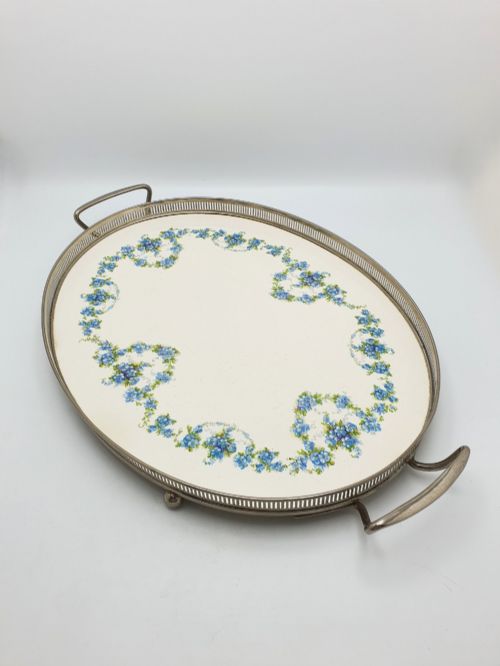
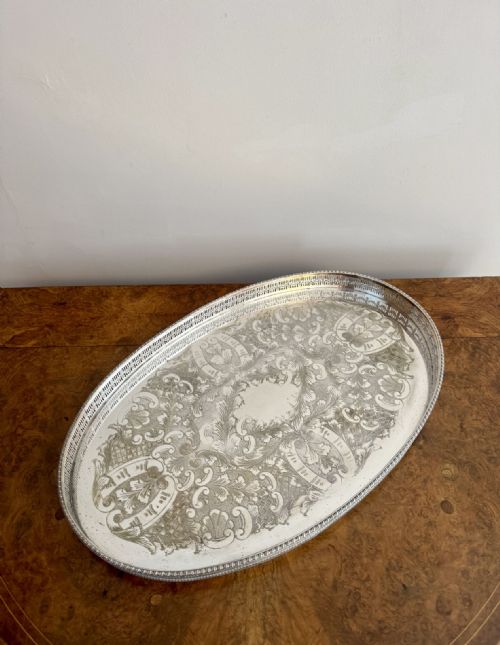


Vintage Oval Gallery Tray
A vintage oval gallery tray is a practical serving piece bordered by a pierced metal rim, offering both secure transport and period elegance.
Vintage Oval Gallery Tray
A vintage oval gallery tray brings together useful serving surfaces and decorative pierced or solid raised borders, appearing frequently in Edwardian silver plate and nineteenth-century mahogany. Buyers seeking a vintage oval gallery tray encounter forms ranging from large tea and cocktail platters to smaller presentation pieces and occasional coffee tables with removable tray tops.
The selection draws on periods spanning the eighteenth century through to the interwar period, though Edwardian silver plated examples dominate the current listings alongside timber pieces decorated with marquetry inlay. These objects served utilitarian functions in domestic spaces before transitioning into decorative room furnishings and drinks displays.
Materials and construction
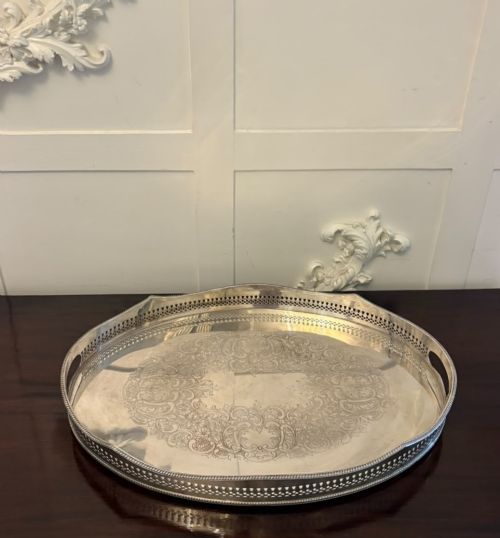
Silversmiths and electroplaters utilised nickel silver and standard silver plate over base metals to create bright reflective surfaces, often embellishing the centres with hand engravings, floral motifs, or embossed scrolls. These metal elements were paired with pierced gallery walls that secured glassware and decanters during service.
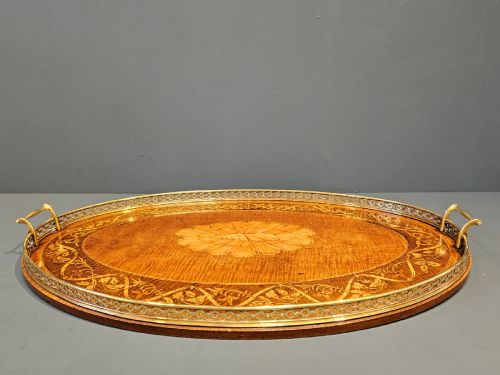
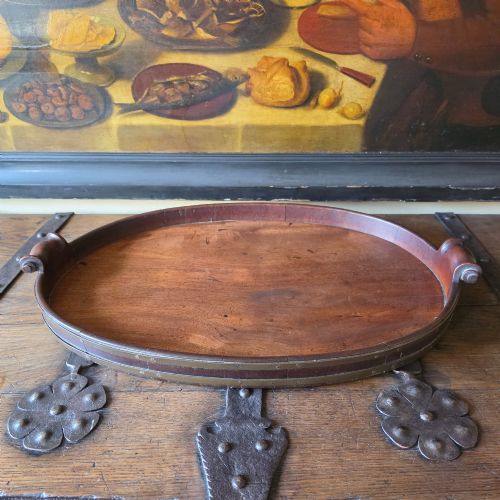
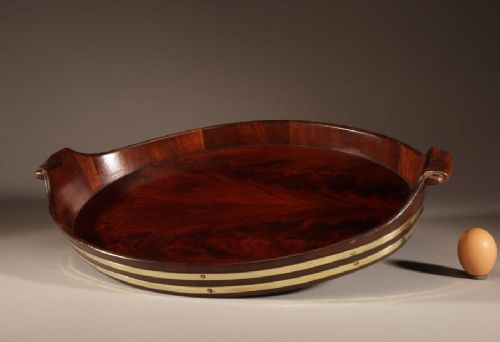
Cabinetmakers constructed wooden versions using solid mahogany, oak, and satinwood, frequently incorporating contrasting stringing, marquetry inlay, and secure brass galleries. Coopered construction techniques appear in circular and oval wooden forms, while handles are integrated directly into the gallery framework or mounted securely to the timber rims.
Makers occasionally punched intricate gallery piercings by hand, leaving tiny variations that reveal the rhythm of the workshop.
Evaluating the craftsmanship
Quality rests in the crispness of the pierced metal gallery, the depth and clarity of hand engraving on the base, and the structural integrity of the raised border joints. Superior silver plated examples maintain even plating without excessive base metal exposure through heavy polishing.
Wooden variations display excellence through tight wood selection, precise marquetry inlay, and the careful fitting of brass galleries to timber bases. The weight of the piece, the rigidity of the handles, and the balance of the proportions distinguish standard utility items from finer presentation pieces.
Mappin & Webb
The Vintage Oval Gallery Tray Glossary
- Gallery
- A raised pierced metal or wooden rim fitted around the edge of a tray to prevent items from sliding off. This architectural feature defines the primary visual characteristic of these serving pieces.
- Electroplated Nickel Silver
- A base metal alloy of copper, nickel, and zinc coated with a thin layer of silver using an electrolytic process. It became the standard manufacturing method for domestic metalware from the mid nineteenth century onwards.
- Coopered
- Constructed from vertical wooden staves fitted together and held by tension, similar to barrel making. This method permitted the creation of curved wooden trays and containers.
- Inlay
- A decorative technique where contrasting woods, shells, or metals are set into depressions flush with the surrounding surface. Satinwood and mahogany trays often utilise this method for geometric or floral decoration.
- EPNS
- An abbreviation for electroplated nickel silver, commonly found stamped on the reverse or rim of late nineteenth and twentieth century metal trays.
Vintage Oval Gallery Tray: Frequently Asked Questions
How do I clean a silver plated tray?
Use a soft cloth and a dedicated silver polish designed to remove tarnish gently without abrading the underlying plate. Avoid harsh chemical dips that strip the protective surface.
Store the tray in a dry environment away from direct sunlight to minimise future tarnishing and protect any underlying wooden elements from humidity.
Can these trays hold heavy decanters?
Solid mahogany, oak, and substantial silver plated examples with reinforced handles support heavy decanters and cocktail sets securely. Lighter pieces suit display or service with fewer items.
Check the stability of the gallery attachment and handles before lifting heavy glassware to ensure the structural joints remain firm.
What is the difference between Edwardian and Georgian trays?
Georgian pieces originate from the eighteenth and early nineteenth centuries, featuring hand worked timber or silver with classic proportions. Edwardian items often utilise electroplated nickel silver and machine assisted piercing techniques.
Revival pieces from later periods frequently emulate eighteenth century decorative motifs while retaining manufacturing markers characteristic of the early twentieth century.
How do I use a tray as a coffee table?
Place the tray atop a dedicated folding stand or a low wooden base to create an occasional table with a removable surface. This allows the piece to function as both furniture and a portable serving tray.
Ensure the base matches the dimensions and weight capacity of the tray to prevent tipping during everyday use.