







Vintage Oriental Lidded Jars
These vintage oriental lidded jars bring intricate hand-painted palettes and textured metalwork into modern rooms, offering both striking visual presence and practical container forms.
Vintage Oriental Lidded Jars
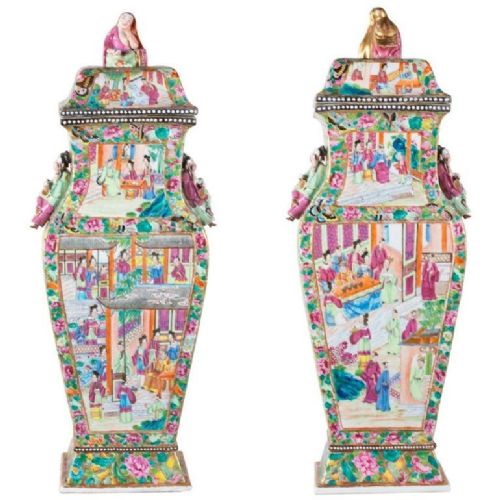
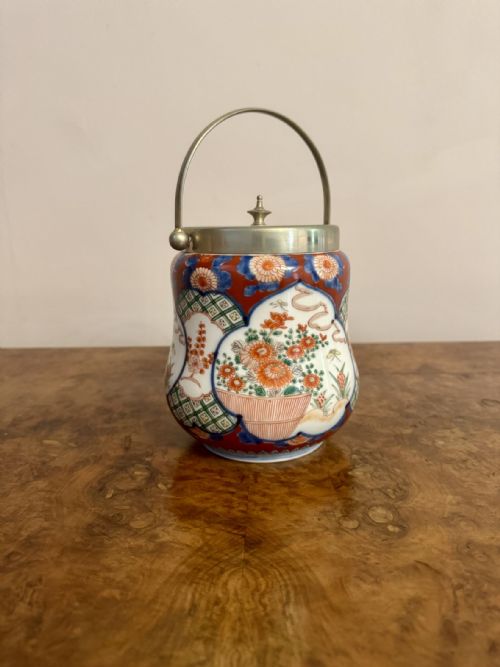
When you search for vintage oriental lidded jars, you encounter a varied assortment of covered vessels spanning late nineteenth-century export wares and twentieth-century decorative pieces. These items originate from Japanese and Chinese traditions, encompassing ginger jars, biscuit barrels, tea caddies, and kamcheng jars produced across the Meiji, Edo, Qing, and Republic periods.
The pieces on this page lean heavily towards Japanese Imari porcelain, Satsuma pottery, Kutani wares, and detailed cloisonne enamel finishes. You will find both single display pieces and matched pairs, ranging from small cabinet pots to large floor-standing vases with fitted covers.
How they were made
The manufacture of these vessels relies primarily on porcelain body forms finished with hand-painted underglaze blue, enamel colours, and occasional gold leaf highlights. Potters shaped the clay by hand or on the wheel before firing, applying glazes that required precise kiln temperature control to achieve the characteristic depth of Chinese and Japanese ceramics.
Metal vessels utilise copper or brass foundations decorated through cloisonne techniques, where thin wire compartments are soldered to the surface and filled with coloured enamel pastes. Subsequent firing and polishing cycles create a smooth, lustrous finish across the exterior of the lidded pot.
Vintage Oriental Lidded Jars Retail Price Guide 2026
Typical asking prices for vintage oriental lidded jars among the pieces listed under this phrase on Sellingantiques today, from the lower quarter to the upper quarter. They describe what is for sale here now, not the wider market.
Materials represented in these jars include hand-painted enamel, copper, brass, gold leaf, silver plate, and traditional papier-mache.
What varies in quality
Quality in these jars rests on the precision of the hand-painting, the crispness of the enamel or wirework, and the overall balance of the vessel form. Superior examples display confident brushwork with well-defined motifs, whereas simpler items show more mechanical or hurried decoration.
The preservation of delicate surface details, such as intact gilding on porcelain or smooth polishing on cloisonne cells, distinguishes finer specimens. Additionally, the correct matching of original lids to their respective bodies significantly influences the integrity of the piece.
Fukagawa·Herend
The Vintage Oriental Lidded Jars Glossary
- Imari
- A style of Japanese porcelain featuring a distinctive palette of underglaze blue, iron red, and gold, originating from the town of Arita. These wares gained immense popularity in European export markets during the Edo period.
- Cloisonne
- A decorative metalwork technique where fine wire is soldered to a copper or brass base to form cells, which are then filled with enamel paste and fired. The resulting surface is ground flat and polished.
- Kamcheng
- A type of lidded ceramic jar traditionally made in China for export to Southeast Asia, typically decorated with polychrome enamels. These vessels were originally used for food storage or ritual purposes.
- Meiji
- The period of Japanese history spanning from 1868 to 1912, characterised by the opening of trade with the West and a surge in the production of highly detailed decorative arts for export.
- Satsuma
- A type of earthenware pottery from Japan with a crackled ivory glaze, typically decorated with elaborate polychrome enamels and raised gold designs. The style evolved specifically to satisfy Western tastes in the late nineteenth century.
Vintage Oriental Lidded Jars: Frequently Asked Questions
What were oriental lidded jars used for originally?
These vessels served various domestic and trade functions, primarily storing ginger, tea leaves, dry biscuits, or valuable commodities. Their airtight or close-fitting lids helped preserve the contents from moisture and pests.
Over time, many of these utilitarian containers transitioned into pure display objects, prized by collectors for their intricate surface decoration and form.
How do I date a Japanese Imari jar?
Dating relies on examining the clay body, the weight of the porcelain, and the specific shades of the underglaze blue and iron red pigments. Earlier pieces from the Edo period often display a slightly rougher base and hand-ground foot rims.
Twentieth-century reproductions tend to have brighter, more uniform synthetic colours and a smoother, perfectly regular white porcelain body without the subtle imperfections of older wares.
Are cloisonne jars made of brass or copper?
Most cloisonne vessels utilise a hammered or spun copper foundation, though some variations incorporate brass fittings or bases. The metal acts as a stable substrate to support the network of soldered wire cells and heavy enamel layers.
Examining the unpolished interior or the base often reveals the underlying metal composition beneath the counter-enamel layer.
How should I clean antique porcelain and enamel jars?
Dust these items gently with a soft, dry brush to prevent abrasive particles from scratching the painted surfaces or delicate gold leaf highlights. Avoid submerging metal-based cloisonne pieces in water, as moisture can seep beneath exposed metal seams.
For porcelain with stable glazes, use a damp cloth with mild soap only when necessary, drying the vessel immediately afterwards to protect any unglazed areas.