





Japanese Lidded Vessel
These Japanese lidded vessel examples unite practical utility and meticulous artistry, offering collectors authentic expressions of Meiji and Edo craftsmanship.
Japanese Lidded Vessel
A Japanese lidded vessel encompasses diverse utilitarian and decorative containers including ginger jars, incense burners, sake kettles, and sugar bowls. These forms emerge primarily from the nineteenth century, spanning both the Edo and Meiji periods.
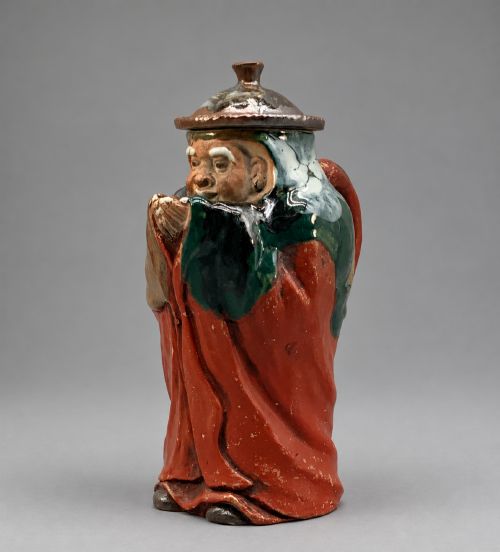
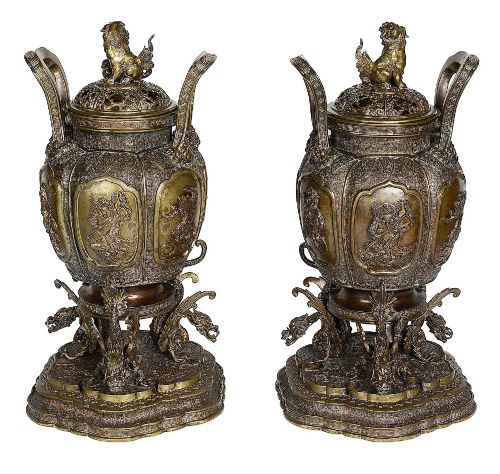
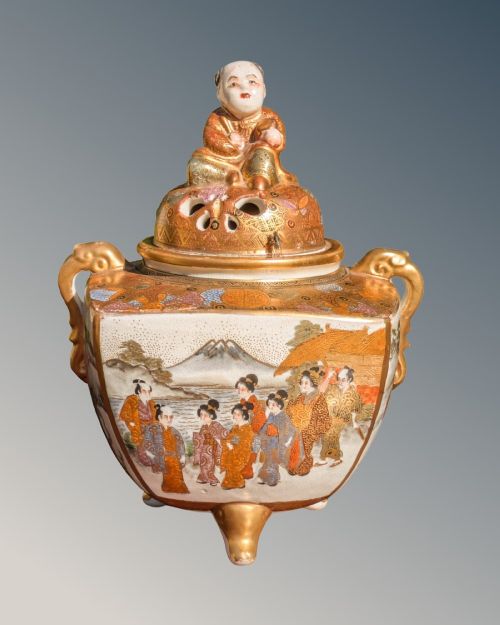
Collectors encounter works fashioned as koro incense burners, pedestal bowls, and figural pottery jugs. Each piece serves a specific historical function while displaying the distinct decorative traditions of its period.
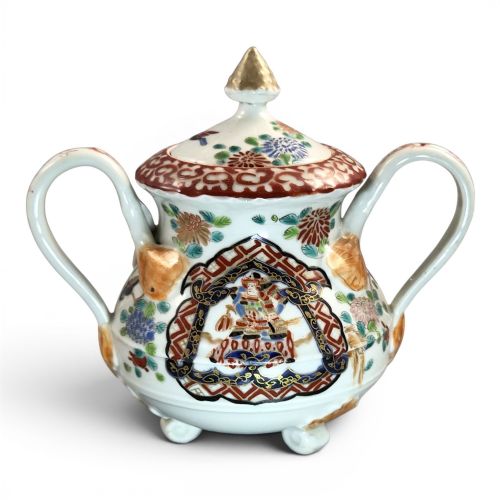
The selection ranges from robust cast iron tetsubin kettles to delicate porcelain imari sugar bowls and cloisonne enamel jars. This variety reflects the broad spectrum of Japanese metalwork and ceramic production available to the buyer.
Materials and Techniques in Construction
Metal vessels utilise bronze, brass, copper, and cast iron, often enhanced with silver details or surface textures like tree bark effects. Cloisonne enamel pieces integrate fine metal wires to partition intricate bird and mosaic patterns across copper or bronze bodies.
Ceramic forms employ earthenware and porcelain, decorated with rich gilding, gold leaf, and traditional Imari or Satsuma palettes. Makers shape these materials into precise lidded jars, vases, and miniature incense burners requiring advanced kiln control and brushwork.
Japanese Lidded Vessel Retail Price Guide 2026
Typical asking prices for japanese lidded vessel among the pieces listed under this phrase on Sellingantiques today, from the lower quarter to the upper quarter. They describe what is for sale here now, not the wider market.
Several lidded vessels disguise their true utility as sake kettles by wearing intricate cloisonne hats.
Distinctions in Quality and Execution
The standard of a Japanese lidded vessel rests on the precision of its surface decoration and the balance of its form. Fine cloisonne exhibits perfectly uniform wirecells and smooth, polished enamel surfaces without pitting.
Ceramic and bronze examples distinguish themselves through the crispness of painted detail, the fidelity of maker marks, and the harmonious integration of the lid. Superior pieces demonstrate complete control over complex glazes, metal patination, and intricate figural modelling.
Fukagawa Mark·Kibundo·Kotobuki do·Shozan
The Japanese Lidded Vessel Glossary
- Cloisonne
- A decorative metalwork technique where fine wires create compartments filled with enamel paste and fired. This method produces intricate patterns featuring birds, flowers, and geometric mosaics.
- Koro
- A traditional Japanese incense burner typically featuring a pierced lid to release fragrance. These vessels appear in bronze, ceramic, and cloisonne formats.
- Imari
- A style of Japanese porcelain characterised by underglaze blue and overglaze red, green, and gold decoration. It frequently adorns export wares like sugar bowls and lidded jars.
- Satsuma
- An earthenware pottery style featuring a crackled, ivory-coloured glaze decorated with elaborate polychrome enamels and gilding. Pieces often include figures such as samurai and detailed botanical motifs.
- Tetsubin
- A traditional Japanese cast iron kettle used for boiling water, fitted with a lid and handle. These utilitarian items often bear maker signatures and distinguished textures.
- Totai Shippo
- A wire-framed enamel technique on a porcelain base where the body is sometimes removed to create a translucent effect. This allows light to pass through the decorated areas.
Japanese Lidded Vessel: Frequently Asked Questions
How do I identify Meiji period pieces?
Meiji period works, produced between 1868 and 1912, often display heightened decorative complexity and refined technical mastery. Look for detailed cloisonne enamel, rich gold leaf accents, and specific studio signatures.
Many pieces from this era reflect the opening of Japan to Western trade, combining traditional motifs like birds and flowers with ambitious scale and form.
What is Imari porcelain?
Imari porcelain refers to wares exported from the port of Imari, traditionally distinguished by a robust palette of underglaze blue, iron red, and gold. These pieces include lidded jars, sugar bowls, and dishes decorated with figures such as samurai.
The style became highly prized in Europe for its vibrant colours and durable construction, remaining a staple of nineteenth-century decorative collections.
How were cast iron kettles used?
Cast iron kettles, known as tetsubin, served to boil water for tea preparation in Japanese households and tea ceremonies. They featured secure lids and sturdy handles, often created by skilled regional workshops.
Living with these pieces involves appreciating their heavy metal construction and textured surfaces, such as simulated tree bark or subtle patination.