


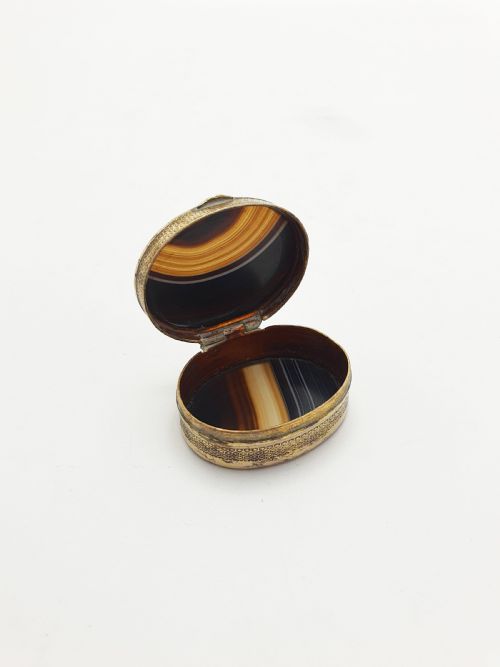
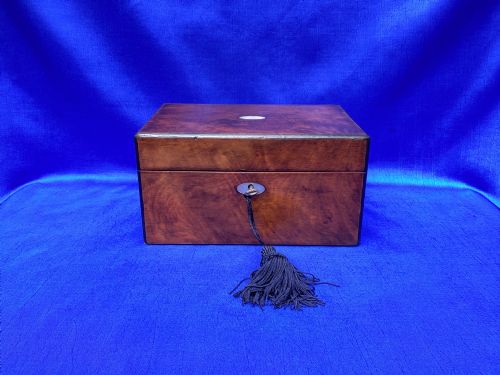
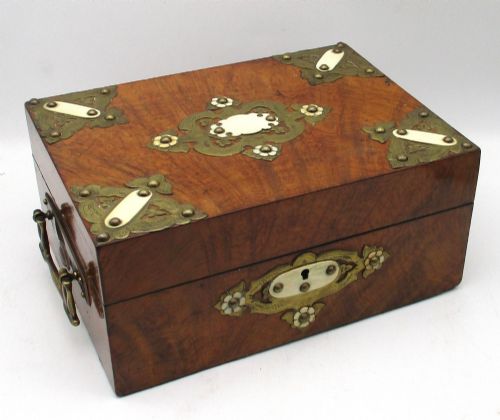

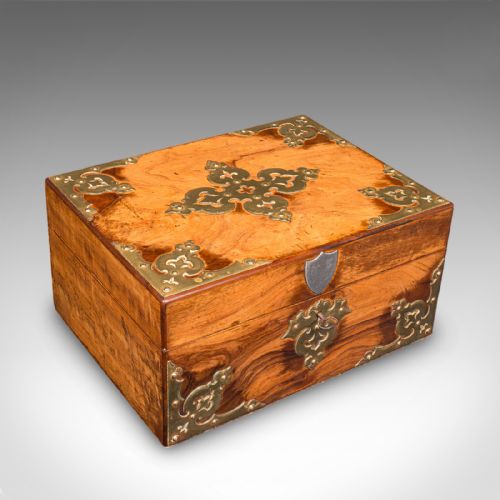


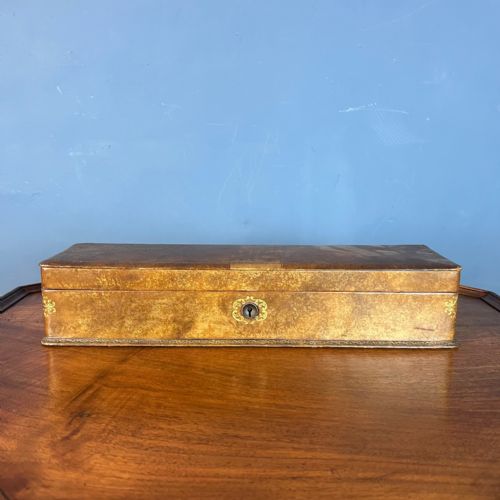


Brown Brass Trinket Box
These brown brass trinket box pieces combine rich timbers and metalwork to secure your small treasures with period style.
Brown Brass Trinket Box
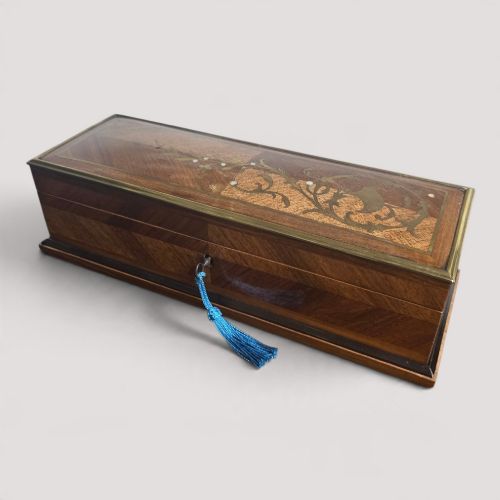
A brown brass trinket box brings together warm wood tones and metal mountings to store small personal valuables. When searching for a brown brass trinket box, buyers encounter items ranging from Victorian sewing cases to Georgian tea caddies and French desk pieces.
Forms extend beyond simple square containers to include glove boxes, presentation chests, and leather caskets. Origin points cross English, French, Italian, and Japanese workshops, demonstrating diverse decorative traditions applied to small storage.
Materials and construction methods
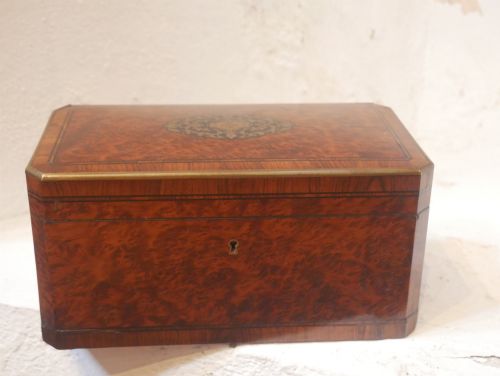
Craftsmen built these boxes using dense hardwoods like walnut, mahogany, and rosewood, often applying burr veneers to create richly figured surfaces. Brass appeared as bound corners, engraved inlays, rosette mounts, and locking hardware, secured tightly to the wooden carcasses.
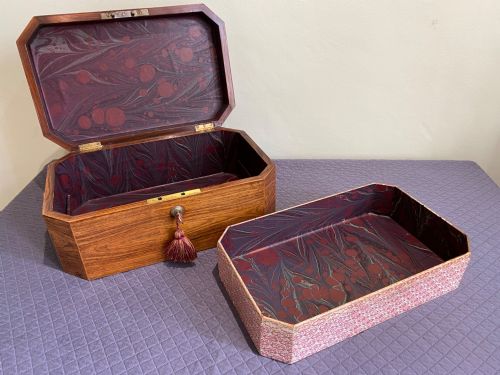
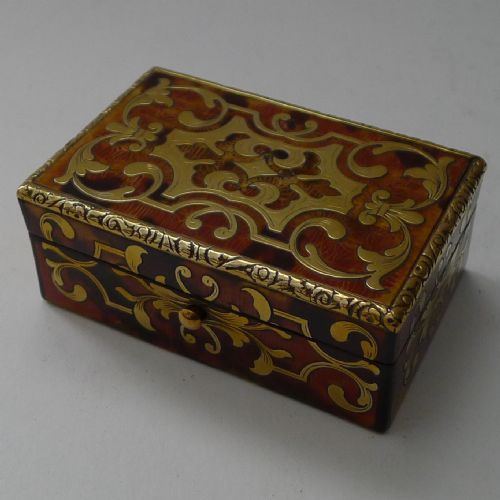
Specialised techniques such as Boulle work, tooled leather wrapping, and penwork decoration added surface texture alongside carved wood and mother-of-pearl accents. Interiors frequently lined themselves in velvet, silk, or patterned paper to protect the jewellery and trinkets stored within.
Brown Brass Trinket Box Retail Price Guide 2026
Typical asking prices for brown brass trinket box among the pieces listed under this phrase on Sellingantiques today, from the lower quarter to the upper quarter. They describe what is for sale here now, not the wider market.
A surprising number of nineteenth-century boxes hide secret compartments behind sliding panels meant to outsmart prying eyes.
Indicators of superior craftsmanship
Quality rests in the precision of the joinery and the selection of the timber veneers, where highly figured burr walnut or amboyna elevates a piece. The weight and crispness of the brass mounts, particularly when hand-engraved or fitted flush to the wood, separate standard containers from finer productions.
Original working locks, intact interior compartments, and well-preserved linings elevate a box's standing. Finer examples display meticulous attention to interior fittings and seamless alignment of wood grains across the opening lids and sides.
Tahan
The Brown Brass Trinket Box Glossary
- Boulle
- A method of marquetry using brass and tortoiseshell inlaid into furniture and decorative boxes. It originated in France and appeared on nineteenth-century pieces.
- Brass bound
- A construction technique where brass strips reinforce the edges and corners of wooden boxes. This method provided durability for campaign and travel use.
- Tea caddy
- A container designed originally to store loose tea leaves securely. Many surviving examples feature internal compartments and lockable lids.
- Burr walnut
- A veneer taken from the knotted growths of walnut trees. It yields a swirling, highly textured pattern prized by period cabinet makers.
Brown Brass Trinket Box: Frequently Asked Questions
How were these boxes originally used?
These containers served various daily storage needs on dressing tables, desks, and sideboards. Owners kept personal letters, stamps, writing implements, and precious jewellery inside them.
Larger versions accommodated sewing equipment, gloves, or tea leaves, keeping delicate items organised and protected from dust in domestic rooms.
How do I date a wooden box?
Dating relies on observing the timber species, construction methods, and hardware styles. Early pieces often show hand-cut dovetails and simpler brass hinges, while Victorian items frequently feature machine-sawn elements and elaborate brass banding.
Maker marks, lock stamps, and interior fabric choices also help narrow the decade of production across the eighteenth and nineteenth centuries.
How should I care for antique wood and brass?
Maintain the finish by keeping boxes away from direct sunlight and sudden temperature changes, which can cause wood to split and veneers to lift. Dust gently with a dry, soft cloth rather than using wet cleaners.
Apply a microcrystalline wax sparingly to nourish the timber surface when the wood appears dry, avoiding contact with the brass mounts.
Can I still use the locks?
Many boxes retain their original working locks and key mechanisms, though working status varies across individual pieces. Care must be taken when turning antique keys so the internal steel mechanisms do not jam.
If a key is absent or a lock is stiff, professional adjustment by a specialist conservator ensures the hardware remains undamaged.