
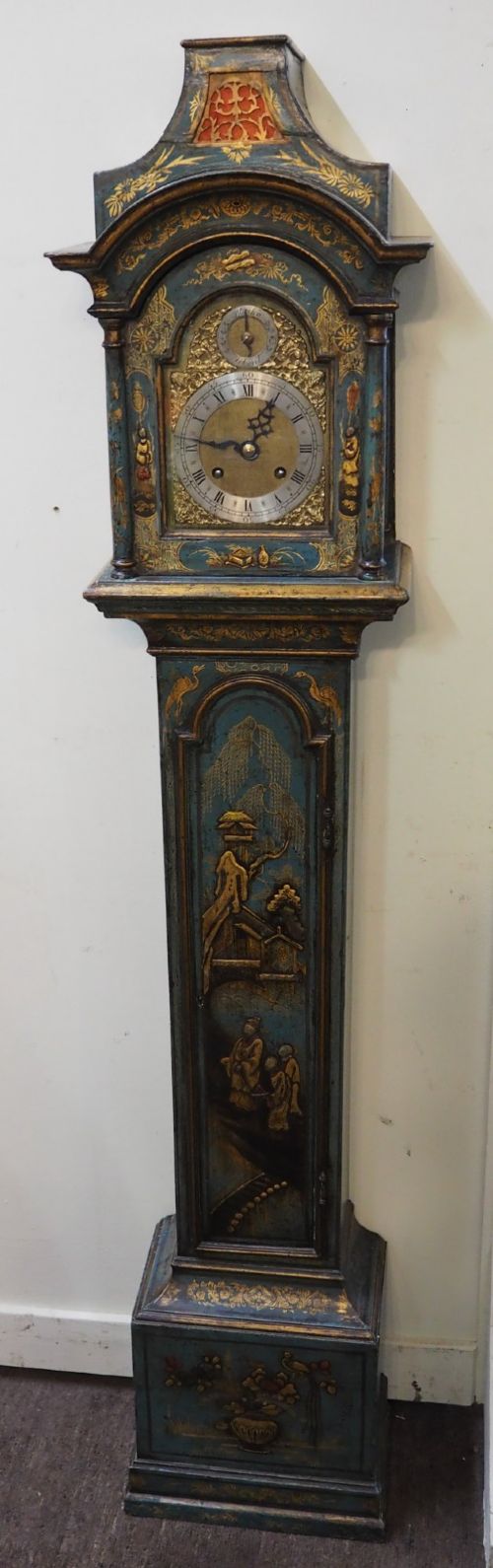


Vintage Oriental Lacquer Clock
These vintage oriental lacquer clock examples bring distinct Chinoiserie character to a room through traditional finishes.
Vintage Oriental Lacquer Clock
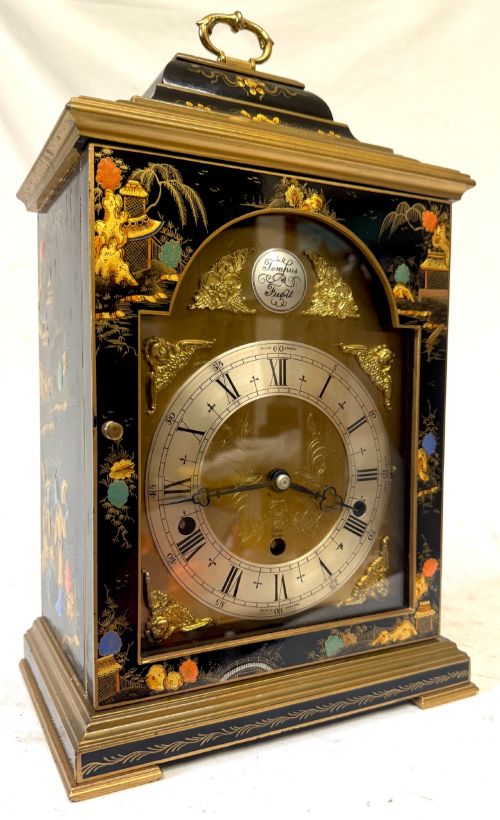
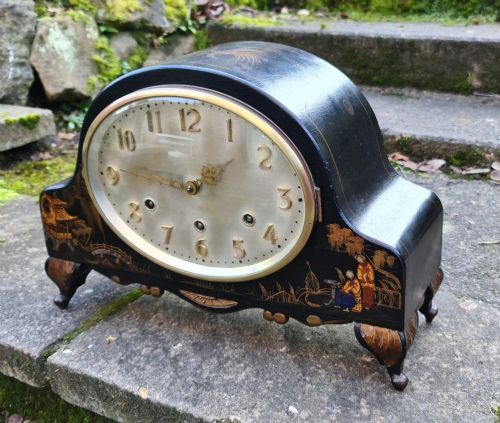
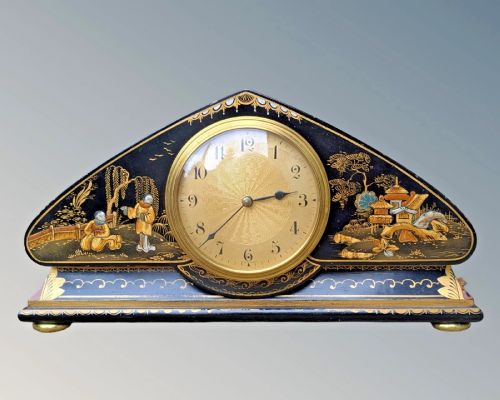
A vintage oriental lacquer clock brings traditional decorative finishes to timepieces, ranging from compact mantel clocks to tall longcase and grandmother clocks. These objects span periods from the nineteenth century through the mid twentieth century, drawing heavily on Chinoiserie styles and revival aesthetics.
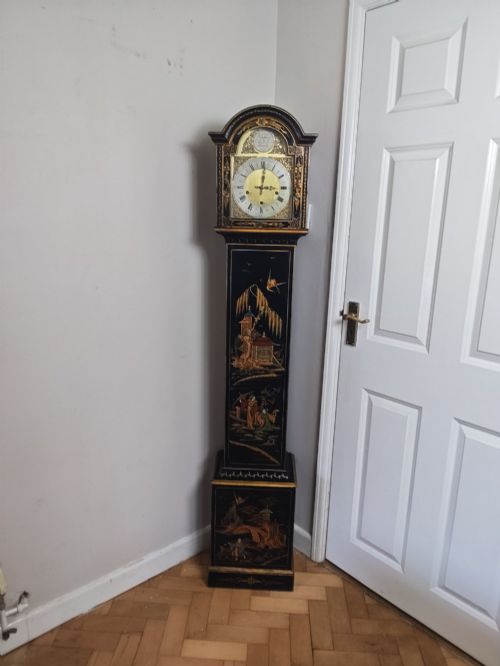
Buyers encounter smaller mantel versions alongside taller grandmother and longcase designs housed in lacquered wood. Many examples utilise colour schemes such as black, cream, blue, and green, often enriched with painted details that reflect historical design traditions.
The selection includes musical movements, Westminster chimes, and bracket clock formats referencing earlier centuries. These pieces serve both practical timekeeping and decorative roles within domestic interiors.
How they were made
Cases rely on wood foundations finished with lacquer, incorporating painted decoration, gilt highlights, and gold leaf applications. Skilled artisans built up layers to achieve the smooth surfaces characteristic of Chinoiserie decorative arts.
Mechanical components include brass and glass elements, alongside specialised movements sourced from makers in London or France. Musical and three train complications demand precise engineering housed within the decorative wooden cases.
Some mantel clocks boast musical movements so lively they practically dance off the shelf at every quarter hour.
What varies in quality
The refinement of the painted Chinoiserie decoration dictates visual appeal, with finer brushwork and richer gold leaf application setting superior examples apart. The depth and durability of the lacquer finish itself reflect the standard of craftsmanship in the workshop.
Movement complexity influences value, distinguishing simple timepieces from musical versions and multi train mechanisms with Westminster chimes. The integration of the movement within a well proportioned case marks the work of established makers like Gardner of London.
Gardner of London·Elliott London
The Vintage Oriental Lacquer Clock Glossary
- Chinoiserie
- European interpretation and imitation of Chinese and East Asian artistic traditions, popular in furniture and clock cases. This style frequently employs painted motifs on lacquered surfaces.
- Longcase clock
- A tall freestanding weight driven pendulum clock, often called a grandfather clock. Shorter variations of this form are known as grandmother clocks.
- Mantel clock
- A small clock designed to sit on a mantelpiece or shelf. These pieces appeared in various coloured lacquer finishes during the early twentieth century.
- Bracket clock
- A portable table clock historically designed to sit on a wall bracket. Later revival versions often incorporated English or French movements.
- Three train clock
- A clock movement with three gear trains to drive timekeeping, striking, and musical chimes. This mechanism is found in more complex musical models.
Vintage Oriental Lacquer Clock: Frequently Asked Questions
What is a grandmother clock?
A grandmother clock is a slender, scaled down version of a traditional longcase clock. These taller pieces occupy less floor space while retaining the architectural presence of full sized models.
They appear in Chinoiserie lacquer finishes featuring painted decoration and musical movements, making them striking focal points in hallways or living spaces.
How do I care for lacquer cases?
Lacquered wood surfaces require gentle dusting with a soft, dry cloth to protect the delicate painted details and gold leaf. Avoid harsh chemical cleaners and keep the clock away from direct sunlight and fluctuating humidity.
Stable indoor temperatures prevent the wood and lacquer finish from expanding or cracking over time.
What are Westminster chimes?
Westminster chimes refer to the melodic four note tune played by the clock movement on the quarter hour before striking the full hour. This complication requires a multi train mechanism.
Clocks featuring this chime often include musical functions or three train setups built by skilled horologists.
Are these clocks mechanical?
Most pieces utilise traditional mechanical movements driven by springs or weights, requiring periodic winding. Brass gears and glass dial covers are standard components in these designs.
Movements range from simple timepieces to complex musical versions produced by established London workshops.