
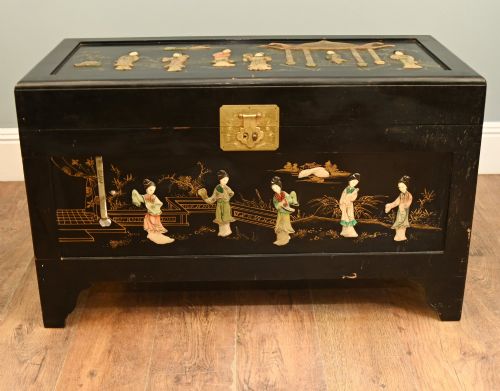
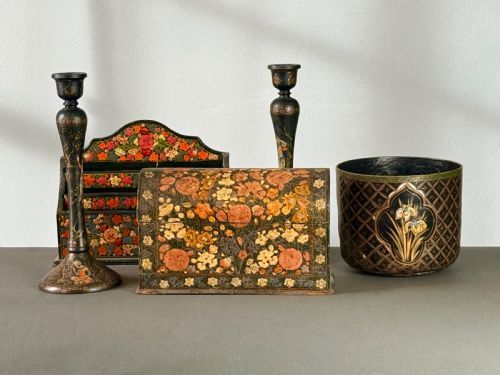
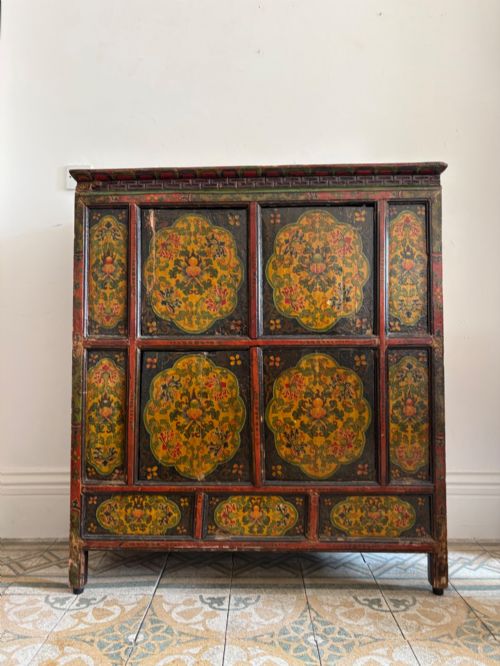


Vintage Oriental Coffer
These vintage oriental coffers are sturdy timber storage chests built for travel and household keeping, bringing distant craftsmanship into modern rooms.
Vintage Oriental Coffer
A vintage oriental coffer is a solid storage chest originating from various Asian and trade regions, designed primarily for transporting and keeping textiles, garments, or valuables. These pieces span centuries from the seventeenth through the early twentieth century, taking the form of camphor trunks, blanket boxes, and travel luggage.
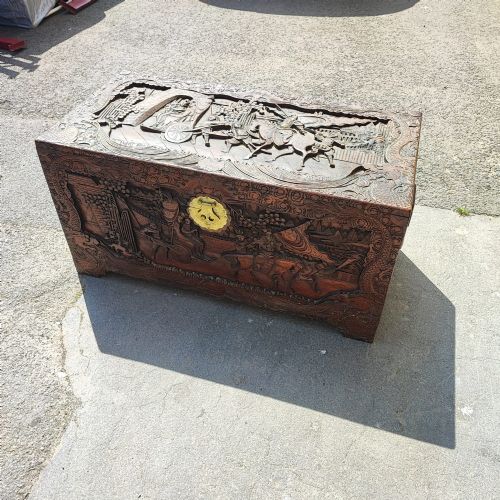
The version most commonly met on this page is the carved camphor wood trunk from the nineteenth or early twentieth century. These storage boxes combine aromatic timber with deep relief carving, brass hardware, and hinged lids built for heavy domestic service.
How they were made
Makers utilised resilient timbers such as camphor wood, elm, teak, and rosewood, chosen for their durability and resistance to insects. These woods were joined using traditional carpentry methods to withstand long journeys by land and sea.
Metalwork played a structural and decorative role, with brass hardware, straps, and corner brackets securing the wooden panels. Surface finishes ranged from natural polished grain to polychrome paint, lacquer, and leather coverings.
Camphor wood chests retain their distinct herbal scent across centuries, guarding blankets against moths long after the trade ships stopped sailing.
What varies in quality
The depth and crispness of the carving distinguish finer examples from simpler utility boxes. Artisans who spent extra hours chiselling intricate floral or figurative motifs produced pieces with lasting visual impact.
The retention of original brass hardware, locks, and hinges alters the integrity of a chest. Pieces preserving their untouched surface patination and authentic fittings hold greater historical cohesion.
The Vintage Oriental Coffer Glossary
- Camphor wood
- An aromatic timber traditionally used for storage trunks because its natural scent deters moths and insects. It forms the core material of many chests on this page.
- Zanzibar chest
- A heavy travel trunk featuring brass studding, strapwork, and decorative corners, often associated with trade routes connecting India, East Africa, and the Middle East.
- Tansu
- A traditional style of Japanese mobile storage cabinetry built with structural framing and sliding or lifting compartments. These pieces emphasise functional joinery and metal mounts.
- Bandaji
- A traditional Korean storage chest constructed with iron or brass reinforcement bands securing the wooden panels. Elm is frequently employed for these regional forms.
- China trade
- A term describing goods manufactured in China specifically for export to Western markets during the eighteenth and nineteenth centuries. These items often merge Eastern materials with European tastes.
Vintage Oriental Coffer: Frequently Asked Questions
What were these chests used for?
These trunks served primarily to store garments, blankets, and precious belongings while protecting them from moisture and insects.
Many were built as travel luggage for merchants and officials journeying across maritime and overland trade routes.
How do I care for camphor wood?
Keep the timber away from direct heat sources and strong sunlight to prevent the wood from drying out or splitting.
Light dusting with a dry cloth maintains the surface, while the natural aroma of the camphor can be refreshed by gently sanding the interior if needed.
How can I tell the period?
Dating relies upon examining the style of the brass hardware, the construction joints, and the wear patterns on the wood. Earlier pieces often display hand-forged mounts and heavier timber framing.
Later twentieth-century examples tend to feature machine-cut elements and lighter surface finishes.
Are these chests suitable as coffee tables?
Their flat lids and sturdy internal construction make them practical for use as low tables in a living space.
Ensure the surface is protected with trays or coasters to prevent ring marks on the antique timber finish.