

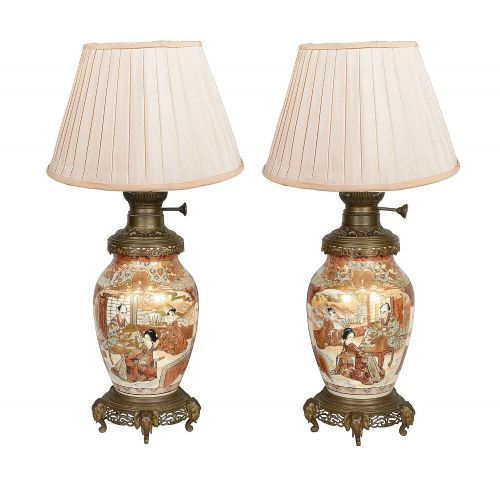


Vintage Oriental Ceramic Lamps
Vintage oriental ceramic lamps bring centuries of Asian artistry into the home, transforming antique vases and jars into striking functional lighting.
Vintage Oriental Ceramic Lamps
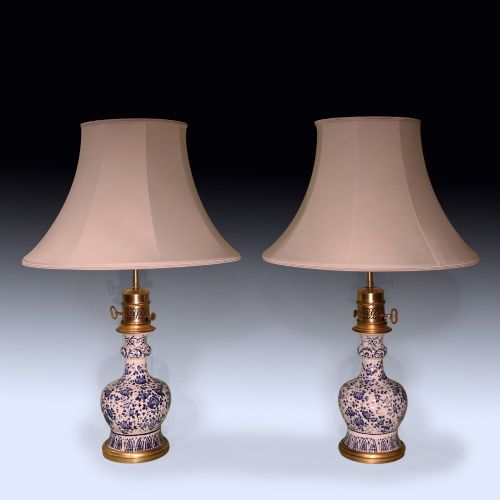
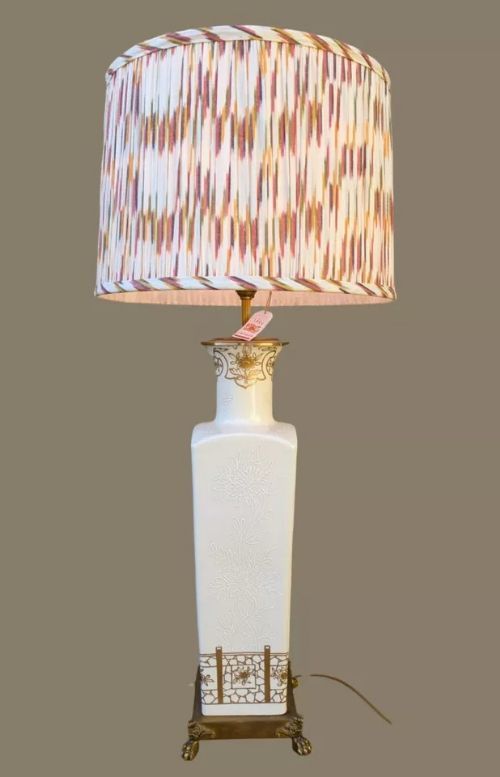
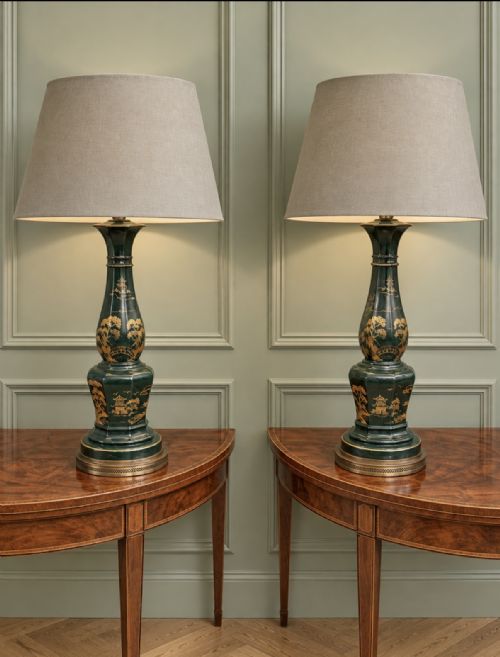
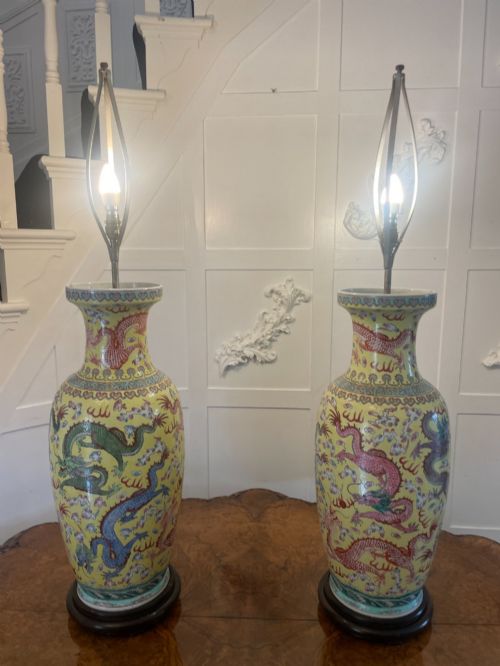
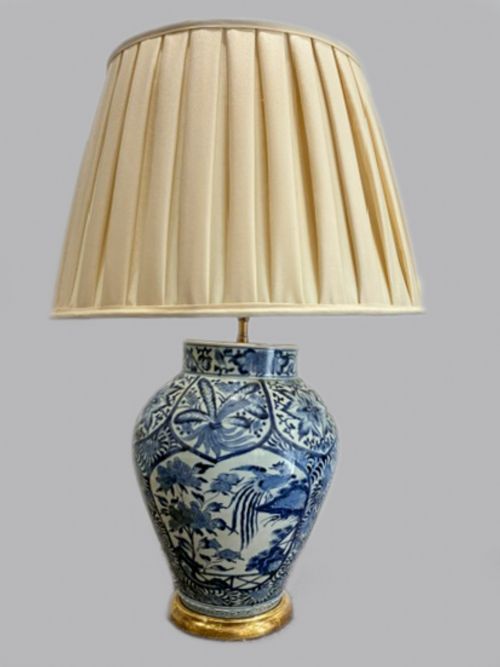
Vintage oriental ceramic lamps are constructed from converted vessels originating in China and Japan, spanning periods from the seventeenth century through to the early twentieth century. Buyers searching for vintage oriental ceramic lamps encounter forms such as ginger jars, rouleau vases, and figural sculptures mounted as table lamps.
The selection includes pieces created during the Qing Dynasty, the Meiji Period, and the Edo Period, alongside later European interpretations in the Chinese style. Many of these lamps began life as porcelain, earthenware, or stoneware vessels before receiving electrical fittings at a later date.
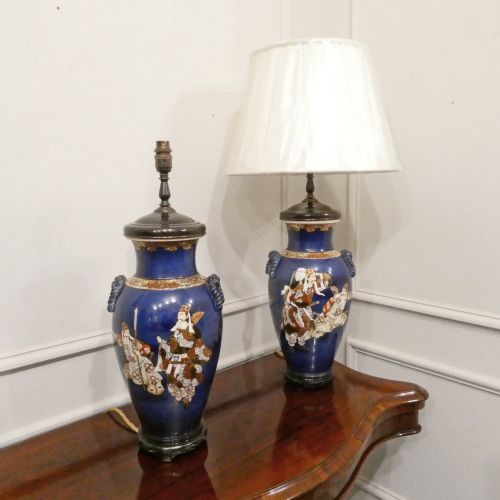
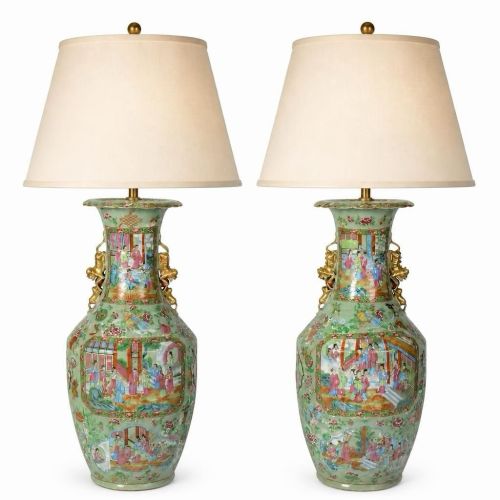
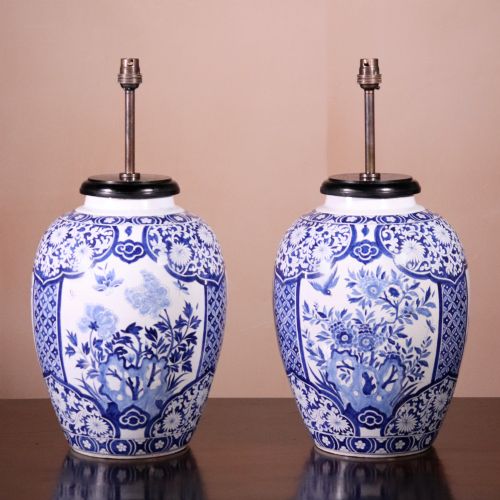
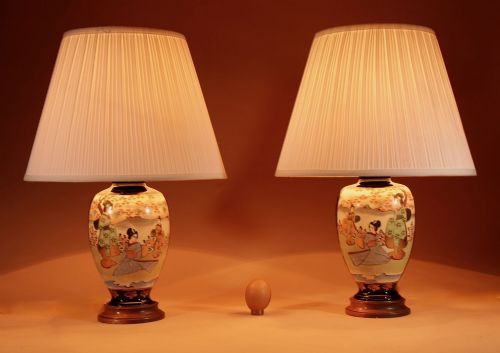
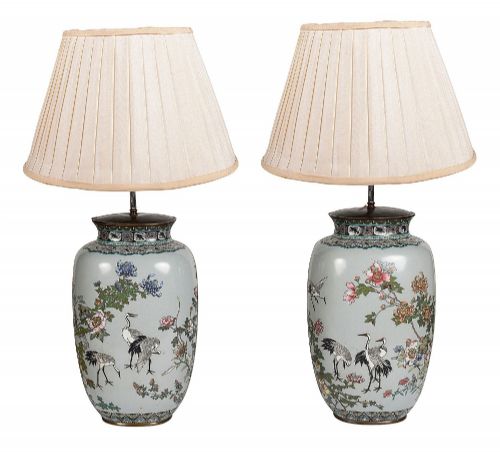
The inventory on this page ranges from modest single jar bases to substantial pairs of Satsuma, Famille Verte, and blue and white vases. These items bridge historical craftsmanship and modern interior lighting, offering distinct decorative focal points for domestic spaces.
How they were made
The foundation of these pieces relies upon traditional ceramic manufacturing techniques, utilising porcelain, earthenware, and crackleware bodies shaped by hand or on the wheel. Potters applied detailed hand-painted glazes, including famille rose, famille verte, and underglaze blue, before firing the vessels in kilns.
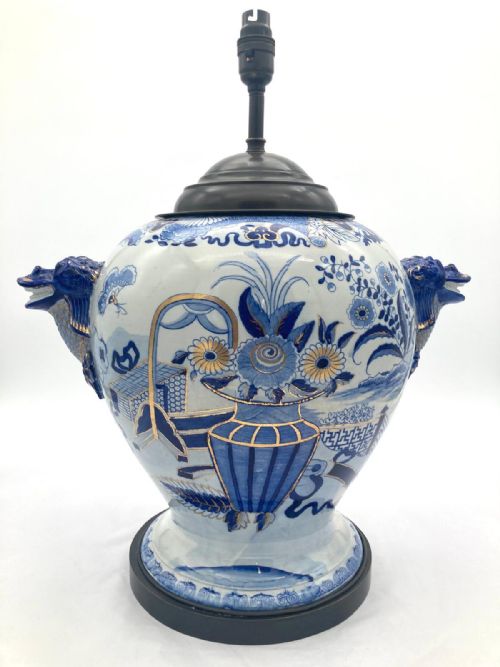
Many items incorporate metalwork elements, such as brass mounts, ormolu fittings, and enamel details that complement the ceramic body. Conversion into lamps typically involves drilling the base or securing fittings through the neck to support fabric or silk shades.
Vintage Oriental Ceramic Lamps Retail Price Guide 2026
Typical asking prices for vintage oriental ceramic lamps among the pieces listed under this phrase on Sellingantiques today, from the lower quarter to the upper quarter. They describe what is for sale here now, not the wider market.
Listings feature ceramics from the seventeenth, eighteenth, and nineteenth centuries, alongside Meiji period Japanese works and early twentieth-century export pieces.
What varies in quality
The quality of vintage oriental ceramic lamps depends on the artistic execution of the hand-painted decoration and the crispness of the ceramic moulding. Superior examples display intricate brushwork, vibrant enamel pigments, and well-balanced proportions that retain the visual integrity of the original vessel.
The method of conversion and the integration of metal mounts also influence the standard of the piece. Lamps that preserve the antique body without excessive alteration while providing secure electrical fittings represent the higher end of the range.
The Vintage Oriental Ceramic Lamps Glossary
- Satsuma
- A type of Japanese earthenware featuring a crackled creamy glaze decorated with polychrome enamels and gilt. It originated in Kagoshima province and became highly popular for export during the Meiji period.
- Famille Verte
- A Chinese porcelain palette dominated by green enamel hues, developed during the Qing dynasty. Artisans combined this shade with cobalt blue, iron red, and yellow to create detailed pictorial scenes.
- Imari
- A style of Japanese export porcelain characterised by a distinct colour scheme of underglaze blue, iron red, and gilt. Production centred on the town of Arita and supplied European markets from the seventeenth century onwards.
- Blanc de Chine
- A white porcelain produced in Dehua, China, known for its milky glaze and lack of painted decoration. Sculptural pieces often depict religious figures or mythical animals such as Fo lions.
- Ginger Jar
- A wide-shouldered ceramic vessel with a domed lid, originally used in China to store spices and preserves. In modern interiors, these jars frequently serve as the primary body for table lamps.
Vintage Oriental Ceramic Lamps: Frequently Asked Questions
How do I date an antique lamp?
Dating relies upon examining the ceramic body, the style of the hand-painted decoration, and any historical glazes present on the vessel. Marks on the base can also provide clues regarding the dynastic period or manufacturing era.
Electrical components are typically modern replacements added during the conversion process, so the age of the lamp refers specifically to the ceramic vase rather than the wiring.
Are these lamps converted from original vases?
Many of these pieces started as antique vases, ginger jars, or temple vessels before being adapted for lighting. This practice preserves historical ceramics while giving them a functional role in modern rooms.
Conversions often involve securing fittings to the top opening or passing wiring through the base of the ceramic piece.
What shades suit oriental ceramic lamps?
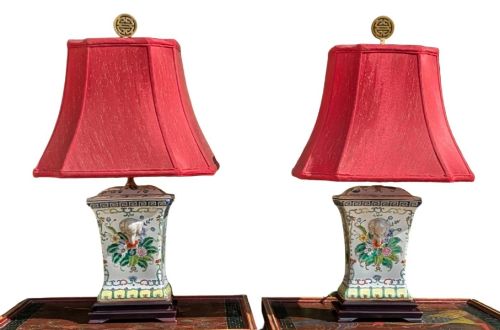
Fabric or silk shades in neutral tones allow the painted patterns and colours of the ceramic body to remain the primary visual focus. Traditional shapes like empire or drum shades balance the substantial proportions of ginger jars and baluster vases.
Matching the scale of the shade to the height of the ceramic base ensures the lamp maintains a balanced appearance on a side table.
How do I care for ceramic lamp bases?
Dusting the ceramic surface regularly with a soft, dry cloth prevents the accumulation of dirt within intricate painted details or textured crackleware glazes. Avoiding harsh chemical cleaners protects fragile overglaze enamels and gilt highlights.
Checking the stability of the mounting hardware periodically ensures the lamp remains safe for daily domestic use.