


Vintage Oriental Bedside Lights
These vintage oriental bedside lights combine imported Asian ceramics and bronzes with domestic wiring, bringing centuries of distant craftsmanship straight to a low table.
Vintage Oriental Bedside Lights
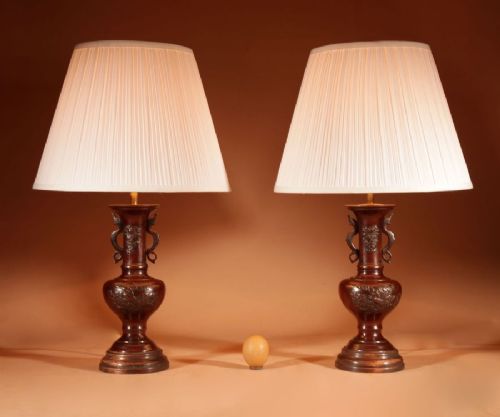
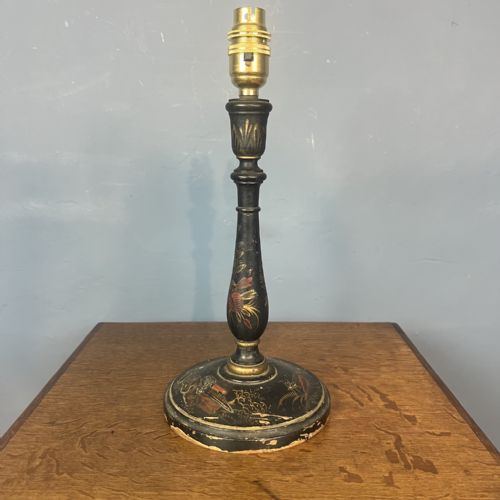
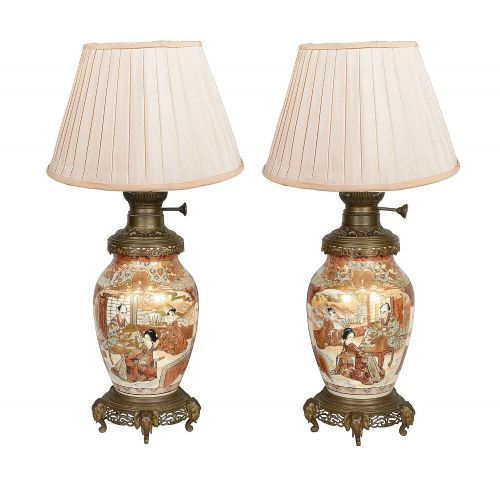
Vintage oriental bedside lights draw upon nineteenth-century Chinese and Japanese decorative arts, alongside early twentieth-century interpretations from Kashmir, to create atmospheric illumination for the home. When you search for vintage oriental bedside lights, you encounter table lamps fashioned from converted vases, ginger jars, and tea canisters, accompanied by dedicated bronze and brass fixtures.
The majority of pieces on this page originate from the Victorian, Edwardian, and early twentieth-century decades, spanning the Meiji period through to the nineteen-thirties. These lamps frequently arrive as matched pairs or individual statement pieces, utilising porcelain, cloisonné enamel, and carved lacquer as their primary bodies.
How they were made
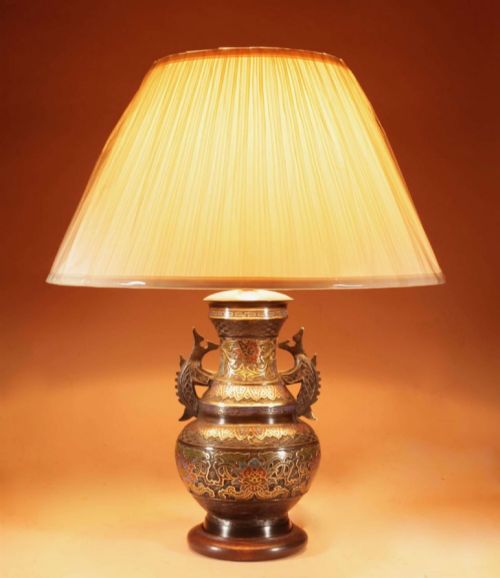
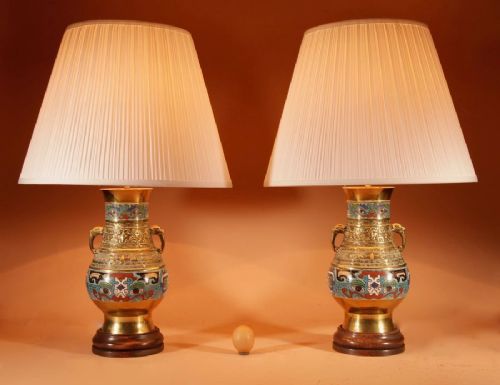
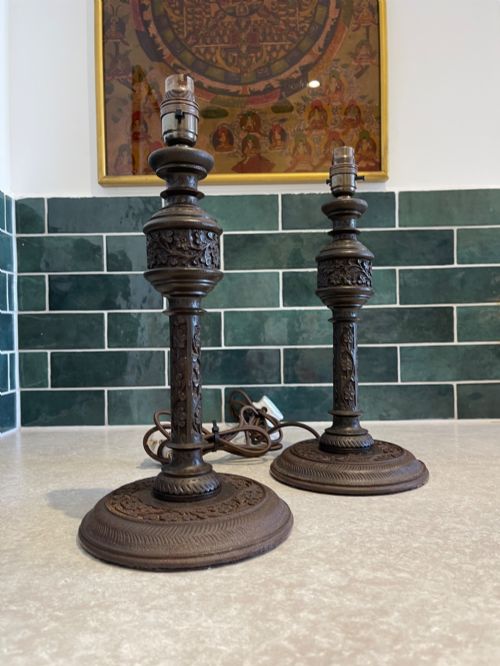
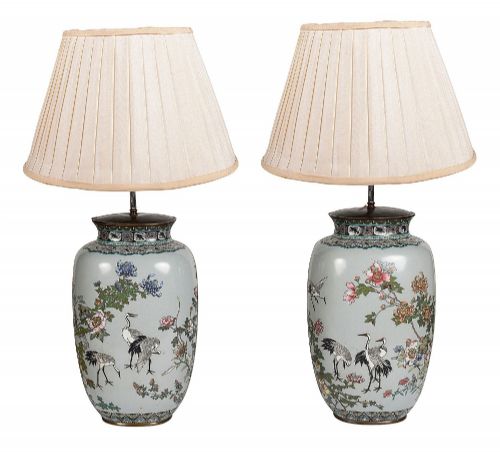
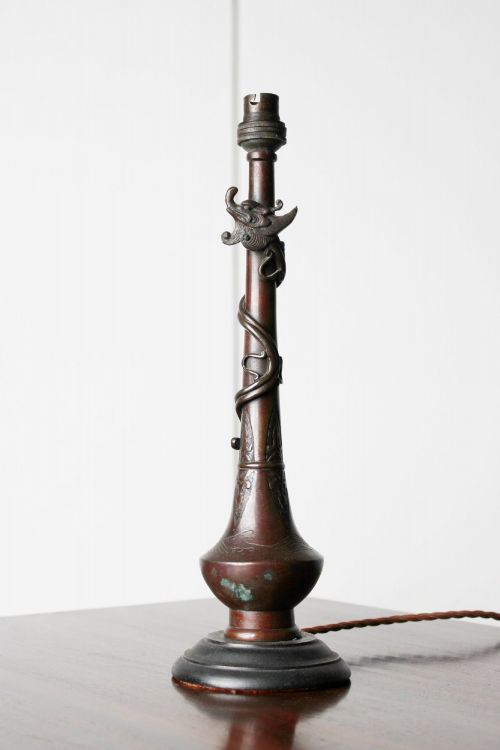
Craftsmen shaped these lamps using traditional Asian ceramic and metalworking techniques, frequently adapting temple vases, brush pots, and tea canisters into functional luminaires. Bronze and brass components underwent champlevé and cloisonné enamelling, wherein fine wire compartments received coloured glass pastes before firing.
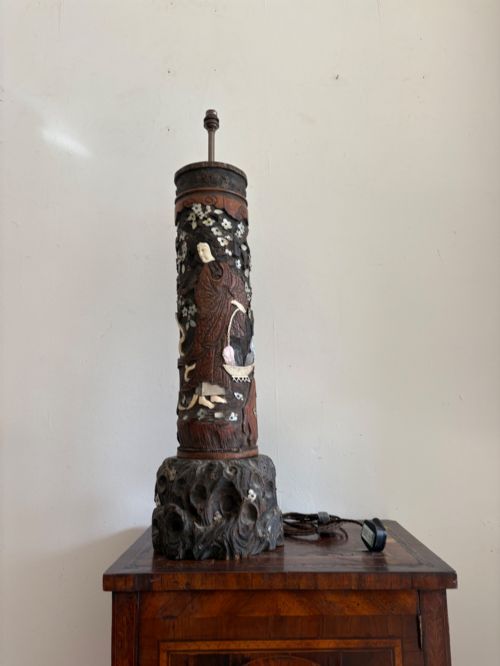
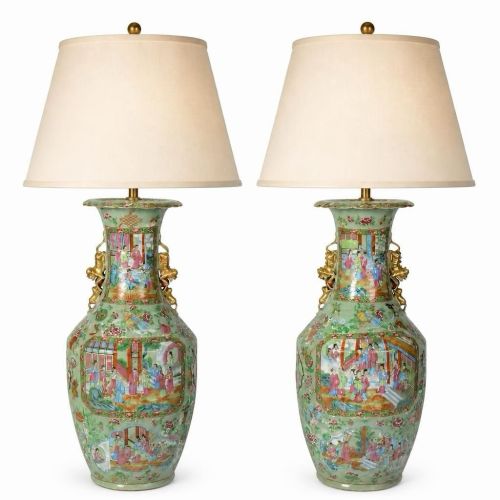
Wood and lacquer workers carved dense substrates, applying successive layers of resin and gilt to achieve rich decorative surfaces. Potters painted porcelain bodies by hand, employing famille verte, blue and white, and Satsuma palettes before later fitters added electrical components.
Materials span porcelain, brass, bronze, silk, and carved lacquer across Victorian and early twentieth-century periods.
What varies in quality
Quality rests upon the crispness of the original vessel and the harmony of its conversion into a lamp. Hand-painted ceramic details on Satsuma and Kutani pieces show distinct levels of artisan precision, while cloisonné enamel work ranges from dense, multi-coloured cells to simpler, broader designs.
The integrity of the structural metalwork and the preservation of lacquered wood surfaces dictate the overall calibre of each piece. Converted vessels retain higher value when the original ceramic remains undamaged by the drilling required for electrical wiring.
The Vintage Oriental Bedside Lights Glossary
- Satsuma
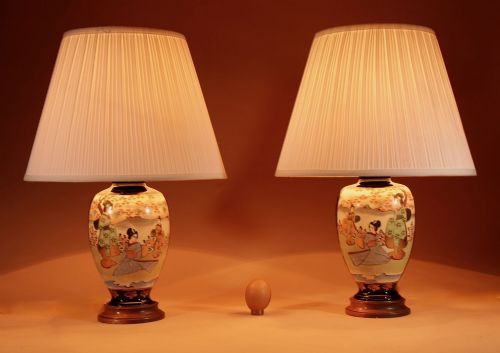
- Japanese pottery characterised by a fine ivory-coloured crackle glaze, typically decorated with intricate enamels and gilt. This ceramic style originated in the Satsuma Province and gained immense popularity for export during the nineteenth century.
- Cloisonné
- A metalworking technique where enamel paste is applied within compartments created by soldering flat metal wire onto a bronze or brass base. The piece is then fired and polished to reveal a smooth, patterned surface.
- Champlevé
- An enamelling method where troughs or cells are scooped directly into the surface of a bronze or brass object and filled with vitreous enamel. This technique differs from cloisonné by carving into the metal rather than soldering wires onto it.
- Famille Verte
- A Chinese porcelain palette dominated by green enamel hues, developed during the Qing dynasty and widely imitated in nineteenth-century export wares. Artisans combined these green tones with underglaze blue and iron-red overglaze pigments.
- Meiji Period
- The era of Japanese history lasting from 1868 to 1912, corresponding with the reign of the Meiji Emperor. Pieces from this period often display exceptional metallurgical and ceramic skill geared towards Western export markets.
Vintage Oriental Bedside Lights: Frequently Asked Questions
Are these lamps safe for modern bedside use?
Most of these pieces utilise vintage or updated wiring that requires inspection by a qualified electrician prior to domestic installation. Proper setup ensures the converted ceramic or bronze bodies remain stable on a bedside surface.
Buyers should check that the lamp holders match modern safety standards while retaining the original decorative vessel without sustaining further alteration.
How do I identify a Satsuma lamp?
Satsuma lamps exhibit a distinctive cream or ivory-coloured earthenware body covered in a fine network of microscopic glaze cracks. They frequently feature detailed painted scenes enhanced with raised gold enamel.
These pieces date predominantly from the late nineteenth and early twentieth centuries, reflecting the high volume of Japanese decorative arts exported during that period.
Can I find matching pairs of these lights?
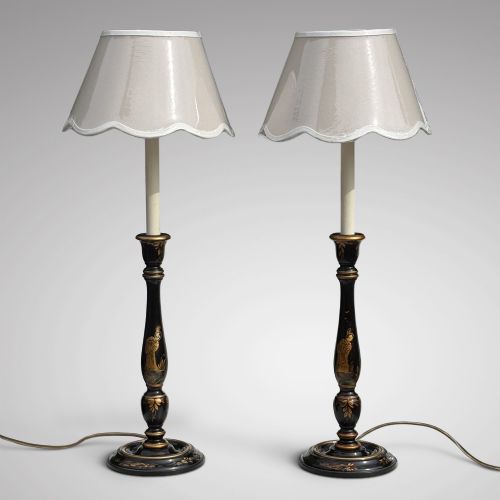
The selection includes several matched pairs alongside individual table lamps, particularly among the cloisonné, Satsuma, and Kashmiri groupings. Pairs usually originate from symmetrical vases or ginger jars converted at the same time.
Examining the height and base construction helps confirm whether two lamps were manufactured and wired together as a set.
What distinguishes Kashmiri lamps from Chinese and Japanese styles?
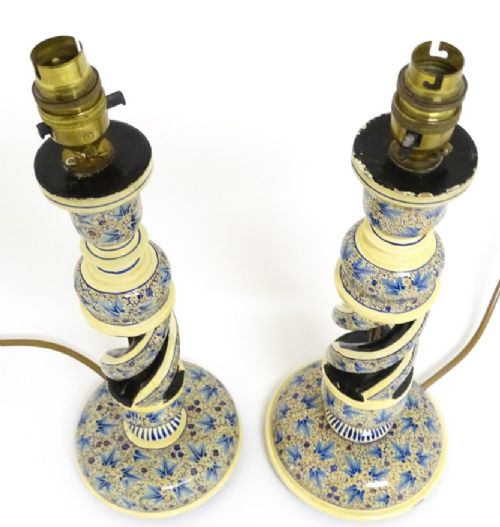
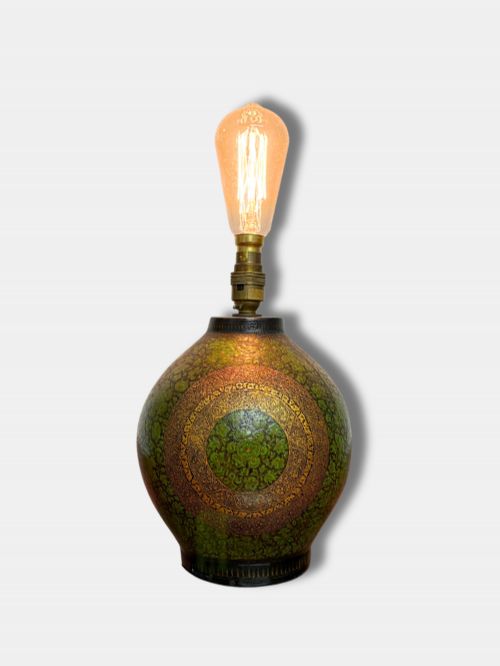
Kashmiri lamps rely on carved and hand-painted wooden bodies featuring intricate gilt and green floral motifs rather than porcelain or cloisonné enamel. Their construction reflects distinct South Asian craft traditions dating from the early twentieth century.
These wooden fixtures offer a warmer texture compared to the smooth glazed ceramic jars and heavy bronze vessels of East Asia.