


Vintage Opaline Glass Light
These vintage opaline glass light pieces diffuse a soft, milky glow through domestic and industrial spaces, bringing period character to any room.
Vintage Opaline Glass Light
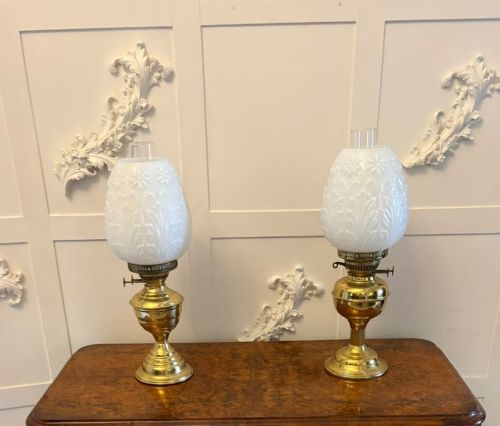
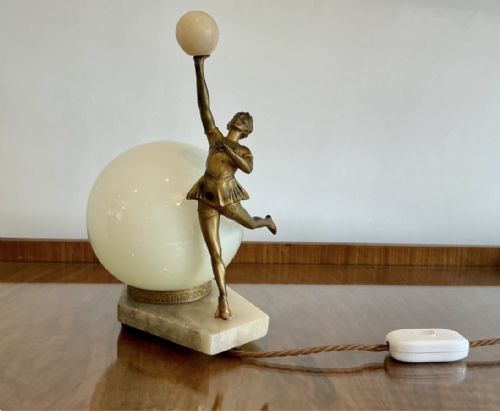
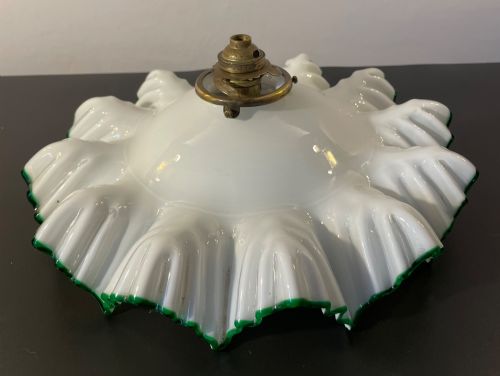
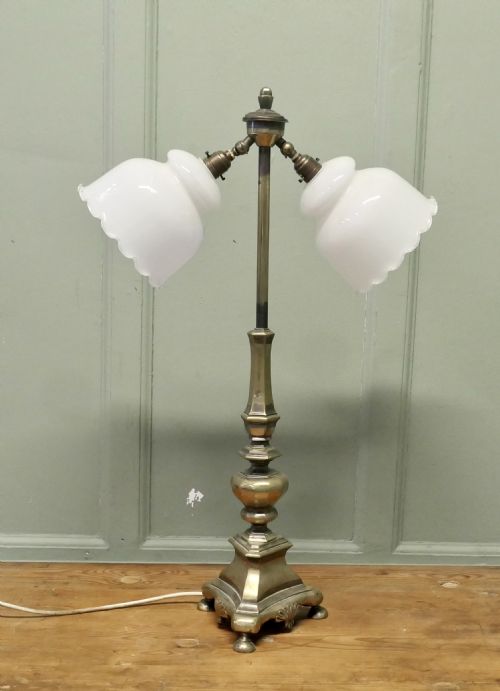
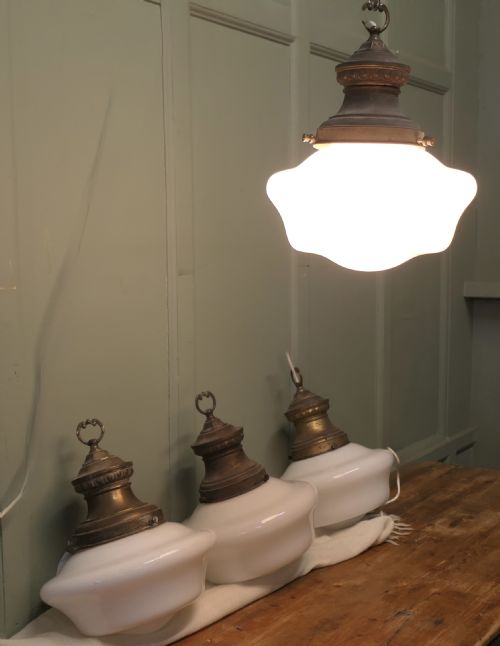
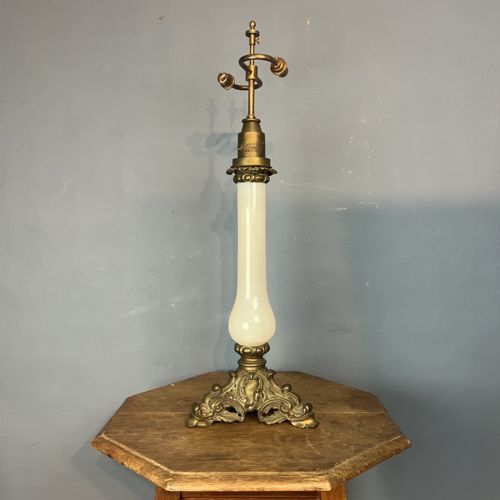
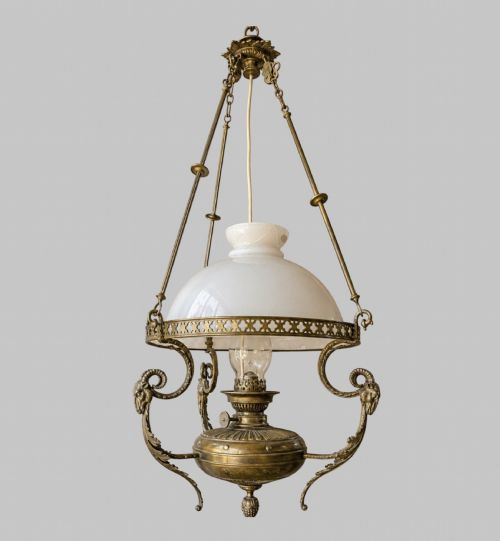
A vintage opaline glass light search reveals a diverse collection of ceiling pendants, table lamps, and hanging oil lamps spanning the nineteenth century through the art deco era. Buyers encounter structural forms ranging from simple conical shades and pear-shaped pendants to ornate brass and bronze column lamps.
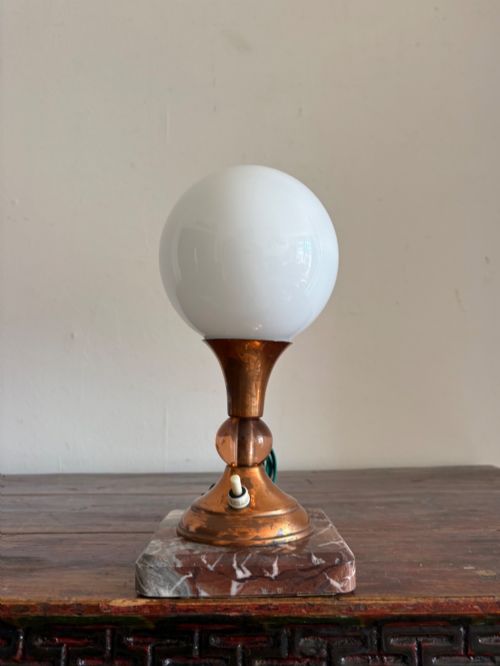
The selection includes Victorian oil lamps with glass shades, early twentieth-century chapel lights, and French art deco fixtures mounted on marble bases. Mid-century and industrial influences also appear alongside Edwardian brass pairings and hand-painted variations.
Most examples combine translucent white or coloured opaline glass diffusers with metal mounts in brass, copper, or chrome. These fixtures reflect functional lighting shifts from paraffin burners to electrical illumination across multiple decades.
Materials and construction methods
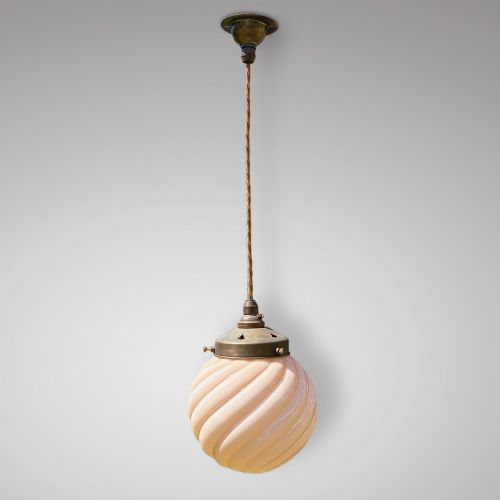
Makers produced opaline glass by adding bone ash or metal oxides to the molten batch, creating its characteristic dense, milky opacity. Artisans often shaped the glass into ribbed, reeded, or fish-scale pendant forms using traditional blowing and moulding techniques.
Metalwork foundations paired with these glass shades frequently utilised cast brass, gilt bronze, and copper components. Heavier structural elements incorporated marble bases, porcelain details, and specialised mechanical burners such as the Hinks system.
Listings feature brass, opaline glass, marble, chrome, enamel, bronze, and wood across Victorian, Edwardian, Art Deco, and Industrial styles.
Judging quality in opaline glass lighting
Quality rests upon the weight and evenness of the glass diffusion, where finer examples display a smooth, consistent milky opacity without heavy surface ripples. The crispness of the moulded decoration, such as reeded or conical lines, distinguishes superior manufacturing.
Metal components dictate the structural calibre of the piece, with solid cast brass, gilt bronze, or heavy copper outlasting lighter plated alternatives. Maker stamps, patented mechanisms like Mc Gary's or Hinks, and intact original hardware elevate the integrity of the fitting.
Mc Gary·Joseph Hinks·Wild and Wessel
The Vintage Opaline Glass Light Glossary
- Opaline glass
- A translucent, milky-white or coloured glass developed to soften glare and diffuse light evenly across a room. This material forms the primary shade component for pendant and table lamps.
- Plafonnier
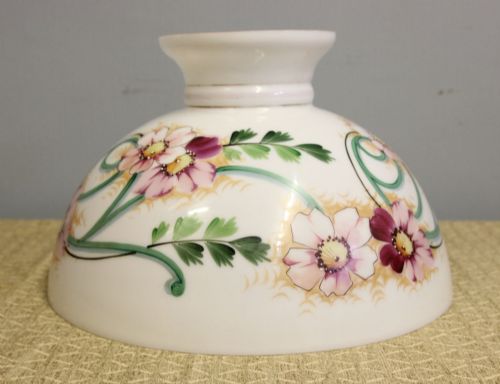
- A ceiling-mounted bowl light or shade sitting flush against the ceiling surface. These fixtures often feature decorative neo-classical or art deco painted glass patterns.
- Lustre
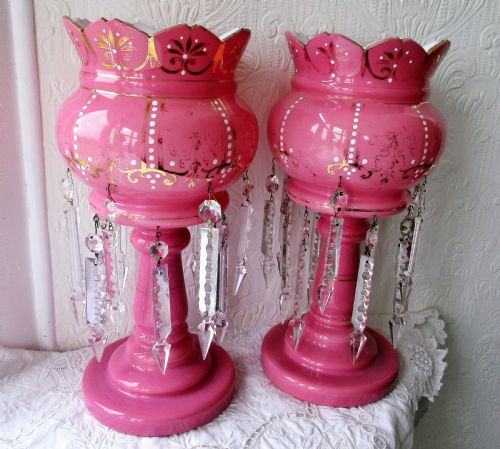
- A decorative glass mantel ornament or lamp hung with cut glass prisms. Victorian examples frequently utilise pink or green glass bodies.
- Hinks burner
- A specific double-wick duplex burner mechanism patented in the nineteenth century for oil and paraffin lamps. It provides brighter, more controlled illumination.
- Colum lamp
- A tall table lamp featuring a central column support made from bronze, brass, or opaline glass. These stands sit upon weighted bases of marble or metal.
Vintage Opaline Glass Light: Frequently Asked Questions
What is opaline glass?
Opaline glass is a semi-translucent, milky material created by adding opacifying agents to the molten mixture during production. It softens light bulbs and flames to reduce harsh glares while casting an even glow.
This glass appears across Victorian oil lamps, Edwardian shades, and art deco pendants in white or tinted variants.
How do I hang a pendant light?
Pendant lights require secure ceiling fixings and appropriate electrical wiring suited to the weight of the brass mounts and glass shades. Heavy fixtures need proper joist support rather than simple plaster anchors.
Professional installation ensures the brass chains or rods bear the load safely while positioning the shade at the correct height.
Can I convert oil lamps to electric?
Many period oil lamps and paraffin fixtures undergo careful electrical conversion to serve as table or desk lamps. This process involves running wiring through the original burner or column without damaging historical metalwork.
Retaining burners like the Hinks mechanism preserves the antique appearance while accommodating modern internal wiring.
How do I date these lights?
Dating relies on stylistic clues, mounting materials, burner patents, and manufacturing techniques recorded in the piece. Victorian items often feature heavy brass and hand-painted floral motifs, while nineteen-thirties pieces adopt geometric art deco lines.
Maker marks, stamped patents, and screw threads provide precise chronological markers for nineteenth and twentieth-century fittings.