
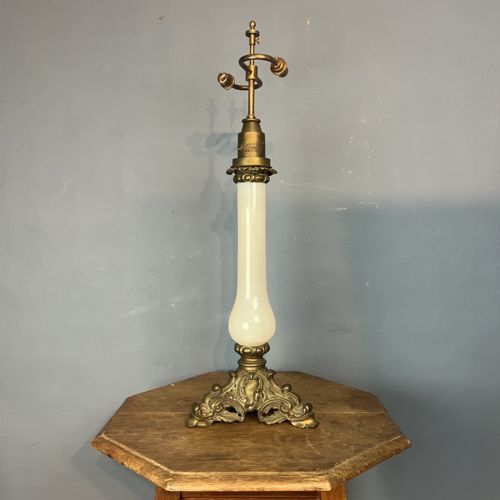


Opaline Glass Desk Light
Opaline glass desk light designs bring soft, diffused illumination and sculptural weight to a room.
Opaline Glass Desk Light
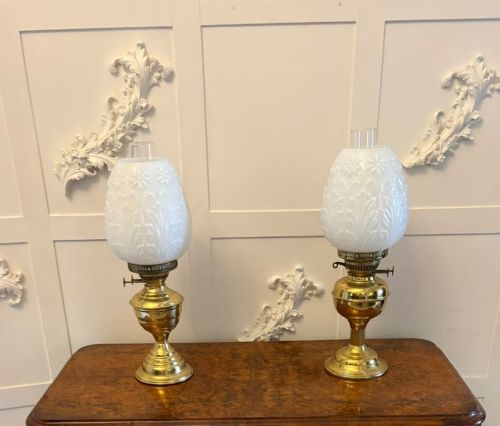
An opaline glass desk light combines opaque or translucent white or tinted glass with metal stands to provide functional illumination. These desk lamps and table lamps emerge across the nineteenth and twentieth centuries, spanning Victorian, Edwardian, and Art Deco periods.
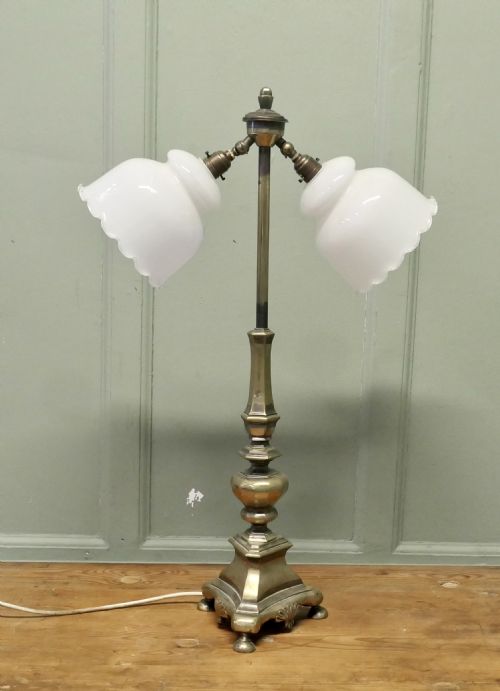
The pieces on this page encompass converted oil lamps, reading lamps, and column lamps. Brass, bronze, and chrome form the primary structural mounts supporting shades made of opaline glass.
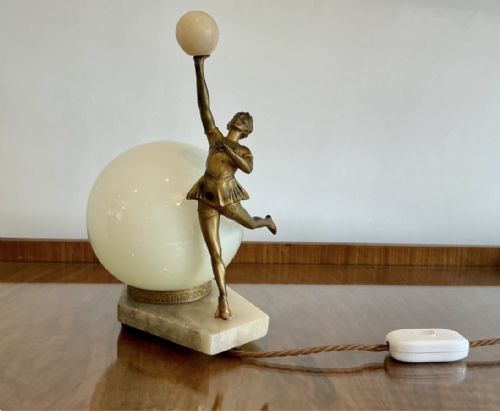
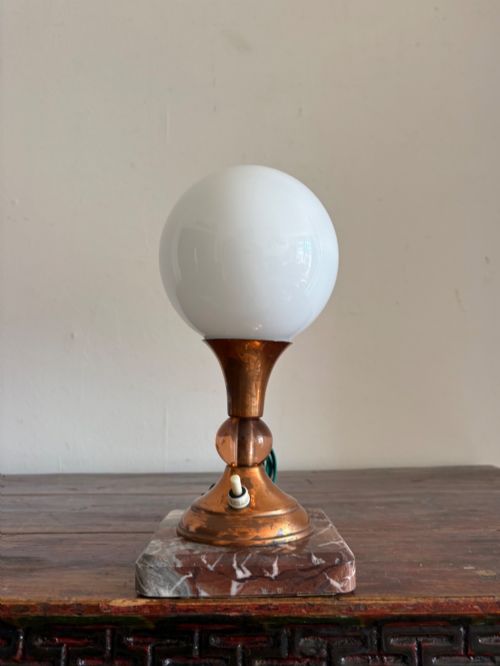
Victorian and Edwardian examples lean towards heavy brass bases and gilt mounts. Later pieces from the nineteen-twenties and nineteen-thirties introduce marble, granite, and modernist chrome lines alongside classic opaline shades.
How they were made
Glassmakers created opaline glass by adding bone ash, tin oxide, or other agents to molten batch to achieve its characteristic milky, opaque appearance. These glass shades were then paired with cast brass, gilt brass, bronze, or chrome metalwork.
Many early desk lights began life as oil or paraffin lamps before later conversion to electricity. Manufacturers also utilised marble and granite for weighted bases, securing the metal stems with threaded rods and fasteners.
Listings feature opaline glass paired with brass, bronze, chrome, marble, and wood across periods from eighteen-fifty to nineteen-thirty.
What varies in quality
Quality rests in the weight of the metal casting and the depth of the opaline glass. Finer examples display crisp chasing on gilt brass and bronze, alongside uniform glass thickness that diffuses light evenly without thin spots.
Maker marks and patent stamps elevate a piece, as seen on stamped nineteenth-century bases. The integration of materials, such as well-fitted marble or granite mounts paired with solid brass, distinguishes the sturdier work.
JOSEPH HINKS·Mc Gary·Wild and Wessel
The Opaline Glass Desk Light Glossary
- Opaline glass
- A milky, translucent or opaque glass that diffuses light softly. It appears frequently in white or tinted shades across Victorian and Art Deco lighting.
- Converted oil lamp
- A historic lighting fixture originally designed to burn paraffin or oil that has been rewired for electricity. These often retain their original burners and reservoirs.
- Ormolu
- Finely ground high-carat gold applied to a bronze or brass object using a mercury amalgam. This technique creates a rich, durable golden finish on antique mounts.
- Spelter
- An alloy of zinc and lead used as a cheaper alternative to bronze or brass for figural bases. It takes plating well to simulate more precious metals.
Opaline Glass Desk Light: Frequently Asked Questions
Are these lamps safe for daily use?
Most antique lamps require professional rewiring to meet modern electrical safety standards before regular use in a home.
Qualified electricians can update internal wiring while preserving original brass components and glass shades.
How do I date an opaline lamp?
Dating relies on stylistic clues, such as heavy brass castings and oil-lamp burners for Victorian pieces, or geometric chrome lines for nineteen-thirties examples.
Maker stamps and patents provide additional chronological markers.
Did these lamps start as oil lamps?
A large portion of nineteenth-century desk lights functioned initially as oil or paraffin burners before later conversion to electricity.
Original hardware such as wicks and galleries often remains intact beneath the modern bulb fitting.
Where should I place a desk light?
These lamps suit studies, side tables, and desks where their heavy brass or marble bases provide stability and focus.
The opaline glass softens the bulb output, making them practical for reading and task lighting.