


Vintage Opalescent Glassware
Vintage opalescent glassware brings together milk-white translucence and shifting blue or amber fires that collectors prize for display.
Vintage Opalescent Glassware
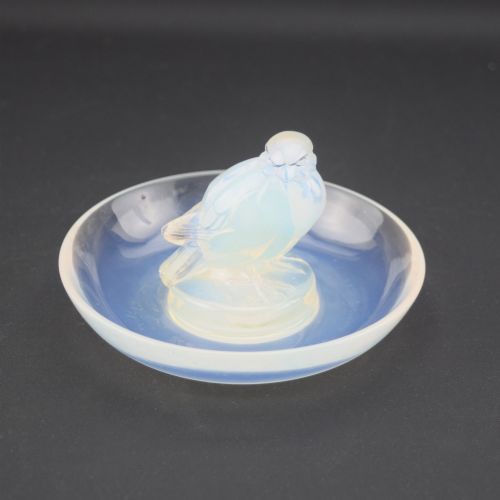
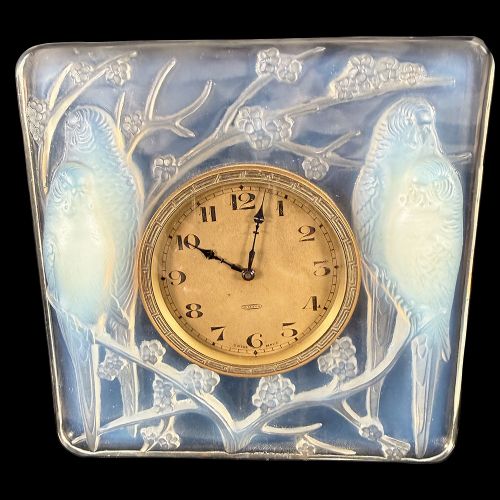
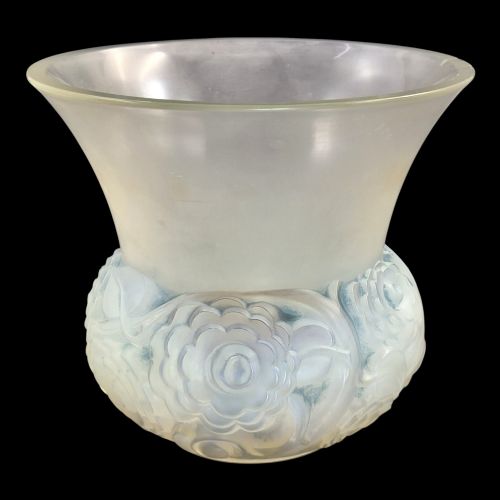
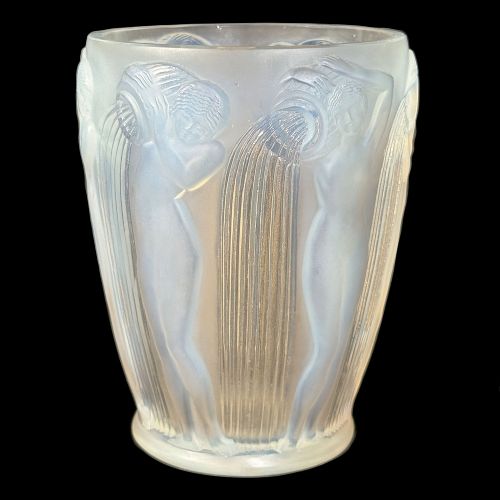
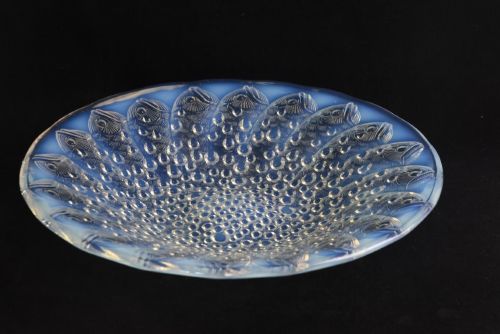
When you search for vintage opalescent glassware, you look at decorative vessels and tableware that catch the light with milky and iridescent tones. The selection on this page centres on the Art Deco and Victorian periods, taking forms such as vases, plates, bowls, clocks, ashtrays, perfume bottles, and epergnes. Most pieces you meet here originate from France, representing the height of moulded and pressed glass artistry.
The aesthetic relies on optical effects where the glass body appears milky white by transmitted light and takes on fiery blue or amber glows by reflected light. Makers manipulated chemical contents in the batch to achieve this milky luminescence, shaping it into high-relief flora, fauna, and geometric motifs. These objects range from delicate cabinet plates to heavy, sculptural bowls and vases.
What varies in quality
Quality rests on the crispness of the moulded relief and the depth of the opalescent fire within the glass body. Superior pieces display sharp definition in complex subjects like birds, fish, or botanical motifs without losing the milky translucence.
The weight of the glass, the balance of the form, and the successful integration of colour stains or frosted contrasts separate masterworks from simpler commercial wares.
Listings feature opalescent glass, frosted glass, and uranium glass across Victorian and Art Deco periods.
Rene Lalique·Etling·Sabino
The Vintage Opalescent Glassware Glossary
- Opalescent glass
- Glass that exhibits a milky, bluish, or amber glow when light strikes its surface from different angles. This optical phenomenon results from specific chemical agents added to the molten batch during production.
- Pressed glass
- Molten glass shaped by being forced into a metal mould with a matching plunger. This mechanical process allowed makers to create complex patterns and high-relief designs rapidly.
- Frosted glass
- Glass rendered opaque and non-reflective through acid etching or sandblasting. It provides a tactile contrast to clear or opalescent polished surfaces.
- Uranium glass
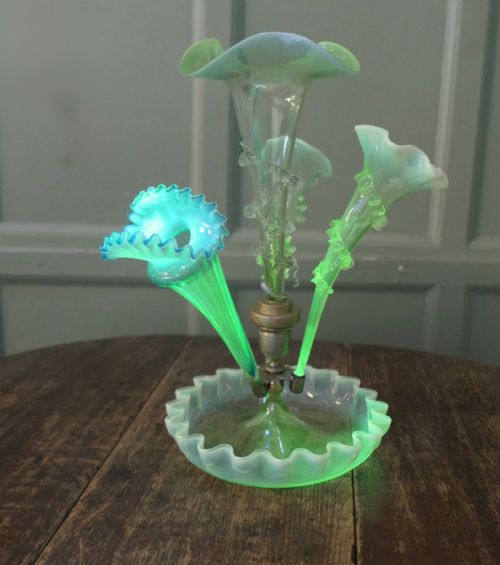
- Glass containing trace amounts of uranium oxide that glows vibrant green under ultraviolet light. It often appears in vintage decorative objects and tableware.
- Epergne
- A large table centerpiece featuring multiple trumpet-shaped vases branching from a central base. French examples frequently employ opalescent and frosted glass components.
Vintage Opalescent Glassware: Frequently Asked Questions
What is vintage opalescent glassware?
It is decorative and functional glass from the Victorian and Art Deco eras characterised by a milky body that catches blue or amber light. The objects include vases, plates, bowls, and clocks.
These pieces rely on specialised chemical mixtures in the glass to create their signature glowing effect. They represent a distinct period of European decorative arts.
How do I care for my opalescent glass?
Wash pieces gently by hand using lukewarm water and mild soap. Avoid harsh detergents and mechanical dishwashers to protect the delicate frosted and opalescent surfaces.
Dry them thoroughly with a soft cloth to prevent water spots. Display them away from direct heat sources and extreme temperature fluctuations.
How do I identify Art Deco pieces?
Art Deco examples feature stylised motifs of flora, fauna, and geometric patterns moulded in high relief. The forms often display clean, symmetrical lines characteristic of the 1920s and 1930s design movement.
Signatures or moulded factory marks frequently appear on the base or side of these pieces. The use of strong figurative subjects like birds or fish is also typical of this period.
What is uranium opalescent glass?
It is glass infused with uranium oxide during manufacture to produce a yellow-green hue that fluoresces brightly under UV light. This material was widely used in vintage tableware and decorative objects.
The uranium content is stable and safe for display purposes. It adds a distinct spectral quality to the opalescent fire of the glass.