




Vintage Opal Five Stone
These vintage opal five stone rings combine flashing gemstones with warm gold, offering a classic finger-spanning arrangement that catches the light from every angle.
Vintage Opal Five Stone
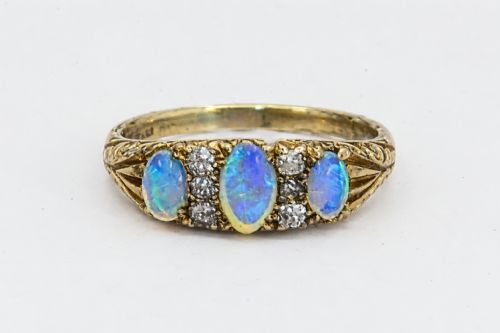
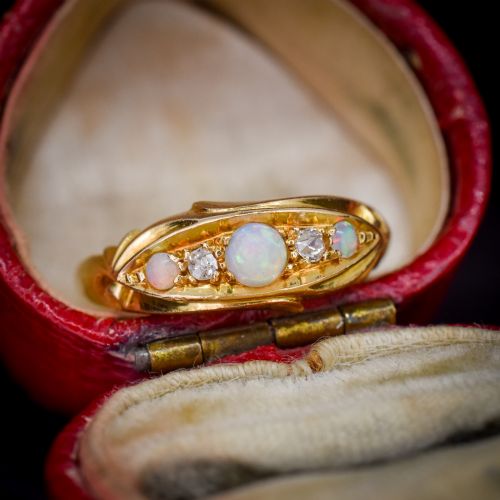
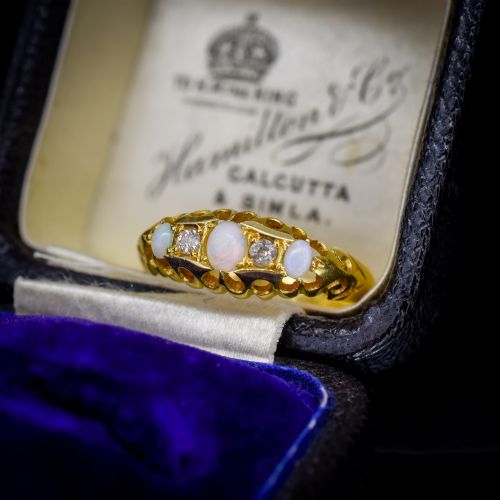
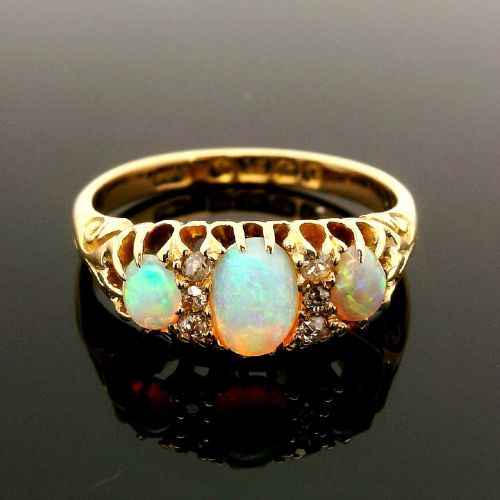
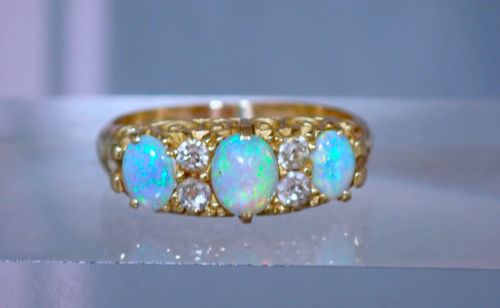
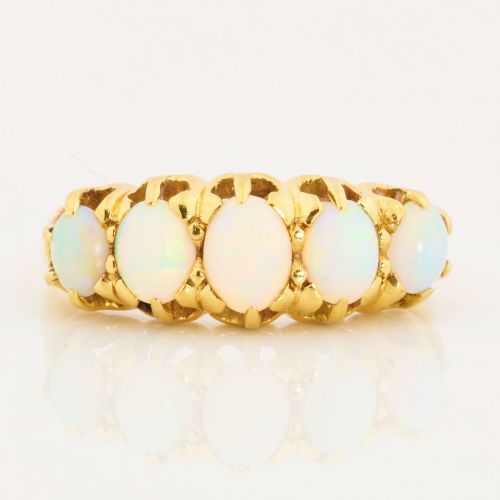
A vintage opal five stone ring presents a row of five stones, typically alternating opals and diamonds, set across the finger on a precious metal band. Most examples encountered here date from the Victorian, Edwardian, and mid-century periods, capturing eras known for refined stone settings.
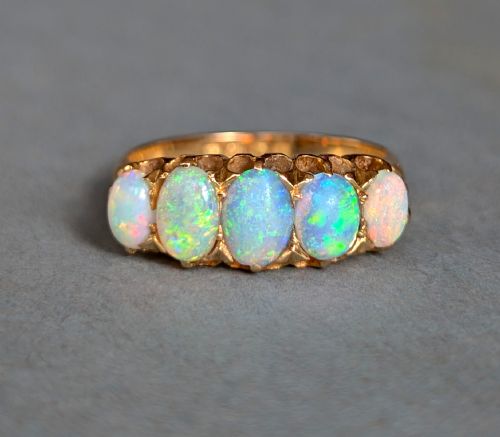
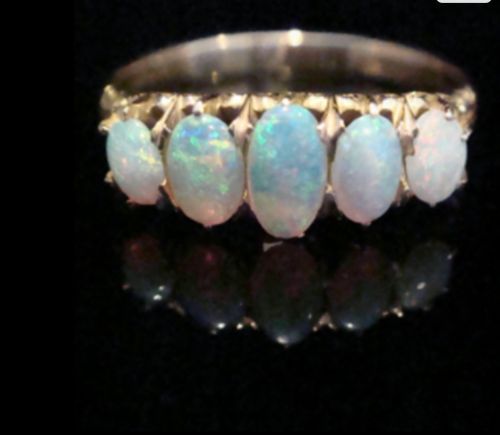
The boat ring shape appears frequently among these pieces, featuring a curved, tapering face that lifts the stones slightly off the finger. This traditional half-hoop design showcases the play of colour in the stones while maintaining a comfortable profile for daily wear.
Makers predominantly selected 18ct gold, both yellow and white varieties, to mount these gems. The stones themselves range from solid white opals displaying varied spectral flashes to smaller supporting diamonds that punctuate the sequence.
How they were made
Goldsmiths utilised 18ct gold to forge the bands and settings, often incorporating detailed claw or flush mounts to secure each opal and diamond. Assay office marks from cities such as Birmingham and Chester frequently stamp the metal purity and date of these pieces.
Gemstone arrangement required careful calibration of stone sizes, particularly in graduating designs where the central opal dominates the progression. Craftsmen balanced the soft nature of opals with harder diamonds to create durable rings intended for lasting wear.
The listings span the Victorian, Edwardian, and mid-century periods, predominantly utilising 18ct gold and natural opals.
What varies in quality
The play of colour across the opal surface dictates much of the visual merit, with stones displaying vivid flashes of green, red, and blue commanding greater appreciation. The intensity and distribution of these internal spectral colours separate standard stones from more striking examples.
Structural integrity of the setting and the preservation of the gold band determine the longevity of each piece. Rings that retain crisp hallmarks and secure, evenly spaced stone mounts demonstrate superior craftsmanship from their original period.
The Vintage Opal Five Stone Glossary
- Boat ring
- A ring featuring a curved, boat-shaped mounting that tapers towards the shoulders. This configuration holds a linear sequence of stones securely across the finger.
- Half hoop
- A ring design where stones span only the upper portion of the band rather than encircling the entire finger. This style ensures comfort on the palm side while displaying the gems prominently.
- Play of colour
- The optical phenomenon where internal diffraction of light causes spectral flashes to move across the opal surface. This dynamic display shifts as the viewing angle changes.
- Solid opal
- A gemstone cut entirely from natural opal material, distinct from doublets or triplets which utilise layers of backing or crystal. These stones present genuine opal throughout their mass.
- Hallmark
- An official stamp or series of marks impressed into precious metal indicating purity, origin assay office, and year of manufacture. These symbols authenticate the age and material composition.
Vintage Opal Five Stone: Frequently Asked Questions
How do I care for my opal ring?
Opals contain natural water content and require gentle handling to preserve their appearance. Avoid exposing them to harsh chemicals, ultrasonic cleaners, and sudden extreme temperature changes.
Remove the ring when engaging in manual work or sports to protect the softer stones from physical impact. Clean the gold and stones simply with a soft, damp cloth.
Can I wear a vintage opal ring daily?
Many people wear these rings regularly, provided they take sensible precautions. Because opals rate lower on the Mohs hardness scale than diamonds, they need protection from hard knocks.
Choosing a secure setting like a boat mount helps shield the stones during normal daily activities. Storing the piece separately from harder jewellery prevents accidental scratching.
What periods do these rings come from?
The available pieces span multiple eras, including Victorian, Edwardian, and mid-century twentieth century. Edwardian examples often feature delicate gold work and refined stone arrangements.
Victorian and later Edwardian pieces frequently carry British assay office hallmarks that confirm their exact year of creation. Mid-century examples introduce slightly bolder forms while maintaining the traditional stone count.
How are opals and diamonds arranged?
These five-stone designs typically alternate opals with smaller diamonds in a straight horizontal line across the finger. This alternating pattern allows the bright sparkle of the diamonds to accentuate the colour flashes within the opals.
Some variations feature graduating stone sizes where the central opal is largest, tapering down towards the shoulders of the ring. This layout draws the eye naturally toward the centre of the hand.