

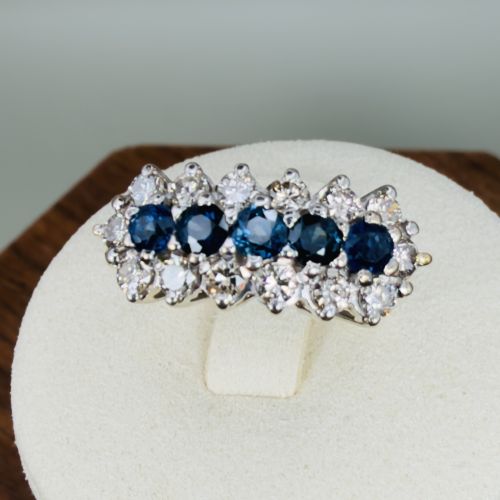

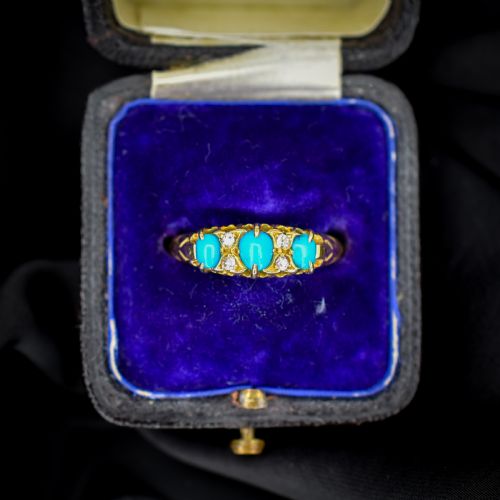


Edwardian Boat Ring
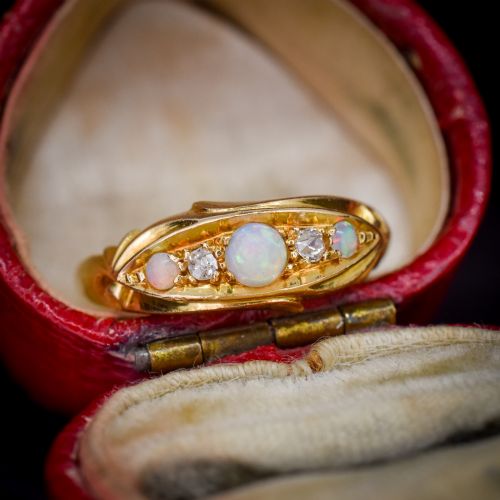
An edwardian boat ring brings together low-profile gemstones and bright gold, shaped like a miniature vessel for the finger.
Edwardian Boat Ring
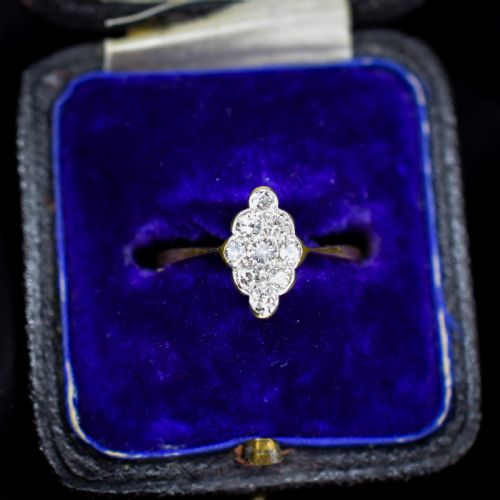
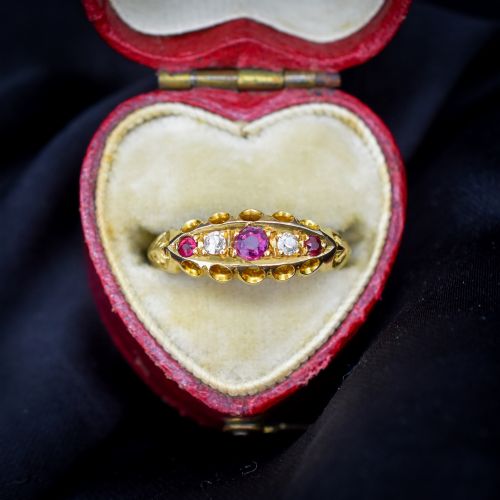
When you search for an edwardian boat ring, you encounter pieces defined by a marquise or navette silhouette that tapers at either end. These rings sit low on the hand and spread horizontally across the finger rather than projecting upwards.
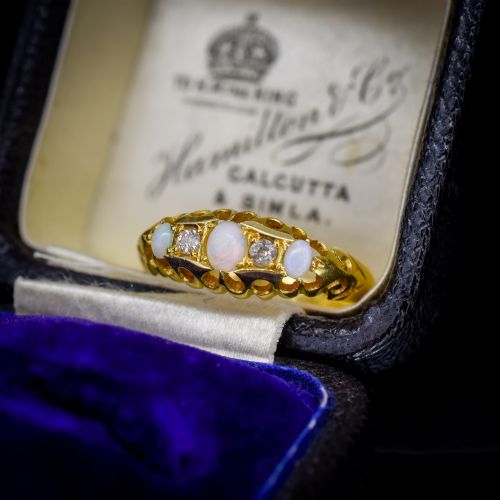
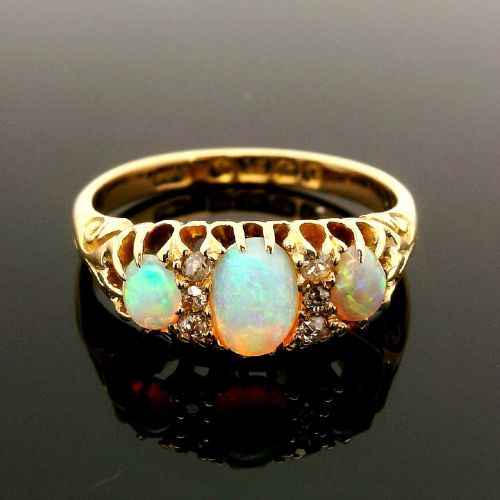
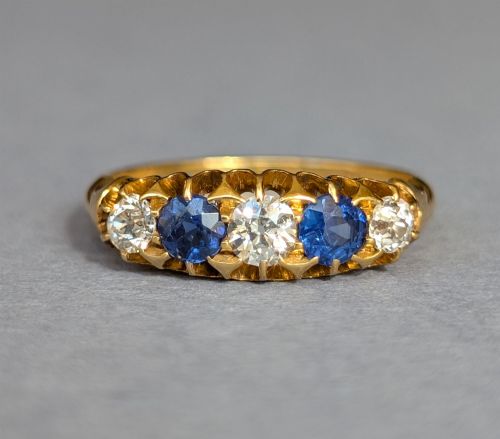
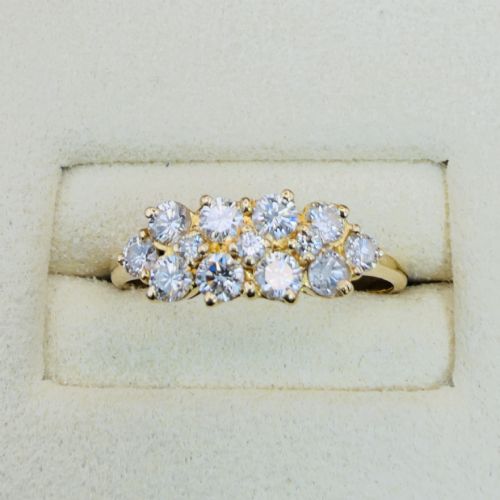
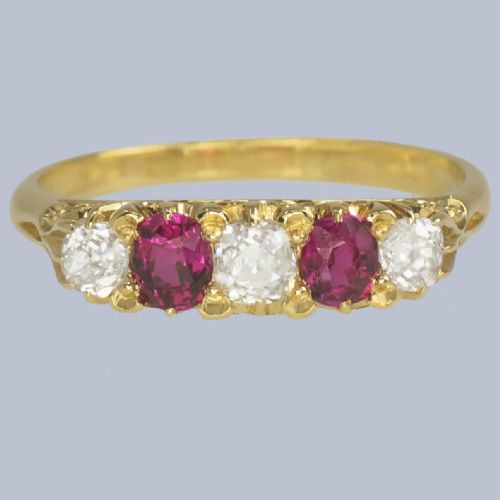
The version most likely to meet you on this page combines 18ct yellow gold with a central cluster of diamonds flanked by sapphires, rubies, opals, or turquoise. Assay office marks from Birmingham and Chester frequently date these pieces to the first decade of the twentieth century.
How they were made
Goldsmiths constructed the foundational mount and shank primarily from 18ct yellow gold, sometimes introducing platinum for the top settings to enhance the whiteness of old cut diamonds. Gemstones were hand-set into low bezels or delicate claw settings following the elongated curve of the boat shape.
Makers integrated natural stones including rubies, sapphires, opals, and turquoise alongside diamonds, securing them closely together to create a continuous face of colour and light.
Listings span the late Victorian era through the Edwardian period and into the nineteen-twenties, thirties, and sixties, rendered in 18ct gold and platinum.
What varies in quality
The distinction between tiers rests upon the choice and match of the principal stones, particularly where old cut diamonds or natural opals show superior fire and clarity. Heavier gold gauge in the shank and crispness in the Chester or Birmingham hallmarks also separate the finer examples from standard production.
Attention to the transition between the shoulders and the boat-shaped head dictates the overall grace of the silhouette, separating finely proportioned work from stiffer execution.
The Edwardian Boat Ring Glossary
- Boat ring
- A ring featuring a horizontally stretched, curved setting resembling the hull of a vessel. This silhouette was particularly popular during the late Victorian and Edwardian periods.
- Navette
- A boat-shaped outline pointed at both ends, derived from the French word for little ship. It describes cluster settings that extend along the length of the finger.
- Old cut
- A diamond facet arrangement typical of the nineteenth and early twentieth centuries, featuring a smaller table, higher crown, and open culet. These stones produce a softer, broader candlelit sparkle.
- Hallmark
- An official stamp struck into precious metal indicating the assay office, metal purity, and year of manufacture. British marks provide reliable chronological anchors for these rings.
Edwardian Boat Ring: Frequently Asked Questions
How do I wear an edwardian boat ring daily?
Because these rings sit low to the finger, they catch less on clothing than high prong-set clusters. Pair them carefully with plain bands to prevent rubbing against neighbouring jewellery.
Take them off during heavy manual tasks to protect the delicate claw settings and softer gems like opal or turquoise.
Are these rings genuinely from the edwardian era?
Many pieces carry British hallmarks from assay offices like Chester and Birmingham that date them precisely to the Edwardian period or immediately surrounding years. Stylistic traits such as platinum-topped gold and old cut diamonds corroborate these dates.
Review the specific assay letters listed in each description to confirm the exact year of manufacture.
What stones appear most often in boat rings?
Diamonds paired with sapphires or rubies form the most frequent combinations, often arranged in alternating rows or cluster formations. Natural opals and turquoise also appear as central focal points surrounded by smaller diamonds.
Coloured gemstones were selected for their depth of hue to contrast against yellow gold mounts.
How do navette and boat rings differ?
While both terms describe an elongated, pointed outline on the finger, navette specifically emphasises the sharp, shuttle-like ends of the marquise shape. Boat rings often share this silhouette but can feature slightly softer, more rounded hull-like contours.
Both forms achieve the same horizontal spread across the hand.