
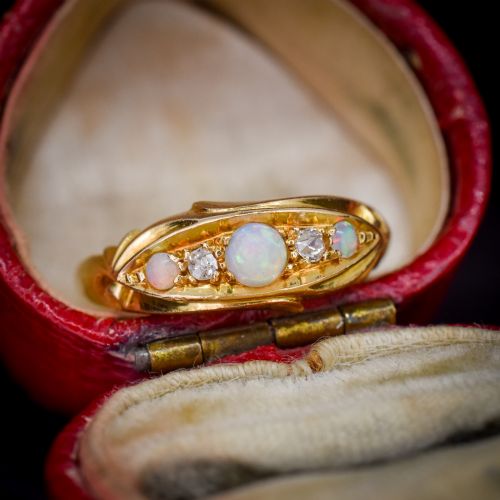
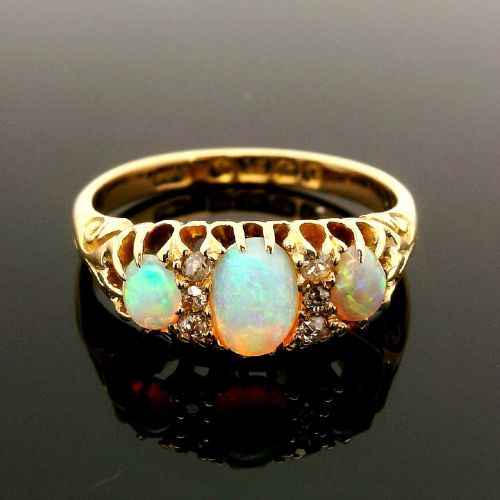
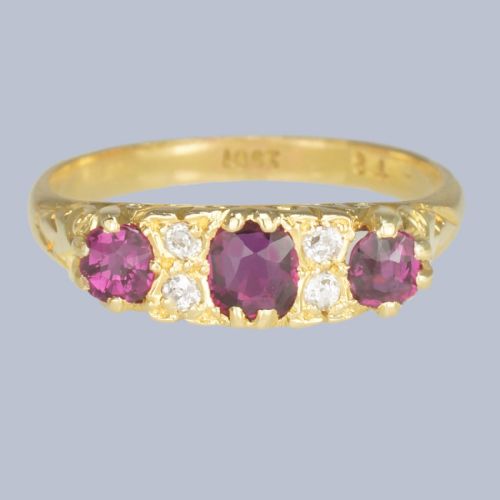


Gold Boat Head Ring
A gold boat head ring is a distinctive piece of antique jewellery featuring a curved, boat-shaped setting that collectors prize for its graceful silhouette and cluster of gemstones.
Gold Boat Head Ring
The version you are most likely to meet on this page is fashioned from yellow gold and set with a row or cluster of mixed stones. Makers of these rings frequently arranged diamonds alongside coloured gems like opals, sapphires, and rubies.
Originating predominantly from British assay offices including Birmingham and Chester, these rings represent a specific aesthetic of the late nineteenth and early twentieth centuries. Their enduring appeal lies in the balanced interplay between the curved gold mount and the contrasting fire of the set stones.
How they were made
These rings are constructed primarily from 18ct gold, utilised for both the shanks and the distinctive boat-shaped head mountings. Goldsmiths shaped the metal to support clustered arrangements of gems securely within the curved framework.
Lapidaries shaped the gemstones into old cut diamonds, cabochon opals, and faceted rubies or sapphires to fit the narrow confines of the boat head. Master jewellers then hand-set these stones using traditional claw or flush settings appropriate to the period.
Listings span the late Victorian, Edwardian, and George V periods, featuring 18ct yellow gold mounted with diamonds, opals, rubies, and sapphires.
What varies in quality
The distinction between standard examples and finer pieces rests upon the quality and matching of the set gemstones. Superior rings feature lively old cut diamonds and vibrant natural opals or sapphires that fill the boat mount harmoniously without awkward gaps.
Execution of the metalwork also separates the tiers, where crisp assay marks and substantial 18ct gold weight indicate superior workshop standards. The proportional balance between the curved gold head and the stone arrangement dictates the overall refinement of the piece.
The Gold Boat Head Ring Glossary
- Boat ring
- A ring featuring an elongated, curved setting that resembles the hull of a boat, popular during the Victorian and Edwardian eras. This distinctive shape allows multiple stones to sit horizontally across the finger.
- Old cut
- A vintage diamond cutting style characterised by a high crown, small table, and deep pavilion. These stones exhibit broad, hand-polished facets that catch candlelight warmly.
- Cabochon
- A gemstone shaped and polished with a smooth, rounded surface rather than faceted. This style is especially common for opals, highlighting their internal play of colour.
- Assay mark
- A stamp indicating the purity of the precious metal and the office where it was tested. British pieces often display marks for towns such as Birmingham or Chester alongside the gold standard.
Gold Boat Head Ring: Frequently Asked Questions
What is a gold boat head ring?
A gold boat head ring is a vintage finger ornament featuring an elongated, curved setting reminiscent of a boat hull. These pieces were particularly fashionable during the late nineteenth and early twentieth centuries.
The design typically showcases a central row of diamonds flanked by coloured gemstones such as rubies, sapphires, or opals. The curved mount allows the cluster to hug the finger gracefully.
How do I date a boat ring?
Dating these rings relies on examining the assay marks stamped inside the 18ct gold shank, which indicate specific towns and assay years. Stylistic clues such as the cut of the diamonds and the choice of coloured stones also point to Victorian or Edwardian origins.
Late Victorian examples often feature rich rubies or deep sapphires, while Edwardian and George V pieces frequently pair diamonds with vibrant natural opals. Hallmarks provide the most precise indication of the manufacturing date.
How were these rings worn historically?
Original owners wore these rings as daily personal adornments, often stacking them alongside wedding bands or other dress rings. The low profile of the boat head made them practical for everyday wear during the Victorian and Edwardian periods.
The horizontal alignment of the gems also made the hand appear slender, a fashionable look in nineteenth-century society. They served both as decorative dress pieces and sentimental gifts.
Are the opals in these rings natural?
The opals found in these antique boat rings are natural stones sourced during the height of the Victorian and Edwardian jewellery trades. They display characteristic play of colour unique to genuine untreated specimens.
Jewellers selected these stones specifically to fit the curved contours of the gold boat mount. Their natural iridescence contrasts effectively with the surrounding old cut diamonds.