





Vintage Oil Canvas Painting
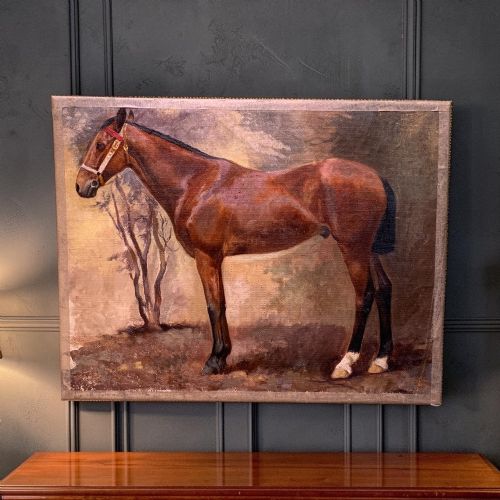
A vintage oil canvas painting brings texture and depth to a room through layered pigments and visible brushwork.
The Nature of Vintage Oil Canvas Paintings
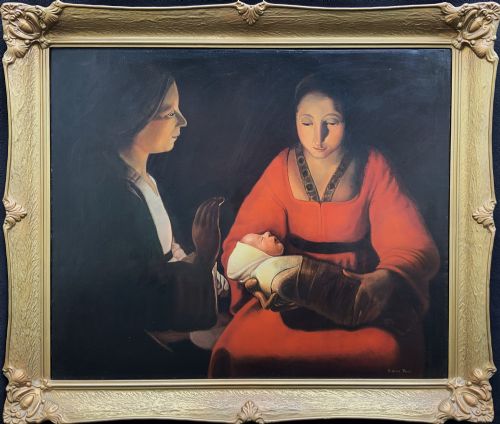
A vintage oil canvas painting encompasses works created across the Edwardian era and the mid-twentieth century, capturing landscapes, still lifes and portraits. These pieces reflect regional British schools, Austrian realism and European portraiture traditions.
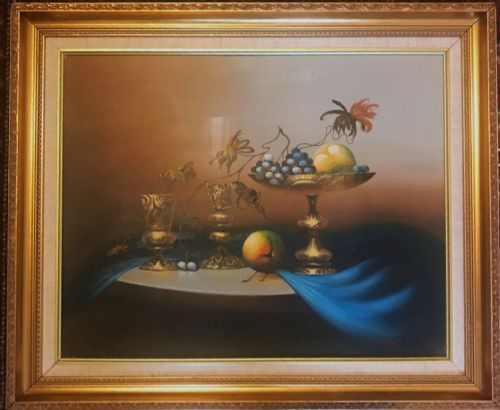
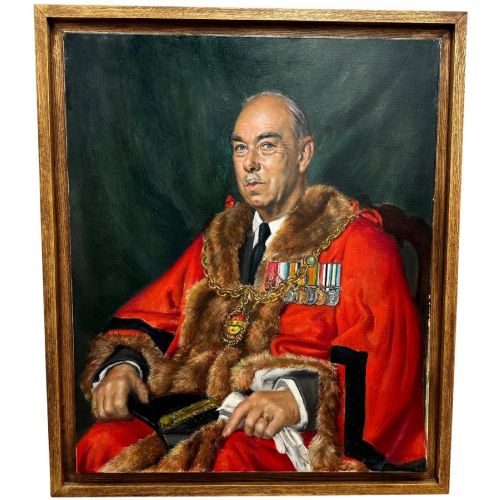
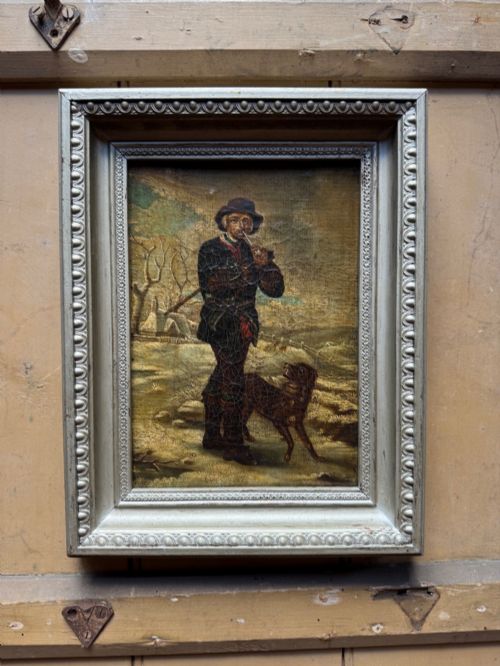
Buyers encounter rural English landscapes, floral still lifes and characterful portraits of gentlemen in historical clothing or suits. The subjects range from Yorkshire river scenes to nautical coastal views.
The selection moves from early twentieth-century Edwardian compositions to post-impressionist mid-century modernist interpretations. Each painting preserves the specific hand of its maker on woven textile supports.
Materials and Techniques
Artists applied oil paint directly onto stretched canvas or canvas boards, occasionally utilising wood supports or incorporating impasto techniques for raised surface texture. Pigments dry slowly, allowing makers to blend tones and build up rich surface layers over weeks.
Finished works frequently sit within wooden frames, some enhanced by gold leaf, gilt wood or decorative glazing. The framing materials often match the period of the painting itself, completing the presentation.
Retail Price Guide 2026
Typical UK retail prices for vintage oil canvas painting, calculated from the Sellingantiques database of over a million retail prices indexed since 2003. This retail price guide relies exclusively on Sellingantiques data; no external sources or auction records are used, so the figures do not describe the wider market.
The documented periods span from the Edwardian era through the nineteen-fifties and sixties.
Distinctions in Quality
The integration of the painting with its original period frame also influences the overall integrity of the piece. Superior examples maintain stable paint layers without extensive cracking or later overpainting.
Henry Yeen King·Arthur Spooner·Erwin Eichinger·Howard Shingler·Owen Bowen·Frank C Harlow·John Burns Robertson·John Bowes·Thomas Sherlock Evans·Hubert Haider·Moussa Ayoub·J Gerhardt
The Vintage Oil Canvas Painting Glossary
- Impasto
- Paint applied thickly to a canvas, standing out in relief from the surface and catching the light. This technique adds tactile dimension to floral studies and landscapes.
- Canvas Board
- A rigid board surfaced with primed canvas fabric, offering a stable painting support used extensively in mid-century works. It provides the texture of woven cloth without the need for wooden stretcher frames.
- Gilt Wood
- Wood carved and coated with a thin layer of gold leaf or metallic powder to create a decorative frame. These frames provide a warm, reflective border around the canvas.
- Provenance
- The documented history of a painting's ownership and origin, establishing its authenticity. Clear attribution to a known artist anchors the historical value of the piece.
- Post-Impressionism
- An art movement extending beyond impressionism that prioritises expressive form and symbolic use of colour. Works in this style show bolder brushwork and simplified geometric forms.
Frequently Asked Questions
How do I date a vintage oil painting?
Examination of the canvas weave, stretcher construction, and framing materials provides reliable clues to a painting's age. Stylistic markers and artist signatures further anchor the work within Edwardian or mid-century periods.
Written inscriptions on the reverse of the canvas or board often record dates, titles, and previous exhibitions. Comparing the pigment handling to dated works by the same school helps confirm the timeline.
Are these paintings original works?
The listings comprise original painted art rather than modern reproductions or prints. Each piece displays unique brush marks, pigment depth, and surface texture created directly by the artist.
Signatures, artist ciphers, and exhibition labels frequently accompany these original compositions. Close inspection reveals the physical ridges of the oil paint layered onto the fabric support.
How should I hang and light an oil painting?
Oil paintings on canvas require placement away from direct sunlight and high humidity to protect the pigments and wooden supports. Stable indoor temperatures prevent the canvas from slackening or the paint from cracking.
Directional picture lights or natural ambient room lighting enhances the visible brushwork and impasto texture. Adequate spacing allows the gilt or wooden frame to sit comfortably against the wall surface.
What subjects are most common?
Portraits of gentlemen, rural English landscapes, and floral still lifes appear frequently across the available selections. Coastal views, sailing ships, and provincial farmsteads also form a significant portion of the artworks.
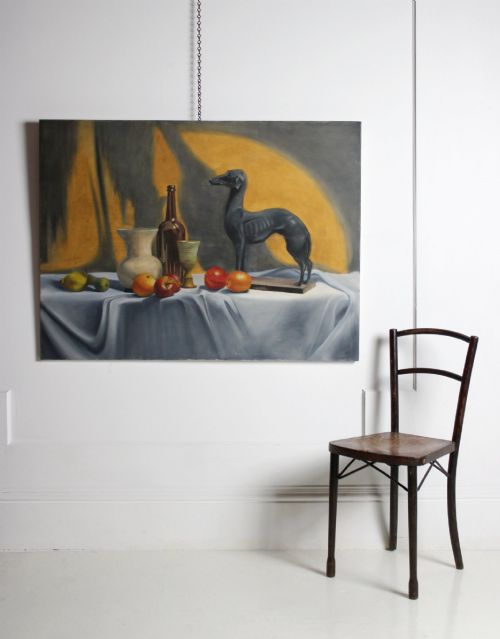
Artists during the Edwardian and mid-century periods often turned to their immediate surroundings for inspiration. This focus resulted in detailed studies of Yorkshire rivers, Bavarian vistas, and domestic tabletop arrangements.