






Vintage Office Stationery Cabinet
A vintage office stationery cabinet brings period character to a workspace through practical compartments and rich timber.
Vintage Office Stationery Cabinet
A vintage office stationery cabinet is a functional piece of workplace furniture designed to organise papers and writing materials. When you search for this phrase, you encounter pieces intended for professional and domestic administration.
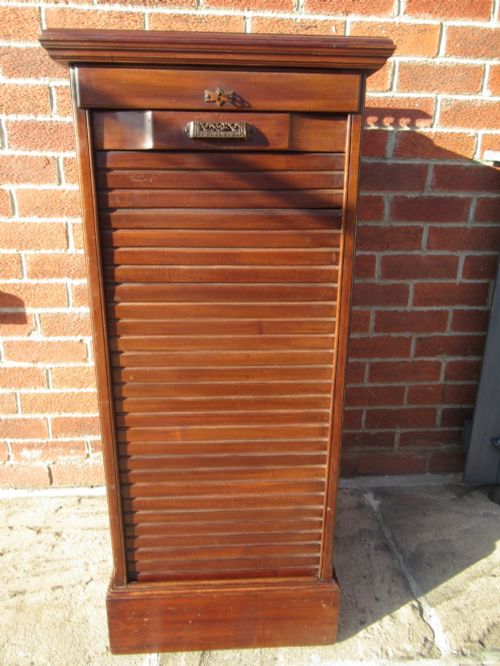
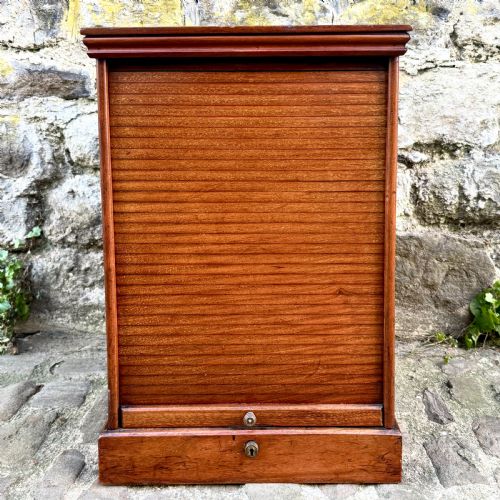
The selections on this page span the Victorian, Edwardian, and Regency periods, alongside early twentieth century designs. The most common versions you will meet are tambour front filing cabinets and stationery cabinets made from oak or mahogany.
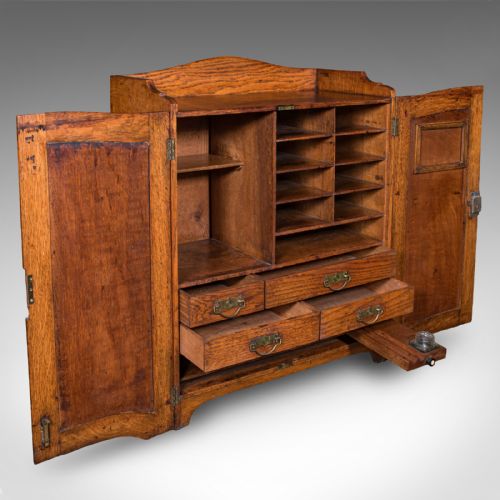
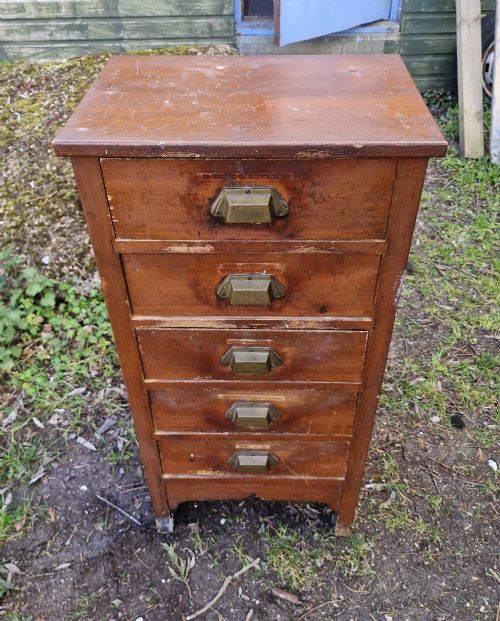
Forms range from compact desk cabinets to larger filing units, incorporating fitted interiors, adjustable shelves, and brass hardware. Occasional examples include campaign desks and cartonnier filing cabinets.
How they were made
Makers utilised solid timbers such as oak, mahogany, and rosewood, sometimes pairing pine carcases with finer wood veneers. Tambour fronts were constructed from narrow wooden slats glued to canvas backing to curve smoothly around tracks.
Metal and brass components formed handles, hinges, and label holders, whilst leather inserts added durable writing surfaces to relevant desk combinations. Joinery relied on traditional methods suited to heavy daily office use.
Vintage Office Stationery Cabinet Retail Price Guide 2026
Typical asking prices for vintage office stationery cabinet among the pieces listed under this phrase on Sellingantiques today, from the lower quarter to the upper quarter. They describe what is for sale here now, not the wider market.
Listings feature woods including oak, mahogany, rosewood, pine, and brass hardware.
What varies in quality
Quality separates pieces through the selection of timber and the precision of the joinery, particularly in moving mechanisms like tambour doors. Smooth operation of slatted fronts and tight cabinet joints indicate superior construction.
The sophistication of the internal fittings, such as adjustable shelving and dedicated stationery compartments, distinguishes simpler utility pieces from finer cabinet work. Original brass handles and sound leather surfaces contribute further to the standing of a piece.
The Vintage Office Stationery Cabinet Glossary
- Tambour front
- A flexible door made of narrow strips of wood attached to canvas, allowing it to slide open around a curved track. This mechanism conceals interior shelving whilst saving space in a busy office.
- Cartonnier
- A piece of furniture fitted with multiple open compartments or drawers designed specifically for holding papers, documents, and cartons. These originate predominantly from French workshop traditions.
- Campaign desk
- Portable furniture built for travel, featuring recessed brass handles and sturdy construction to withstand transport. Units often separate into sections for easier movement.
- Fitted interior
- An arrangement of internal shelves, pigeonholes, and small drawers designed to organise specific office supplies. Such layouts enhance the utility of the cabinet.
- Solid oak
- Timber milled straight from the log rather than veneered onto a secondary wood. It provides weight, durability, and a pronounced grain pattern.
Vintage Office Stationery Cabinet: Frequently Asked Questions
What is a tambour front cabinet?
A tambour front cabinet uses a sliding door made from narrow wooden slats attached to a fabric backing. This allows the door to curve smoothly around the side of the cabinet when opened.
Such mechanisms were particularly popular in early twentieth century office furniture for saving space in tight rooms.
How do I identify an Edwardian stationery cabinet?
Edwardian stationery cabinets typically date from the early nineteen hundreds and often feature lighter oak or mahogany timbers. They frequently incorporate brass handles and simple linear proportions suited to contemporary offices.
Compared to heavier Victorian pieces, Edwardian examples lean towards functional restraint while retaining traditional timber craftsmanship.
Can I use these cabinets for modern paperwork?
Many vintage office stationery cabinets offer adjustable shelves and compartments that suit modern stationery, letters, and notebooks. Filing variations adapt well to contemporary desktop organisation.
Measuring the internal compartments ensures compatibility with modern paper sizes before placement in a room.
What is a cartonnier filing cabinet?
A cartonnier is a specialised cabinet featuring tiered compartments for sorting documents and papers. French examples often pair mahogany with leather accents.
These pieces served administrative roles in nineteenth century studies and offices before standard vertical filing systems took over.