
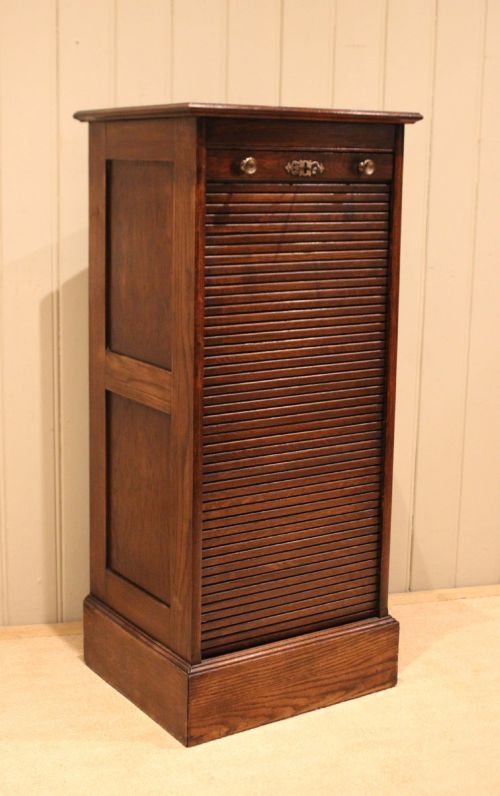
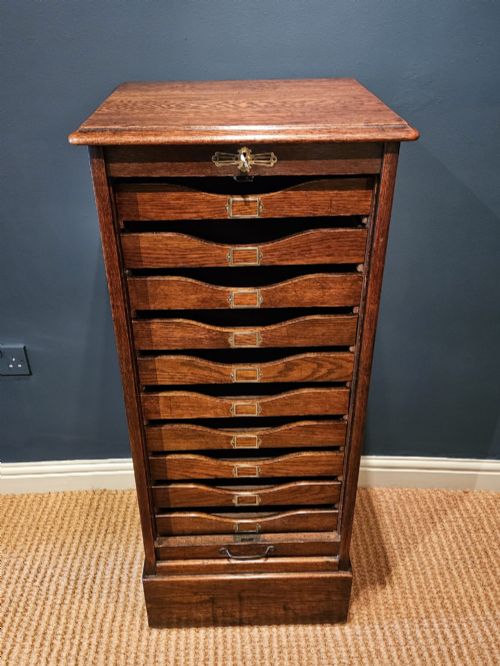
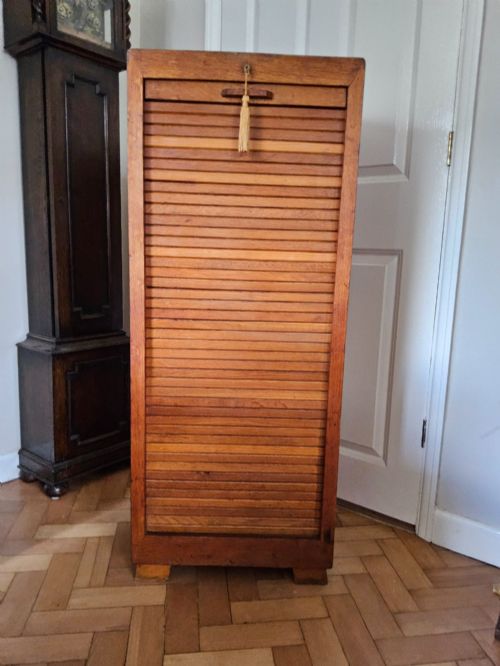
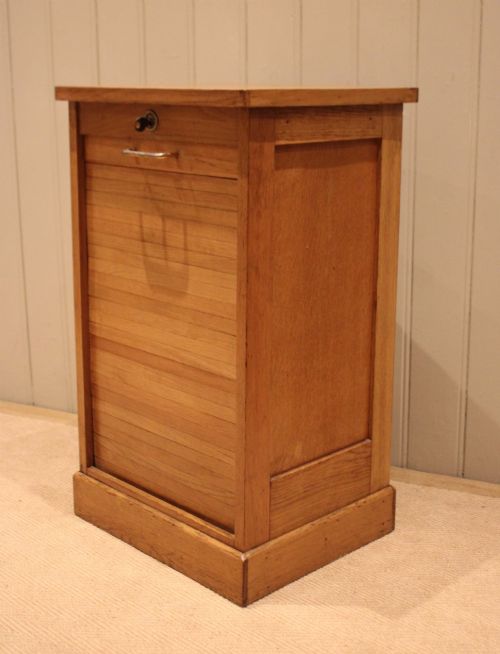
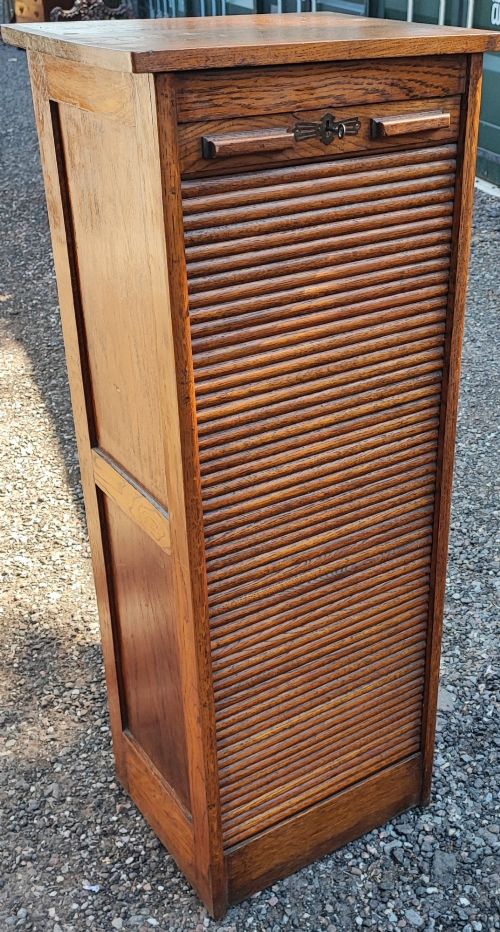
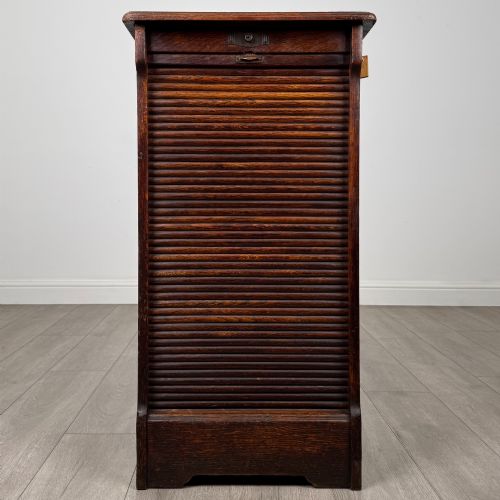
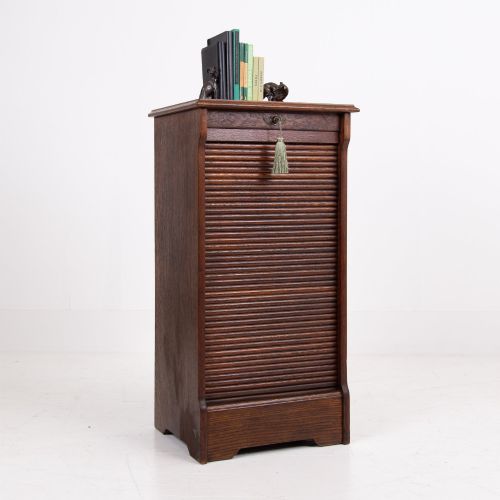
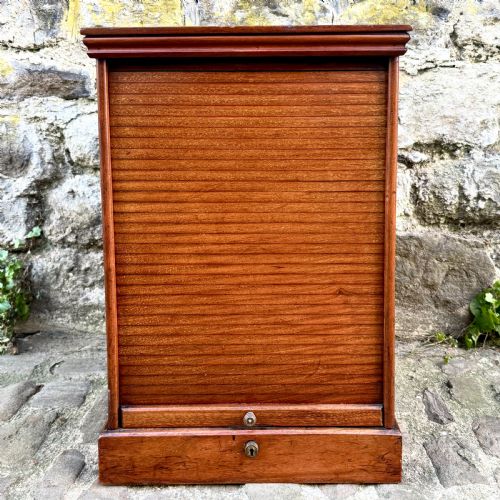
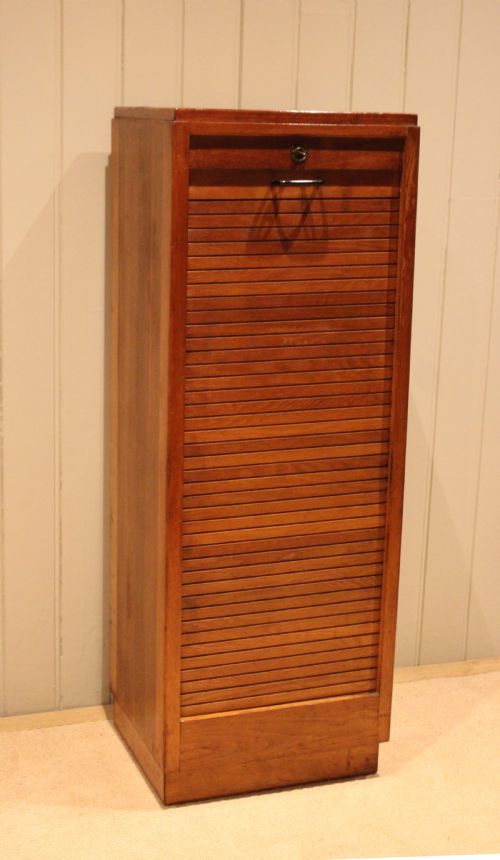
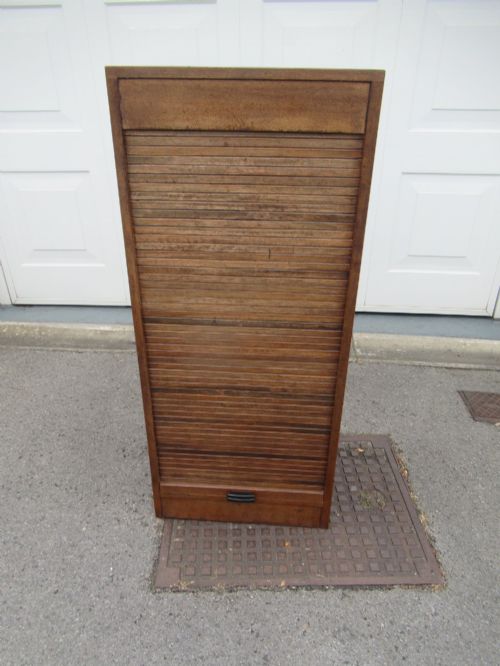
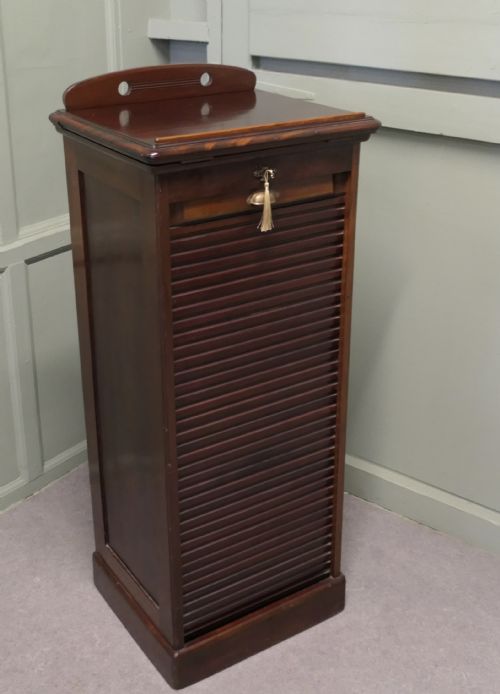


Edwardian Tambour Filing Cabinet
An Edwardian tambour filing cabinet is a practical piece of office furniture featuring slatted wooden doors that slide away smoothly.
Edwardian Tambour Filing Cabinet
When you search for an Edwardian tambour filing cabinet, you encounter sturdy office storage solutions designed to keep documents organised while saving floor space. The form relies on flexible wooden shutters, known as tambour doors, which run in concealed grooves around the side of the cabinet.
The version you are most likely to meet on this page is constructed from oak, often dating from the Edwardian period or the early twentieth century. These pieces range from single-door units with internal drawers to double-door models designed for heavy office use.
How They Were Made
Cabinet makers built the slatted tambour doors by gluing narrow strips of wood onto a sturdy backing material such as canvas or linen, allowing the shutter to bend smoothly around tight corners. The carcase is typically jointed with solid timber panels, complemented by brass handles, locks and label holders.
Timbers like oak, mahogany, walnut and rosewood provide the primary structure, finished with polished surfaces that highlight the natural grain. Metal and steel components appear in internal mechanisms and hardware.
Some cabinets hid a musician's collection rather than legal papers, proving that sheet music also required smooth wooden sliding doors.
What Varies in Quality
The smoothness of the tambour mechanism distinguishes a superior piece from a mediocre one, as well-fitted slats glide along their tracks without sticking or sagging. The choice of timber also dictates the tier of the piece, with finely figured mahogany, walnut or rosewood indicating higher status than standard oak or pine.
Internal configuration plays a significant role, with multiple fitted drawers and original locking mechanisms adding considerable utility and desirability. Construction details, such as solid back panels and precise joinery, separate standard workshop output from finer cabinet work.
The Edwardian Tambour Filing Cabinet Glossary
- Tambour
- A flexible door constructed from narrow strips of wood affixed to a fabric backing. This allows the door to slide around a curved track and disappear into the sides of the cabinet.
- Carcase
- The main body or skeletal structure of a piece of furniture before drawers and doors are fitted. It provides the foundational strength for the entire cabinet.
- Wellington
- A tall, upright chest of drawers secured by a locking side flap. This design relates to specific tall filing formats found in office furniture.
- Rosewood
- A dense, heavily figured timber with dark grain patterns used in high-end cabinet making. It yields a polished reddish-brown surface.
Edwardian Tambour Filing Cabinet: Frequently Asked Questions
How do tambour doors work?
Tambour doors operate through a series of small wooden slats attached side by side to a flexible fabric backing. This construction allows the entire shutter to bend smoothly along a curved track cut into the sides of the cabinet.
When opened, the door slides away into the recess of the carcase, remaining hidden from view and saving space in a compact office setting.
What timber are they made from?
These cabinets appear primarily in oak, with many examples utilising mahogany, walnut and rosewood. Pine and secondary softwoods occasionally support internal framing or backing boards.
Selected pieces feature polished finishes that enhance the natural figure of the wood, while brass hardware provides functional contrast.
Were these used in homes?
While originally designed for commercial offices, law practices and administrative spaces, their tidy footprint made them suitable for domestic studies and libraries. Variations include music storage cabinets alongside standard document filing units.
Their compact scale allows them to fit easily into modern residential interiors as practical storage.
How do I date an Edwardian cabinet?
Dating relies on period styles, construction methods, and materials recorded across early twentieth-century examples. The Edwardian era spans from 1901 to 1910, though similar office furniture designs continued through the 1920s and 1930s.
Hardware styles, timber choices, and secondary labels help distinguish an 1890s piece from a later 1940s production.