
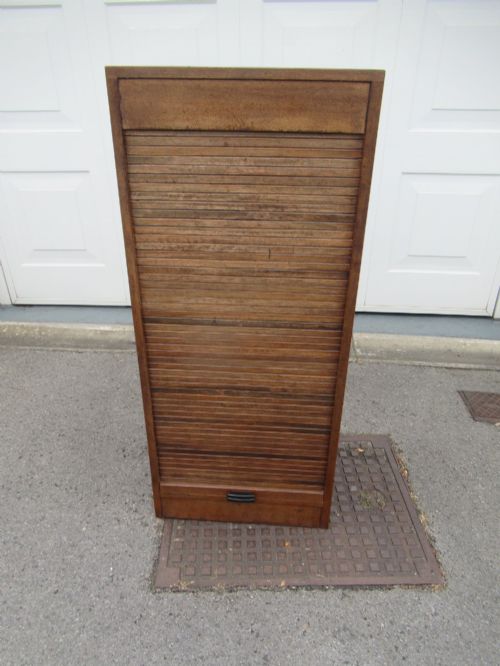
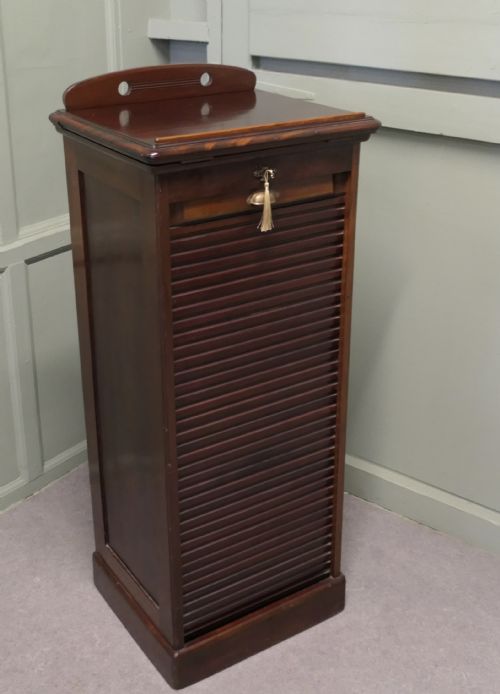


Roll Front Filing Cabinet
These roll front filing cabinets are practical workspace essentials built to hide paperwork behind sliding slats, offering both charm and utility.
Roll Front Filing Cabinet
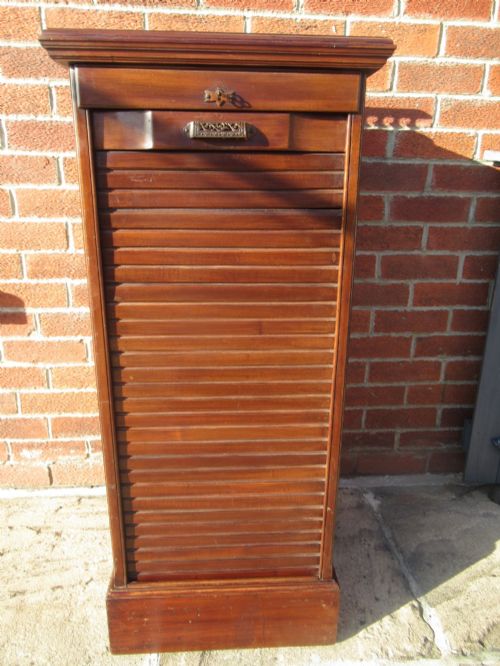
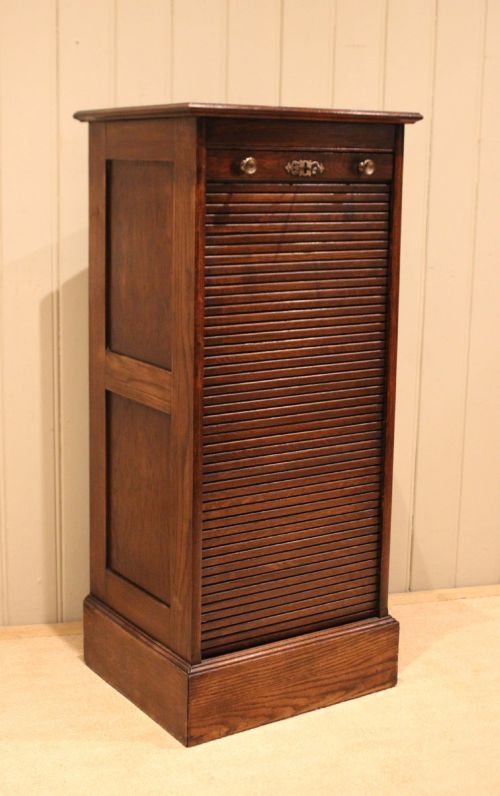
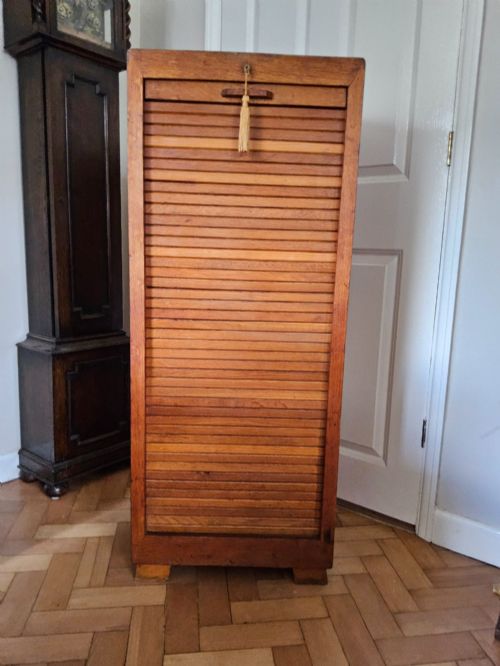
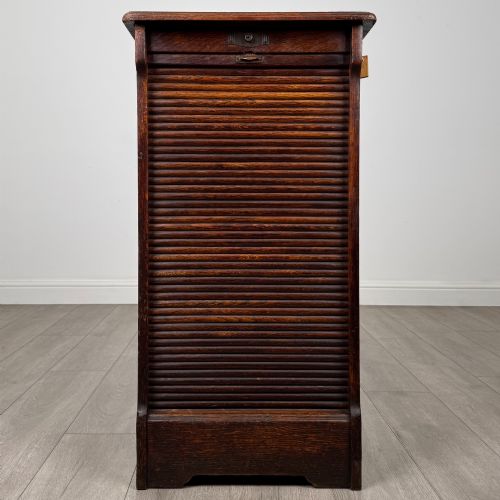
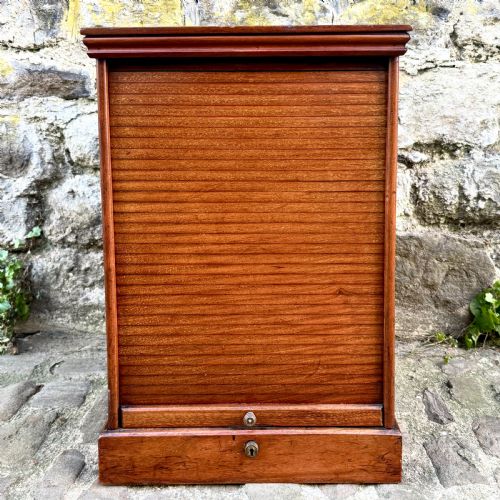
A roll front filing cabinet is a functional piece of office furniture designed to organise documents securely while maintaining a tidy exterior appearance. These cabinets appear primarily in robust woods like oak and mahogany, with examples dating from the late 19th century through the mid 20th century.
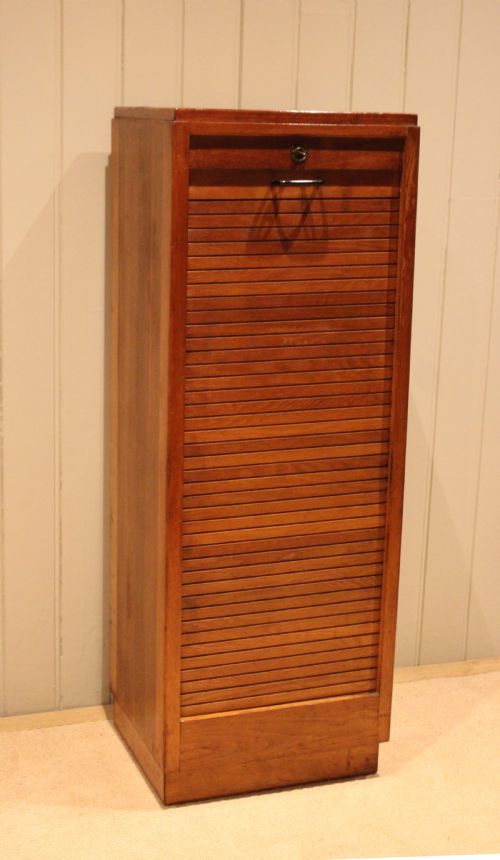
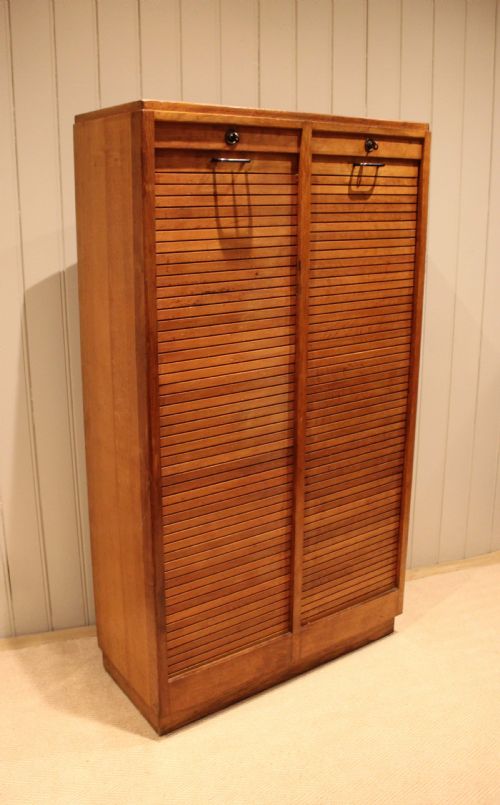
The version most commonly encountered on this page is the single tambour front filing cabinet constructed from oak, reflecting Edwardian and early 20th century office designs. Double tambour variations and pieces featuring pine or rosewood also appear across Victorian, Art Deco, and French Utility styles.
How they were made
Cabinet makers utilised durable hardwoods such as oak, mahogany, and rosewood alongside pine for internal structures and carcasses. The defining characteristic is the flexible tambour shutter, formed from narrow wooden slats attached to a canvas backing that slides smoothly within recessed side tracks.
Hardware details typically include brass pulls, handles, and label holders that complement the timber construction. Metal and steel elements occasionally appear on industrial or later variants from the 1930s and 1940s.
Listening to the gentle clatter of wooden slats running along hidden canvas tracks offers a tactile reminder of early office efficiency.
What varies in quality
Quality in these cabinets rests upon the precision of the tambour mechanism and the integrity of the slatted tracks. Smooth operation of the sliding shutter without binding or sagging separates superior examples from those with misaligned wooden tracks.
The selection of timber grain and the depth of the cabinet proportions also influence the overall character. Finely figured oak or rosewood veneers and well-joined solid panels indicate a higher standard of original workshop production.
The Roll Front Filing Cabinet Glossary
- Tambour
- A flexible shutter made from narrow strips of wood glued to a canvas backing, allowing it to curve around tracks and conceal the interior of the cabinet.
- Roll front
- An alternative term for a tambour front where the slatted wooden curtain rolls upward or sideways to open the compartment.
- Edwardian
- A stylistic period spanning the reign of King Edward VII, known in these pieces for straightforward oak construction and functional office forms.
- French Utility
- A functional design movement originating in France during the mid 20th century, prioritising utilitarian construction using available timber resources.
- Pedestal
- A freestanding cabinet form resting on a base, often utilised beside desks or reception areas to house active paperwork.
Roll Front Filing Cabinet: Frequently Asked Questions
How do I operate the roll front?
The slatted wooden shutter runs within hidden grooves cut into the sides of the cabinet frame. Gently lift or slide the handle to guide the flexible curtain around the track.
Ensure the tracks remain free of dust and debris to keep the sliding action smooth and prevent the wooden slats from jamming.
Where were these cabinets used?
These cabinets served primarily in commercial offices, legal practices, and administrative reception areas during the late 19th and early 20th centuries. Their enclosed fronts kept sensitive documents private and protected paperwork from dust.
Today, they transition easily into modern home studies or living spaces as storage units for stationery and modern electronics.
How do I date an oak cabinet?
Examine the construction methods, hardware materials, and overall styling cues to determine the period of origin. Edwardian and early 20th century examples often display quarter-sawn oak grain and simple brass handles.
Later pieces from the 1930s and 1940s may show simpler internal drawer configurations or incorporate steel and canvas components typical of utilitarian manufacturing.
Can I store standard folders inside?
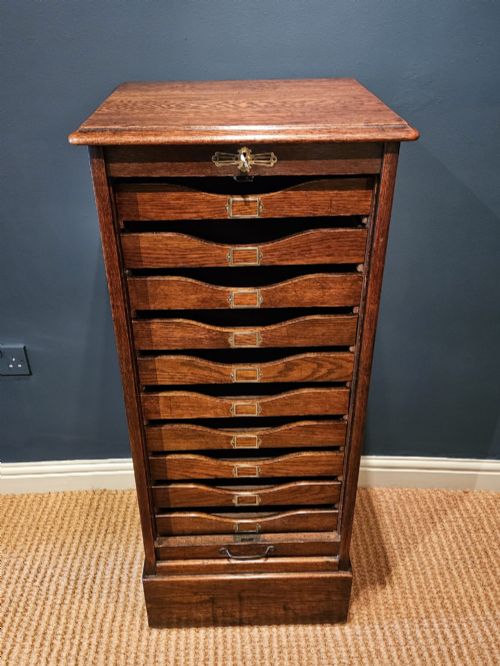
Many older filing cabinets feature internal drawer configurations designed for historical paper sizes rather than modern hanging folders. Checking the internal depth and drawer dimensions helps determine compatibility with contemporary stationery.
Some multi-drawer variants house numerous shallow compartments well suited for sorting correspondence, receipts, or craft supplies.