

Vintage Office File Drawers
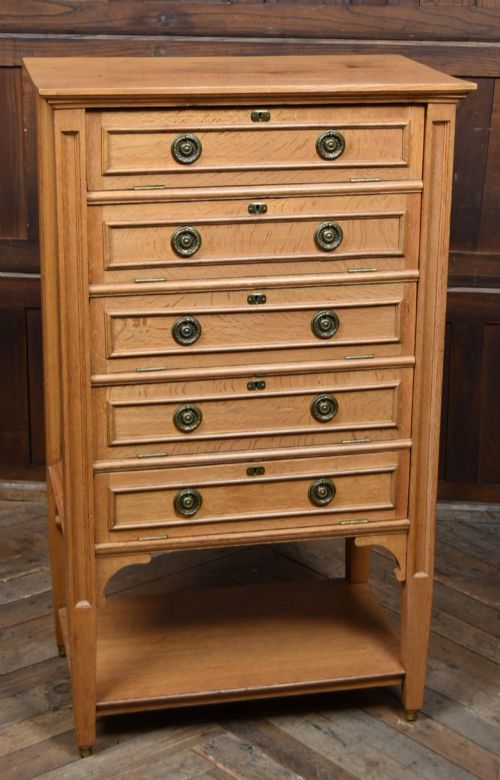
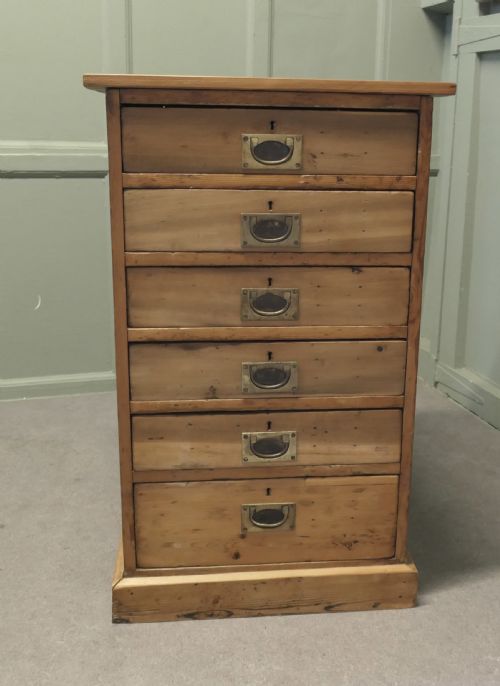
Vintage office file drawers organise paperwork with character, spanning robust industrial banks and polished timber cabinets built to endure.
Vintage Office File Drawers
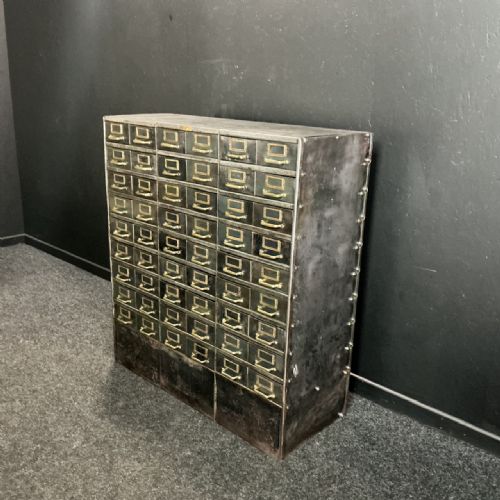
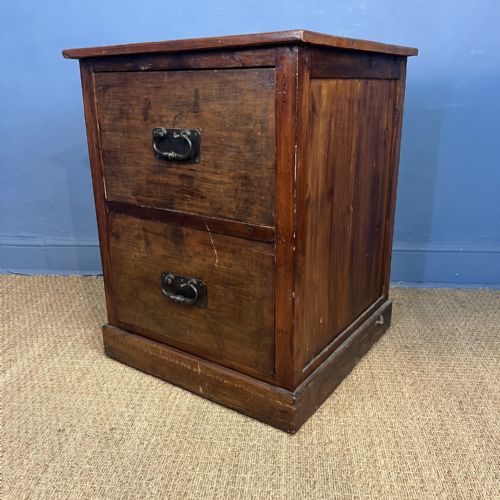
Vintage office file drawers comprise sturdy banks of drawers, filing cabinets, and desk organisers designed for practical sorting in workspaces. Buyers searching this phrase encounter substantial timber units and utilitarian metal designs configured for heavy paperwork.
The selections on this page draw from periods spanning the Victorian era through the Edwardian period and into the 1920s and 1930s. Oak, mahogany, and pine form the bulk of the wooden structures, while industrial pieces utilise steel and iron.
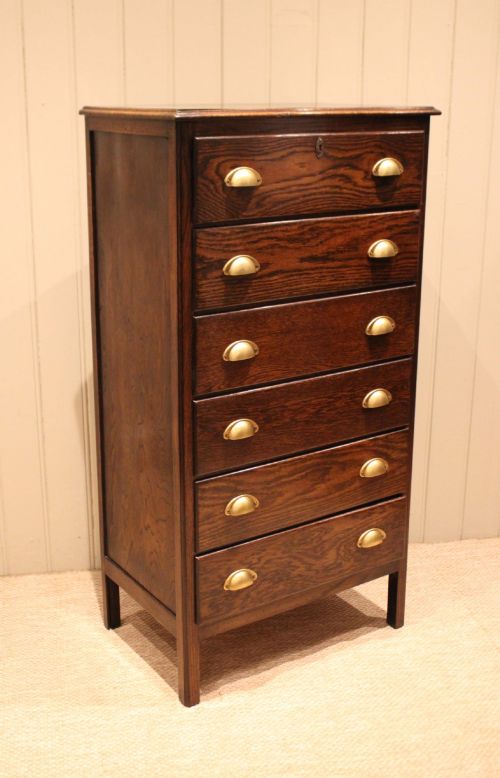
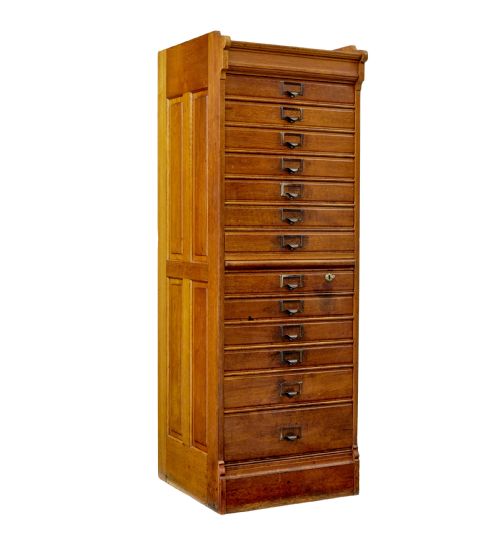
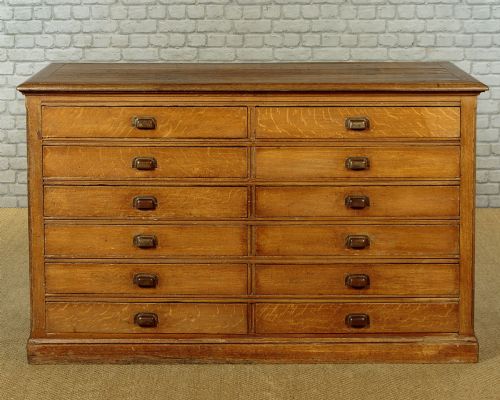
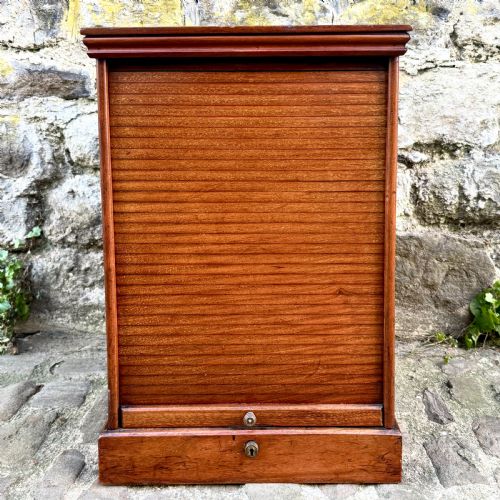
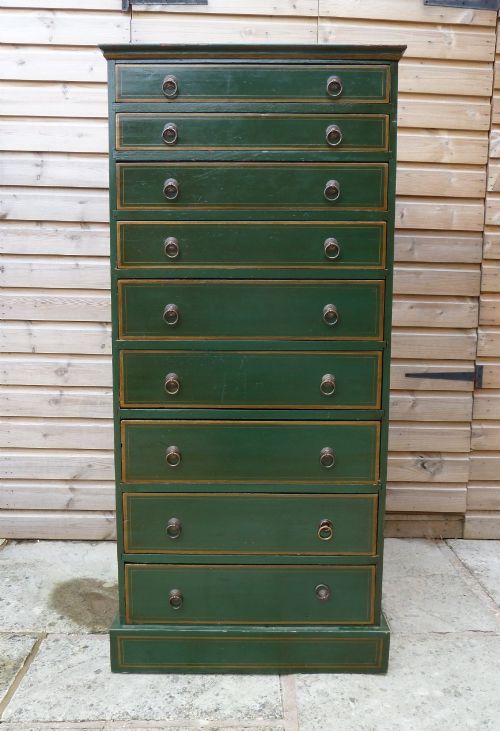
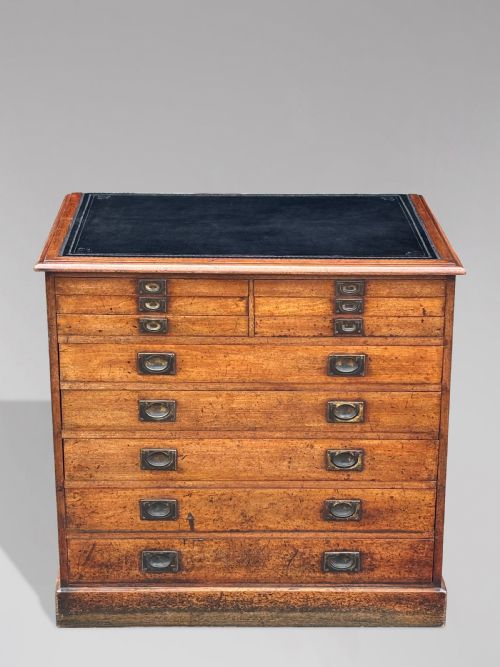
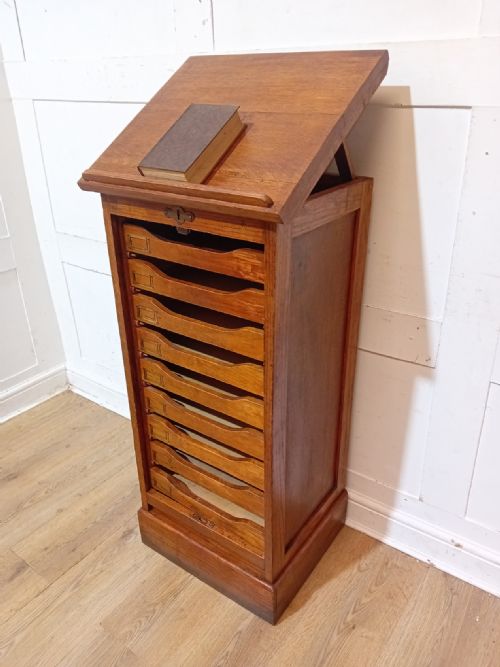
Forms range from tall multi-drawer banks to compact desktop filing sets, plan chests, and tambour front cabinets. Originating from English workshops and French postal or industrial settings, these pieces bring period utility directly into modern rooms.
How they were made
Cabinetmakers constructed these office pieces primarily from solid hardwoods like oak, mahogany, walnut, and teak, alongside utilitarian softwoods such as pine. Joints were robustly engineered to withstand daily commercial use, utilising dovetailed drawer construction to ensure longevity under heavy loads.
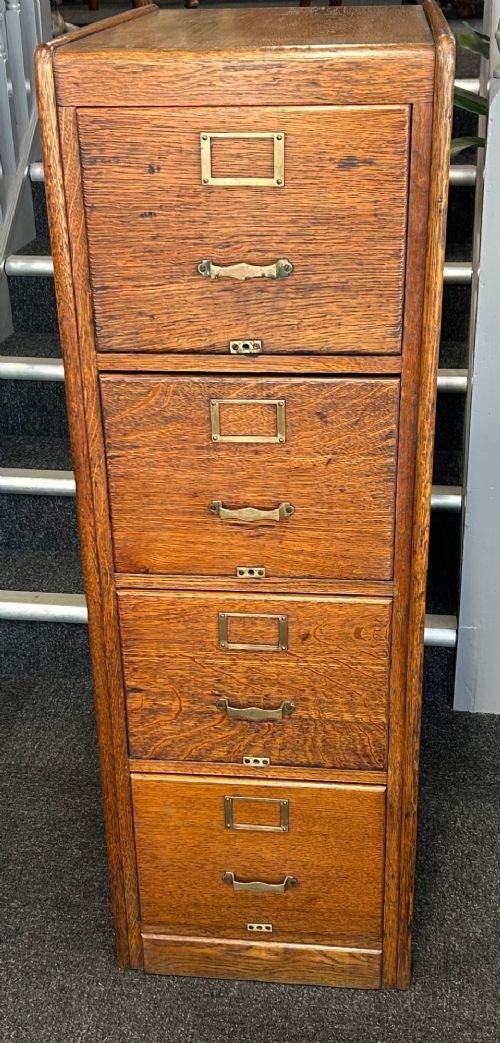
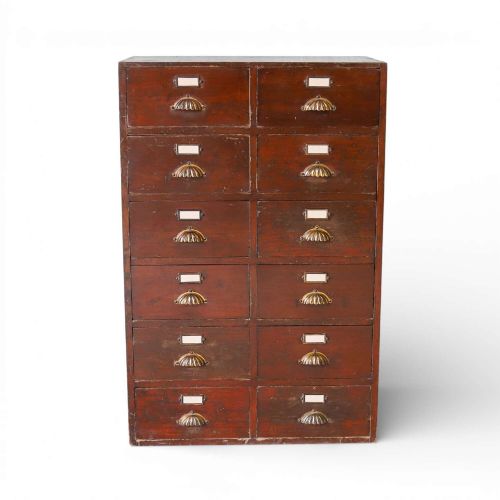
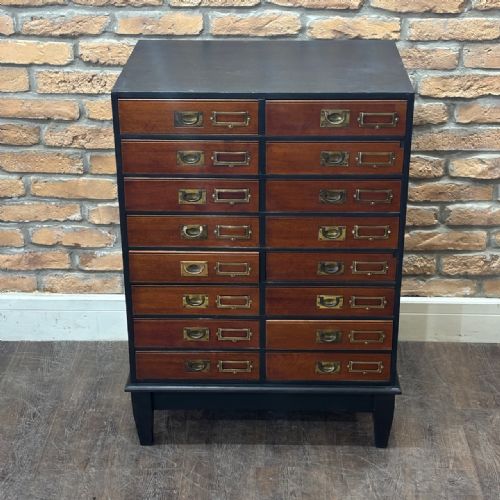
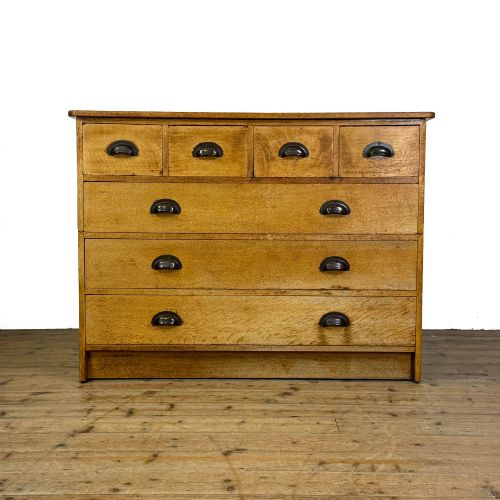
Hardware played a defining structural and functional role, incorporating brass handles, shell pulls, and integrated label holders that allowed swift identification of contents. Specialist mechanisms such as tambour slats and patent letter file systems enabled smooth operation in busy Edwardian and Victorian offices.
Vintage Office File Drawers Retail Price Guide 2026
Typical asking prices for vintage office file drawers among the pieces listed under this phrase on Sellingantiques today, from the lower quarter to the upper quarter. They describe what is for sale here now, not the wider market.
Some drawers still retain faded Victorian paper labels for items long forgotten.
What varies in quality
The distinction between standard utility storage and superior cabinetmaking rests on the choice of timber and the refinement of internal joinery. Dense quartersawn oak and richly figured mahogany command higher regard than utilitarian painted pine.
Original hardware integrity dictates overall merit, particularly the survival of stamped brass shell pulls, working patent locking mechanisms, and intact label holders. Pieces retaining their manufacturer fittings demonstrate superior provenance compared to those altered with replacement parts.
Maple and Co·Amberg
The Vintage Office File Drawers Glossary
- Tambour front
- A sliding shutter formed of narrow vertical strips of wood glued to canvas, allowing smooth closure around a curved cabinet track.
- Shell pull
- A pressed metal or brass handle shaped like a half-shell, frequently incorporating a slot for a paper index label.
- Cartonnier
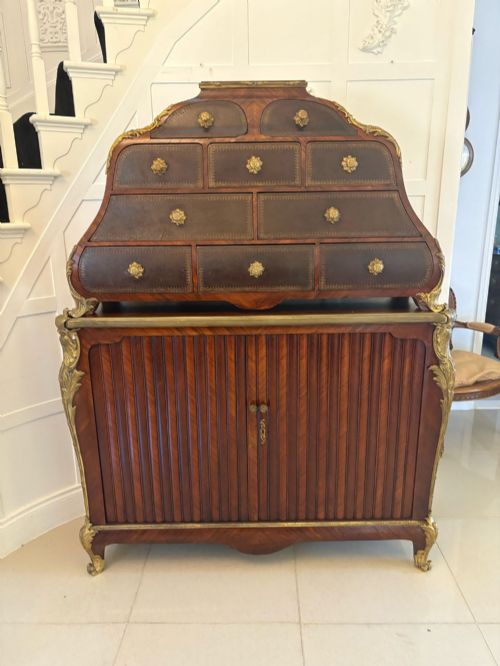
- A French filing cabinet fitted with leather-bound boxes or heavy cardboard carton drawers for sorting correspondence.
- Plan chest
- A wide, shallow multi-drawer cabinet originally utilised by architects and draughtsmen for storing large sheets of paper.
- Haberdashery cabinet
- A glass-fronted or multi-drawer storage unit adapted from retail drapery shops for domestic filing.
Vintage Office File Drawers: Frequently Asked Questions
How do I care for wooden file drawers?
Maintain the timber by applying natural beeswax periodically to nourish the grain and protect the polished surfaces from drying out.
Keep the cabinets away from direct heat sources and strong sunlight to prevent the wood from warping or splitting over time.
Can I use these drawers for modern paper sizes?
Many antique filing drawers accommodate standard modern documents, though older internal dividers sometimes require minor adjustment for larger formats.
Card filing sets and shallow plan chests suit specific items like photographs or stationery rather than standard lever-arch files.
How do I identify an Edwardian filing cabinet?
Edwardian examples typically feature crisp oak construction, linear proportions, and unfussy detailing consistent with early twentieth-century office efficiency.
They frequently incorporate brass label holders and panelled sides that distinguish them from more ornate Victorian precursors.
What is a tambour front cabinet?
A tambour front utilises flexible wooden slats running in recessed tracks to conceal the internal drawers when pulled shut.
This clever mechanism saved valuable floor space in tight office environments by eliminating traditional swinging doors.