


Vintage Office Drawer Unit
These vintage office drawer units combine practical workplace storage with period character, offering sturdy timber and metal construction suited for modern homes and workspaces.

Vintage Office Drawer Unit
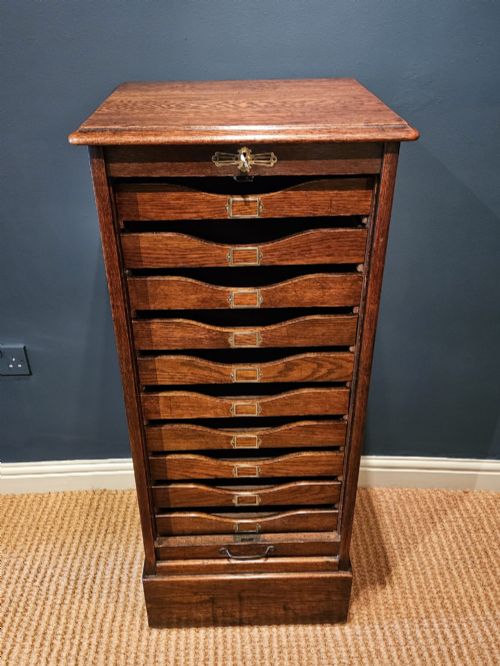
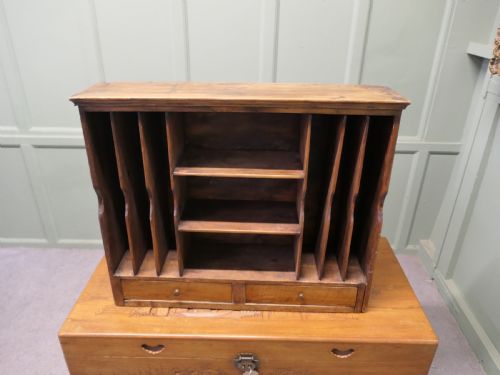
When you search for a vintage office drawer unit, you encounter functional storage pieces spanning from the nineteenth century through to the 1930s. The selection ranges from compact desktop filing drawers and desk organisers to tall industrial banks of drawers, filing cabinets, and plan chests.
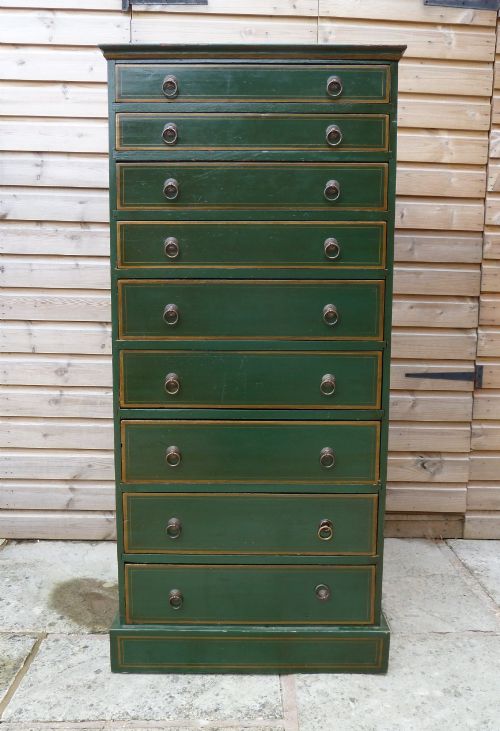
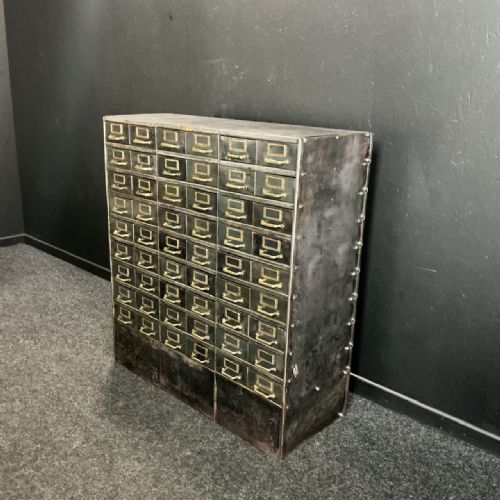
You are most likely to meet oak and mahogany filing cabinets, alongside painted pine office chests and industrial metal units. These pieces originate from Edwardian, Victorian, Art Deco, and industrial utility contexts, reflecting the practical administrative needs of their original working environments.
How they were made
Construction relies heavily on durable hardwoods such as oak and mahogany, alongside softer pine and robust industrial metal and steel. Cabinet makers utilised solid timbers and joined them to withstand daily commercial use in offices, libraries, and post offices.
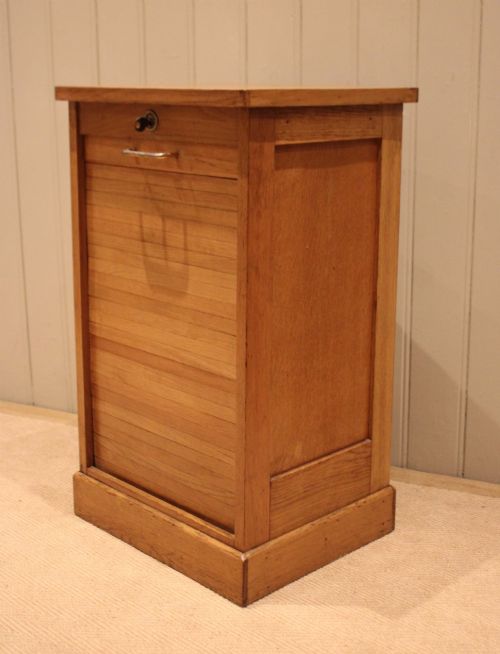
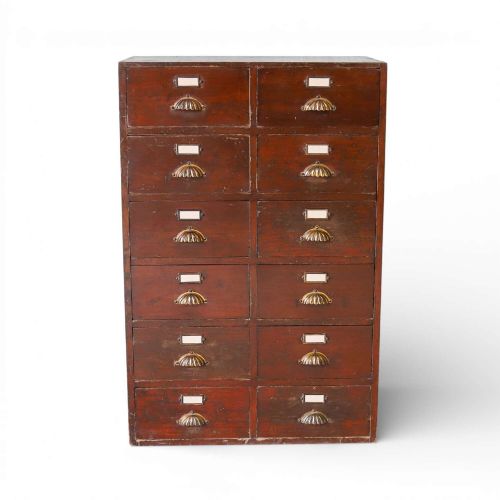
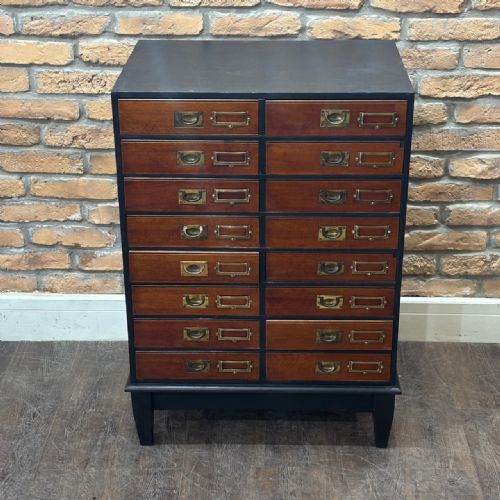
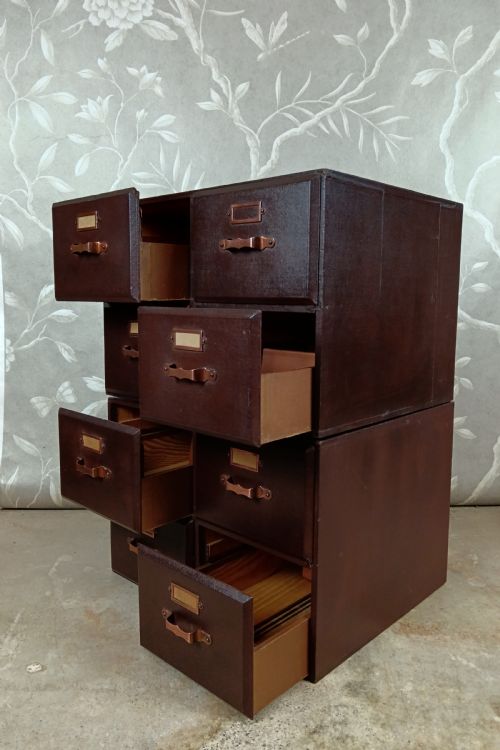
Hardware details such as brass handles, original shell pulls, and label holders were integrated to serve the filing systems of the period. Tambour doors and specialised card filing mechanisms demonstrate the mechanical ingenuity applied to early twentieth-century office furniture.
Post office filing shelves and library card index sets bring the quiet clatter of historical sorting rooms directly into the modern study.
What varies in quality
Quality in these storage units rests on the integrity of the timber selection and the retention of original functional hardware. Pieces featuring well-figured oak or mahogany, alongside intact brass label holders and smooth-operating drawers, represent the higher end of the range.
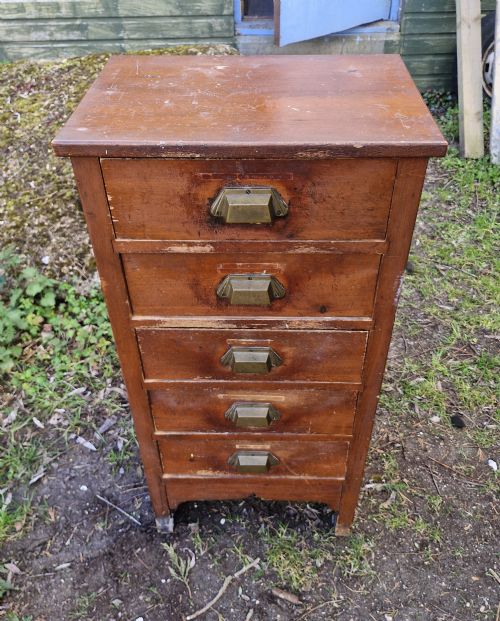
The sophistication of the mechanism also distinguishes the pieces, from simple dovetailed drawers to patented filing systems and complex tambour fronts. Construction depth and the survival of original patinated surfaces rather than modern refinishing determine the standing of each unit.
Amberg·Shannon
The Vintage Office Drawer Unit Glossary
- Tambour
- A flexible sliding door made from narrow strips of wood attached to canvas or leather, commonly found on period filing cabinets to conceal the interior drawers.
- Shell Pull
- A pressed metal or brass handle shaped like a scallop shell, frequently combined with a label holder on Edwardian and Victorian filing drawers.
- Plan Chest
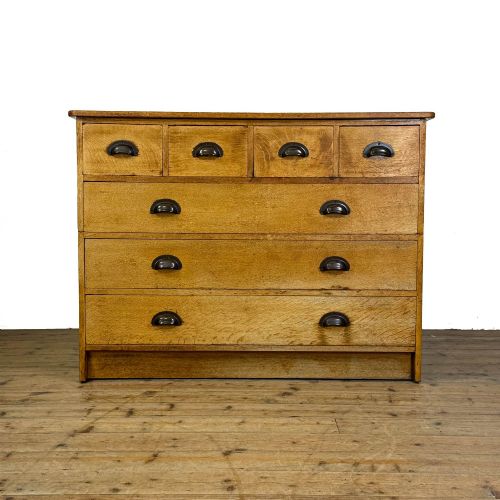
- A wide, shallow set of drawers originally designed for storing architectural plans and maps, typically constructed in oak or pine.
- Cartonnier
- A decorative freestanding cabinet fitted with rows of vertical compartments or drawers for holding papers, often finished in mahogany and leather.
- Haberdashery Cabinet
- A multi-drawer unit originally used in retail shops for storing small goods, featuring glass fronts or shallow wooden trays.
Vintage Office Drawer Unit: Frequently Asked Questions
How do I date a vintage filing cabinet?
Dating relies on observing construction methods, timber choices, and hardware styles such as brass shell pulls or patent mechanisms. Edwardian and Victorian pieces often display distinctive label holders and traditional dovetailing.
Later 1920s and 1930s examples introduce industrial steel elements and tambour doors, aligning with shifts in workplace design and filing technology.
Can I use these drawers for modern paperwork?
Many period desktop organisers, card files, and small drawer units accommodate modern stationery, notes, and craft supplies quite naturally. Some older filing formats are tailored for specific historical paper sizes rather than standard modern folders.
Checking internal drawer dimensions ensures the unit suits your intended organisational purpose before purchase.
What woods were commonly used?
Oak and mahogany appear frequently across the selection, providing durable and attractive exterior surfaces for professional office environments. Pine and beech also feature in utility contexts, alongside industrial metal and steel constructions.
Selected pieces incorporate walnut or satin walnut for decorative drawer fronts in Edwardian office settings.
How do tambour doors operate?
Tambour doors run within recessed tracks routed into the sides of the cabinet frame, allowing the flexible wooden slats to roll smoothly around a curve. This mechanism conceals the interior drawers without requiring clearance space for hinged doors.
Regular gentle use and appropriate lubrication keep the wooden slats moving fluidly along their tracks.