
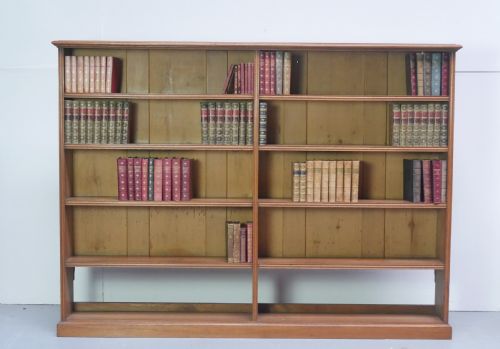
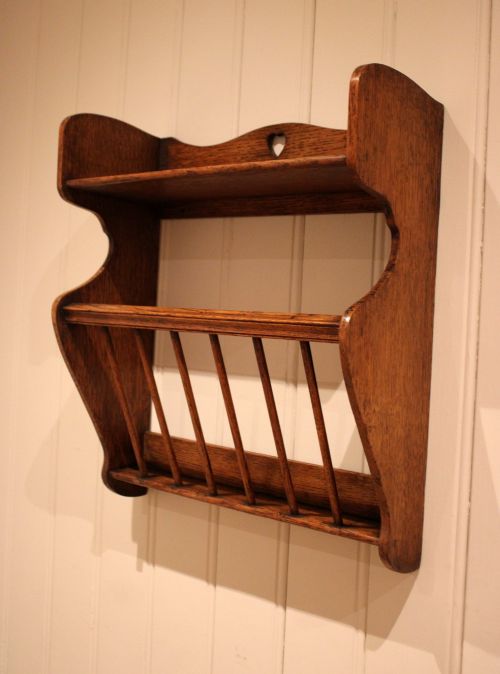

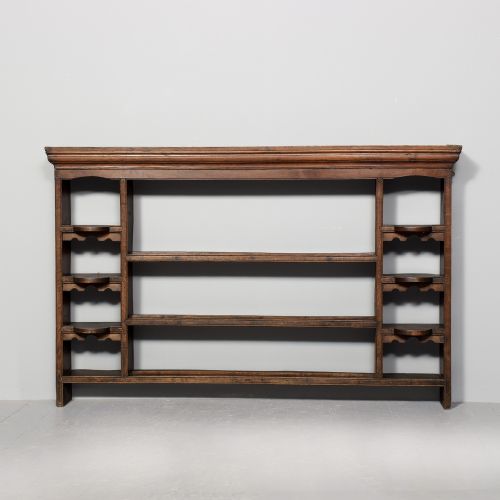


Vintage Oak Wall Unit
These vintage oak wall unit pieces provide practical timber storage and display, bringing solid construction and warm grain into your home.
Vintage Oak Wall Unit
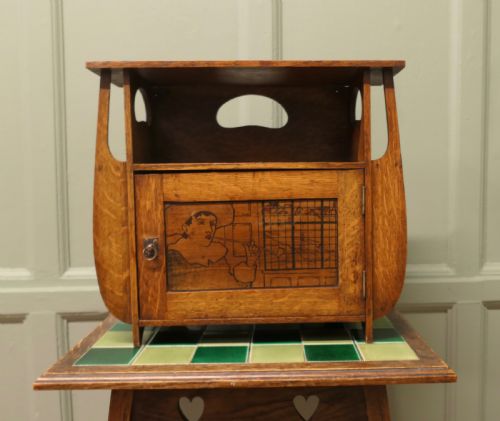
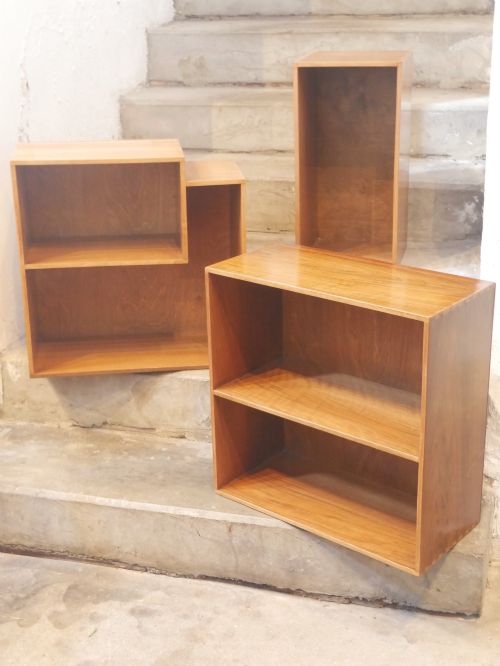
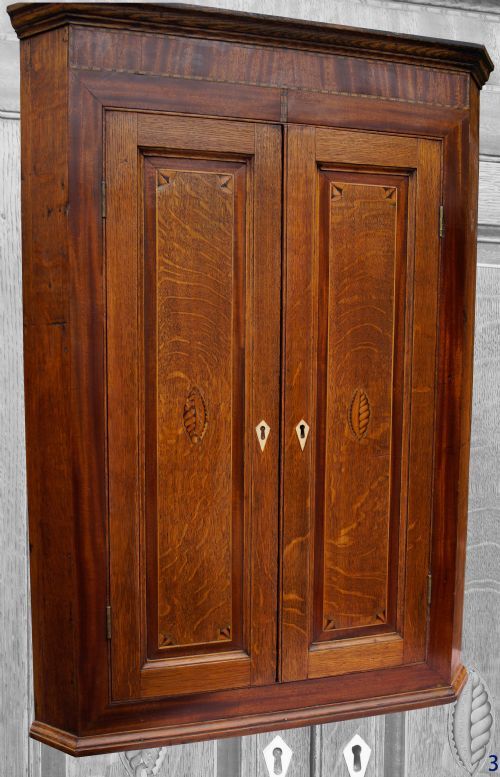
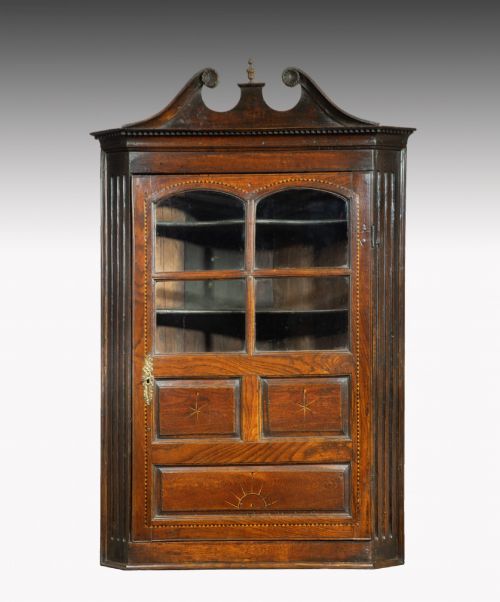
A vintage oak wall unit combines timber storage with wall-mounted convenience, appearing frequently in forms such as corner cupboards, wall shelves, and hanging cabinets. These pieces serve to maximise floor space while keeping everyday items organised within domestic interiors.
The selection ranges across centuries of cabinet making, from Georgian and 18th Century hanging cupboards to Arts and Crafts designs and later mid-century iterations. Buyers encounter utilitarian plate racks, bowfront corner units, and compact display boxes suited to various room layouts.
How they were made
Construction relies primarily on solid oak, selected for durability and distinctive grain patterns, often supplemented by secondary timbers like pine in hidden areas or mahogany details. Workshops utilised traditional joinery methods to build hanging frames, shelves, and cupboard doors capable of supporting weight over generations.
Hardware such as brass hinges, iron latches, and glass panels integrate with the woodwork, whilst certain pieces incorporate plywood or wood veneer in later twentieth-century examples. Surface finishes range from polished patinas on early provincial furniture to simpler waxed or painted treatments.
Listings span multiple eras from the 18th Century through the Georgian, Victorian, and Arts and Crafts periods up to 1930.
What varies in quality
Quality depends on the crispness of hand-carved details, the selection of figured oak boards, and the integrity of structural joints in corners and hanging brackets. Superior examples display thoughtful proportions and harmonious grain matching across the visible surfaces.
Construction refinement separates standard utilitarian storage from masterwork cabinet making, visible in dovetail precision, original brassware, and well-fitted doors that maintain proper alignment within their frames.
Heals
The Vintage Oak Wall Unit Glossary
- Bowfront
- A convex, curved front shape common on eighteenth and nineteenth-century corner cabinets. This design softens room angles and provides additional interior depth.
- Corner Cupboard
- A storage unit specifically built to fit neatly into ninety-degree room intersections. These items make efficient use of otherwise neglected space.
- Plate Rack
- Open wooden shelving designed with vertical slats or grooves to display plates upright. They are typically mounted on kitchen or dining room walls.
- Arts and Crafts
- A design movement valuing handcraftsmanship, simple forms, and honest materials over mass production. Pieces from this tradition often feature exposed joinery and subtle decorative elements.
- Cotswold School
- An influential twentieth-century English craft movement focused on vernacular furniture making using solid timber. Makers associated with this style prioritised hand tools and traditional construction.
Vintage Oak Wall Unit: Frequently Asked Questions
How do I hang a heavy oak cabinet safely?
Heavy wall-mounted units require secure fastening directly into wall studs or masonry using appropriate fixings rated for the weight of solid timber.
Distributing the load evenly across structural supports prevents strain on the original hanging brackets and protects the wall structure.
What rooms suit a corner cupboard best?
Corner cupboards fit naturally into dining rooms, kitchens, or studies where floor space is limited and room corners remain empty.
They transform awkward angles into practical display areas for glassware, books, or decorative objects.
How do I date an oak wall cabinet?
Dating relies on examining construction techniques, joinery marks, hardware types, and stylistic indicators such as Georgian mouldings or Arts and Crafts simplicity.
Tool marks and timber preparation methods often reveal whether a piece originates from the eighteenth, nineteenth, or twentieth century.
Can these units support heavy books?
Wall shelves and bookcases handle moderate loads depending on the thickness of the oak and the strength of the supporting brackets.
Heavier volumes sit best on lower shelves or dedicated floor-standing bookcases rather than lightweight hanging units.