

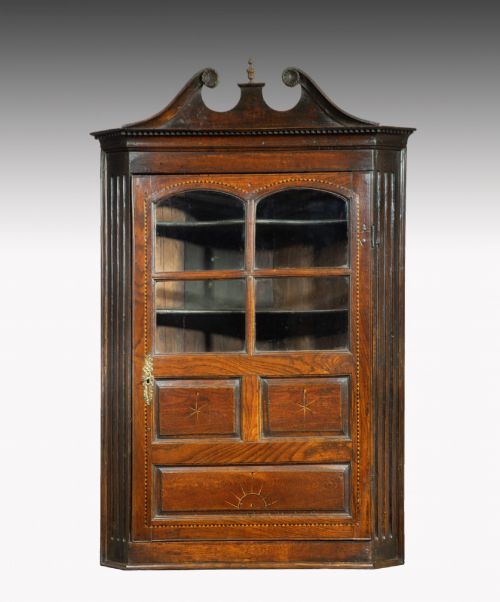


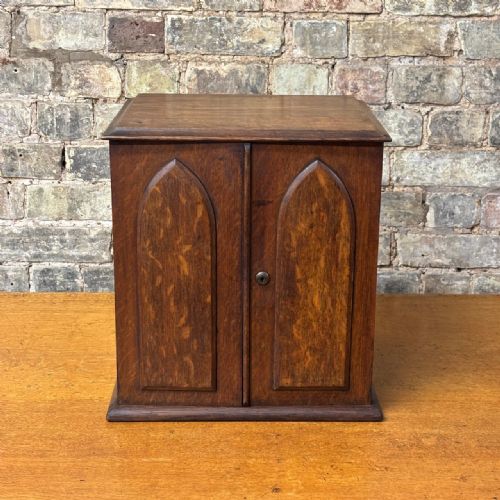
Vintage Oak Wall Cupboard
A vintage oak wall cupboard brings practical storage and solid timber grain to a room, ranging from simple provincial hanging units to refined Georgian corner cabinets.
Vintage Oak Wall Cupboard
A vintage oak wall cupboard serves to hold belongings while mounting securely to a wall or resting neatly in a corner. These pieces span centuries of domestic life, drawing on forms made for everyday utility in English and French interiors.
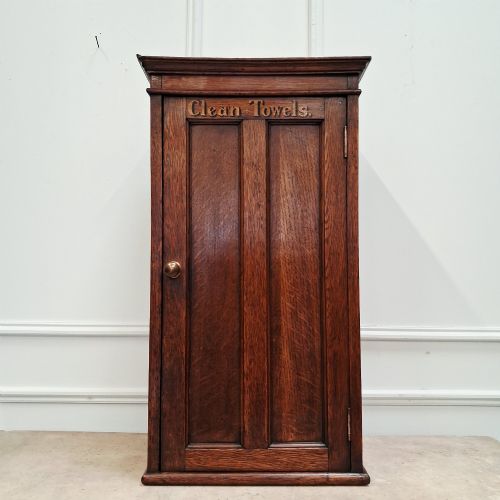
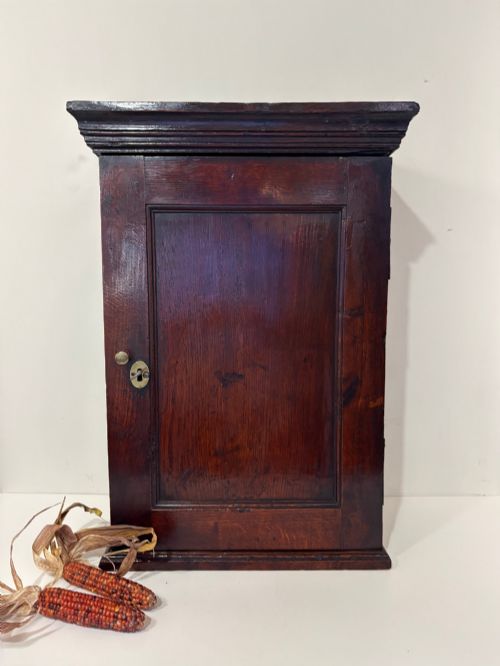
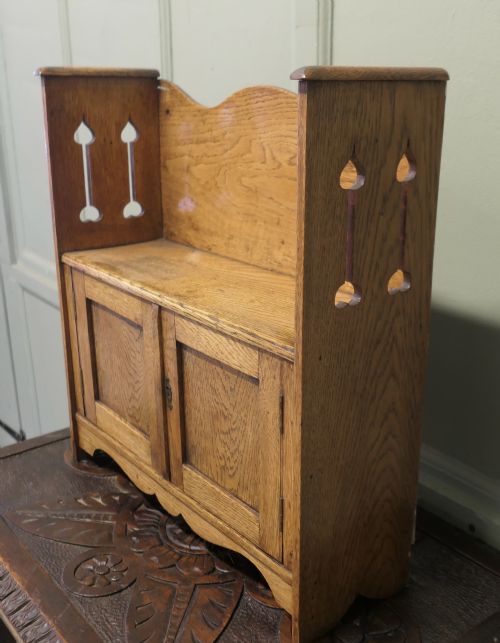
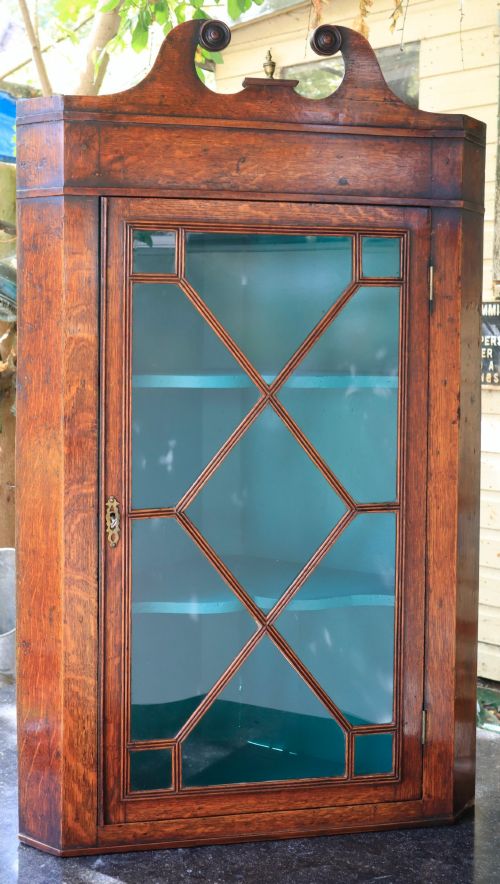
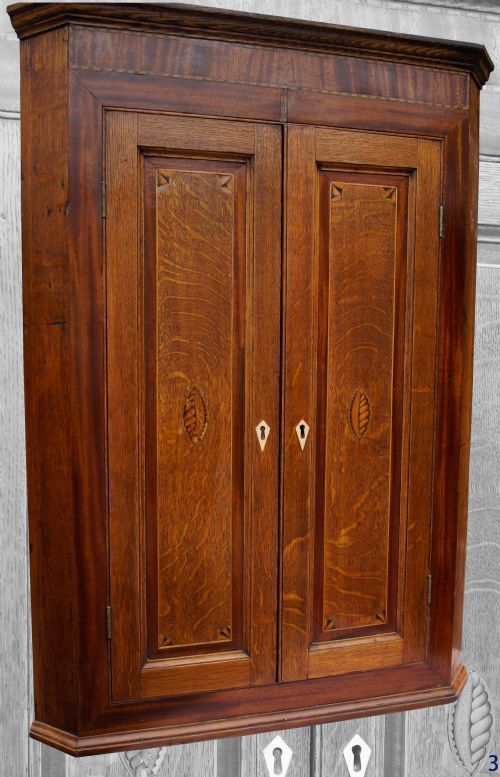
The most common examples encountered on this page are Georgian hanging corner cupboards and later Victorian or Arts and Crafts wall cabinets. Makers shaped these items from sturdy timber to withstand generations of daily use in kitchens, parlours, and hallways.
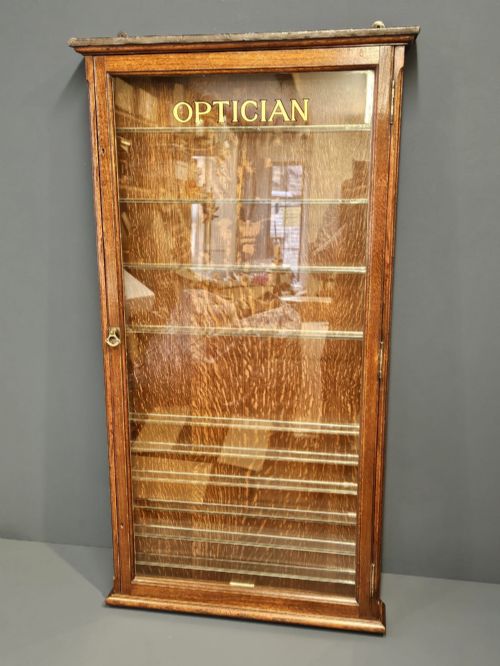
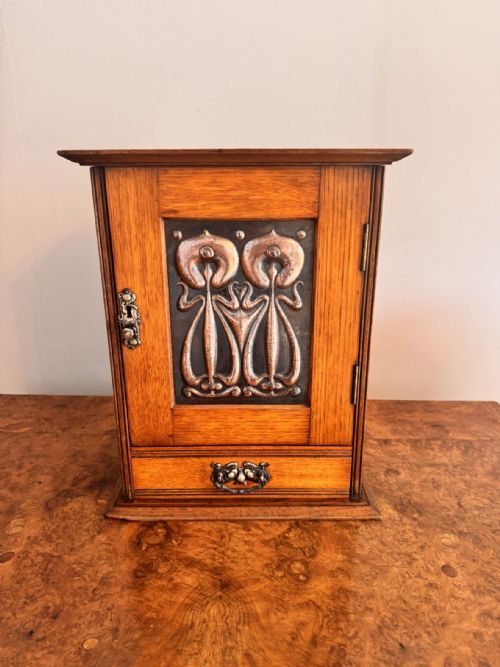
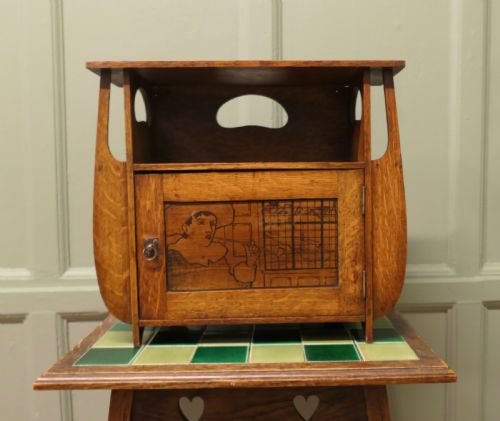
Buyers will find everything from plain provincial storage boxes to glazed display cases and small smoker cabinets fitted with internal shelves. Each form reflects the specific domestic requirements of its period, whether for keeping provisions, displaying china, or securing keys.
Materials and construction
Oak forms the primary structural material across these pieces, frequently complemented by brass hinges and escutcheons, iron hardware, and glass panels. Joinery techniques rely on solid timber planks, pegged joints, and raised panels designed to accommodate natural wood movement over time.
Secondary woods such as mahogany, pine, and copper appear in specific elements like cross-banding, backing boards, or decorative hinges. Certain cabinets also show traces of original paint or rich patination developed through centuries of polishing and handling.
Vintage Oak Wall Cupboard Retail Price Guide 2026
Typical asking prices for vintage oak wall cupboard among the pieces listed under this phrase on Sellingantiques today, from the lower quarter to the upper quarter. They describe what is for sale here now, not the wider market.
Listings span multiple centuries, incorporating 17th-century rustic pieces alongside Georgian, Victorian, and Arts and Crafts examples.
Judging the standard
Quality in a vintage oak wall cupboard reveals itself in the selection of the timber and the crispness of the joinery. Superior examples display tightly fitted panel doors, original brass or iron hardware, and minimal intervention from later restorations.
The distinction between ordinary and exceptional pieces lies in proportion, carving detail, and the integrity of the original hanging brackets. Well-balanced cornices and smooth door action separate humble utility items from pieces made by accomplished provincial or school workshops.
The Vintage Oak Wall Cupboard Glossary
- Hanging cupboard
- A wall-mounted storage unit designed to be secured above floor level. These pieces maximise room space by utilising empty wall areas.
- Corner cabinet
- A specialised storage form built with an angled back to fit snugly into the intersection of two walls. They frequently feature single or double doors enclosing stacked shelving.
- Raised panel
- A central wood section within a door frame with bevelled edges that sit proud of the surrounding rails. This traditional technique allows the timber to expand and contract without splitting.
- Bowfront
- A curved exterior front profile that swells outward from the corners. This design softens the angles of a room and requires advanced woodworking skill to construct.
- Provincial
- A term denoting items made in regional workshops rather than metropolitan centres. These pieces often display robust, straightforward construction using locally sourced materials.
Vintage Oak Wall Cupboard: Frequently Asked Questions
How do I hang an antique wall cupboard?
Most vintage oak wall cupboards rely on original internal fixing brackets or heavy-duty rear battens to support their weight safely. Modern wall fixings matched to the specific wall type ensure the piece remains secure.
Because these cabinets are constructed from solid oak, they carry considerable weight even when empty. Professional installation into wall studs or masonry provides the necessary structural support.
How do I care for oak furniture?
Maintaining solid oak requires keeping pieces away from direct heat sources and sudden humidity changes to prevent the timber from splitting. Regular dusting with a dry cloth keeps the surface clean without building up residue.
Applying a traditional beeswax polish occasionally helps nourish the grain and preserve the deep patination built up over decades or centuries of use.
Are these cabinets suitable for modern kitchens?
These cupboards integrate well into contemporary spaces when used for storing crockery, glassware, or dry goods. Their compact wall-mounted formats make them practical for adding character to smaller rooms.
Care should be taken to protect antique finishes from excessive moisture and steam typically found in modern kitchen environments.