

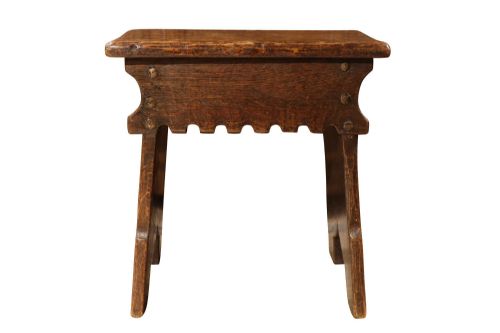


Vintage Oak Milking Stool
A vintage oak milking stool offers solid rustic charm, bringing genuine utilitarian history and tactile warmth into a modern interior.
Vintage Oak Milking Stool
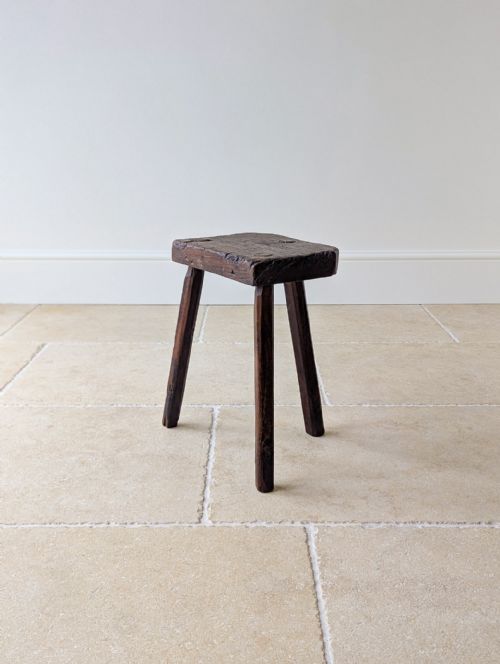
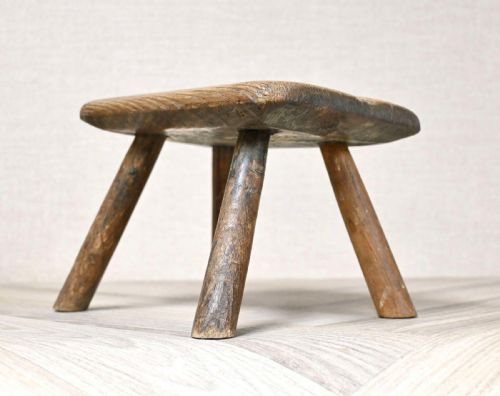
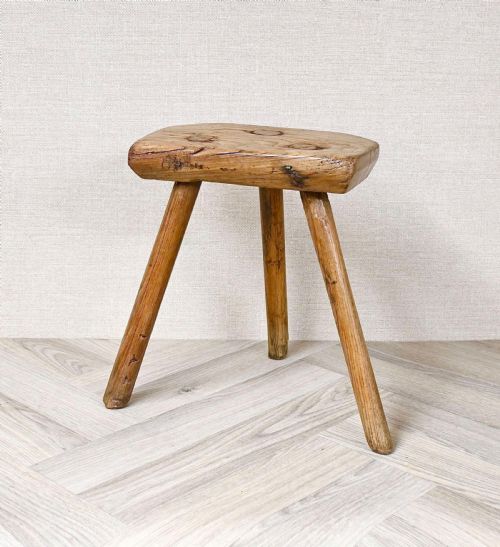
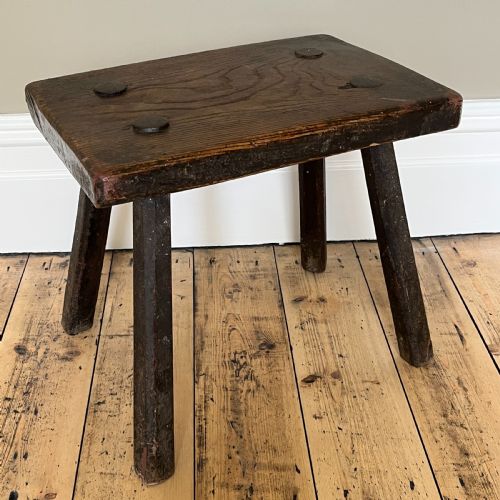
A vintage oak milking stool is a low, sturdy seat originally designed for agricultural work, frequently appearing alongside elm, ash, and pine variants in rural forms. You will mostly encounter nineteenth-century examples and rustic farmhouse pieces featuring simple tripod or four-legged designs.
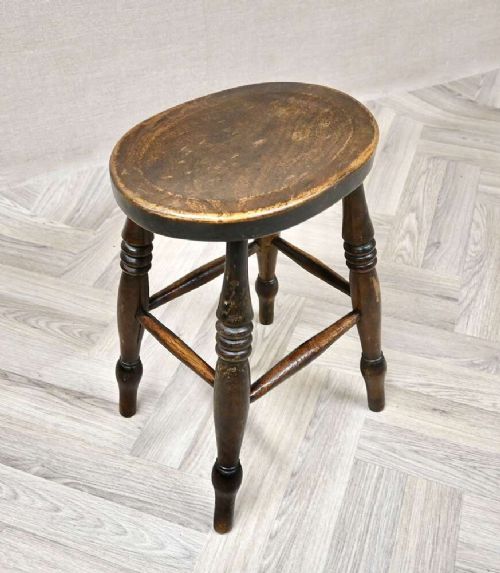
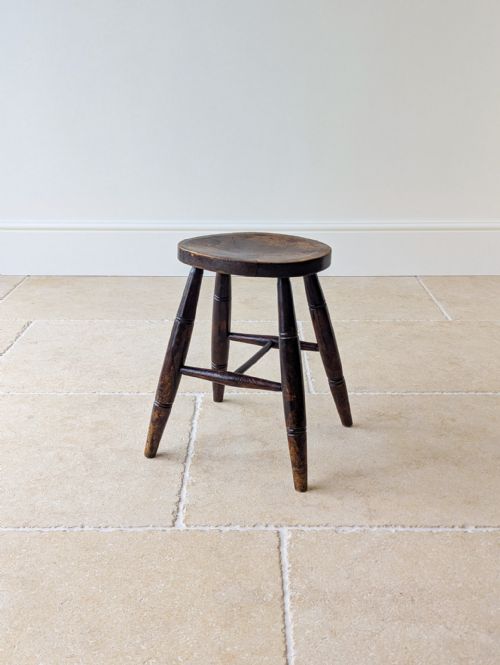
The inventory ranges from three-legged milking seats and windsor-style variants to small hearth stools, five-plank construction, and primitive natural form children's pieces. These items served practical functions in farmhouses and dairies before finding a permanent place in contemporary domestic decor as side tables and accent seats.
Materials and construction methods
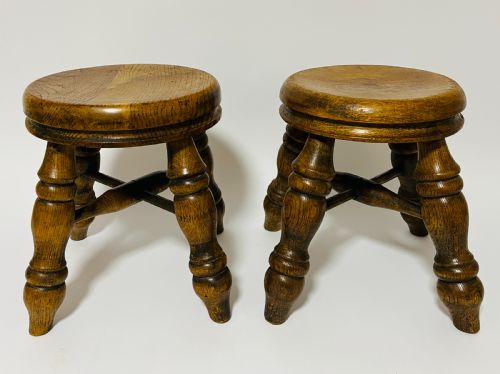
Construction relies on traditional timber selection, combining sturdy oak seats or tops with ash, elm, and beech for legs and stretchers. Makers utilised pegged joints, bobbin turning, and straightforward mortise and tenon techniques to ensure stability on uneven farmhouse floors.
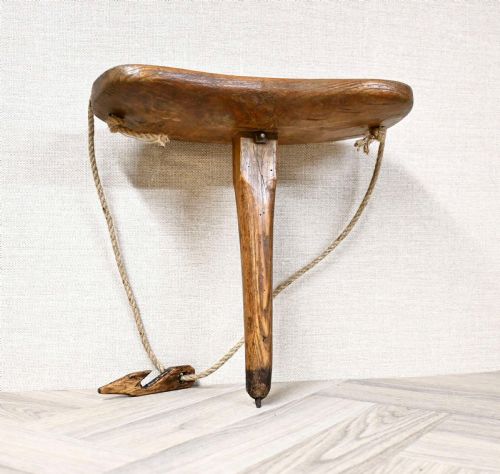
Surfaces often display the honest marks of daily use, occasionally incorporating carved details, pokerwork decoration, or hemp rope. The emphasis remains firmly on utilitarian strength rather than elaborate ornamentation, resulting in robust everyday objects built to endure.
The selection includes utilitarian farm furniture, hearth seats, children's items, and decorative Arts and Crafts interpretations.
Factors influencing quality and character
Quality rests in the harmony of timber selection, grain pattern, and the integrity of the original joints. Pieces retaining their honest surface patination and authentic wear stand apart from heavily restored or altered examples.
Structural honesty dictates desirability, where sturdy leg placement and original pegging matter more than smooth finish. Unusual configurations, such as distinct single-leg designs or specific regional origins, elevate individual pieces above standard utility.
The Vintage Oak Milking Stool Glossary
- Pegged construction
- A method of joining wooden components using tight wooden pins rather than modern metal fasteners. This traditional technique allows the timber to expand and contract naturally with changes in humidity.
- Tripod
- A three-legged base configuration commonly found on early seating. This design provides unwavering stability on uneven flagstone or earth floors.
- Windsor
- A style of seating characterised by turned legs and spindles inserted directly into a solid sculpted seat. It represents a pinnacle of vernacular woodworking skill.
- Pokerwork
- A decorative technique using heated metal tools to burn designs into a wooden surface. Scottish examples occasionally feature traditional mottoes applied in this manner.
- Patina
- The deep, lustrous surface sheen developed on timber over decades of handling, polishing, and environmental exposure. It serves as a visual record of age and continuous use.
Vintage Oak Milking Stool: Frequently Asked Questions
How were milking stools originally used?
These low seats provided dairy workers with a stable, portable perch while milking cows by hand in barns and pastures. Their compact size allowed handlers to move quickly between stalls.
Beyond agricultural tasks, such sturdy seating served various utilitarian purposes around the farmhouse hearth and dairy.
Are three-legged stools stable?
Three-legged designs naturally remain level on uneven stone or timber floors without wobbling. This engineering logic made tripod seating essential in rustic environments.
While they require mindful placement, they offer remarkable balance once weight is applied downwards.
Can I use them as side tables?
Their flat tops and compact dimensions make them ideal for holding small lamps, books, or decorative objects. Many collectors repurpose them specifically as occasional tables.
Ensure the top surface is relatively level if you plan to balance beverages or delicate items.
How do I identify a 19th-century piece?
Nineteenth-century examples display hand-turned elements, traditional pit-sawn marks, and genuine surface wear accumulated through decades of domestic or agricultural work. Construction details like hand-carved wedged tenons point directly to this era.
Examining the underside often reveals the tool marks and ageing patterns characteristic of vernacular country furniture.