
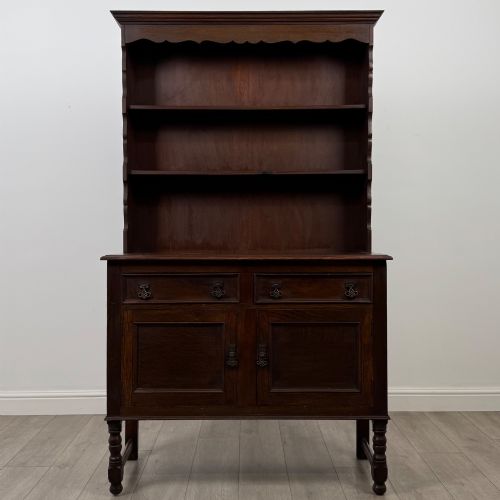

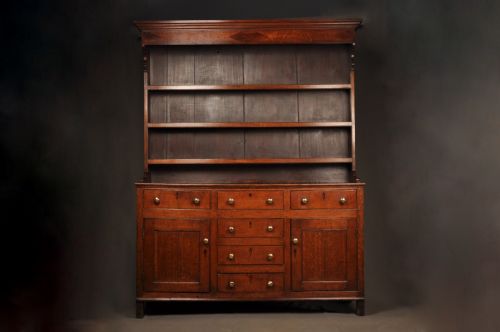
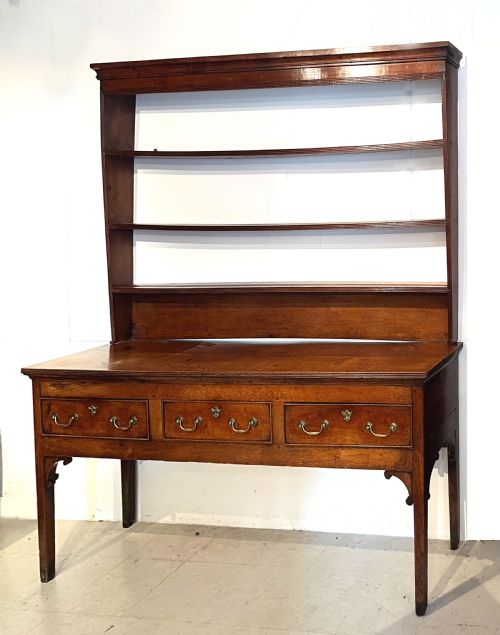


Vintage Oak Kitchen Hutch
These vintage oak kitchen hutch pieces offer honest storage and display, bringing enduring utility and character to any home.
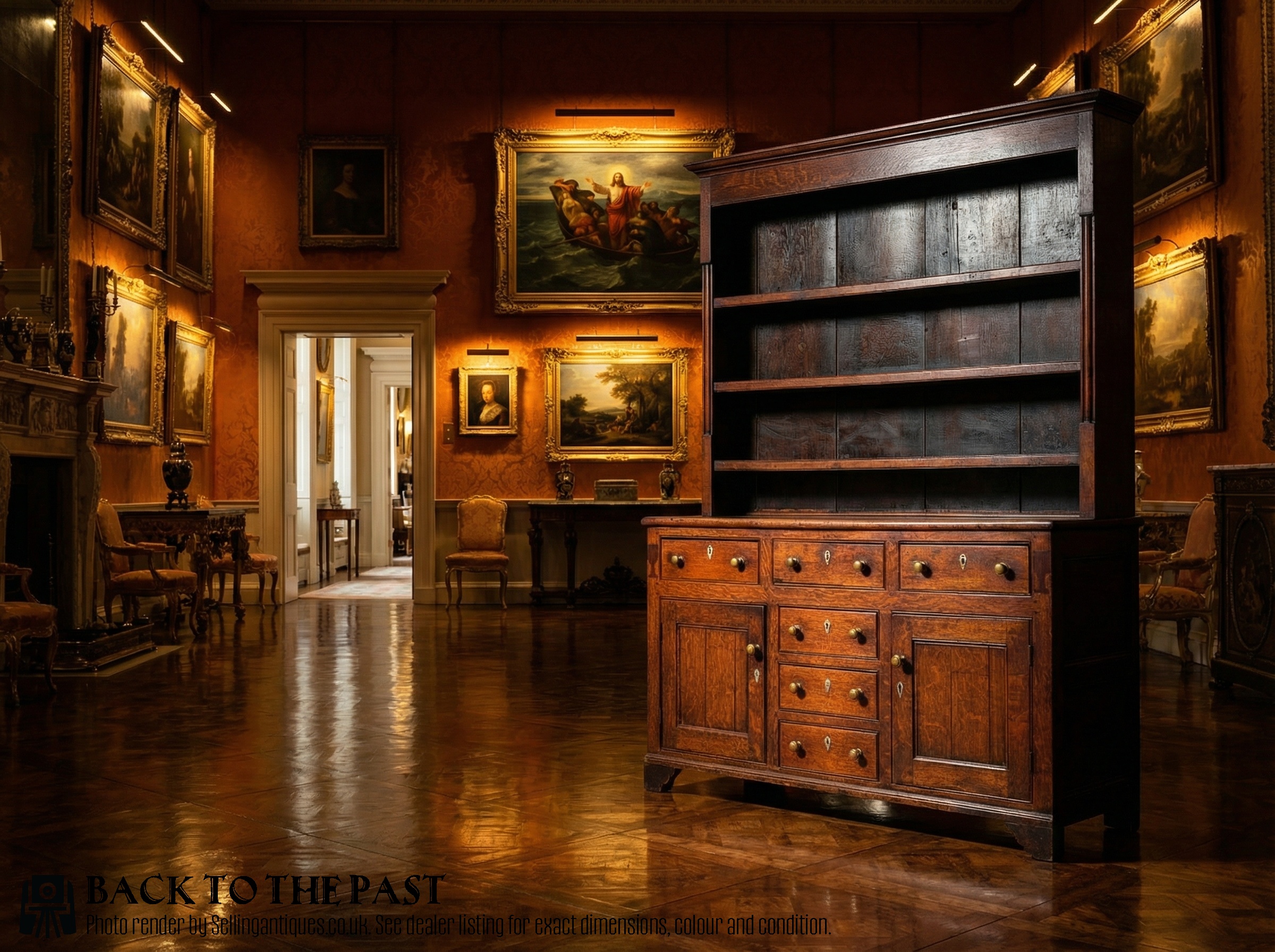
Vintage Oak Kitchen Hutch
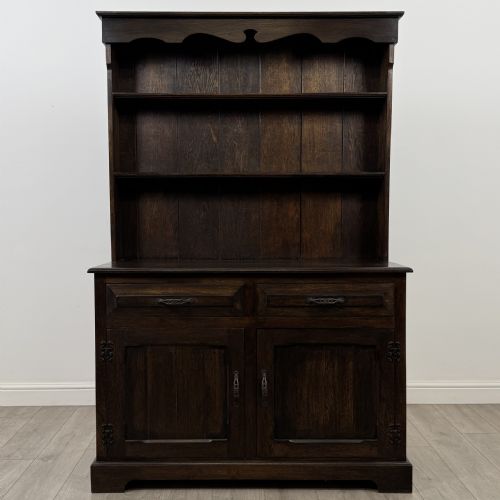
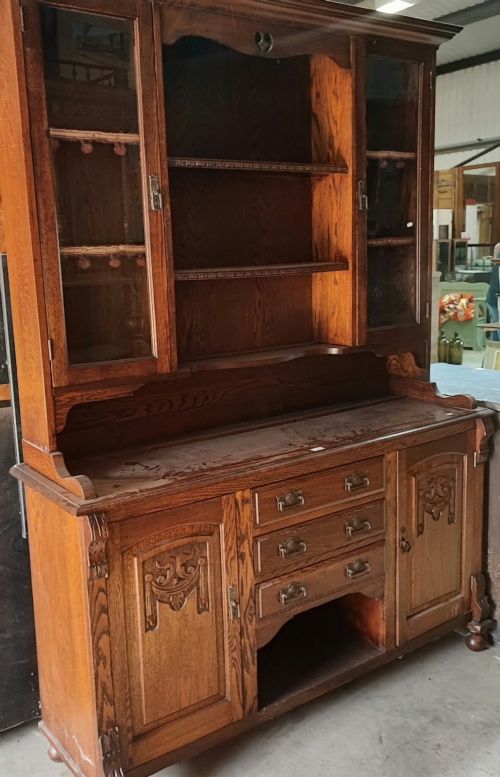
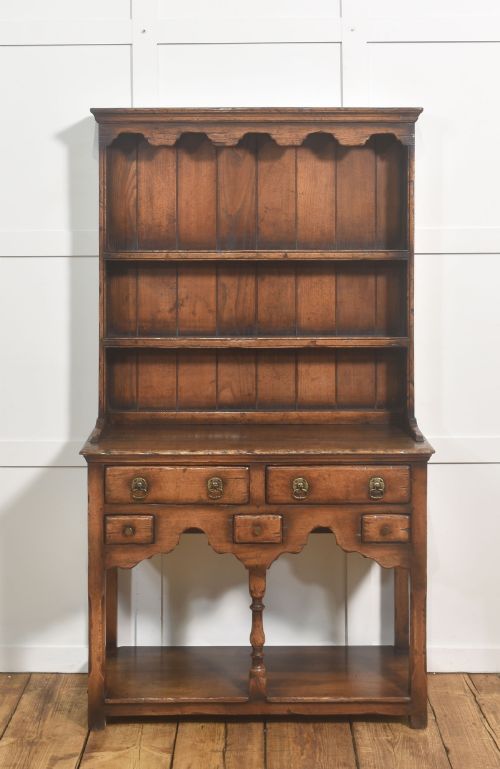
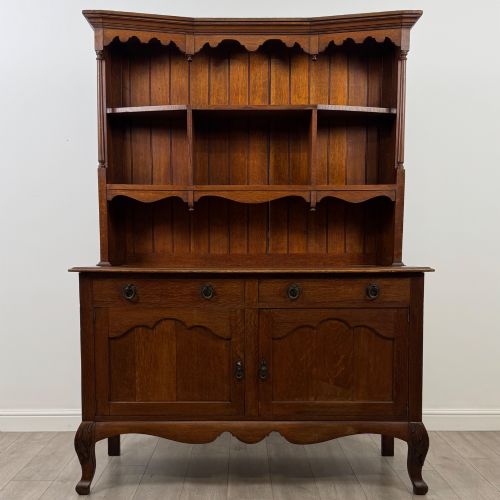
A vintage oak kitchen hutch serves as a traditional storage and display unit, combining a lower base of cupboards or drawers with an upper plate rack. When you search for a vintage oak kitchen hutch, you meet substantial wooden furniture designed for domestic use.
The pieces appearing here span centuries of craftsmanship, ranging from eighteenth-century country examples to early twentieth-century revivals. Many take the form of Welsh dressers or farmhouse dressers built to house kitchenware.
Regional variations appear across England and Wales, utilising local timber and traditional construction methods. Buyers encounter everything from simple cottage furniture to carved Jacobean revival interpretations.
How they were made
Makers built these pieces primarily using solid oak, frequently paired with brass or iron hardware for handles and hinges. Glass panels appear on glazed upper doors, while bone or metal details occasionally form escutcheons.
Construction relies on traditional joinery techniques such as mortise and tenon joints to ensure lasting stability. Carved ornamentation, paneling, and two-part construction methods define the more elaborate stylistic periods.
Some dressers still retain the faint ghosts of old plate grooves worn deep by generations of Sunday best china.
What varies in quality
Quality rests upon the integrity of the timber, the crispness of any hand carving, and the retention of original brass or iron fittings. Pieces displaying honest patination through decades of use command greater appreciation.
Structural proportion and the balance between the lower sideboard and upper plate rack distinguish finer examples from standard utility items. The tightness of the joinery and the selection of figured oak further elevate individual pieces.
Early Heals of London
The Vintage Oak Kitchen Hutch Glossary
- Plate rack
- The open shelving attached to the upper section of a dresser designed for displaying ceramic plates and platters. It forms an integral visual component of many traditional kitchen dressers.
- Welsh dresser
- A traditional regional term for a large kitchen sideboard combined with an upper plate rack. These units originated for storing and displaying domestic kitchen pottery.
- Jacobean Revival
- A nineteenth and early twentieth-century decorative style imitating seventeenth-century English furniture. It utilises heavy geometric mouldings, paneling, and deep carved motifs.
- Joined oak
- Furniture constructed using mortise and tenon joints secured with wooden pegs rather than metal nails. This method typifies earlier periods of cabinet making.
- Glazed dresser
- A variation featuring glass-fronted upper doors to protect displayed ceramics from dust. This style offers enclosed display space alongside open shelving.
Vintage Oak Kitchen Hutch: Frequently Asked Questions
What is a vintage oak kitchen hutch used for?
These pieces serve primarily for storing kitchenware while providing open or glazed display space for ceramics and decorative objects.
Historically placed in the kitchen or dining room, they keep everyday crockery accessible and organised.
How do I date a vintage oak kitchen hutch?
Dating relies on examining construction methods, timber selection, and stylistic details such as hardware and carvings.
Earlier pieces feature hand-cut joinery and pegged joints, whereas later revival items incorporate machine-cut elements and distinct period styling.
Are these hutches made of solid oak?
Most examples utilise solid oak throughout their primary construction, often combined with secondary timbers for internal framing.
Hardware elements incorporate brass, iron, or glass depending on the specific era and stylistic tradition.
How do I care for an oak hutch?
Maintenance involves keeping the wood away from direct heat sources and sudden humidity changes to prevent timber movement.
Applying natural wax periodically nourishes the surface and preserves the accumulated patination of the oak.