

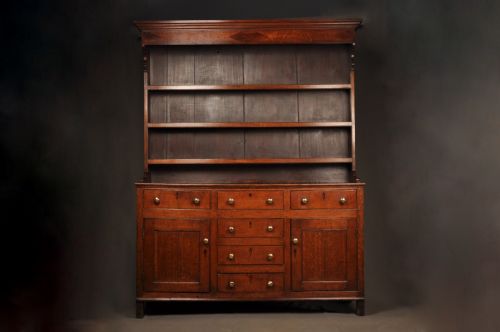
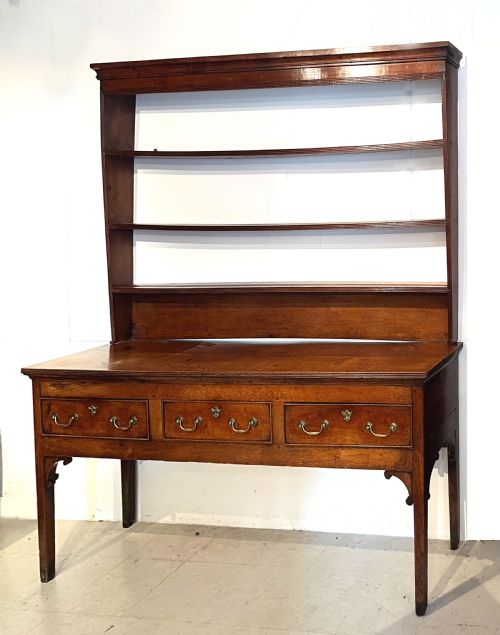


Georgian Oak Kitchen Hutch
A georgian oak kitchen hutch provides practical storage while bringing honest country character into everyday modern interiors.
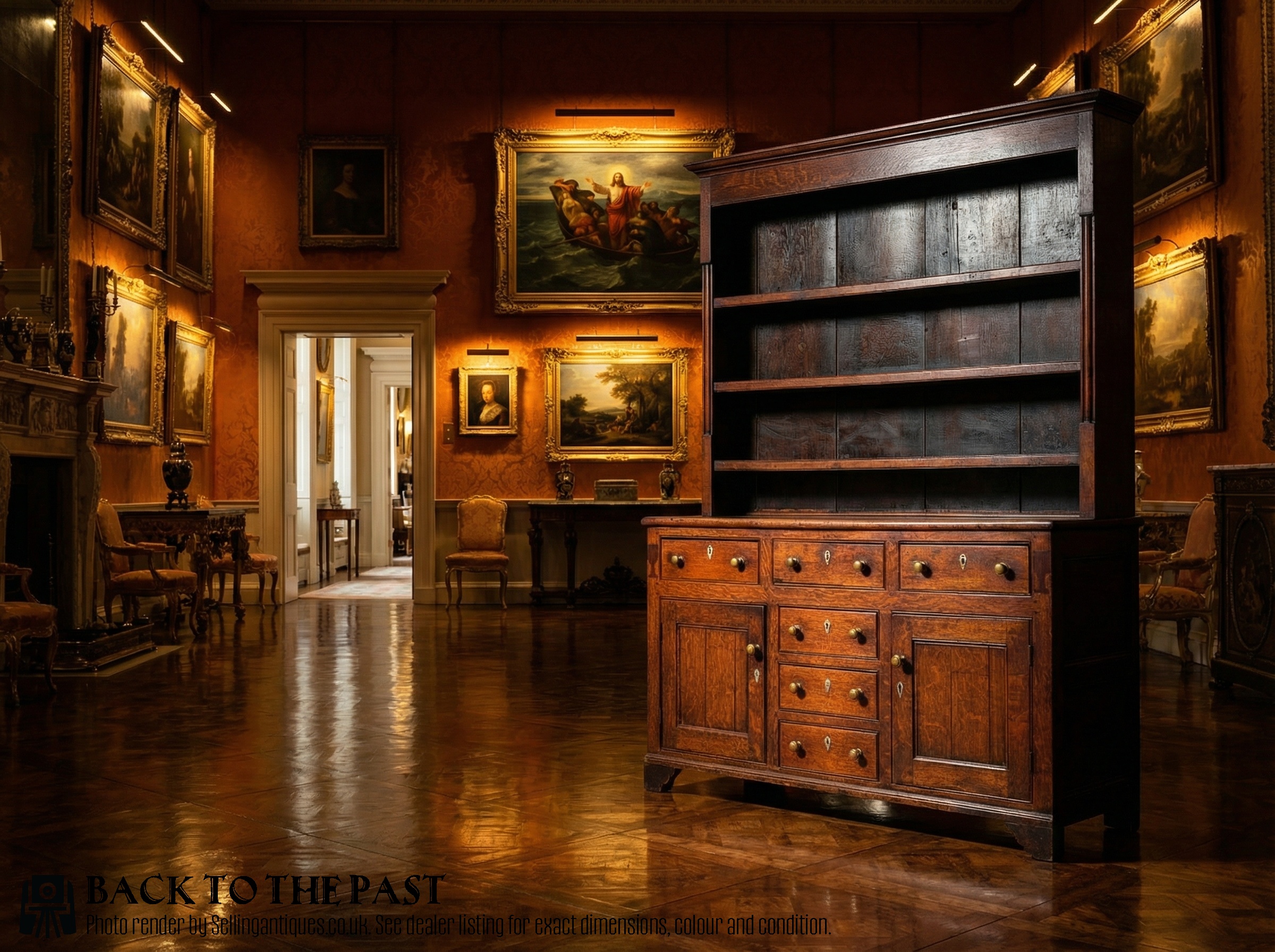
Georgian Oak Kitchen Hutch
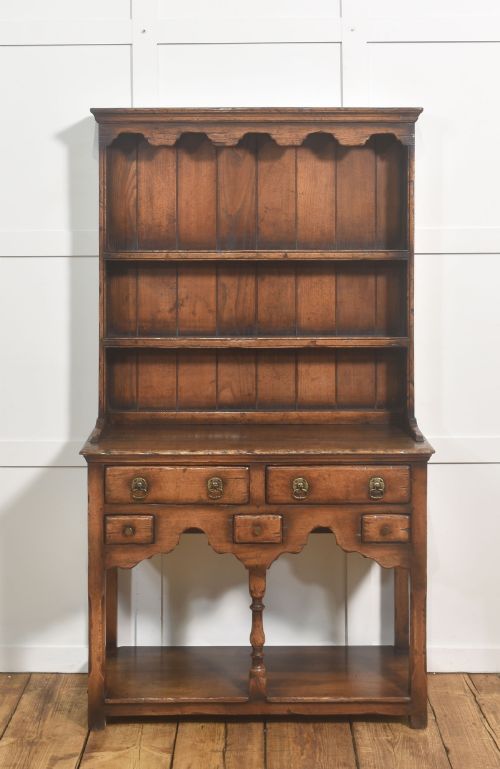
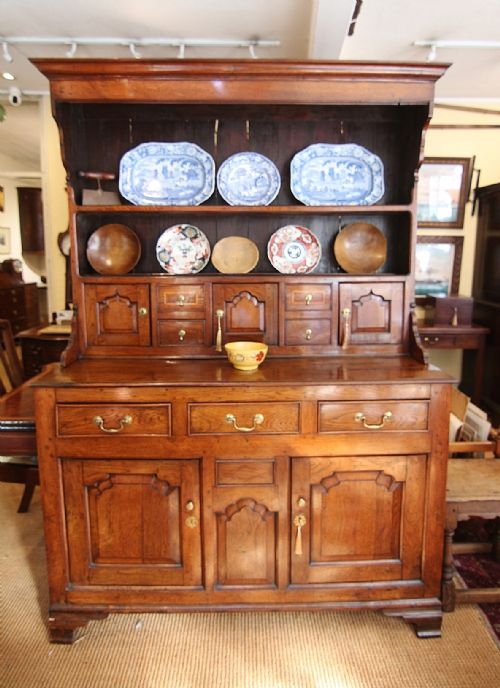
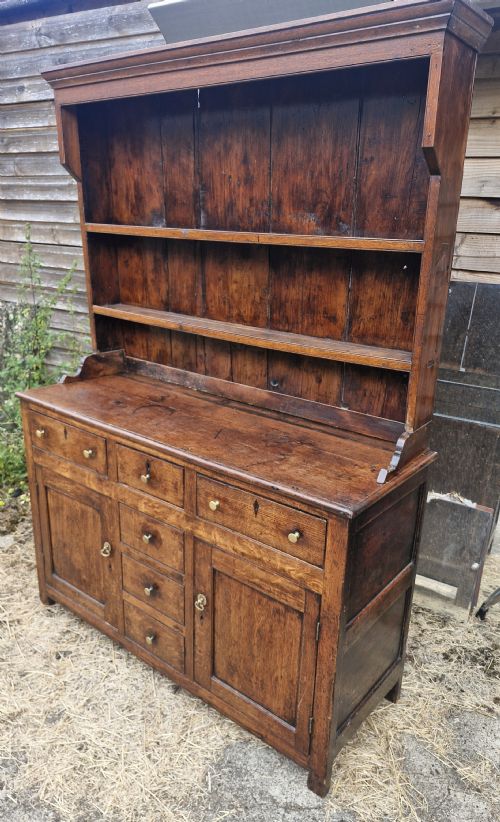
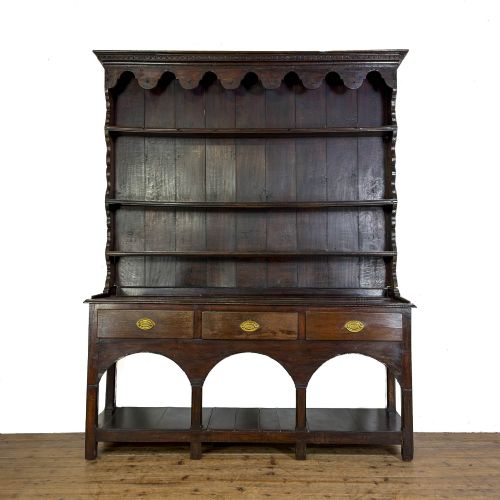
A georgian oak kitchen hutch serves as a traditional storage and display unit, combining a lower base of drawers or cupboards with an upper plate rack. Buyers searching this phrase encounter robust country furniture spanning the eighteenth and nineteenth centuries, often categorised in regional vernacular styles.
Most examples appearing here take the form of Welsh dressers or two-part farmhouse dressers originating from regional workshops. These pieces reflect everyday domestic life through functional timber construction designed for holding household ceramics and provisions.
How they were made
Cabinet makers utilised solid oak timbers for the primary framework, often pairing it with secondary woods such as pine for internal components. Structural joins relied on traditional pegged mortise and tenon construction to withstand daily domestic use.
Surface detailing incorporated hand-carved geometric motifs, inlay work, and brass hardware such as drawer pulls. Pot-board bases and open plate racks were constructed to support heavy earthenware and platters.
Some eighteen-century kitchen dressers feature carved kings peering out from the woodwork, keeping a stern watch over the dinner plates.
What varies in quality
Quality rests upon the integrity of the timber selection, regional character, and whether the upper rack remains original to the lower base. Pieces displaying crisp geometric carvings or regional Snowdonia characteristics command greater interest among collectors.
Proportion and surface patina distinguish superior examples from standard utility pieces. Retaining original brass fittings, backboards, and untouched timber surfaces elevates the integrity of an individual dresser.
The Georgian Oak Kitchen Hutch Glossary
- Pot-board
- A low slatted shelf fitted between the lower legs of a dresser, originally intended for storing heavy pots and pans. This lower platform provides structural stability to the base frame.
- Plate rack
- The upper shelving unit attached to a dresser base, featuring grooves and plate rails to display ceramic plates upright. Many regional examples retain their original matching racks.
- Breakfront
- A cabinet design where the central section projects forward from the flanking outer sections. This architectural arrangement adds visual depth to the lower drawer configuration.
- Vernacular furniture
- Domestic pieces made by local country cabinet makers using regional traditions rather than metropolitan academic designs. These items prioritise functional utility and local materials.
- Inlay
- A decorative technique where contrasting woods or materials are inserted into recessed portions of the oak surface. This creates geometric patterns or pictorial motifs.
Georgian Oak Kitchen Hutch: Frequently Asked Questions
How do I identify a genuine period piece?
Examine the timber surfaces for hand-planed marks, traditional peg joins, and consistent patination that indicates genuine age. Regional variations in construction often point to specific workshops or geographic areas.
Check whether the upper rack matches the wear and construction style of the lower base. Original components share a unified character and timber ageing process.
Where were these dressers originally made?
Makers constructed these utility items in rural workshops across England and Wales, with notable regional examples originating from Snowdonia and South Wales. Each area developed distinct proportions and decorative vocabulary.
Local timber availability dictated the choice of solid oak, pine, and occasional inlay details. These pieces served as the central storage hub in farmhouse kitchens.
How should I care for oak furniture?
Maintain a stable indoor humidity level to prevent the solid oak timber from splitting or warping over time. Avoid placing the unit near direct heat sources or strong sunlight.
Apply natural beeswax periodically to nourish the wood and preserve the historic surface finish. Clean gently with a soft, dry cloth without harsh chemical polishes.
What is the difference between a dresser and a hutch?
Traditional British terminology generally refers to these combined base and rack units as dressers rather than hutches. The lower section provides enclosed cupboard or drawer storage while the open upper section displays ceramics.
Regional variations include pot-board bases and two-part constructions that separate for transport. Both terms describe functional kitchen storage furniture.