


Vintage Oak Fold Table
These vintage oak fold tables bring sturdy timber and clever folding mechanisms together for compact living.
Vintage Oak Fold Table
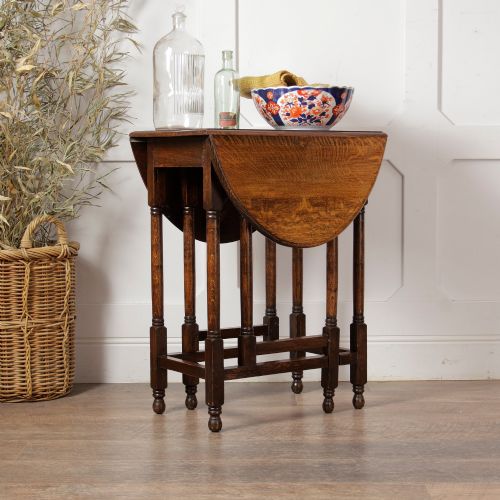
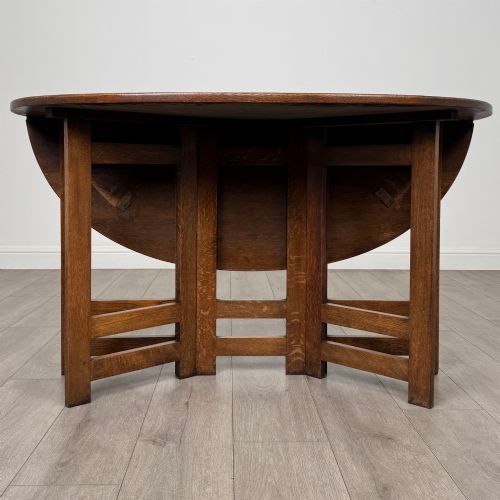
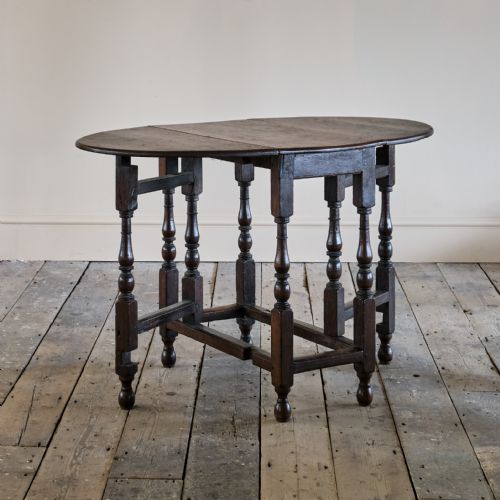
A vintage oak fold table serves versatile roles in smaller rooms, moving easily between dining, serving, and occasional use. Buyers seek these pieces for their combination of solid hardwood construction and space-saving hinged or drop-leaf designs.
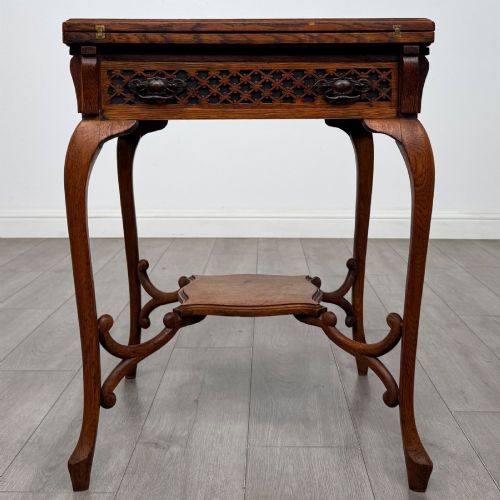
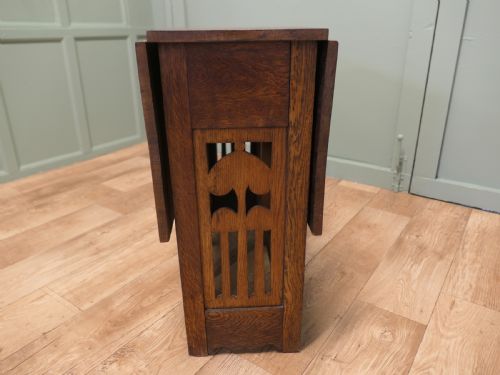
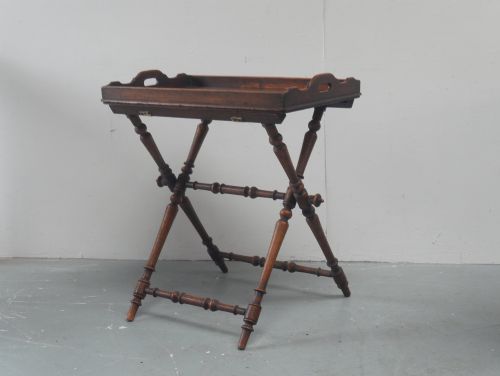
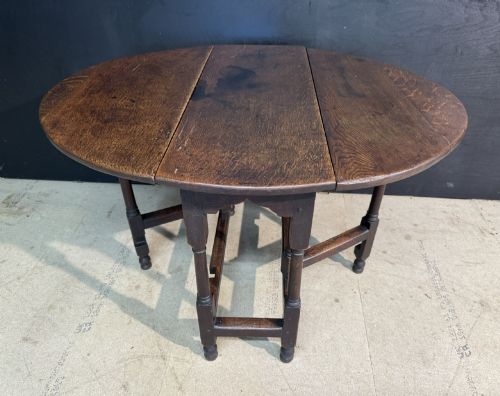
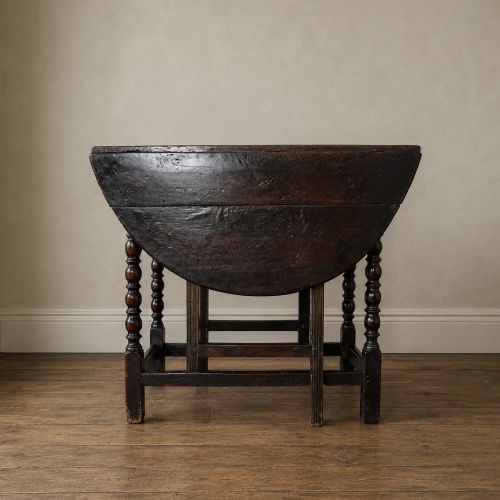
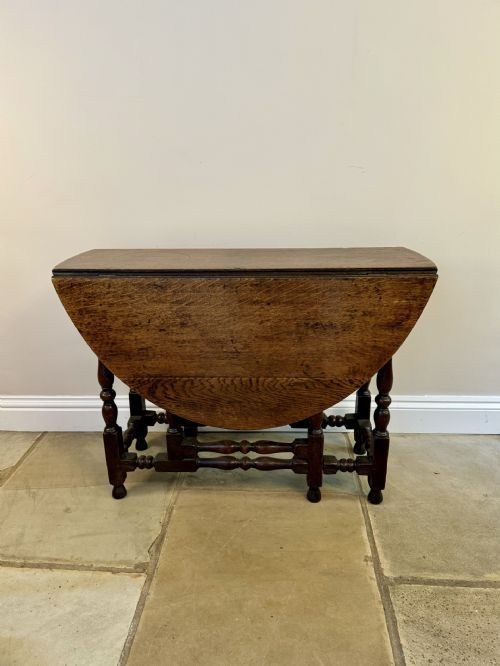
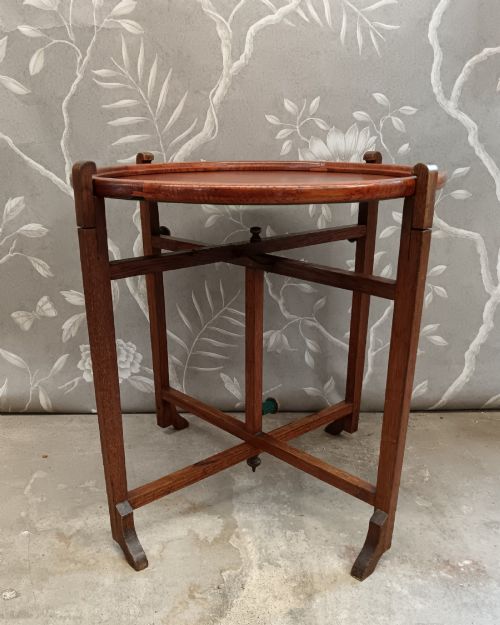
The selection ranges from seventeenth-century gateleg dining surfaces to early twentieth-century tea trolleys, but gateleg tables dominate the offerings. Common forms include butler trays on stands, occasional tables, and drop-leaf dining formats.
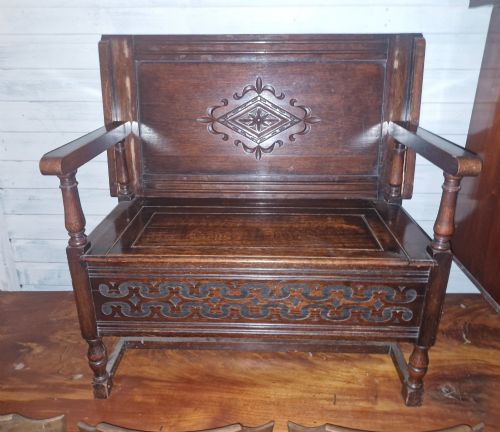
Originating largely from English workshops, these items span Jacobean revival styles, Arts and Crafts designs, and plain country vernacular. Pieces from the nineteen-twenties and nineteen-thirties frequently appear alongside nineteenth-century examples.
Materials and construction
Makers relied principally on solid oak, utilising its natural strength to support hinged leaves and swinging gatelegs without excessive bulk. Selected pieces incorporate brass hinges, iron brackets, or turned wooden pivots to manage the movement.
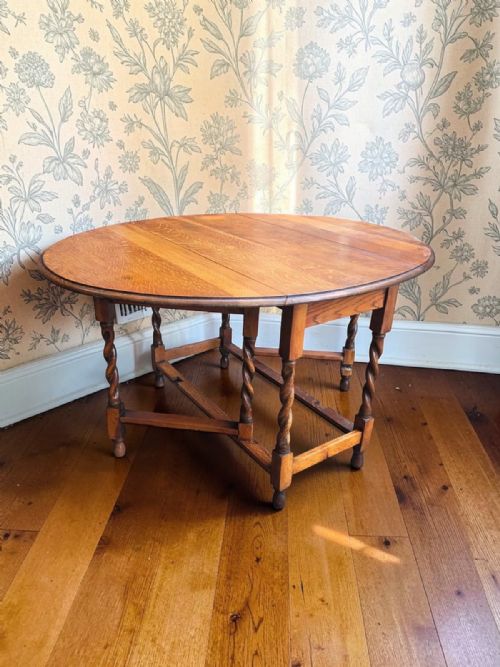
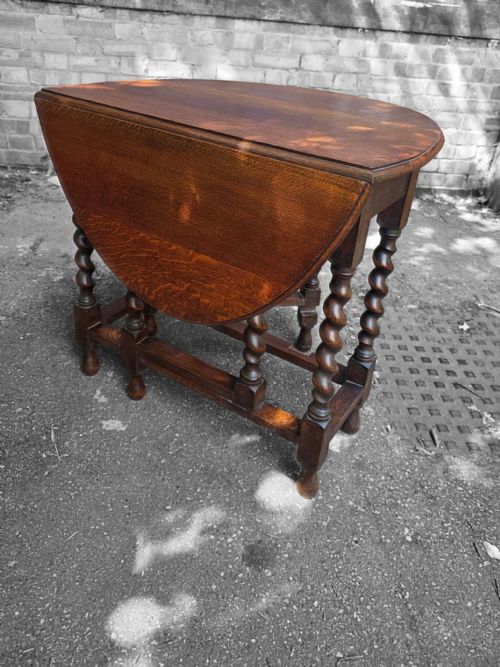
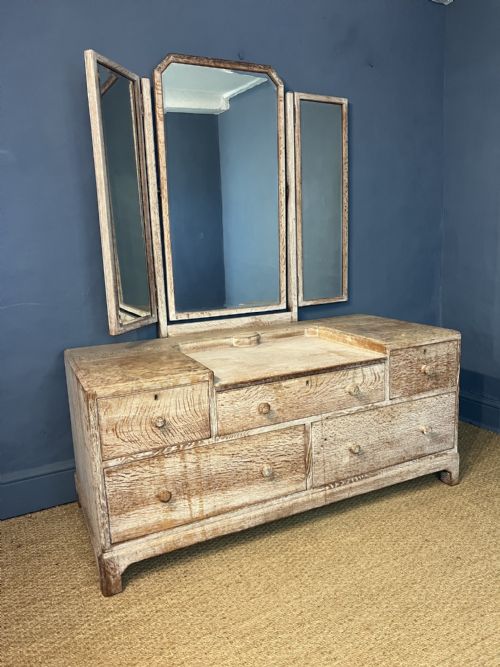
Turned supports such as barley twist and bobbin legs appear frequently, demonstrating steady lathe work alongside plain square or chamfered stretchers. Surfaces often show a dark wax finish or a lighter limed oak treatment applied to the timber grain.
Listings feature oak predominantly, supported by brass and iron fittings, across periods ranging from the seventeenth century through to the mid-twentieth century.
Indicators of standard
Quality rests in the stability of the frame and the precise alignment of the leaves when opened flat. Superior examples maintain tight joints at the pivot points, ensuring the folding action operates smoothly without sagging.
The depth of the natural patina on the timber and the thickness of the oak boards distinguish better pieces from simpler utilitarian items. Original brass hardware and well-matched grain patterns across the leaves signal careful initial manufacture.
Heals
The Vintage Oak Fold Table Glossary
- Gateleg table
- A table with hinged flaps supported by legs that swing outward like a gate. This design allows the surface area to expand or contract according to space needs.
- Butler tray
- A removable wooden tray with raised edges, often fitted with handles, designed to sit upon a folding wooden stand. It originated for portable service in larger houses.
- Barley twist
- A turned column resembling a spiralling rope or twist of barley sugar. Popularized in seventeenth-century furniture, it returned in many Edwardian and interwar revivals.
- Drop leaf
- A table top configuration comprising a fixed central section and hinged flaps on either side. These flaps drop down vertically when not in use.
- Limed oak
- Timber treated with a white pigment or lime finish to highlight the open grain patterns. This technique gained favour during the nineteen-thirties.
- Patina
- The surface sheen and mellowing developed by timber over decades of handling and polishing. It serves as an indicator of age and consistent maintenance.
Vintage Oak Fold Table: Frequently Asked Questions
How do I care for a vintage oak fold table?
Dust the surface regularly with a soft, dry cloth and apply a quality beeswax occasionally to nourish the timber. Avoid placing the table near direct heat sources or damp areas to prevent the oak from warping.
Protect the finish from moisture by using coasters under glasses and placing hot dishes on mats. Gentle maintenance preserves the existing patina without stripping the character built up over decades of use.
Are these tables sturdy enough for daily dining?
Most gateleg and drop-leaf designs provide solid support when the hinged legs are properly locked into position. The structural integrity depends on the tightness of the original joints and the condition of the wooden pivots.
Checking that the swinging legs sit firmly on the floor ensures the leaves remain level during use. Heavier oak versions handle regular meals easily, while smaller occasional formats suit lighter tasks.
How can I tell the age of an oak table?
Examining the construction methods, such as hand-cut joints, timber thickness, and fastener types, provides clues to the manufacturing period. Seventeenth and eighteenth-century examples often display pegged tenons and irregular grain from pit-sawn boards.
Twentieth-century pieces generally show more uniform machining, standardised hardware, and revival styles like barley twist legs. Comparing the wear patterns around the hinges and feet also helps place the item in its correct era.
Will a fold table fit in a small room?
The primary advantage of these pieces lies in their adjustable footprint, allowing leaves to drop down flat against the base. This compact profile lets the furniture function as a console or side table when floor space is limited.
Raising the flaps transforms the surface for dining or working without requiring a permanent large table. Measuring the clearance needed for the swinging gatelegs ensures the mechanism opens fully in tighter spaces.