


Vintage Oak Draw Leaf
Vintage oak draw leaf tables are versatile extendable dining tables offering robust construction and traditional charm for modern homes.
Vintage Oak Draw Leaf
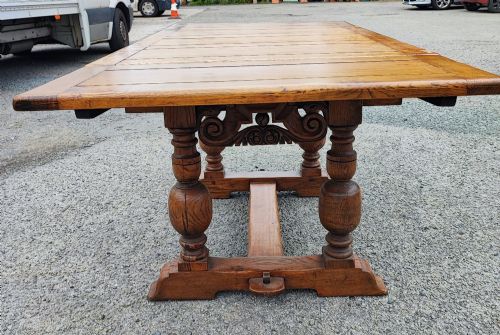
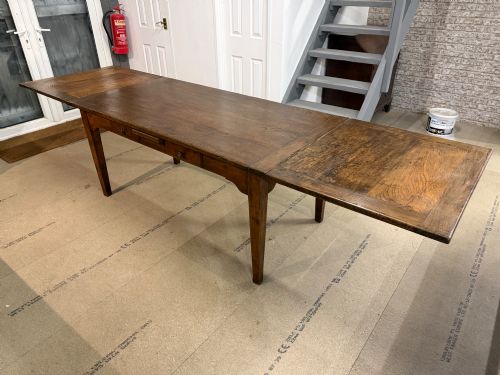
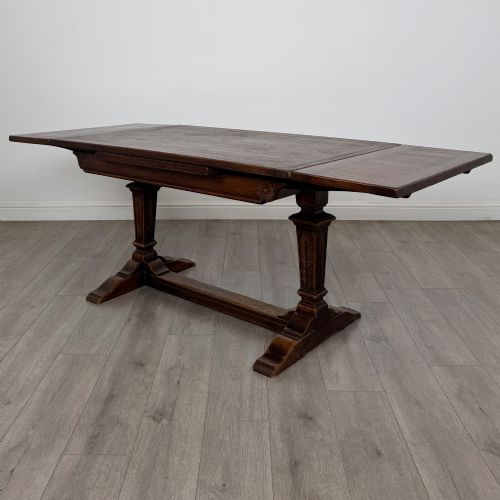
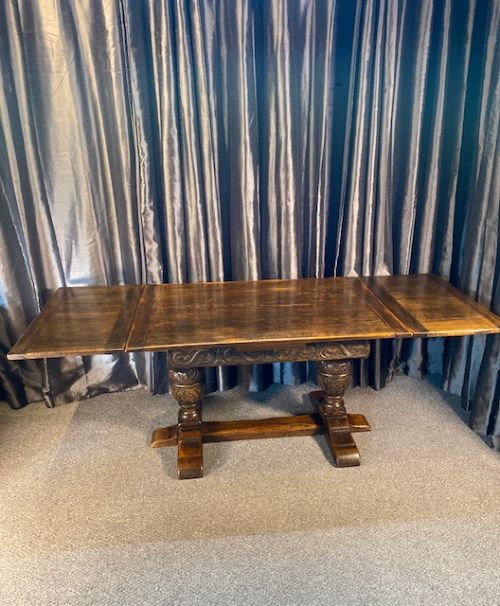
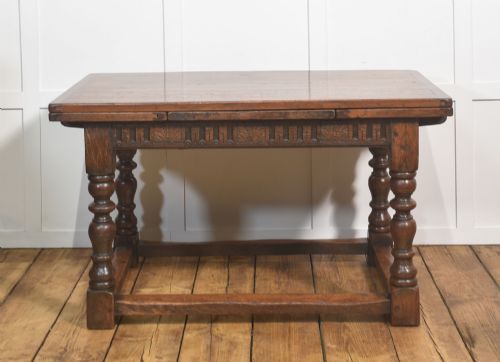
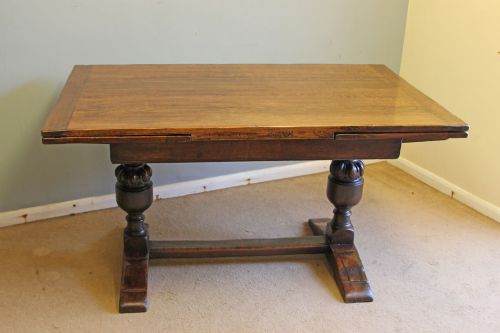
Vintage oak draw leaf tables are practical dining furniture designed to extend smoothly via concealed pull-out leaves beneath the main top. Buyers searching for a vintage oak draw leaf will encounter sturdy refectory, farmhouse, and revival styles spanning from the nineteenth century through the nineteen-thirties.
How they were made
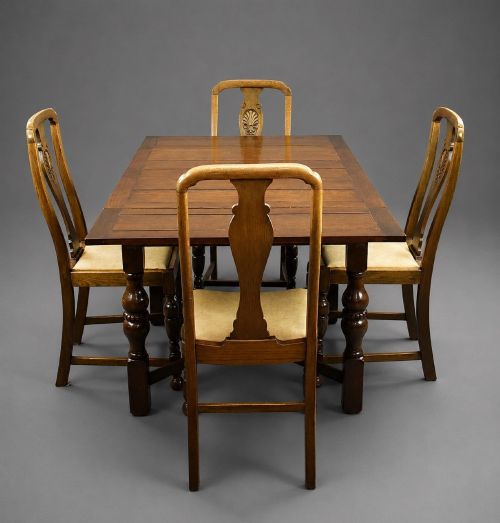
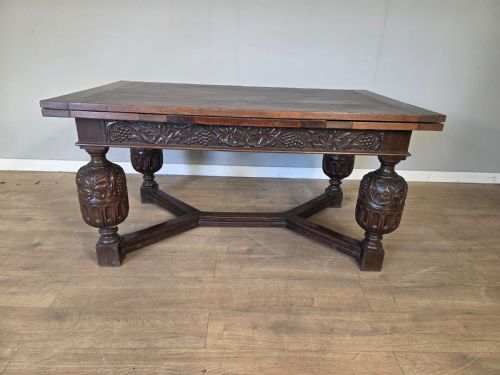
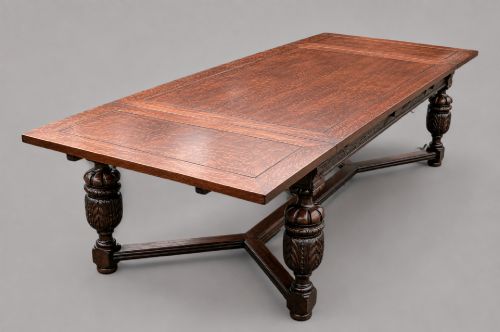
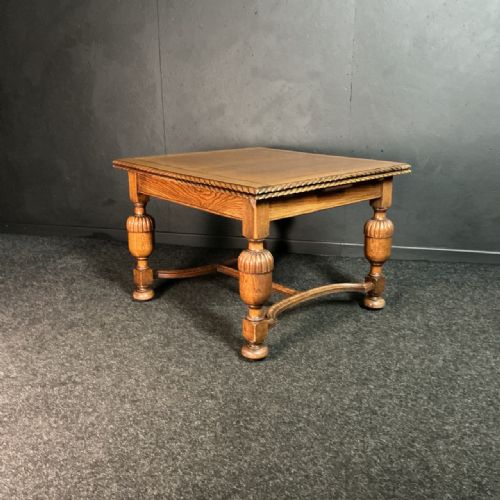
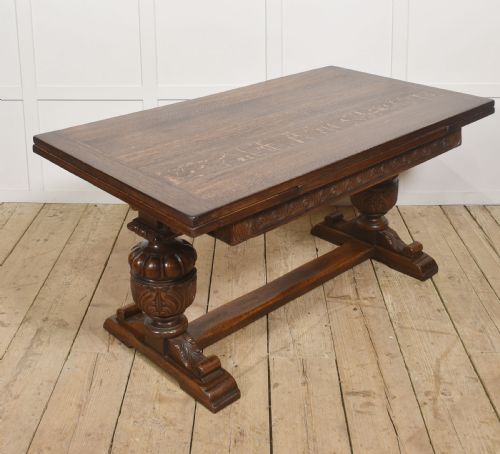
These tables are constructed using solid oak and engineered oak veneers, frequently employing traditional joinery such as mortise and tenon frames. Carved detailing and parquetry tops appear across various examples from the Edwardian and early twentieth-century periods.
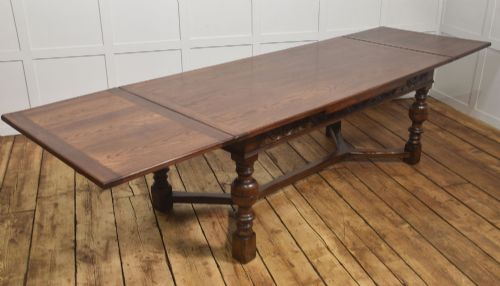
Extension mechanisms rely on clever sliding underleaves that pull out from each end while keeping the main surface level. Upholstery is occasionally integrated when tables are sold alongside matching dining chair sets.
Some tables hide their extension leaves so cleverly that guests sit down completely unaware the table is about to grow.
What varies in quality
Quality in these tables rests upon the selection of timber and the precision of the extension mechanism. Superior examples utilise heavy solid oak with tight grain patterns and smooth sliding tracks that operate without binding.
Carving depth and finish execution also separate standard production from finer workshop pieces. Hand-carved detailing and sophisticated surface treatments like limed oak or French parquetry indicate higher craftsmanship.
Heals·Maple and Co
The Vintage Oak Draw Leaf Glossary
- Draw leaf
- A table with two concealed leaves stored beneath the main top that slide outwards to extend the surface. This mechanism allows daily space-saving while accommodating larger gatherings when needed.
- Refectory
- A long narrow dining table traditionally used in monastic refectories and adapted for domestic dining rooms. These forms provide substantial legroom and a sturdy silhouette.
- Parquetry
- Geometric wood pattern work created by arranging small veneer blocks on the tabletop. This technique adds decorative texture and visual interest to the surface.
- Limed oak
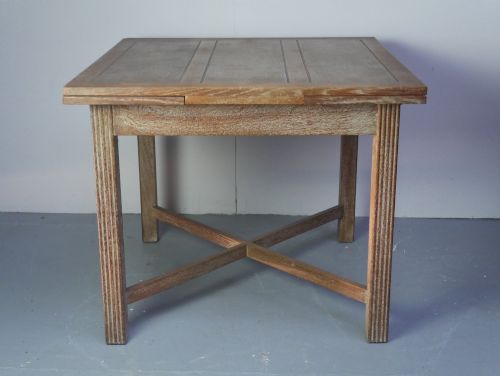
- A specialised wood finishing process that introduces a whitish pigment into the open grain of oak. This treatment achieved a lighter, modern appearance popular during the early twentieth century.
- Jacobean revival
- A nineteenth and twentieth-century decorative style emulating seventeenth-century English furnishings. Pieces feature turned legs, heavy frames, and strapwork carving.
Vintage Oak Draw Leaf: Frequently Asked Questions
How do draw leaf tables work?
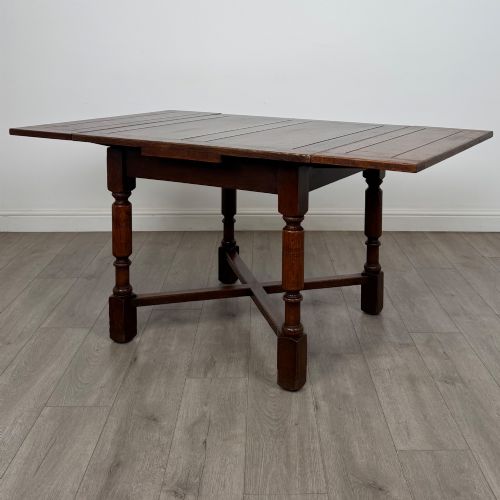
Draw leaf tables operate through a pair of sliding leaves tucked underneath the primary surface. When pulled, the main top rises slightly or the leaves glide out smoothly from each end to lock level.
This clever engineering doubles the usable dining space without requiring loose boards stored separately in a cupboard.
Where were these tables used?
These tables served primarily in country houses, vicarages, and suburban dining rooms for family meals and formal hosting. Their adaptable length suited both daily compact dining and larger seasonal gatherings.
Today, they transition easily into open-plan kitchens and traditional dining spaces alike.
How do I care for an oak table?
Solid oak surfaces respond best to routine dusting with a dry cloth and occasional treatment with natural beeswax to nourish the timber. Avoiding direct heat sources and excessive moisture preserves the polish and grain.
Using placemats and coasters prevents heat rings and liquid marks on the antique finish.
How do I identify the period?
Period identification relies on examining hardware, construction marks, and stylistic motifs such as Jacobean turning or Arts and Crafts simplicity. Edwardian and early twentieth-century examples often display lighter timber tones and machine-assisted joinery.
Comparing leg profiles and underframe stretchers helps distinguish nineteenth-century origins from later revival pieces.