
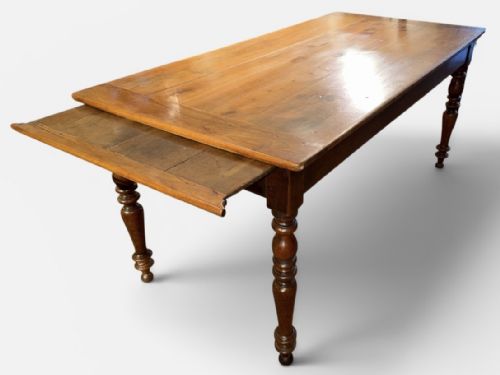


Oak Extendable Kitchen Table
An oak extendable kitchen table gives you solid timber strength and adaptable surface space for daily family meals and larger gatherings.
Oak Extendable Kitchen Table
When you search for an oak extendable kitchen table, you encounter practical dining timber built to adapt in size. The examples available span centuries from the late seventeenth century through the Victorian and Edwardian eras into the nineteen-twenties and nineteen-sixties.
The aesthetic reaches across various revivals and regions. Pieces appear in Jacobean Revival, Arts and Crafts, English Country House, Rustic Farmhouse, and French Provincial interpretations.
How they were made
Construction relies primarily on oak, sometimes accompanied by fruitwood elements and brass fittings or hardware. Structural joinery uses traditional methods suited to heavy daily use in busy domestic spaces.
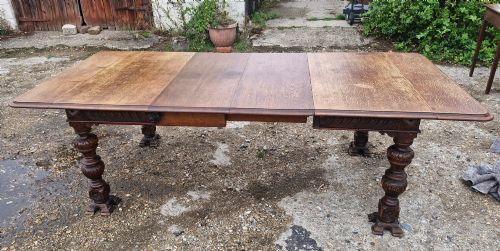
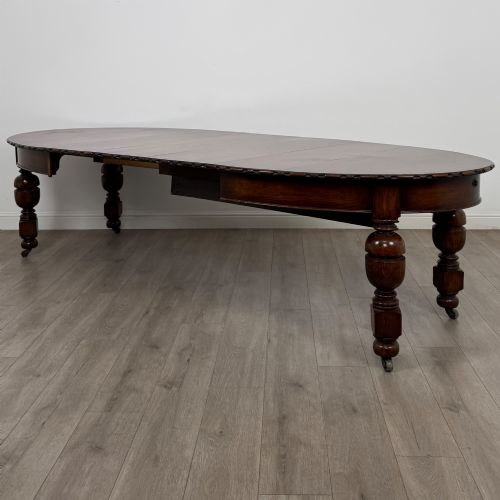
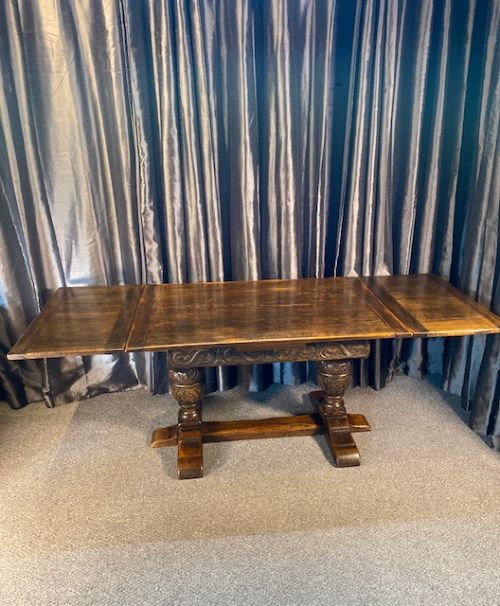
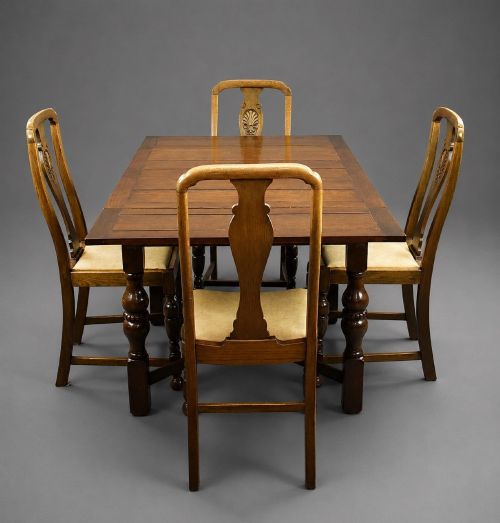
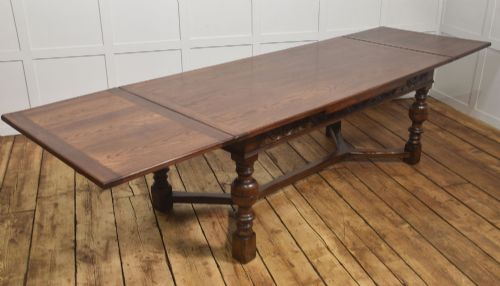
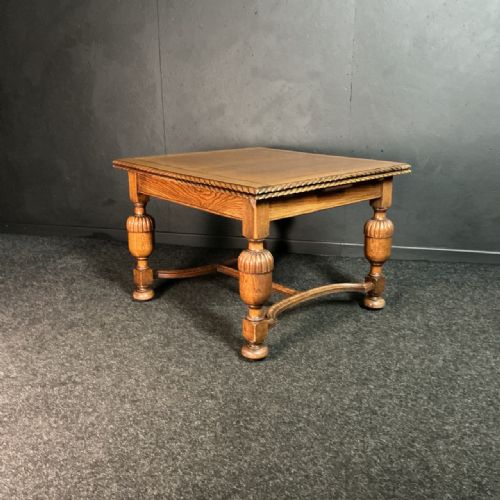
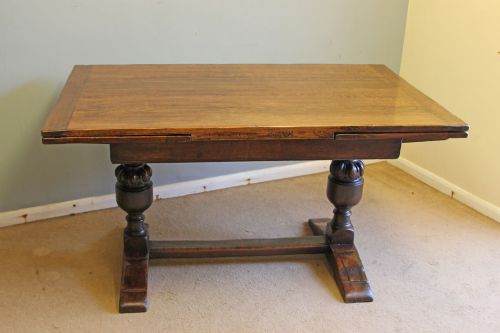
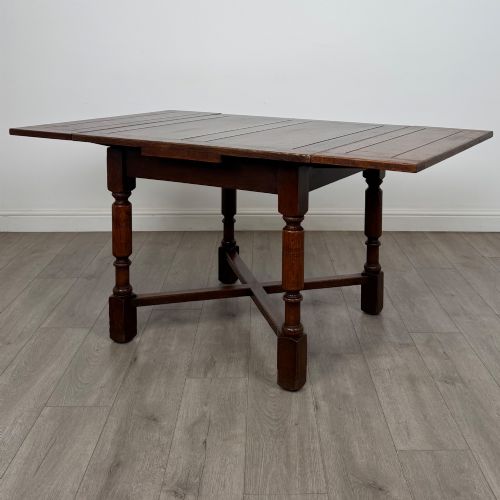
Extension mechanisms vary according to the period and form, utilising draw leaves that slide beneath the main top, drop leaves supported by swinging gates, or gateleg actions. Surfaces occasionally feature parquetry work to add geometric interest to the timber top.
Current listings span periods from the late 17th century through the Victorian and Edwardian eras to 1960.
What varies in quality
The standard of timber selection and the grain pattern in the oak define the visual merit of each piece. Superior examples display carefully matched boards and rich patination developed through age and use.
The precision and smoothness of the extension mechanism dictate practical excellence. Tables where leaves slide or fold with alignment and stability represent finer craftsmanship than those with loose tolerances.
Maple and Co
The Oak Extendable Kitchen Table Glossary
- Draw leaf
- A dining table equipped with sliding leaves stored beneath the main surface that pull out to extend the length. This mechanism allows quick expansion without removing the central top.
- Gateleg
- A table with hinged flaps supported by legs that swing outward like a gate. This form folds down compactly when floor space is limited.
- Refectory
- A long, narrow dining table originally used in monastic dining halls. These pieces often feature sturdy trestle or four-leg bases connected by stretchers.
- Parquetry
- A geometric mosaic of wood pieces used for decorative surfaces on floors and tabletops. It employs contrasting grains and tones of timber.
- Jacobean Revival
- A nineteenth or twentieth-century style imitating the heavy, ornate furniture of the early seventeenth century. It typically incorporates turned legs and geometric panel carving.
Oak Extendable Kitchen Table: Frequently Asked Questions
How do draw leaf tables work?
Draw leaf tables operate using two concealed extension leaves positioned beneath the main surface. You pull these leaves outward from each end while the centre top drops slightly into place.
This design allows you to lengthen the table surface without storing separate boards elsewhere. The mechanism relies on wooden runners fitted beneath the tabletop.
What is a refectory table?
A refectory table is a long, narrow dining table traditionally built for communal dining halls. These sturdy pieces feature substantial legs joined by low floor stretchers for added stability.
In modern kitchens, they provide generous seating capacity along both long sides. Their narrow width encourages closer conversation across the table.
Are these tables suitable for daily kitchen use?
Solid oak construction provides durability for everyday meals and food preparation tasks. The timber withstands regular cleaning and general household activity.
Over time, daily use develops a natural patina on the wooden surface. Applying appropriate wax or oil helps protect the grain from moisture and heat.
What defines Arts and Crafts tables?
Arts and Crafts tables emphasise honest construction, visible joinery, and the natural grain of the oak. Makers rejected mass-produced ornamentation in favour of simple, robust forms.
These pieces often feature unadorned surfaces and sturdy structural frames. Their understated design pairs well with various interior styles.