


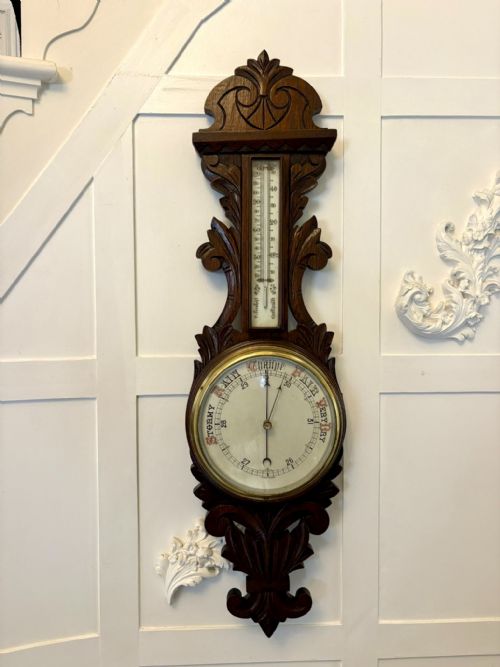

Vintage Oak Barometer
A vintage oak barometer records changes in atmospheric pressure while anchoring a room with its rich timber grain and mechanical dials.
Vintage Oak Barometer
When you search for a vintage oak barometer, you encounter scientific instruments housed in robust timber cases that reflect domestic utility and craft over past centuries. These pieces emerge primarily from Victorian, Edwardian, and early twentieth-century workshops, spanning wall-hanging banjo formats, stick barometers, and table-standing barographs.
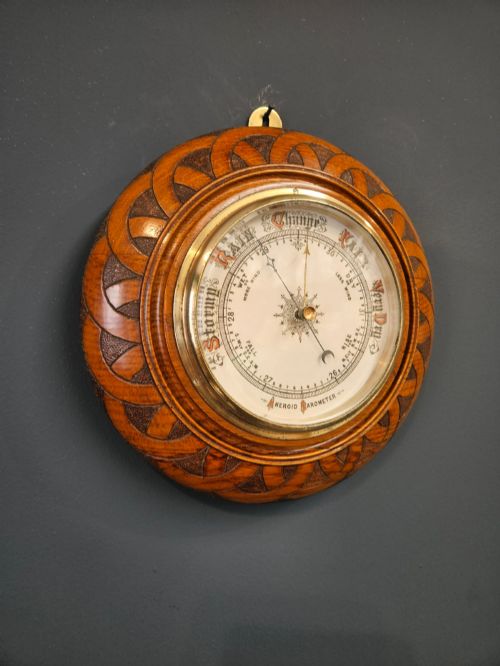
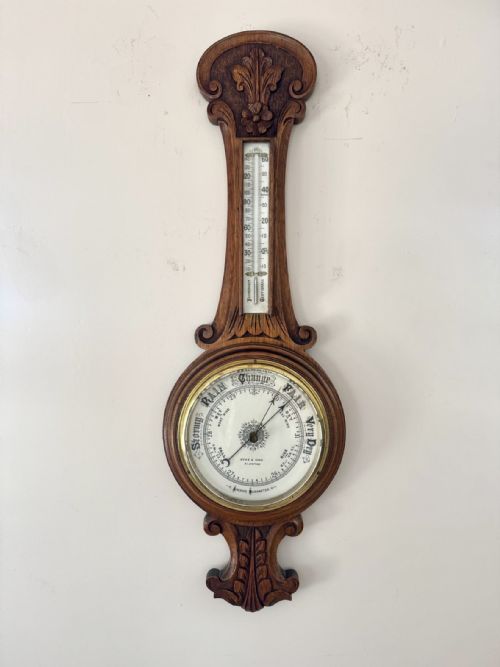
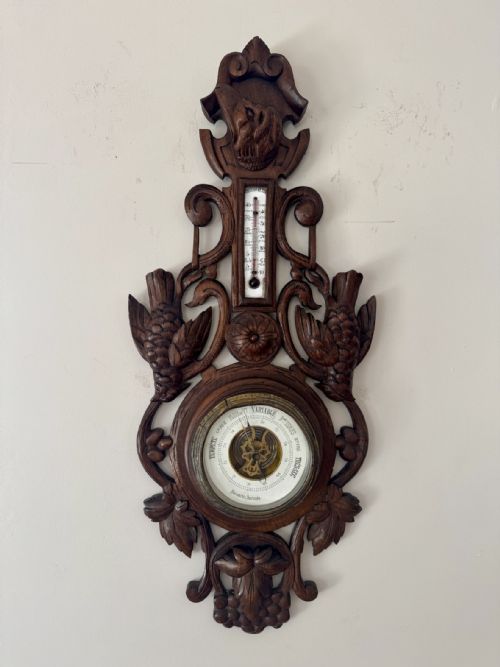
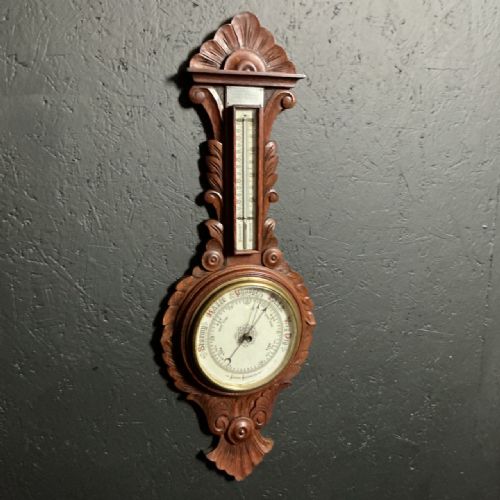
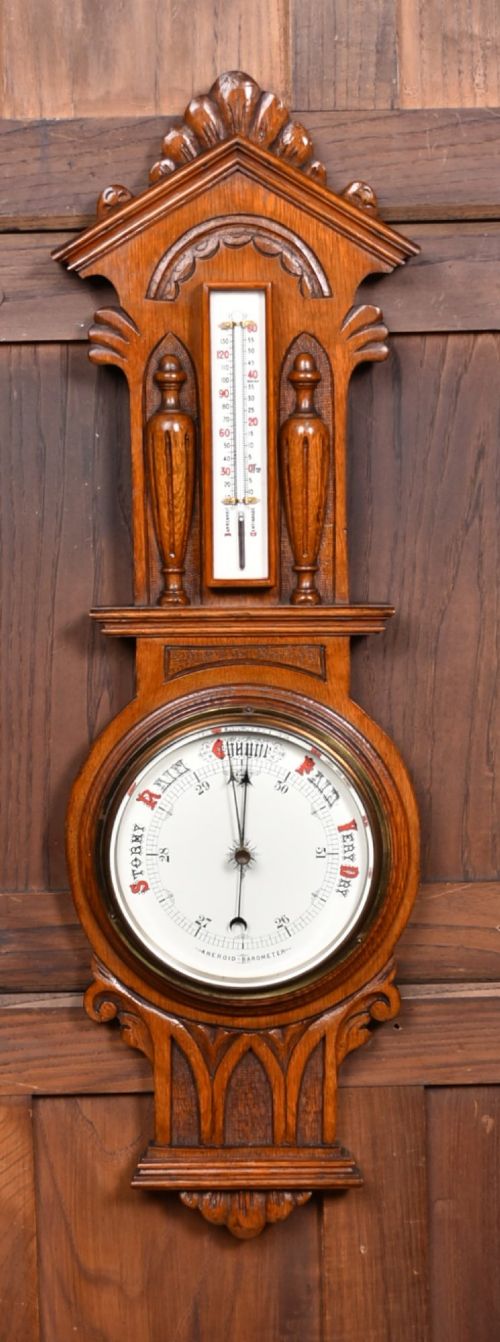
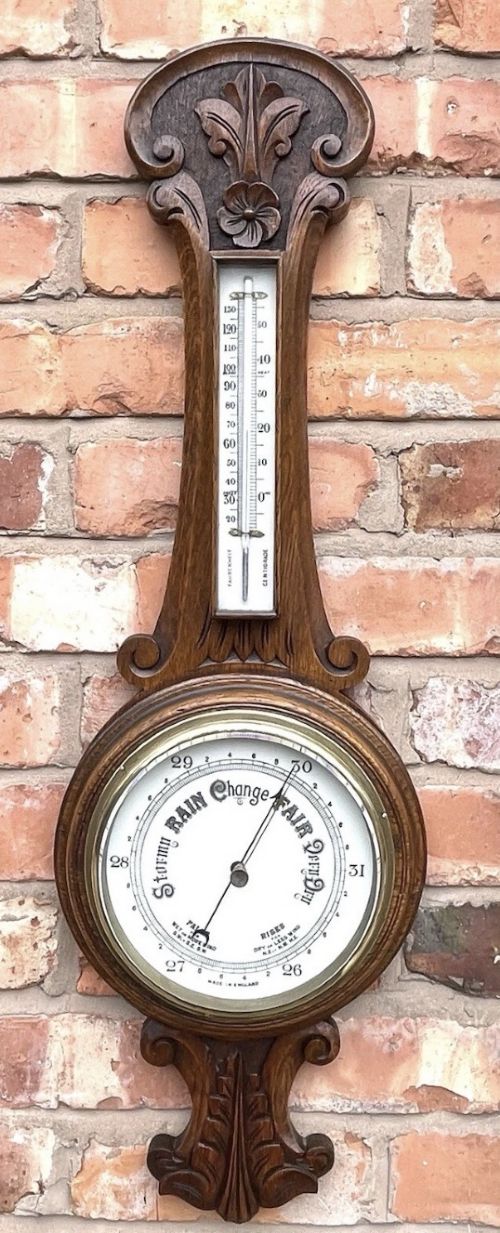
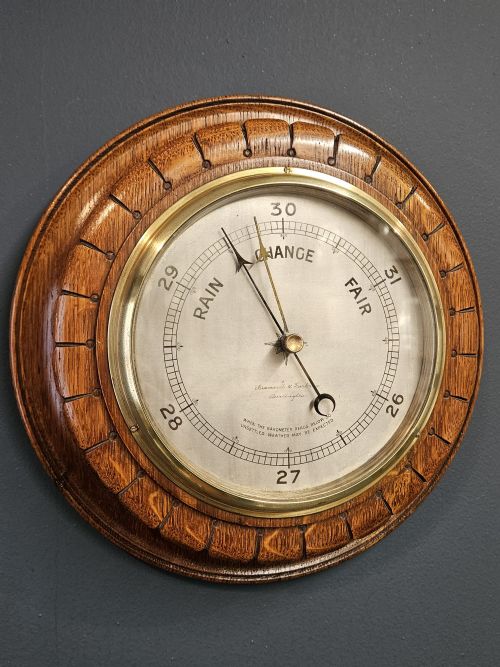
The versions most commonly met on this page combine carved or turned oak frames with silvered brass dials, often incorporating matching thermometers or chart drawers behind bevelled glass. They range from simple circular wall pieces to elaborate Black Forest carvings and multi-instrument weather stations.
How they were made
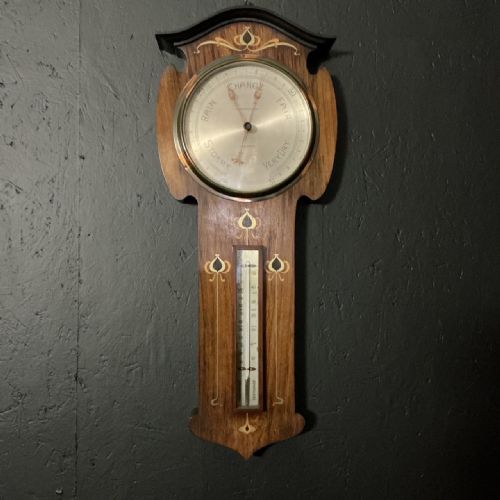
Makers utilised solid and veneered oak, frequently selecting carved wood, walnut, or mahogany for accent details, alongside brass for bezels and mercury or aneroid movements for internal measurement. Cases received detailed hand-carving in geometric or naturalistic styles, particularly seen in Black Forest and Arts and Crafts examples.
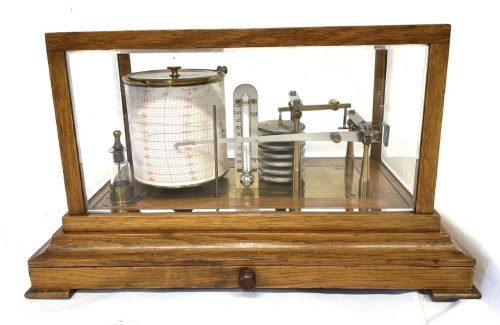
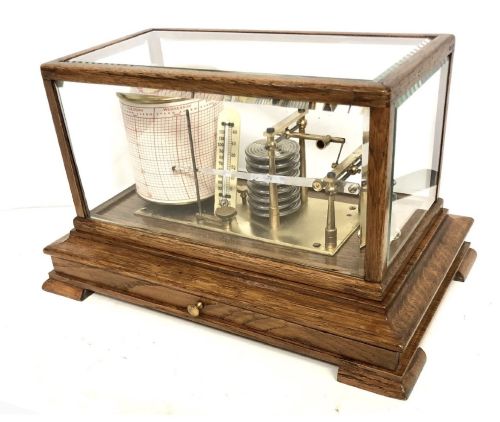
Dials were commonly silvered metal or ceramic, protected by heavy bevelled glass panes fitted into hinged brass doors. Barographs added precision inked mechanisms housed in five-glass oak boxes with dedicated drawers for paper recording charts.
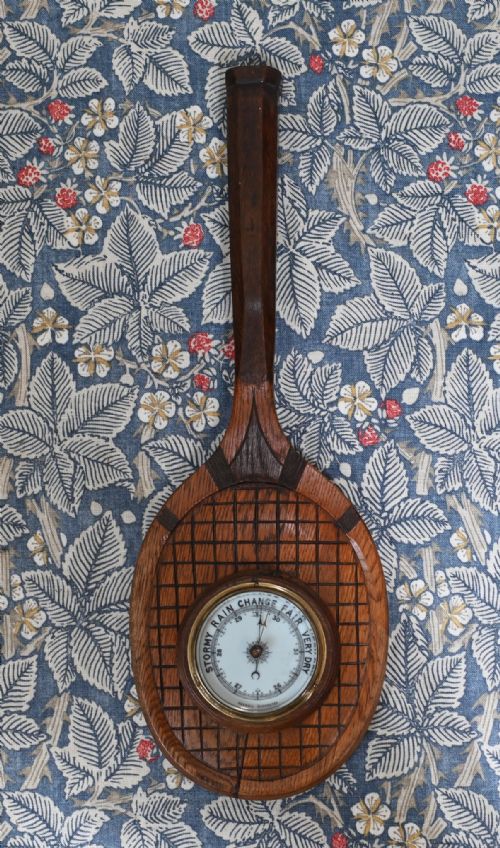
Tennis enthusiasts can check atmospheric pressure on a dedicated club aneroid barometer.
What varies in quality
The standard of a piece rests in the crispness of the timber carving and the legibility of the engraved dial. Superior examples display deep relief work on the oak case and signed mechanical movements by reputable makers rather than mass-produced generic hardware.
Proportion and material selection dictate value within the range, distinguishing simple utility instruments from elaborately detailed wall pieces fitted with thermometers, hydrometers, and heavy bevelled glass.
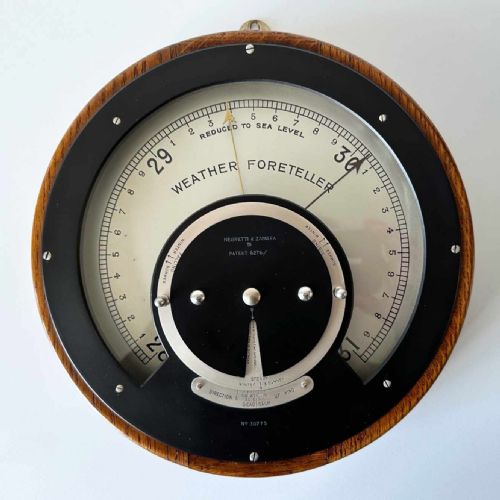
Hyde & Sons Sleaford·Negretti & Zambra·Bramwell & Harbron of Darlington·Short & Mason·W Watson & Sons·J Hughes London
The Vintage Oak Barometer Glossary
- Aneroid barometer
- An instrument that measures air pressure using a flexible metal box without liquid. It expands or contracts with pressure changes to move the dial pointer.
- Barograph
- A mechanical instrument that records barometric pressure continuously onto a paper chart over a week. It sits inside a glazed wooden case.
- Banjo barometer
- A wall-mounted weather instrument shaped somewhat like a banjo, typically featuring a circular dial at the top and a thermometer or hygrometer down the long stem.
- Stick barometer
- A tall, narrow instrument containing a vertical glass tube filled with mercury to measure atmospheric pressure directly against a scale.
- Silvered dial
- A brass or metal dial face treated to produce a matte silver finish with engraved and blackened lettering for clear reading.
Vintage Oak Barometer: Frequently Asked Questions
How do aneroid barometers work?
An aneroid barometer uses a small, flexible sealed metal capsule called an aneroid cell. This capsule contracts and expands as atmospheric pressure rises and falls.
A system of levers and springs transfers this movement to the visible needle on the dial, pointing to weather conditions like rain or set fair.
Where should I hang a wall barometer?
Hang your barometer on an interior wall away from direct sunlight, radiators, and draughty doors. Sudden temperature changes can affect the internal mechanism.
Choose a sturdy hook suited to the weight of the solid oak case, keeping the dial at eye level for daily reading.
How do I read a barograph?
A barograph traces a continuous ink line onto a rotating paper chart secured to a drum. The drum turns once a week via a clockwork movement.
Rising lines indicate improving weather, while falling lines warn of approaching storms or rain, allowing you to observe pressure trends over days.
What is the difference between a stick and banjo barometer?
A stick barometer relies on a long vertical tube of mercury to show atmospheric pressure directly on an ivory or brass scale. They represent the earlier, more scientific approach to weather recording.
Banjo barometers use an internal aneroid mechanism inside a widened wooden frame that accommodates decorative carvings, thermometers, and larger dials.