

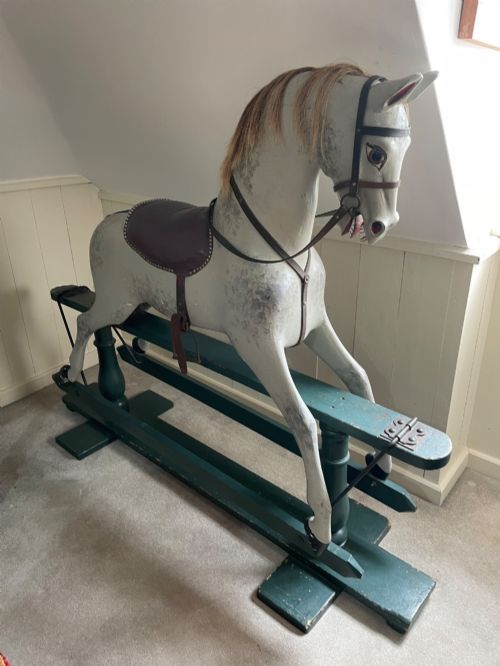
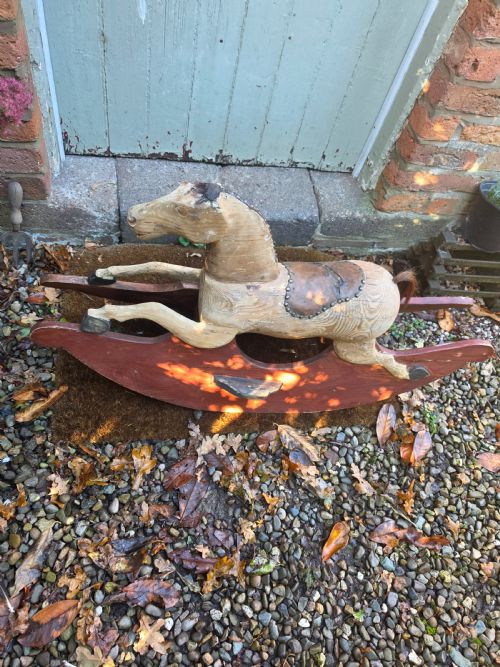
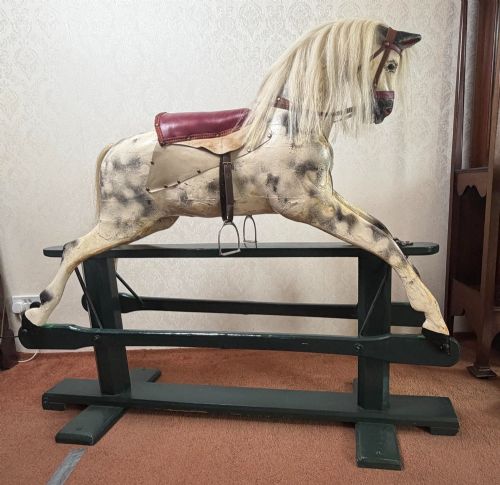
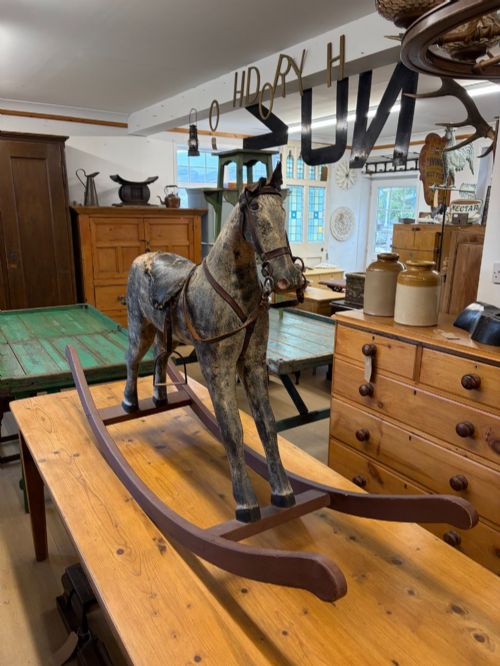


Vintage Nursery Rocking Horse
A vintage nursery rocking horse brings enduring charm to a room, offering both traditional craftsmanship and tangible history.
Vintage Nursery Rocking Horse
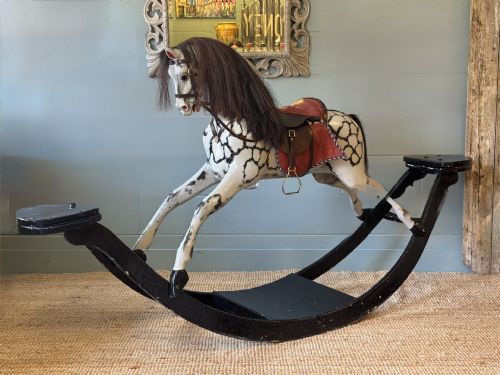
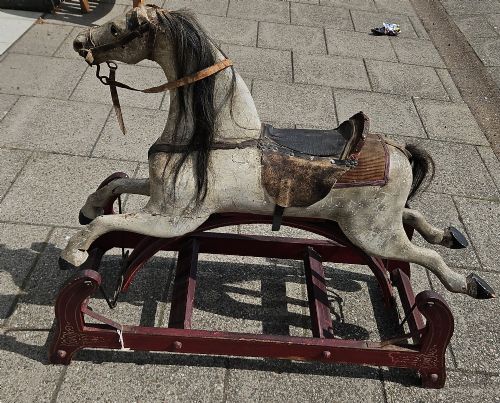
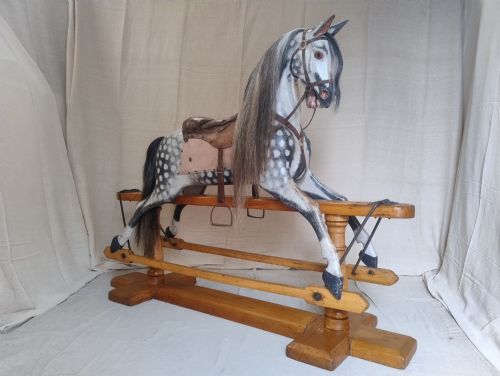
A vintage nursery rocking horse embodies traditional childhood play, taking the form of large floor-standing toys as well as smaller decorative objects and charms. These pieces originate from periods spanning the nineteenth century through the mid-twentieth century, encompassing Victorian, Edwardian, and interwar eras.
Buyers most frequently encounter large carved wooden models mounted on safety stands or curved wooden rockers. These substantial toys reflect domestic playrooms of the past, constructed from sturdy timbers and finished with traditional paints.
How they were made
Carved wooden bodies form the structural core of these pieces, utilising pine and other timbers shaped by hand or machine. Makers often mounted these wooden animals onto iron or steel components and curved wooden rockers to facilitate movement.
Surface finishes and traditional details complete the construction, incorporating leather tack, horsehair manes and tails, and applied paint. These combined materials provide the tactile authenticity expected in nineteenth and twentieth-century children's toys.
Vintage Nursery Rocking Horse Retail Price Guide 2026
Typical asking prices for vintage nursery rocking horse among the pieces listed under this phrase on Sellingantiques today, from the lower quarter to the upper quarter. They describe what is for sale here now, not the wider market.
Among full-sized wooden steeds, a tiny gold pendant version proves that even monumental playroom companions sometimes come in pocket-sized editions.
What varies in quality
The degree of original surface preservation distinguishes examples within this category, particularly where early paint layers and traditional tack remain intact. Pieces retaining their initial finish demonstrate greater historical integrity than those subjected to later repainting.
The sophistication of the carving distinguishes workshop output, separating naive folk art interpretations from the refined work of established makers. Structural robustness and the retention of original rockers further define the standing of individual pieces.
G and J Lines of London·F.H. Ayres·Collinson·Lines Bros Sportiboy
The Vintage Nursery Rocking Horse Glossary
- Rocking horse
- A toy horse mounted on rockers or a swing frame designed for a child to ride. These objects range from large floor-standing nursery toys to small metallic pendants.
- Folk art
- Artistic work produced from an indigenous culture or peasant society, typically characterised by a naive style. These pieces rely on traditional craftsmanship rather than academic training.
- Rockers
- The curved pieces of wood attached to the bottom of a toy to allow forward and backward movement. Early examples frequently utilise continuous wooden curves before the introduction of safety stands.
- Charm and pendant
- A small decorative jewellery item worn on a bracelet or necklace. In this category, miniature representations take the form of precious metal toys.
Vintage Nursery Rocking Horse: Frequently Asked Questions
Are these toys safe for children?
Most antique and vintage nursery rocking horses function primarily as decorative objects or collectors' items rather than modern playthings. Their historical construction may not meet current safety standards.
Buyers intending regular use by children should inspect the structural stability of the stand, rockers, and joints before allowing unsupervised play.
What is original paint condition?
Original paint refers to the initial decorative coating applied during manufacture, which often shows natural wear from historical play. Surviving dapple patterns and early surface pigments add significantly to the character of the piece.
Subsequent overpainting alters the visual history, making untouched surfaces particularly desirable for collectors seeking authenticity.
How do I clean wooden horses?
Maintenance requires gentle dusting with a soft dry cloth to protect fragile painted surfaces and leather elements. Moisture and chemical cleaning agents can damage historic finishes.
Preserving the material integrity ensures the longevity of horsehair manes, leather tack, and carved wooden bodies.