


Vintage Nightstand Drawer
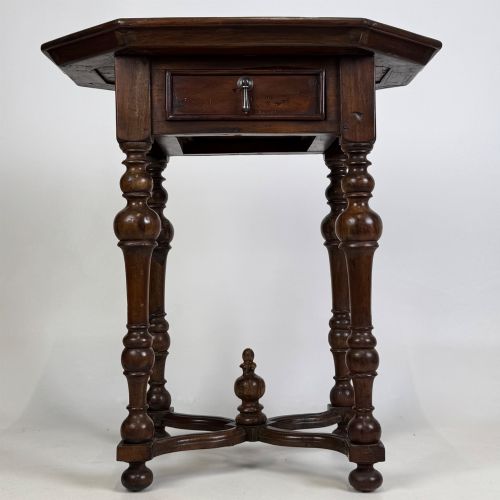
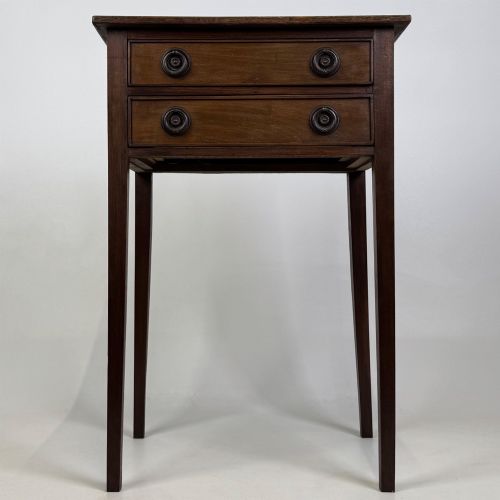
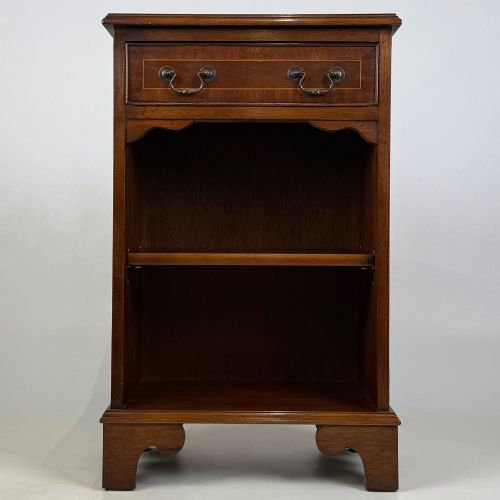
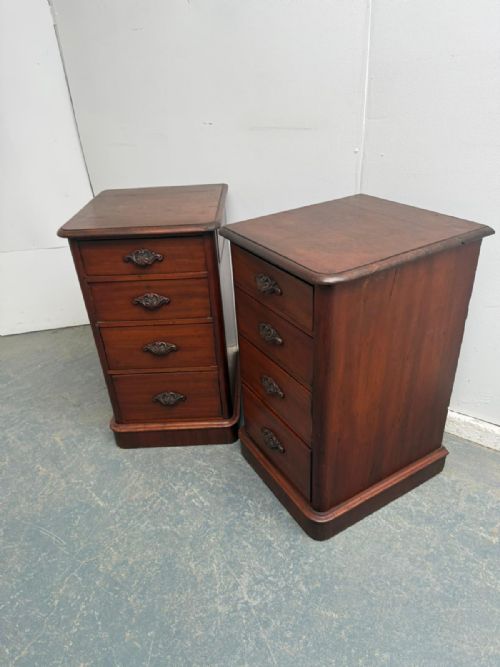
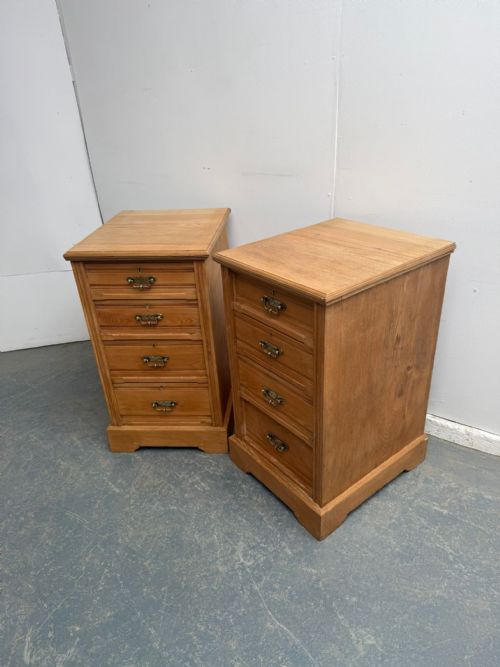
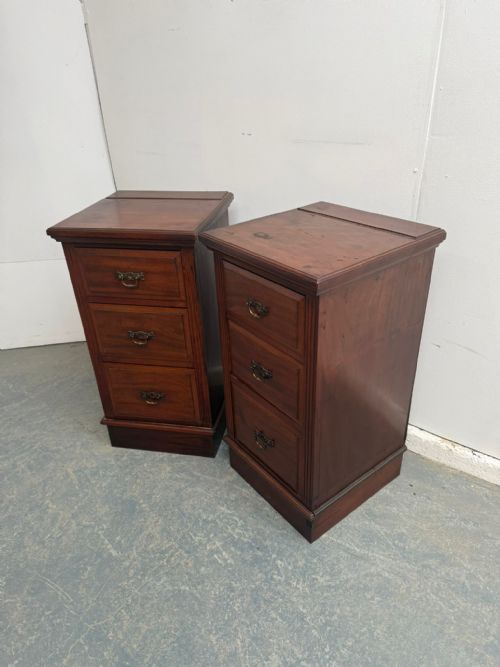
These vintage nightstand drawer pieces offer compact bedside storage in styles ranging from Georgian to Art Deco.
Vintage Nightstand Drawer
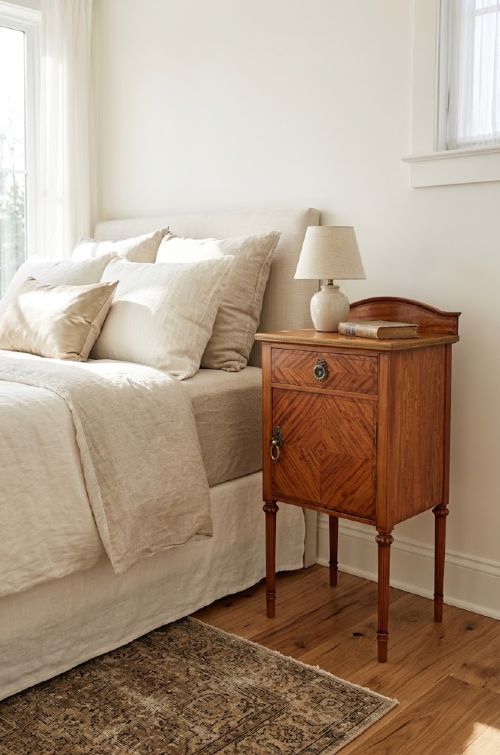
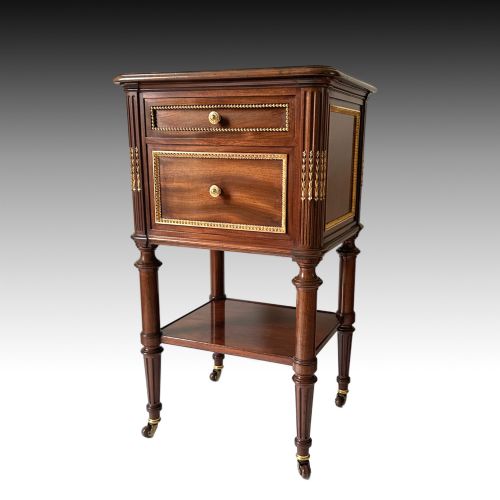
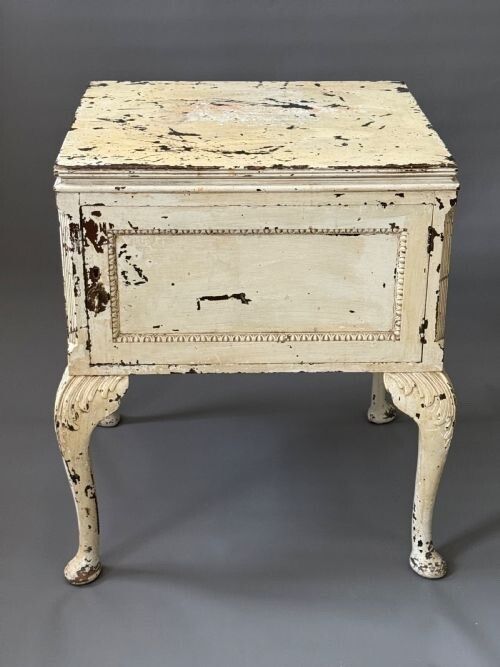
A vintage nightstand drawer serves as a small bedside table, cabinet or chest designed to hold bedside essentials within arm's reach. When searching for a vintage nightstand drawer, buyers encounter forms that span the Georgian period, the Victorian era, and the 1930s Art Deco movement.
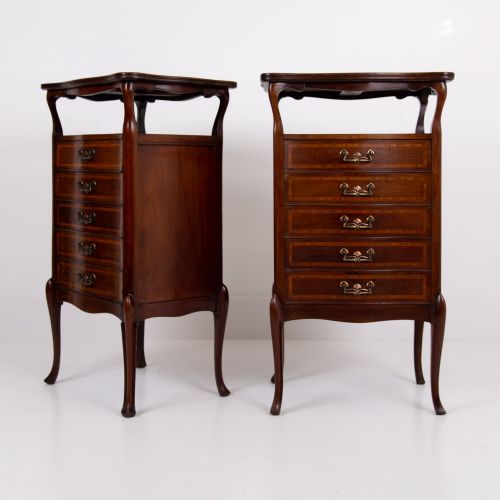
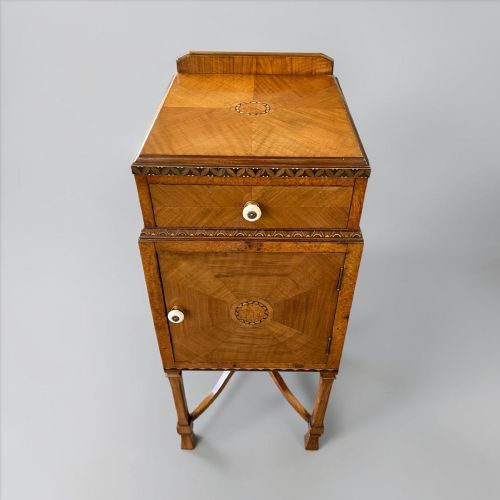
The objects appearing here take many shapes, including bedside cupboards, lamp tables, small chests of drawers and bedside cabinets. Most examples originate from English and French workshops, utilising timbers typical of their respective periods.
Materials and Construction
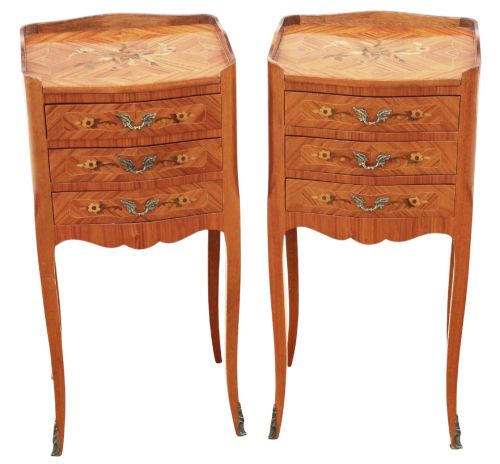
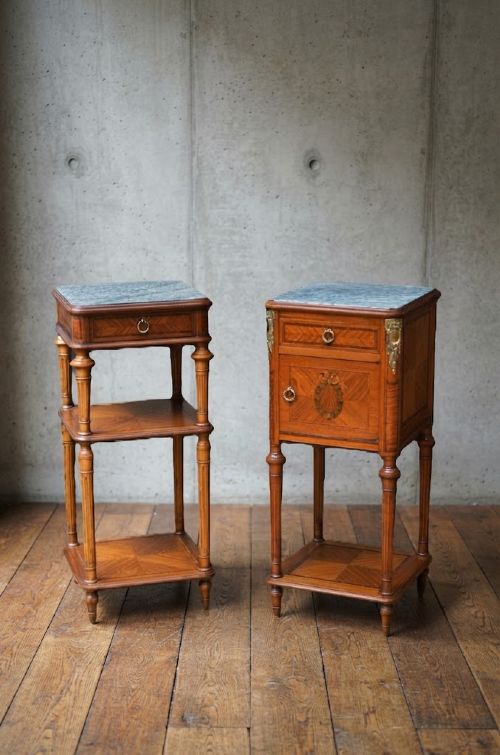
Cabinetmakers constructed these bedside tables and chests using dense hardwoods such as mahogany, walnut, oak, and satinwood, frequently applying decorative marquetry or figured grain veneers. Marble tops appear on specific French and Edwardian cabinets, providing a durable and polished surface.
Joinery techniques rely on traditional drawer construction and frame assembly suited to smaller bedside furniture. Metal mounts, brass handles and occasional ormlou details complete the hardware on these cabinets and chests.
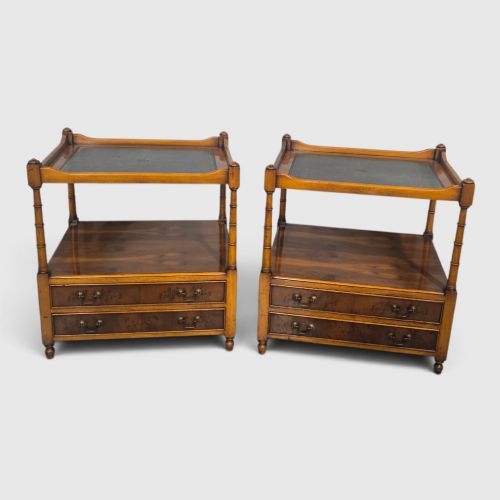
Faux bamboo makes an unexpected appearance, bringing botanical whimsy to nineteenth century bedside storage.
Assessing Quality and Execution
Quality in these pieces rests upon the selection of timber veneers, such as figured walnut or satinwood, and the precision of the marquetry inlay. Better examples demonstrate careful proportion in small dimensions, particularly in serpentine fronts and matched drawer arrangements.
The integration of secondary materials like marble tops and brass handles elevates the execution of a piece. Finer cabinets maintain smooth drawer operation and crisp carving details across revival styles from Queen Anne to Jacobean.
The Vintage Nightstand Drawer Glossary
- Marquetry
- Decorative veneer work arranged in pictorial or geometric patterns on furniture surfaces. It utilises contrasting timbers to create complex visual designs.
- Serpentine
- A furniture front shape curving gently inward at the centre and outward at the ends. This profile requires skilled woodworking to execute cleanly on small drawers.
- Ormolu
- Gilded bronze ornamentation applied to furniture mounts and feet. It adds metallic contrast to wood surfaces, particularly on continental pieces.
- Bedside Cabinet
- A small enclosed piece of furniture designed to stand next to a bed. It typically combines a cupboard door with an upper drawer.
Vintage Nightstand Drawer: Frequently Asked Questions
What periods do these pieces span?
The selections encompass furniture from the Georgian era through Victorian times, Edwardian pieces, and 1930s Art Deco designs. Various revival styles also appear alongside items from the nineteenth and early twentieth centuries.
Each period brings distinct timber choices and decorative motifs, allowing buyers to match specific historical interiors or mix eras within a bedroom scheme.
How were bedside chests used historically?
These small chests and cabinets sat beside sleeping quarters to hold personal items, books, and chamber lighting. Their drawers and cupboards kept nighttime necessities concealed and organised.
Over time, their roles expanded from utilitarian bedside storage to include display surfaces for lamps and decorative objects in domestic spaces.
How do I identify Art Deco nightstands?
Art Deco pieces from the 1930s typically feature geometric silhouettes, symmetrical forms, and figured walnut or exotic veneers. They discard ornate historical revival detailing in favour of clean, streamlined shapes.
Such bedside tables often utilise contrasting wood grains and understated hardware to emphasise modern elegance.
Are marble tops common on bedside cabinets?
Marble tops appear frequently on continental and Edwardian bedside cabinets to provide a hardwearing surface. They offer resistance to moisture and cosmetic spills.
These stone slabs are fitted directly into the wooden frame of the cabinet top, often accompanying satinwood or marquetry structures.