

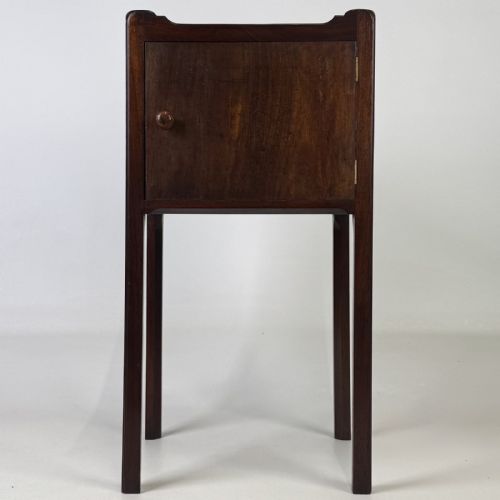
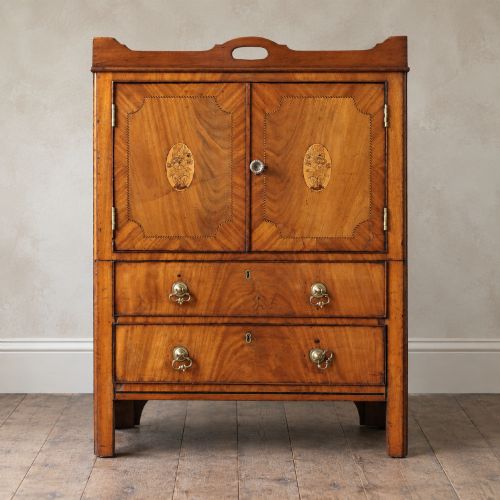
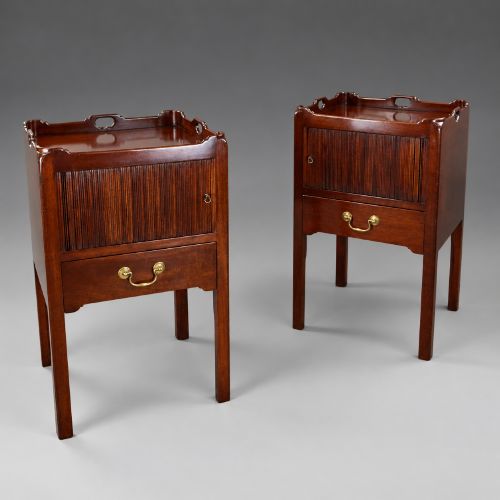
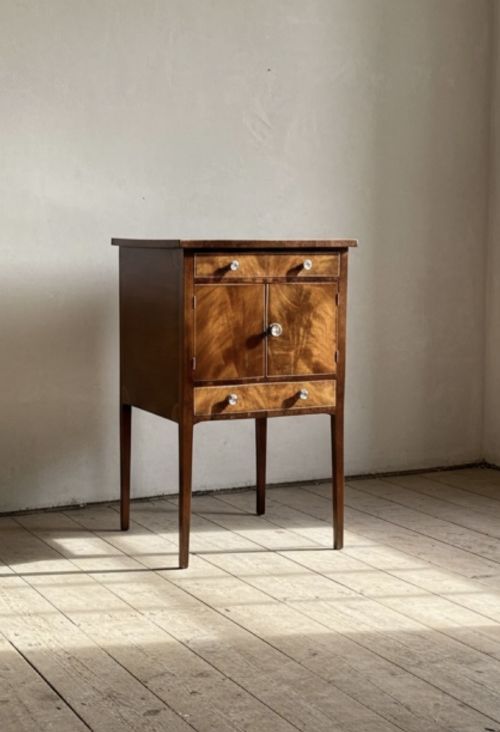




Vintage Night Commode
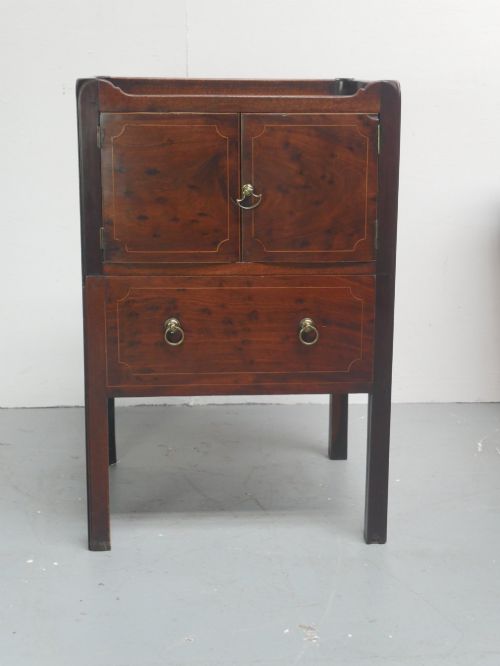
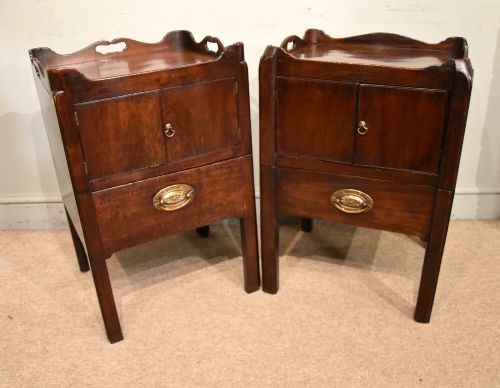
These vintage night commode pieces are timber bedside cupboards and tables that keep bedroom essentials tucked away beside the bed.
Vintage Night Commode
A vintage night commode serves as a bedside table, cabinet, or cupboard designed to hold chamber pots or personal items close at hand. When searching for a vintage night commode, buyers encounter sturdy bedside furniture built to practical domestic standards.
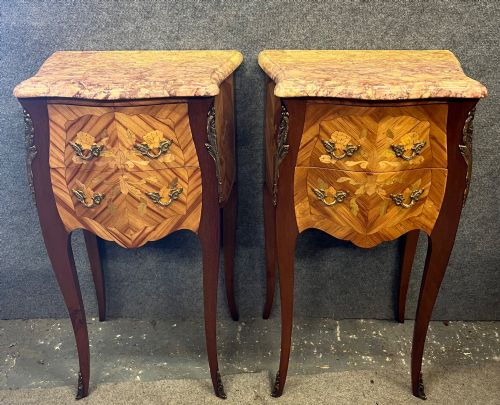
The pieces listed here span periods from the seventeenth century through to the 1930s, encompassing Georgian designs, Regency examples, and French Louis XV styles. Mahogany forms the backbone of these pieces, alongside walnut and marquetry work.
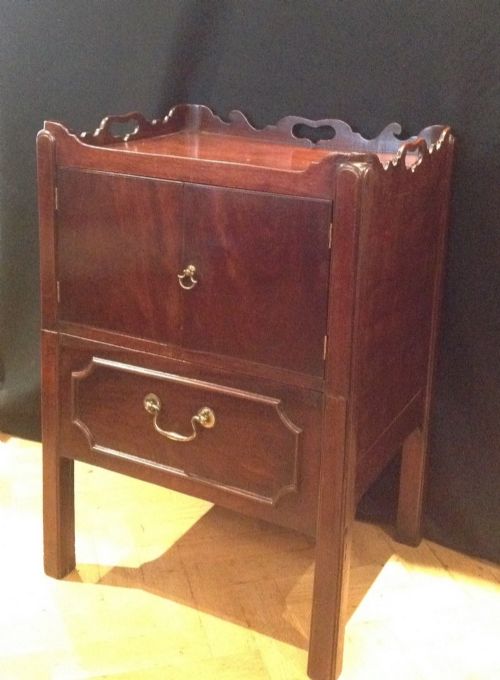
Forms vary from tray top bedside cabinets to side cupboards and nightstands, with some pieces featuring pull-out steps or marble tops. Buyers are most likely to meet mahogany tray top cupboards from the Georgian era or later Georgian style reproductions.
What varies in quality
The selection of timber grade sets apart finer examples, particularly where figured flame mahogany or carefully matched veneer grain patterns are evident. Superior construction shows in tight dovetailing, original brass hardware, and crisp inlay work rather than painted imitation details.
Proportion and architectural balance dictate the standing of a piece, with smaller, well-balanced tray top cabinets commanding greater appreciation. Originality of surface finish and the retention of fitted interior elements influence the character of each cabinet.
Vintage Night Commode Retail Price Guide 2026
Typical asking prices for vintage night commode among the pieces listed under this phrase on Sellingantiques today, from the lower quarter to the upper quarter. They describe what is for sale here now, not the wider market.
Listings span periods from the 17th century to 1930, featuring materials such as mahogany, marble, brass, boxwood inlay, and ormolu.
The Vintage Night Commode Glossary
- Tray top
- A tabletop finished with a raised moulded rim on three or four sides designed to contain items safely. This feature is particularly common on eighteenth-century bedside commodes.
- Marquetry
- The art of applying decorative veneer pieces in wood, shell, or metal to form geometric or pictorial patterns. French styles frequently employ this technique across bedside cabinet doors.
- Ormolu
- Gilded bronze ornamentation applied to furniture, common in French Louis XV style pieces. It adds metallic contrast to timber surfaces.
- Dovetailed
- A joint formed by interlocking wedge-shaped fingers of wood, providing strong tensile strength for drawer construction. Traditional cabinet making relies heavily on this technique.
- Commode
- A low cabinet or chest of drawers, historically enclosing a chamber pot but later adapting into general bedside storage. Georgian examples often conceal a cupboard section below a tray top.
Vintage Night Commode: Frequently Asked Questions
What is a night commode?
A night commode is a small bedside cabinet or cupboard originally designed to house a chamber pot and night-time necessities. Over time, these pieces evolved into general bedside tables and cupboards.
Today they function as practical bedside storage units that support lamps, books, and personal items while concealing lower shelving behind doors.
How do I style a bedside commode?
Place the commode directly beside the bed at a comfortable height for reaching a reading lamp, glass of water, or book. The enclosed lower cupboard provides convenient out-of-sight storage for bedroom clutter.
Pairing a timber commode with neutral walls allows the grain of the mahogany or walnut to stand out as a focal point in the room.
Are these pieces stable for daily use?
Most pieces are constructed from solid hardwoods like mahogany, making them robust enough for daily domestic service. Their compact proportions give them a solid footing beside standard bed heights.
Care should be taken with marble tops or delicate veneer surfaces by using coasters and mats to prevent moisture rings and scratches.
How can I tell a Georgian piece from a later copy?
Georgian pieces generally show period construction methods, such as hand-cut dovetails, secondary softwood drawer linings, and genuine age-related wear to the timber. Later nineteenth-century or 1930s revival pieces often display machine-made precision or different finishing techniques.
Examining the hardware fixings and internal timber helps clarify whether a piece dates to the eighteenth century or a later revival.