


Vintage Nested End Tables
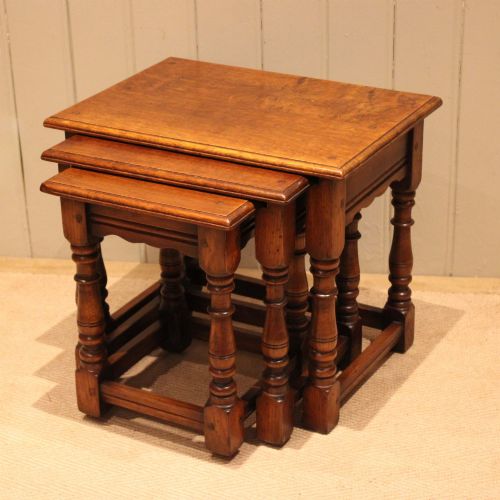
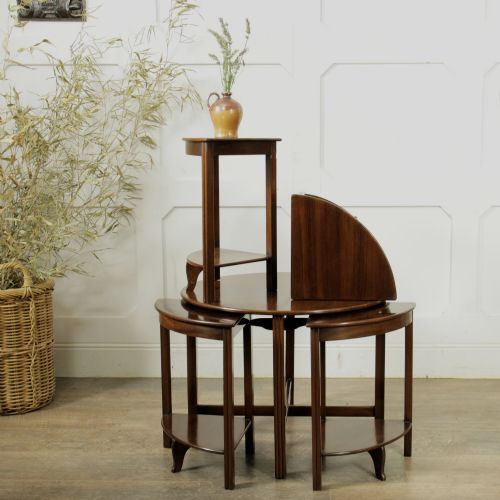
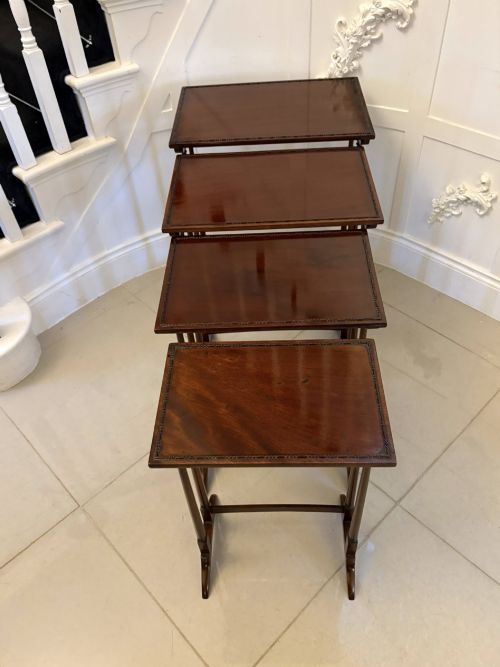
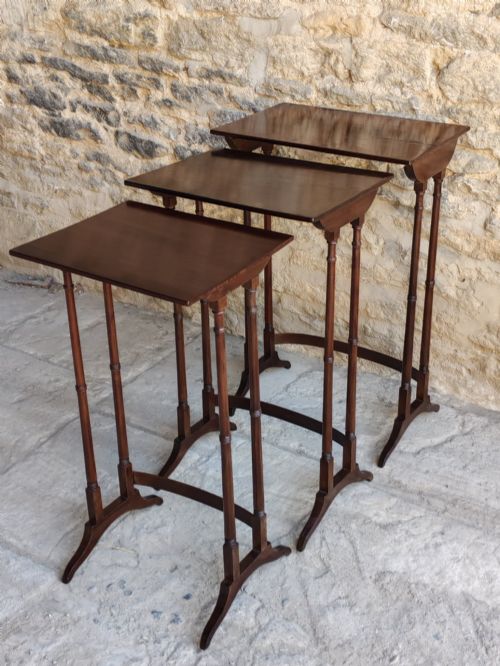
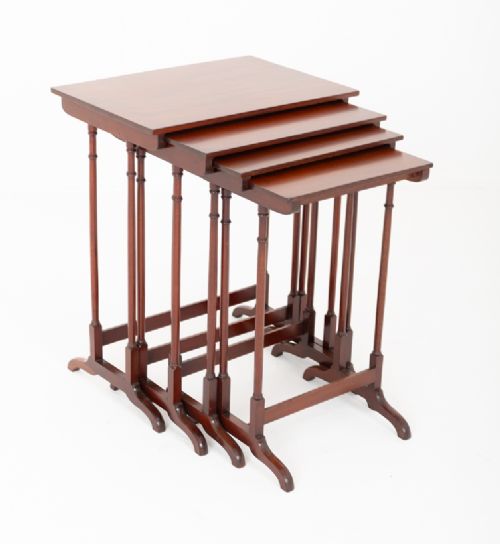
These vintage nested end tables stack neatly together to save floor space while offering multiple surfaces when entertaining.
Vintage Nested End Tables
Vintage nested end tables consist of graduating sets of small tables that slide one beneath the other. When you search for vintage nested end tables, you encounter sets ranging from three to five pieces designed for occasional use.
The Edwardian period and the 1920s dominate the selection on this page, alongside examples from the Victorian era, the 19th Century, and the 1930s. Mahogany and oak appear most frequently as the primary woods for these stacking sets.
Forms include circular tops, rectangular occasional tables, and coffee table heights. Many examples originate from traditional English styles, while others incorporate Chinoiserie decoration or Indian hardwoods.
Materials and Construction
Cabinetmakers utilised dense timbers such as mahogany, walnut, and oak to build sturdy frames that withstand frequent sliding. Satinwood, boxwood, and gold leaf provide decorative contrast through stringing and inlay work.
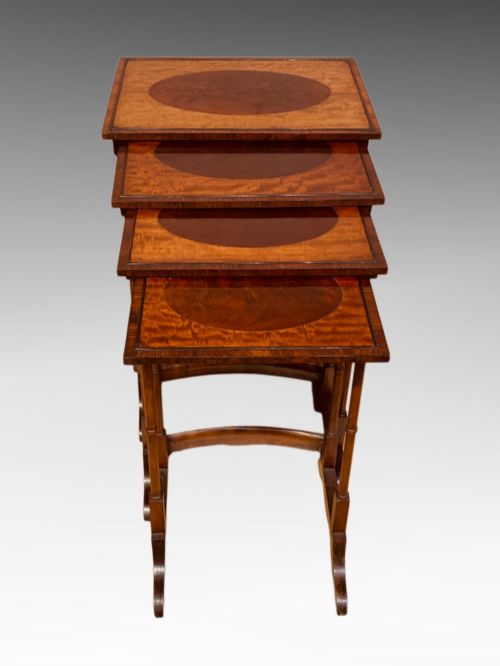
Surface decoration involves parquetry, floral marquetry, and embossed leather inserts set into the timber tops. Artisans also employed hand-carved details and turned supports like barley twists to define styles from Jacobean Revival to Art Deco.
Indicators of Quality
Quality rests in the precision of the graduating frame sizes, ensuring each smaller table slides smoothly into position without binding. Superior sets maintain structural rigidity across all legs despite the slender proportions required for stacking.
The refinement of the timber selection and inlay work separates standard utility sets from finer examples. Finer pieces display crisp botanical or geometric parquetry and careful matching of grain patterns across the nested surfaces.
Waring & Gillow
The Vintage Nested End Tables Glossary
- Quartetto
- A traditional term for a set of four nesting tables. These sets typically graduate in size to stack completely under the largest top.
- Parquetry
- A geometric mosaic of wood pieces used for decorative surfaces on table tops. It creates intricate patterns using contrasting timbers.
- Chinoiserie
- European decorative style imitating Chinese artistic traditions. It frequently employs hand-painted motifs and lacquer on wood surfaces.
- Satinwood
- A durable tropical timber with a lustrous golden sheen. Cabinetmakers use it for contrasting inlay and fine stringing lines.
- Barley Twist
- A spiral-turned wooden column used for table legs and supports. This turning style appears frequently on early twentieth-century oak furniture.
Vintage Nested End Tables: Frequently Asked Questions
What is a nest of tables?
A nest of tables is a set of graduating smaller tables designed to fit neatly beneath the largest piece. This clever space-saving arrangement provides extra surfaces for drinks or books when needed.
Most sets contain three or four pieces, though five-table configurations also exist. They serve primarily as occasional side tables in living rooms and reception spaces.
How do I identify an Edwardian nest?
Edwardian sets typically feature light mahogany construction with subtle satinwood inlay or stringing. The proportions remain slender, and the legs often take simple tapered or turned forms.
These pieces date from the early twentieth century and frequently use the term quartetto in older descriptions. The woodwork emphasises refinement and practical elegance over heavy ornamentation.
Are Art Deco nested tables different?
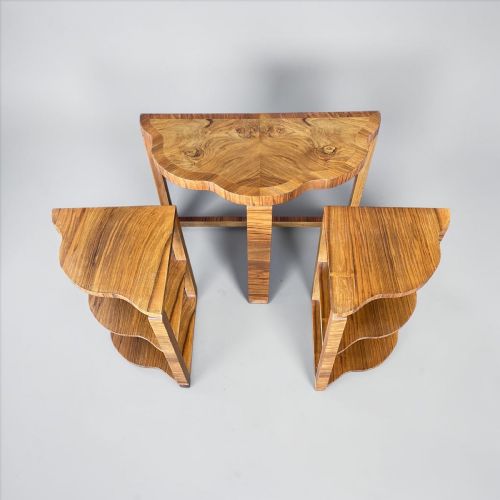
Art Deco nested tables favor exotic materials like Indian rosewood or streamlined geometric shapes. They date from the 1930s and avoid traditional carved ornamentation in favor of clean lines.
The construction emphasises the natural grain of the timber and practical stacking ability. These sets suit modern interiors while retaining vintage character.
Can I use them as coffee tables?
Certain larger nested sets function well as low coffee tables when arranged across a room. They separate easily to accommodate guests during gatherings.
When choosing for this purpose, consider the height of the main table relative to your seating. Lower sets designed specifically as coffee tables offer the best proportions for this use.