
Three Tier Mahogany Tables
Three tier mahogany tables group useful stacked furniture built to hold service ware, books and drinks across Georgian, Regency and Victorian periods.
Three Tier Mahogany Tables
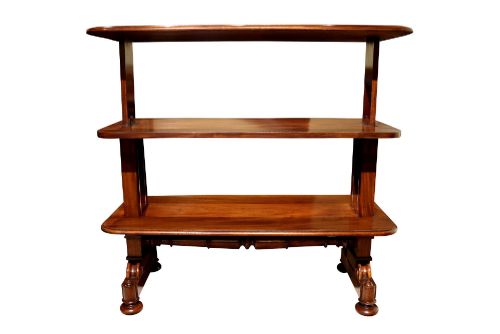
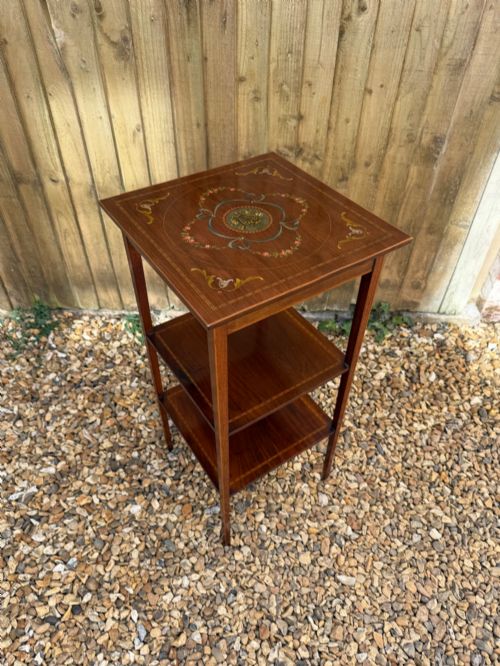
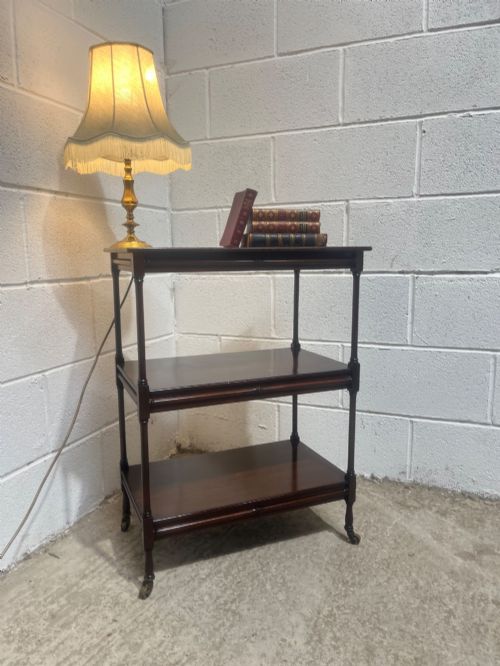
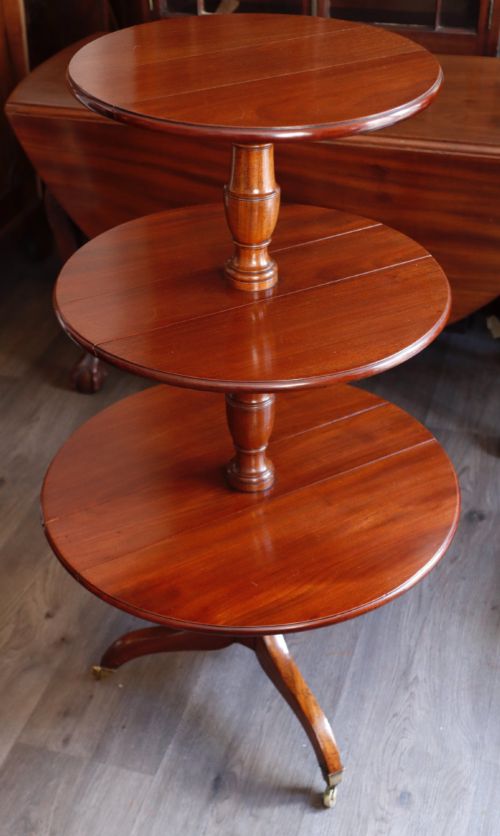
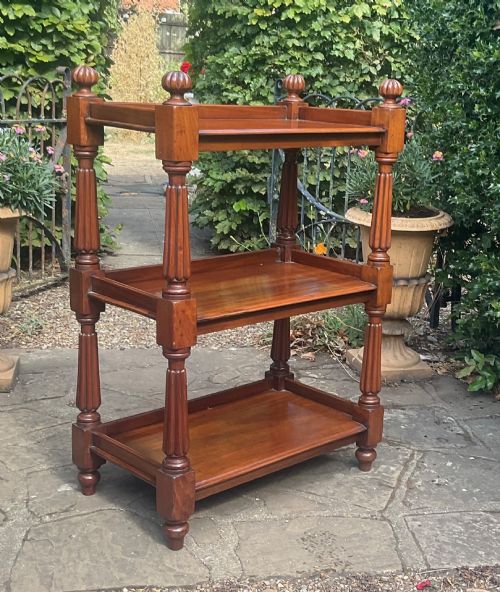
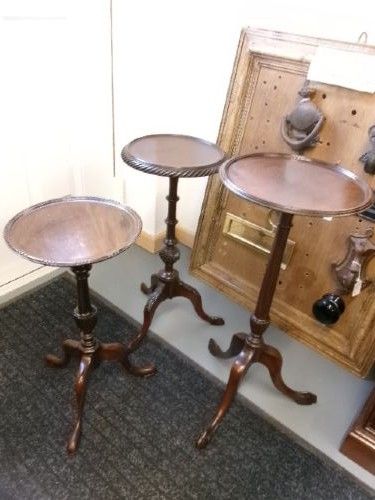
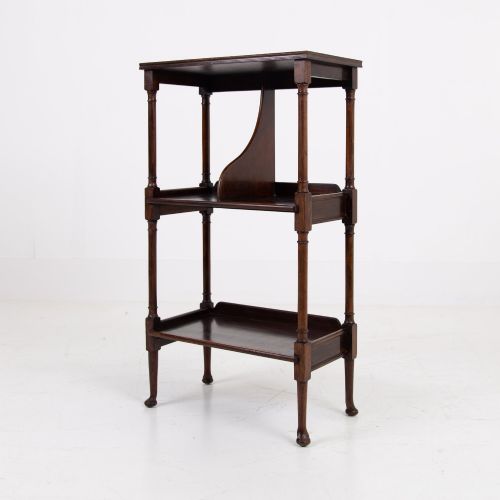
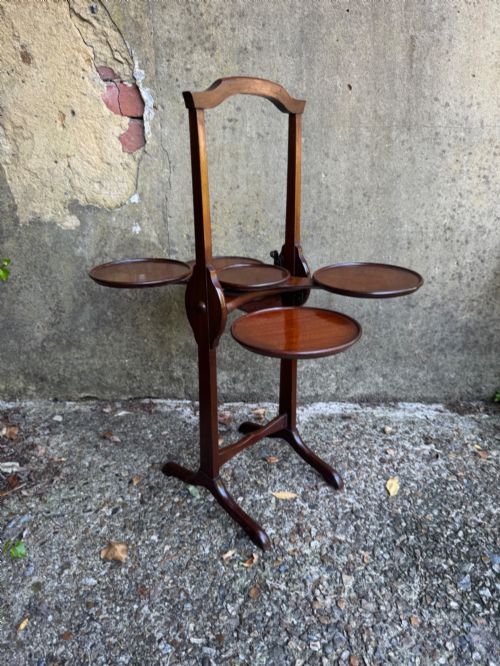
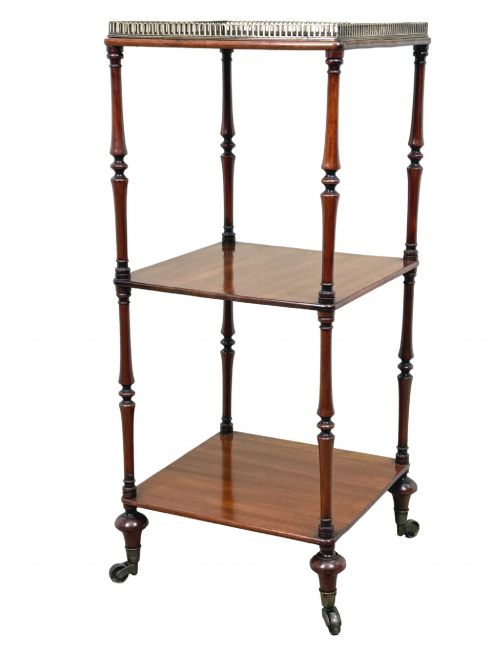
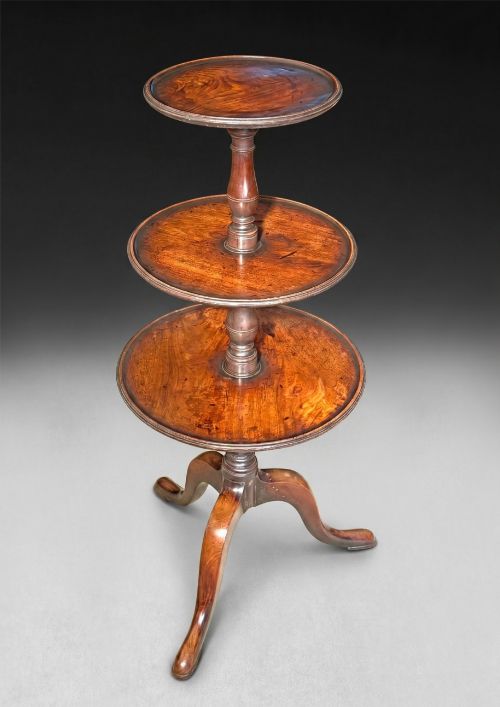
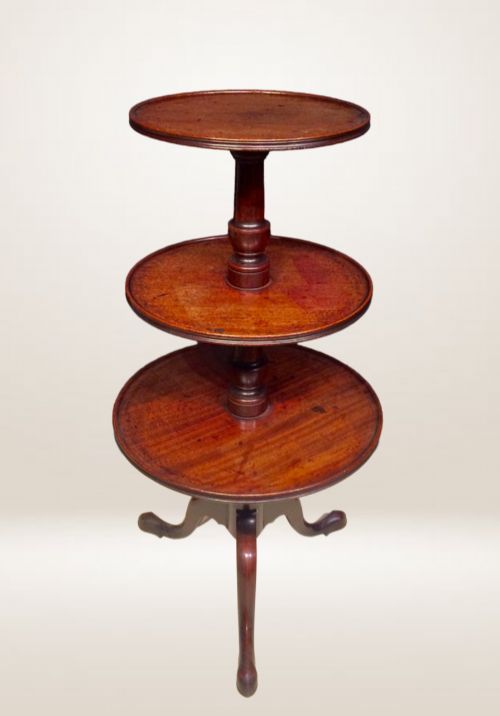
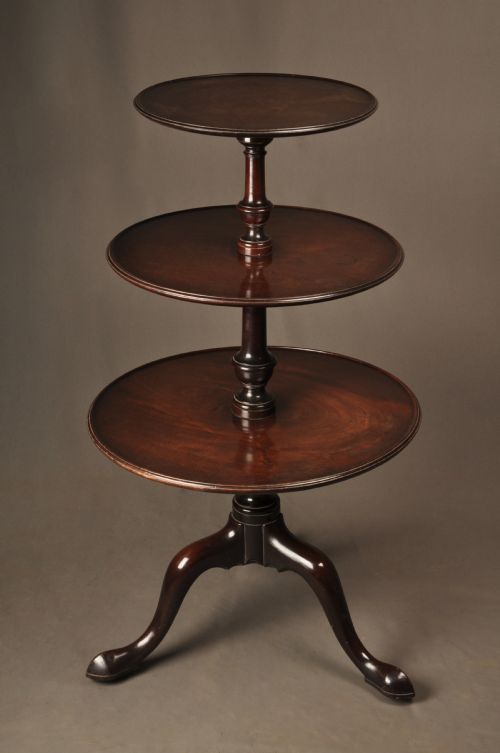
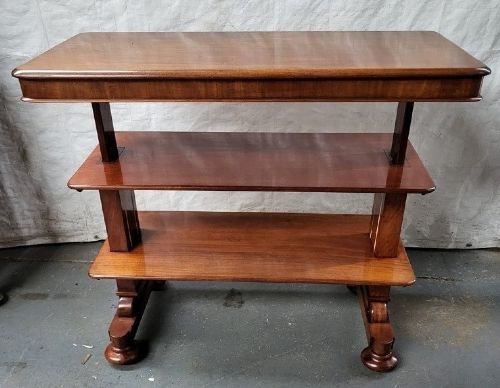
Three tier mahogany tables encompass a variety of tiered forms designed for practical service and display across multiple levels. Buyers exploring this category encounter dumb waiters, etageres, whatnots and tiered buffets spanning the Georgian, Regency, Victorian and Edwardian eras. Circular revolving tiers and rectangular stacked shelves dominate the structural designs found in these listings.
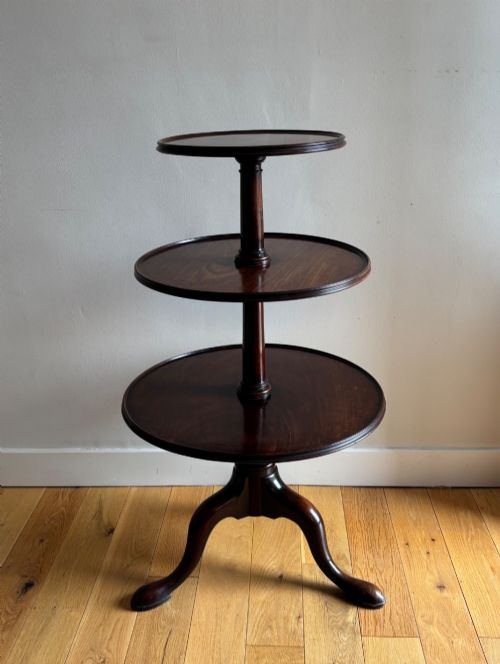
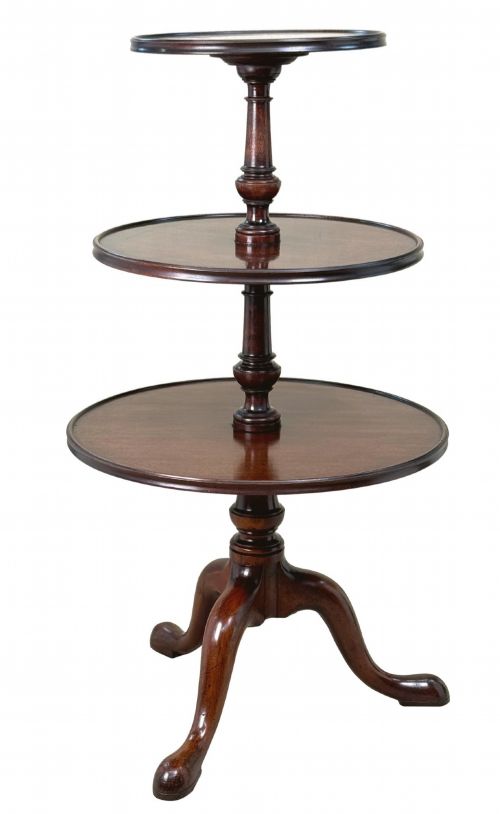
The most common iterations on this page are dining room dumb waiters and multi-shelf etageres suited for side storage. These pieces combine tiered graduating platforms supported by turned columns or upright posts, often terminating in castors or tripod bases. Origins stretch from 18th century workshops through to Edwardian revival pieces.
Materials and construction
Makers utilised primary timber stocks of solid mahogany and Cuban mahogany, sometimes selecting figured grains such as fiddleback for prominent display surfaces. Secondary framing often incorporated boxwood inlay for decorative contrast on panel edges and borders.
Structural hardware relied upon brass components, including castors, hinges and mechanical rise and fall fittings on metamorphic pieces. Paint was occasionally applied to finished surfaces, alongside traditional wood turning for upright columns and pillar supports.
Listings feature mahogany, brass, paint and boxwood inlay across Georgian, Regency, Victorian and Edwardian periods.
Judging quality and execution
Quality separates along the crispness of the timber turning, the choice of dense grain timbers like Cuban mahogany, and the integrity of original mechanical fittings. Superior examples display refined proportions across graduating tiers and smooth revolving action on circular dumb waiter columns.
The refinement of edge moulding, the precision of boxwood inlay and the presence of original brass castors further distinguish standard production items from finer workshop output. Construction stability across multiple stacked platforms indicates the original standard of joinery.
The Three Tier Mahogany Tables Glossary
- Dumb Waiter
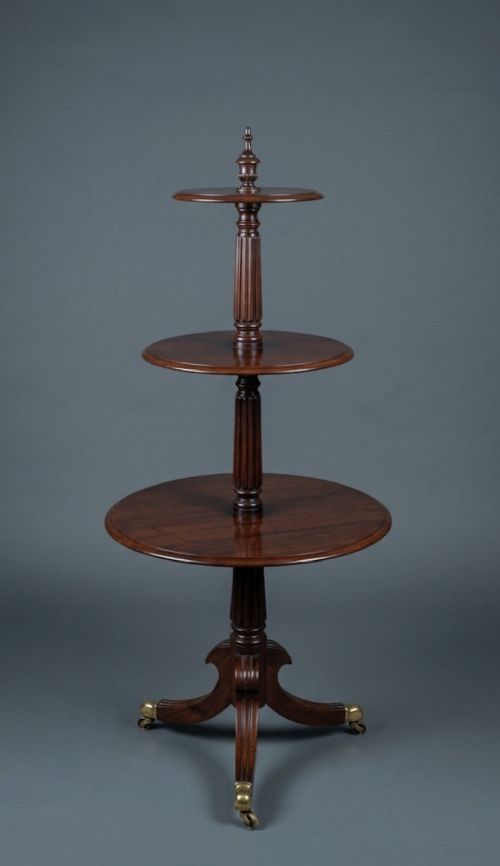
- A tiered serving table with rotating or fixed circular shelves, traditionally used for holding dishes and wine bottles near a dining table without requiring a servant.
- Etagere
- A set of open shelves for displaying small objects, ornaments or books, arranged in a tiered vertical format.
- Whatnot
- A piece of furniture consisting of a set of open shelves for displaying articles, standing on upright supports.
- Fiddleback Mahogany
- Mahogany timber exhibiting a wavy, rippled grain pattern resembling the back of a violin, prized for decorative surfaces.
- Metamorphic
- Furniture designed to transform into another form or configuration through hinged or mechanical folding mechanisms.
Three Tier Mahogany Tables: Frequently Asked Questions
What were three tier mahogany tables used for?
These tables served primarily as auxiliary storage in dining rooms and parlours for holding dishes, glassware, wine bottles and books.
Tiered formats allowed multiple items to occupy a compact footprint, keeping dining essentials close at hand during meals.
How do I identify a Georgian dumb waiter?
Georgian examples typically feature heavy circular graduating tiers mounted on a central turned pillar supported by tripod legs.
Construction relies on solid mahogany or Cuban mahogany timber without the mechanical complexity seen in later Victorian designs.
Are these tables suitable for modern living?
Their vertical stacked design makes these tables practical for corner placement, bedside use or as compact side tables in contemporary rooms.
Lower tiers accommodate books or small objects while top surfaces provide functional display space.
What is the difference between a whatnot and an etagere?
Both terms describe multi-tiered shelving furniture, though etageres frequently lean towards decorative display in salons and drawing rooms.
Whatnots often incorporate enclosed lower cupboards or function as general utility stands across various 19th century interiors.