

Vintage Music Stand
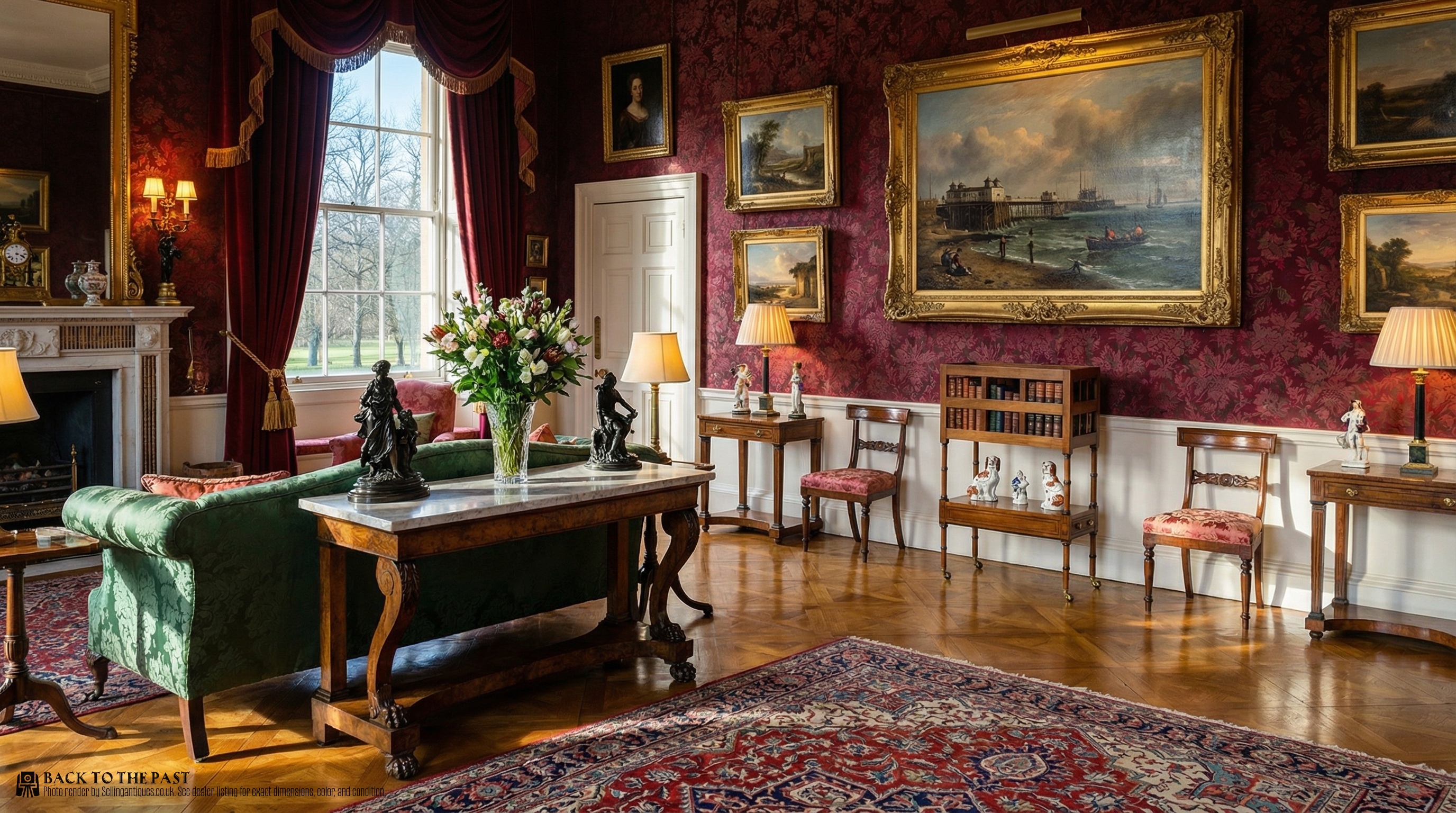
A vintage music stand brings utility and period character to a room, holding scores or reading material with distinct architectural presence.
Vintage Music Stand
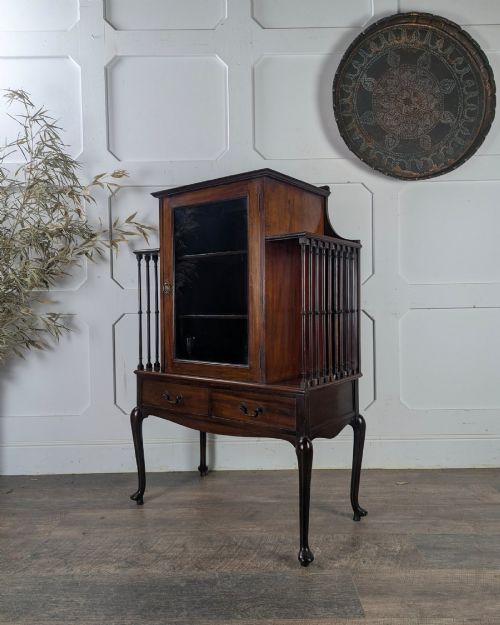
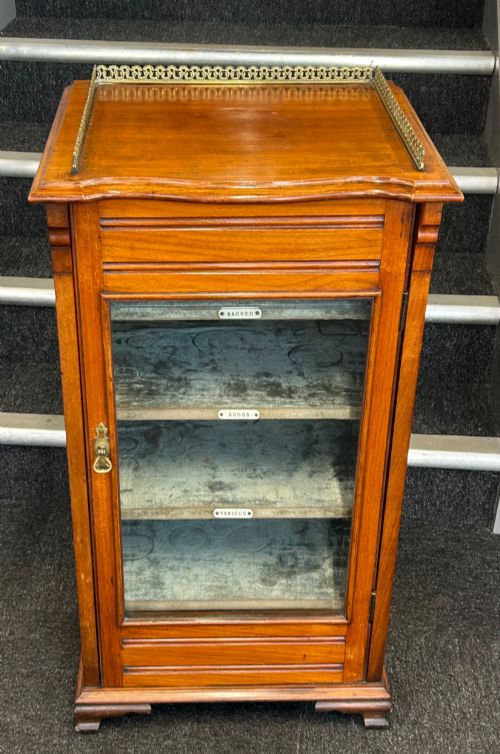
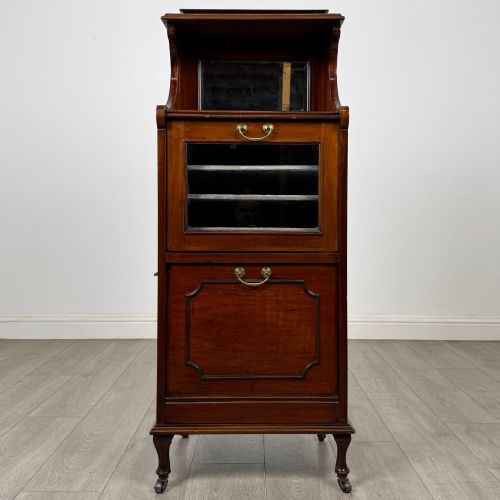
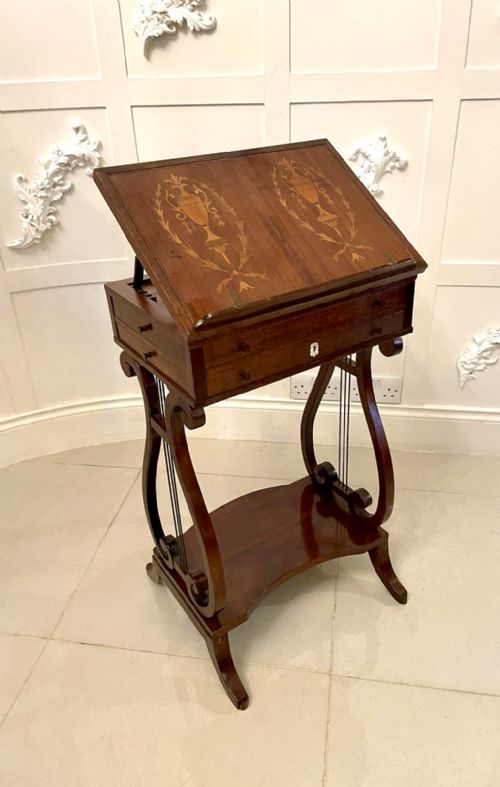
When you search for a vintage music stand, you encounter pieces designed to hold scores, books, or papers, spanning forms from adjustable reading stands and lecterns to canterburys, magazine racks, and multi-drawer music cabinets. These pieces bridge functional utility and decorative furniture, serving as compact storage or display items in studies, parlours, and living spaces.
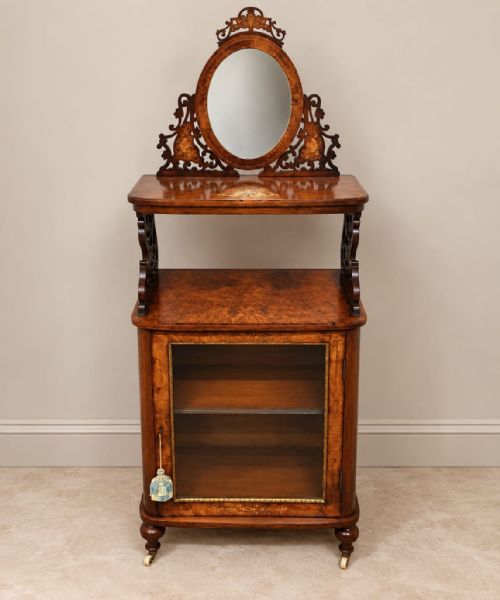
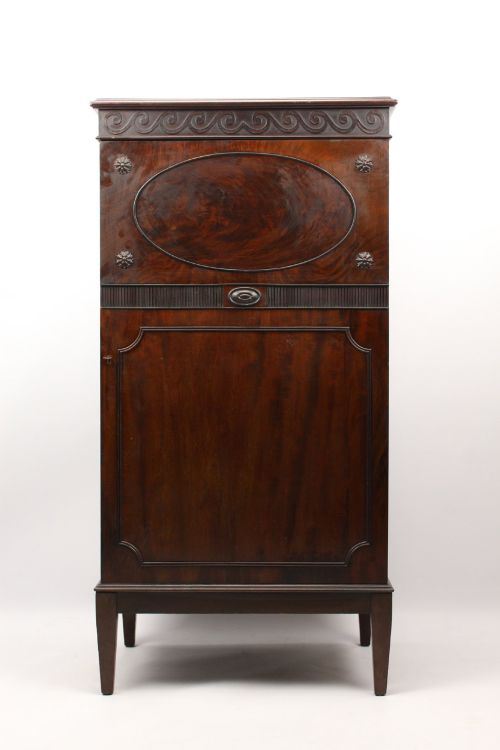
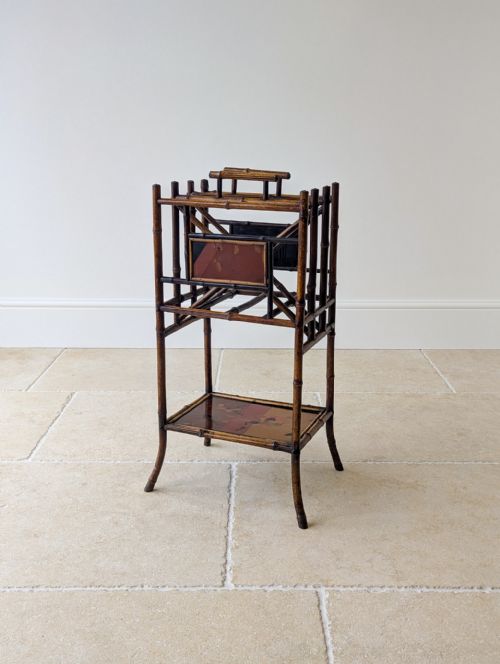
The selections on this page draw from periods including the Georgian era, the Regency period, the Victorian age, and the Edwardian years up to the 1920s. You meet mahogany canterburys, burr walnut cabinets, bamboo frames, and adjustable pine lecterns that reflect the changing domestic habits of past centuries.
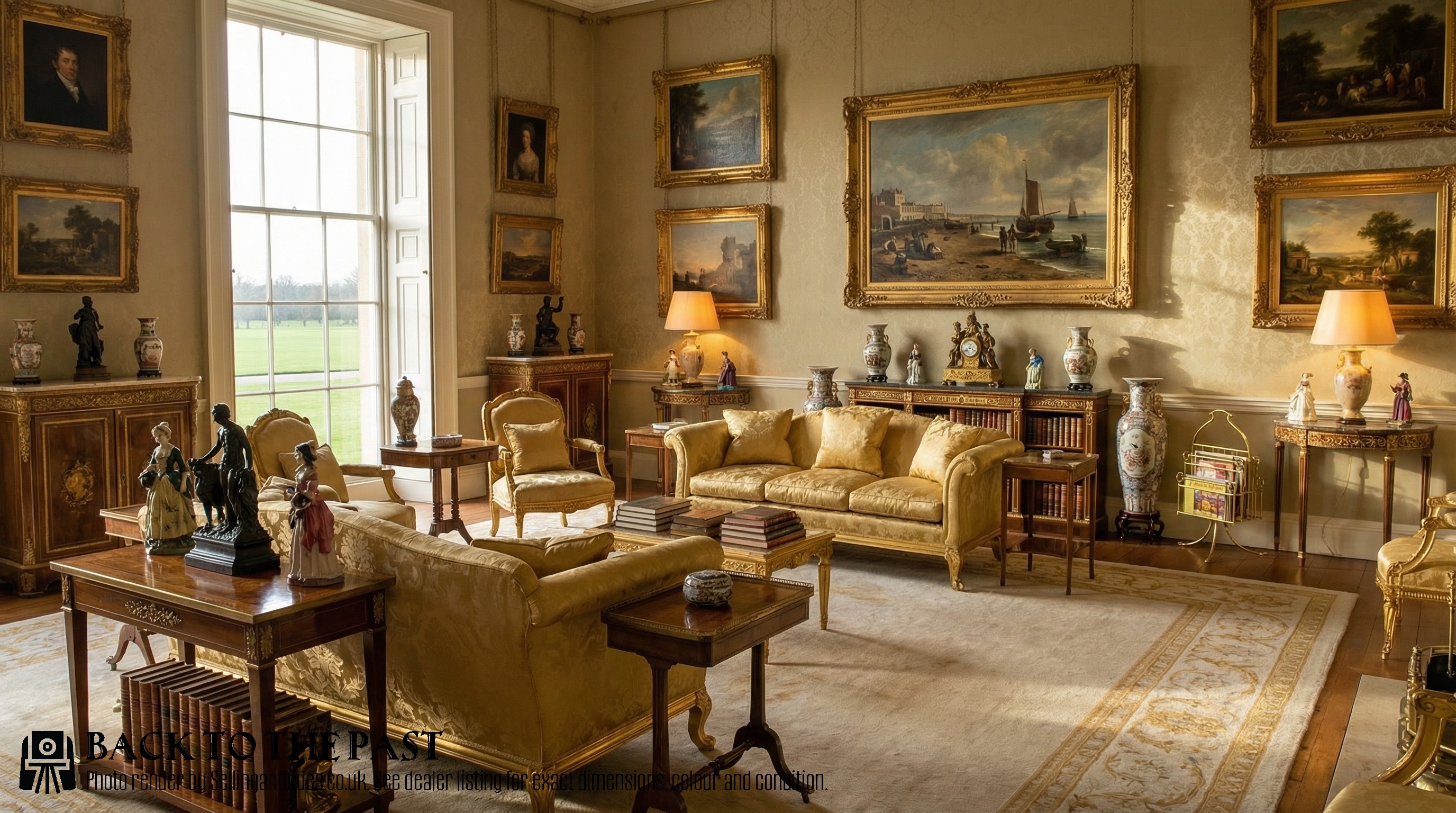
What varies in quality
The standard of a piece rests upon the selection of timber figures, such as burr walnut or figured mahogany, and the precision of the joinery and decorative inlay. Superior examples display refined proportions and hand-carved details that denote careful workshop execution.
Functional hardware also differentiates pieces, particularly the smoothness and ingenuity of adjustable mechanisms on reading stands and lecterns. The integrity of internal cabinet partitions and drawer construction further distinguishes standard production from finer cabinet work.
Listings feature items spanning the Georgian, Regency, Victorian, and Edwardian periods, constructed from mahogany, burr walnut, oak, and bamboo.
GM Elwood for JS Henry·Denby & Spinks·U Phone of Leeds
The Vintage Music Stand Glossary
- Canterbury
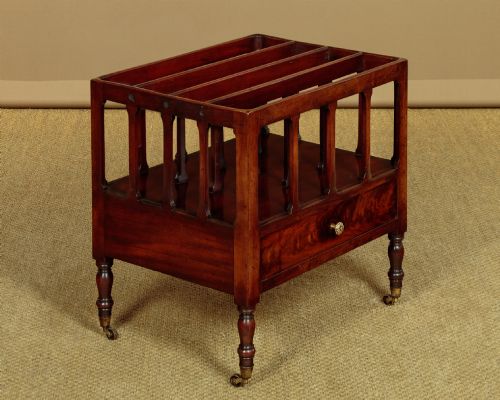
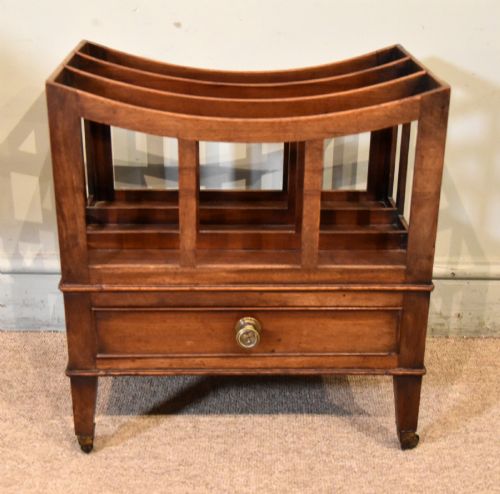
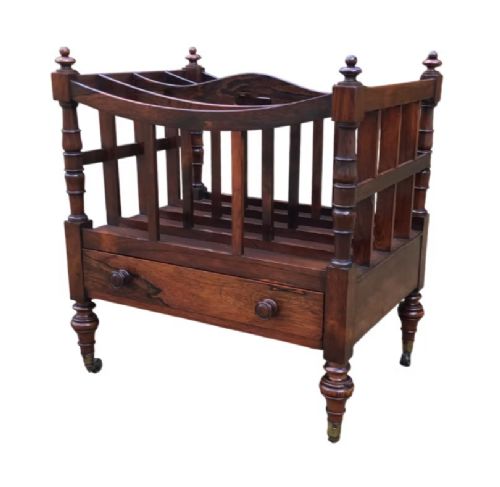
- A low, open-partitioned stand used for holding sheet music, newspapers, or magazines, often fitted with castors and a small drawer below. Originating in the late eighteenth century, it serves as both a tidy and an occasional table.
- Lectern
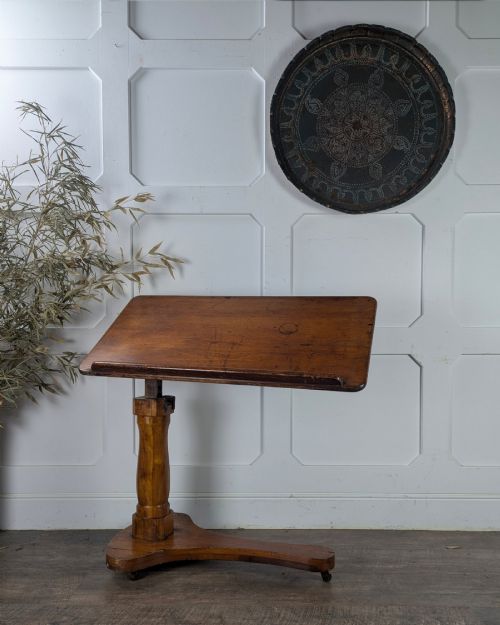
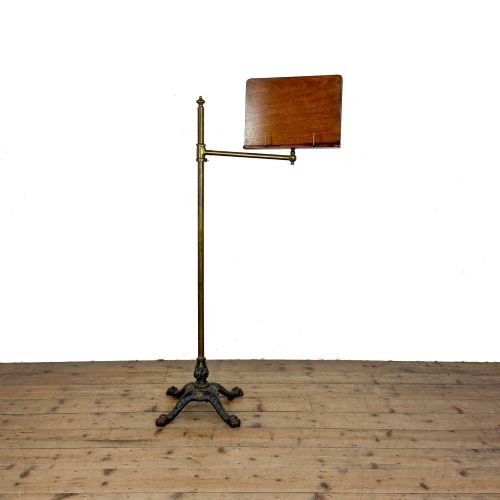
- A tall reading stand with a sloped top designed to hold books or scores for a standing reader. These pieces appear in wooden or metal forms, sometimes featuring adjustable stems.
- Burr walnut
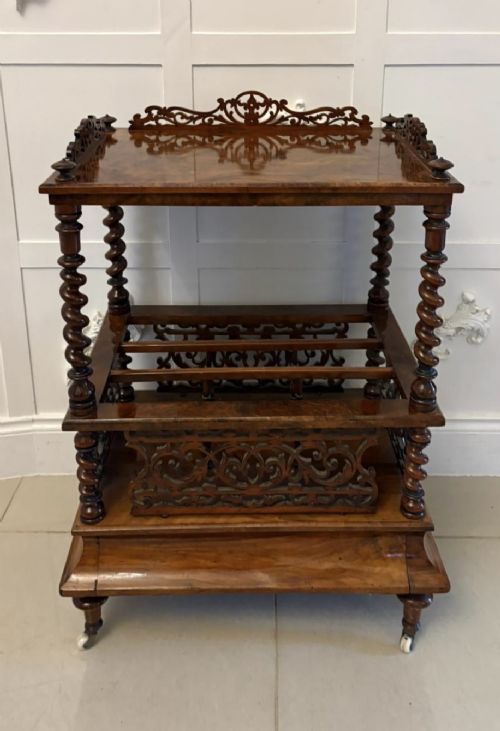
- A veneer sliced from the knotty growth of a walnut tree, prized for its swirling, highly figured grain pattern. Cabinet makers applied it to the primary surfaces of Victorian and Edwardian music cabinets and canterburys to create rich visual texture.
- Aesthetic Movement
- A late nineteenth-century design style that emphasised artistic expression, simplicity, and oriental influences over heavy Victorian ornamentation. Pieces from this movement often incorporate materials like bamboo.
Vintage Music Stand: Frequently Asked Questions
What is a canterbury?
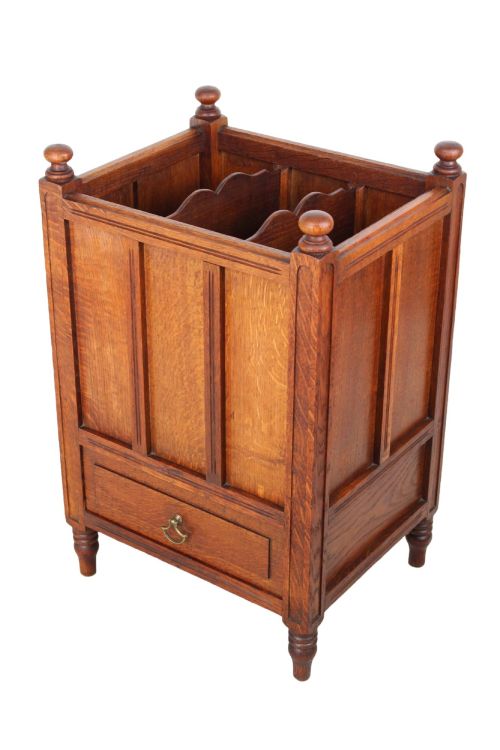
A canterbury is a low stand featuring vertical partitions designed to store sheet music, books, or periodicals off the floor. They often include a small lower drawer and slender legs fitted with castors.
Originally conceived in the eighteenth century, they evolved through the Regency and Victorian periods into versatile living room furniture that functions equally well as a modern magazine rack.
How do adjustable reading stands work?
Adjustable reading stands utilise mechanical brass or iron ratchets, screws, and sliding stems to alter the height and tilt of the bookrest. These mechanisms allowed musicians and readers to customise the angle for comfort.
Operating the adjustment requires releasing the friction collar or pin, setting the desired slope, and securing the fastener to hold the heavy timber ledge in place.
Where should I place a music cabinet?
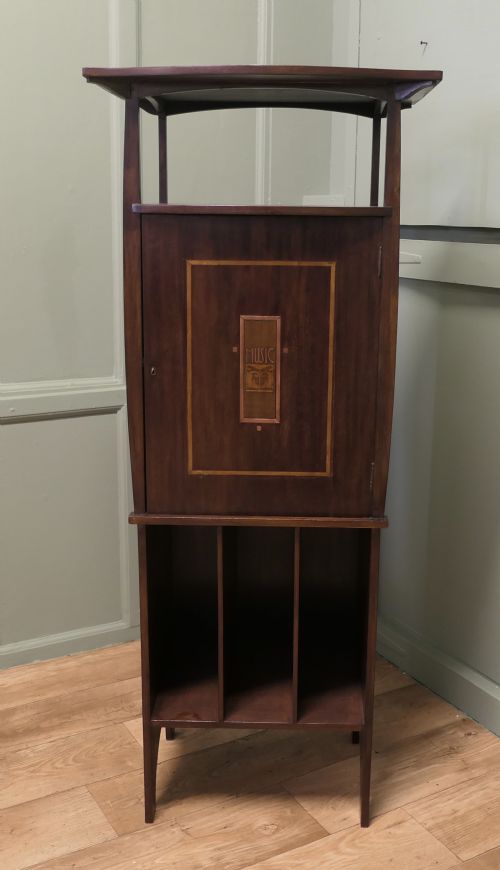
Music cabinets suit studies, music rooms, and living spaces where their compact vertical footprint provides useful enclosed storage. Their shallow depth allows them to sit comfortably against walls or beside seating.
Inside, the shallow drawers and shelves accommodate sheet music, documents, or modern electronics while keeping surfaces clear of clutter.
How do I distinguish Victorian from Edwardian pieces?
Victorian pieces, spanning the mid to late nineteenth century, typically feature heavier proportions, dark mahogany or burr walnut veneers, and rich decorative carving or Aesthetic bamboo work. They emphasise substantial presence and elaborate detail.
Edwardian furniture, dating from around 1900 to the 1910s, generally displays lighter construction, simpler inlaid satinwood stringing, and bright mahogany or oak surfaces that reflect a more restrained domestic taste.