
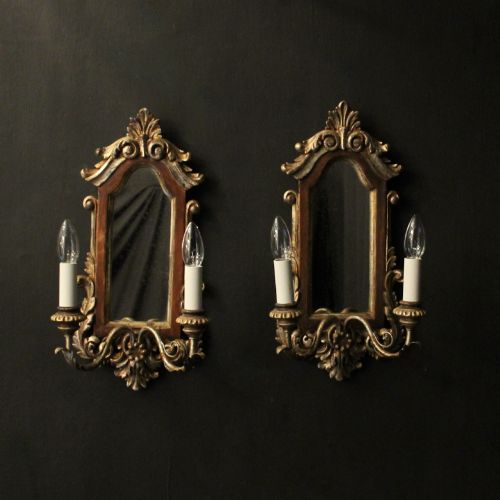
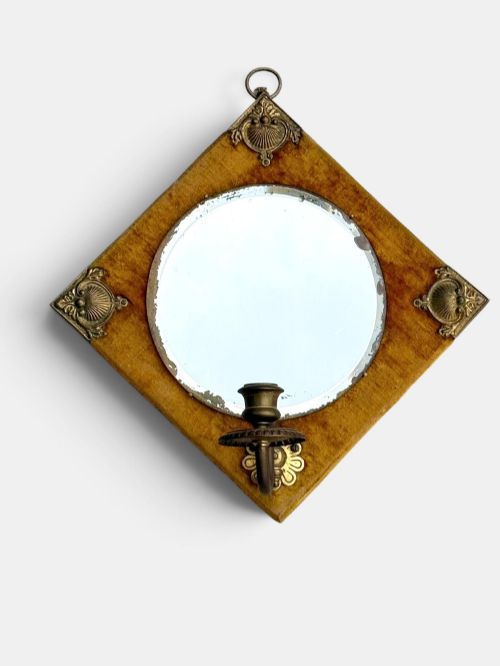
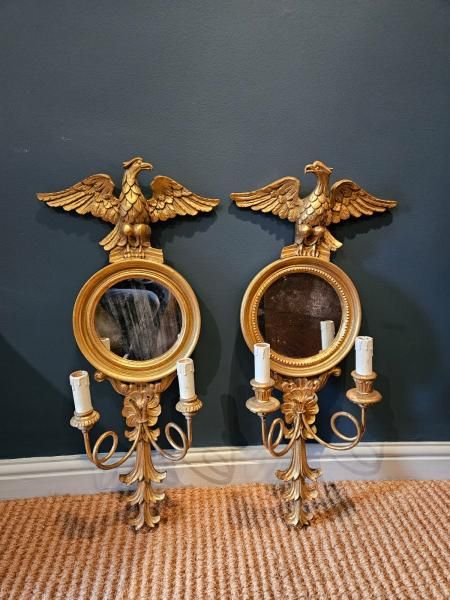
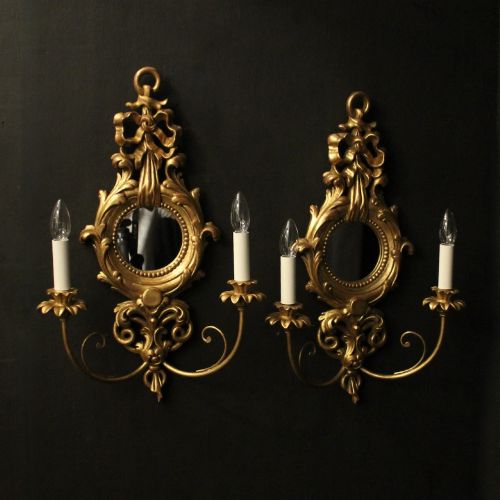
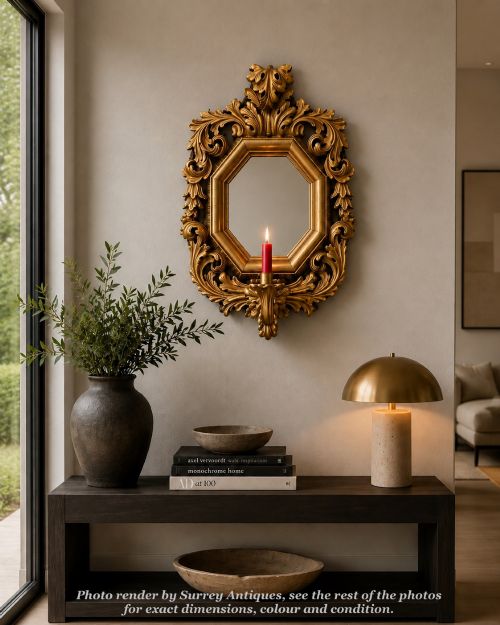


Vintage Mirror Sconce
These vintage mirror sconce examples combine reflective glass and candle arms to throw warm light across a room.
Vintage Mirror Sconce
A vintage mirror sconce combines a wall-mounted glass panel with projecting candle arms to amplify ambient light in a room. Buyers searching this phrase encounter various forms, including girandoles, giltwood wall lights, and mirrored display brackets.
How they were made
Carvers shaped wooden frames from pine, mahogany, or softwoods before applying layers of gesso for intricate relief ornament. Artisans then water-gilded these surfaces with thin gold leaf or applied polychrome paint finishes.
Foundry workers cast metal components in brass or bronze, sometimes integrating articulated candle holders directly into the frame structure. Mirror plates were traditionally silvered and bevelled by hand, fitted securely into their timber or metal housings.
Listings feature eighteenth and nineteenth-century furniture styles including Regency, Rococo Revival, and Neoclassical designs.
What varies in quality
The depth and crispness of carved ornament distinguish finer examples from simpler production pieces. Hand-carved giltwood and chased bronze display sharper detail in foliage, scrollwork, and figural motifs than moulded compositions.
Originality of the glass and fittings dictates overall integrity. Retaining period mirror plates with authentic foxing, alongside matching candle arms and secure backing boards, elevates a piece above those with replaced components.
E.G Paris
The Vintage Mirror Sconce Glossary
- Girandole
- A decorative wall mirror featuring attached candle branches or sconces. These fixtures multiplied candlelight by reflecting the flame across the mirrored surface.
- Giltwood
- Timber, often lime or pine, coated with gold leaf over a prepared gesso ground. This technique created a rich, reflective surface popular in classical framing.
- Gesso
- A plaster mixture applied to wood frames to create a smooth base for carving or gilding. It allowed makers to achieve high-relief ornamentation.
- Bevelling
- The practice of sloping the outer edges of a mirror plate to a thinner profile. This traditional detail catches light at an angle.
- Overmantel
- A large mirror designed to hang specifically above a fireplace mantelpiece. They often incorporated candle arms or shelf brackets.
Vintage Mirror Sconce: Frequently Asked Questions
How do I hang a heavy vintage mirror sconce?
These pieces require secure wall fixings suited to their weight, particularly models made from solid giltwood or cast bronze. Wall anchors tied directly into masonry or studs provide the necessary support for safe suspension.
Positioning the sconce at eye level allows the candle arms and glass to interact effectively with surrounding room light. Ensure the hanging wire or brackets on the reverse match the designated load.
Can I burn real candles in these sconces?
Many surviving pieces retain their original metal drip pans and candle sockets designed for functional use. Standard taper candles fit most historical arm diameters safely.
Caution is necessary to protect delicate giltwood or gesso surfaces from dripping wax or direct heat. Using battery-operated candles offers an alternative for preserving fragile antique finishes.
How do I clean antique mirror glass?
Cleaning requires a soft microfiber cloth and a mild, ammonia-free solution applied sparingly. Harsh commercial sprays can damage the silvering behind the glass or strip surrounding wooden frames.
Care must be taken around the edges where silver backing often degrades with age. Gently wiping removes dust without disturbing the historical patina of the plate.
What is the difference between a girandole and a wall sconce?
A girandole specifically denotes a wall-mounted mirror that incorporates candle branches into its design. Traditional wall sconces often feature candle arms mounted on a backplate without a significant central mirror.
Many listings use the terms interchangeably when the mirror surface dominates the decorative composition. Both forms served to illuminate domestic interiors before electric lighting.