



Vintage Millinery Mould
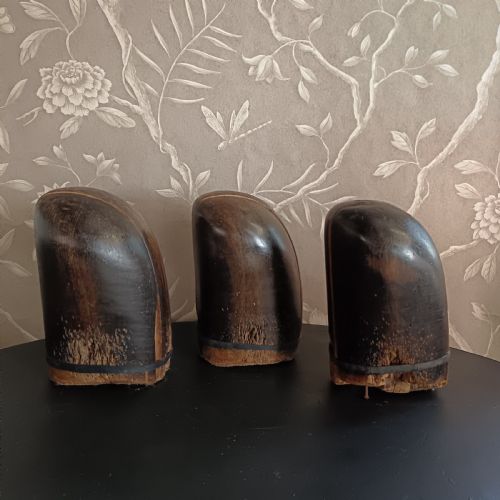
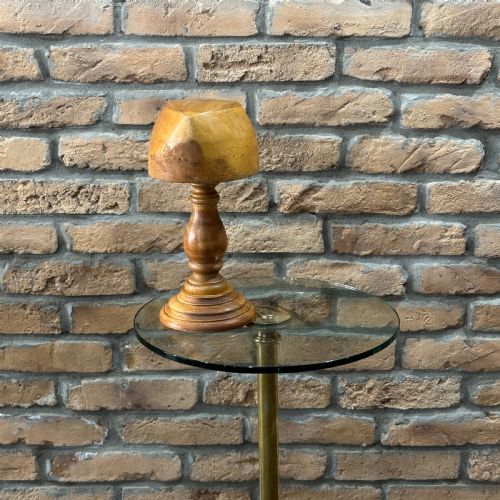
These vintage millinery mould examples are solid wooden and metal blocks that shape traditional hats, offering striking sculptural presence for any modern interior.
Vintage Millinery Mould
A vintage millinery mould encompasses carved wooden heads, sectional blocks and utilitarian forms designed for shaping headwear. These objects range from nineteenth-century fruitwood and carved oak examples to early twentieth-century industrial aluminium blocks.
The versions most frequently met on this page include carved wooden milliner heads from Regent Street and French provincial workshops alongside utilitarian aluminium moulds. Collectors also encounter specialised items such as nineteenth-century wooden hat stretchers and military bearskin cap blocks.
Originating primarily from English and French workshops, these utilitarian forms served hatters and haberdashers before finding a second life as decorative objects and sculptural busts. Their varied profiles capture the distinct fashion silhouettes of the Victorian era up through the nineteen-twenties.
Materials and construction
Later production shifted towards cast aluminium and iron, creating durable industrial moulds designed for heavy commercial hat production. These metal forms combine bolted sections and socket mounts, reflecting practical workshop engineering from the early twentieth century.
Some wooden heads still bear traces of long-vanished hat pins and chalk marks left behind by busy Victorian milliners.
Judging quality and character
The distinction between standard commercial forms and superior items lies in the execution of the surface and the clarity of the maker or retailer stamps. Original bases, metal fittings and untouched surface patination elevate an ordinary workshop tool into a compelling decorative object.
The Vintage Millinery Mould Glossary
- Hat block
- A solid wooden or metal form used by milliners to shape and dry hats during manufacture. These blocks determine the final crown and brim profile of the headwear.
- Hat stretcher
- A mechanical wooden device inserted into hats to expand or maintain their inner circumference. They typically feature hinged sections adjusted via a central screw mechanism.
- Millinery form
- A generic term covering all blocks, heads and moulds utilised in the creation of hats. They exist in various geometric and anatomical shapes.
- Folk art style
- A descriptor for handmade objects produced outside formal academic traditions, often displaying charming irregularities and direct craftsmanship. In millinery heads, this appears in simplified facial carving.
- Fruitwood
- Dense, fine-grained timber sourced from fruit-bearing trees such as pear or apple, favoured by turners and carvers for its smooth finish. It resists splintering during detailed shaping.
Vintage Millinery Mould: Frequently Asked Questions
What is a vintage millinery mould?
A vintage millinery mould is a solid form made of wood or metal, historically used by hatters to shape felt, straw and fabric.
Today, these objects are collected and displayed as sculptural art and busts in homes.
How do I date a wooden hat block?
Dating relies on timber species, construction marks, tool traces and the specific hat silhouette the block was designed to create.
Nineteenth-century examples often feature hand-carved details and dense hardwoods, while later twentieth-century pieces incorporate cast aluminium.
How were millinery moulds used originally?
Hatters dampened felt or straw hat bodies and pulled them tightly over the wooden or metal blocks to set the desired form.
Once dried and stiffened, the finished hat was removed from the mould for trimming and lining.
Are aluminium hat blocks authentic?
Yes, aluminium and iron blocks became common in commercial hat manufacturing during the early twentieth century for durability.
These industrial metal moulds handled heavy daily production demands much better than traditional timber.