


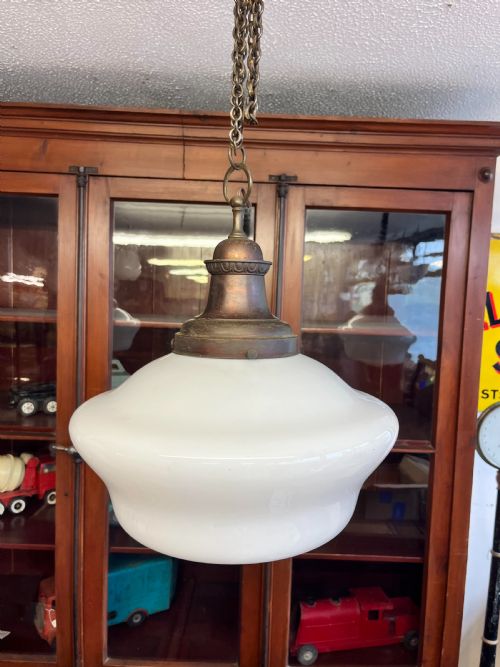


Vintage Milk Glass Pendant
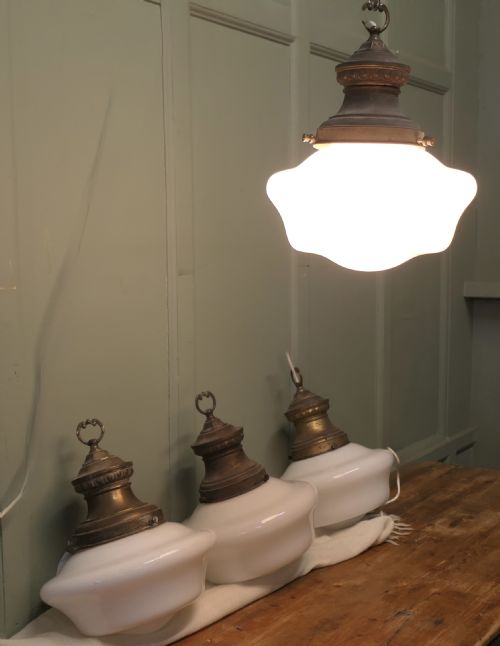
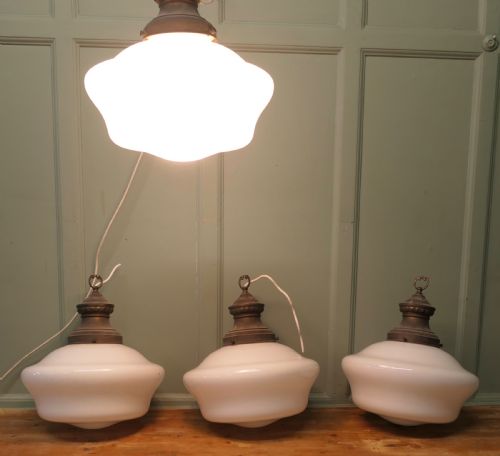
These vintage milk glass pendant lights bring a clean, diffused illumination and industrial character to a room.
Vintage Milk Glass Pendant
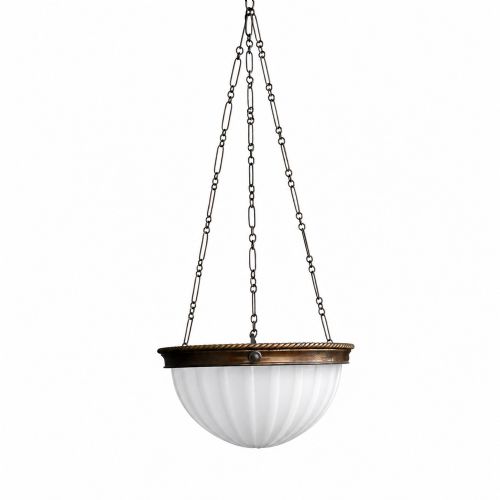
Forms range from pear-shaped and conical bodies to reeded designs and fish scale patterns. These lights originate from domestic, chapel, industrial, and pharmacy settings.
The styles present include Art Deco, industrial, Gothic Revival, and early 20th century English designs. You will find single pendants alongside matched sets of ceiling lights.
How they were made
The shades utilise opaline glass, opal glass, and moonstone glass to achieve their characteristic milky, light-diffusing opacity. Artisans shaped these materials into distinct geometric and moulded forms.
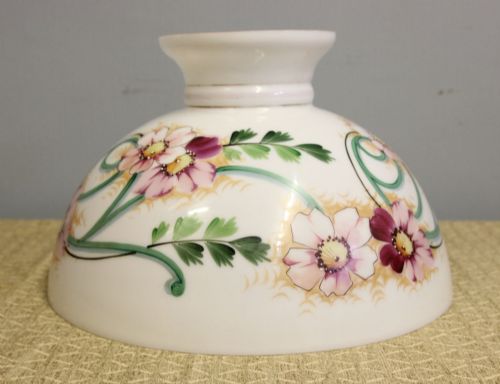
Metal components in brass, chrome, steel, and general metalwork support the glass shades. Selected pieces incorporate painted details and enamel finishes upon the glass or metal surfaces.
Fish scale glass shades catch the afternoon sun even when the electricity remains switched off.
What varies in quality
Subtleties in glass density and surface texture separate standard production shades from finer examples. The depth of the milky opacity and the crispness of moulded patterns such as reeding or fish scales dictate the visual weight of the piece.
The accompanying metalwork, whether cast brass or utilitarian steel, displays varying degrees of refinement in its fabrication. Scale also plays a role, with unusually large or diminutive proportions altering the impact of the fixture.
The Vintage Milk Glass Pendant Glossary
- Milk glass
- Opaque or translucent white glass used for tableware and lighting fixtures. It creates a soft, glare-free distribution of light.
- Opaline glass
- A type of glass that exhibits a milky appearance, often showing subtle fire when lit from within. It was widely utilised in European lighting throughout the early twentieth century.
- Moonstone glass
- A specific variety of translucent glass with a mottled or cloudy appearance resembling the gemstone. This material scatters light evenly across the room.
- Reeded
- A decorative surface treatment consisting of parallel convex ridges moulded into the glass. This texture catches the light and adds rigidity to the shade.
- Pendant light
- A hanging light fixture suspended from the ceiling by a cord, chain, or metal rod. These units serve as primary or task illumination in a space.
Vintage Milk Glass Pendant: Frequently Asked Questions
How do I hang a vintage pendant light?
These pendant lights suspend from ceilings using wired cords, chains, or metal rods attached to the upper fitter. Professional electrical installation is recommended to secure the weight and connect the internal wiring safely.
Ensure the hanging height suits the room proportions and ceiling clearance. Many shades work well suspended over tables, in hallways, or as central living space illumination.
What rooms suit milk glass pendants?
The neutral white tones and diffused glow integrate easily into kitchens, hallways, and bathrooms. Industrial and Art Deco variations suit utilitarian or period-restored interiors.
Larger chapel and pharmacy fixtures provide a stronger focal point in high-ceilinged spaces. Smaller diminutive shades fit comfortably in compact rooms or above secondary work surfaces.
How do I identify the period?
Dating relies on stylistic markers such as geometric Art Deco silhouettes or ornate Edwardian brass and enamel work. Materials like opaline and moonstone glass point predominantly to the early decades of the twentieth century.
Form also guides attribution, with utilitarian conical shapes often aligning with 1930s industrial production. Manufacturing techniques and fitter sizes offer further clues to the exact decade of origin.
Are the shades original to the hardware?
Many surviving shades retain their period-appropriate metal galleries, chains, or brass fitters from the early twentieth century. Some fixtures may be paired with replacement hanging mechanisms that match the original style.
Checking the collar and fitter dimensions helps determine if the glass and hardware share an era of manufacture. Both original and matched setups provide the correct mounting points for installation.