

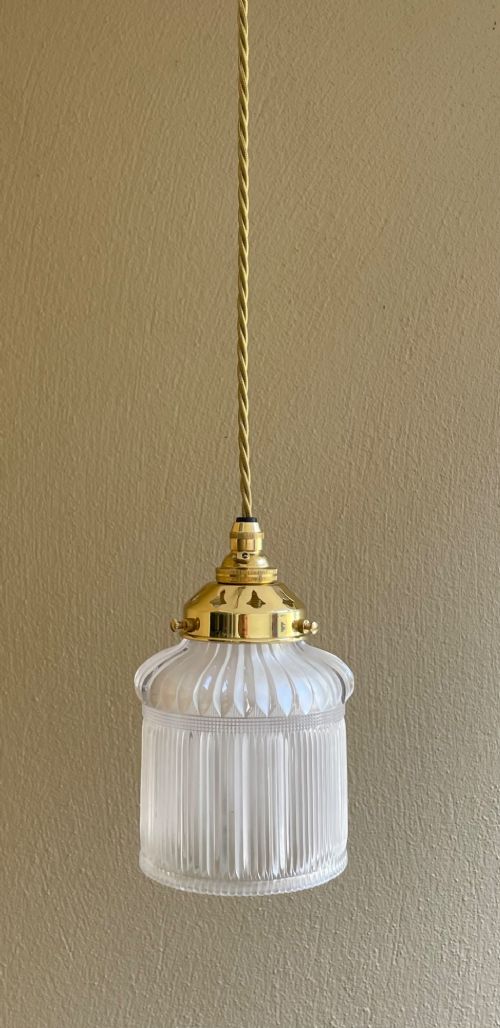
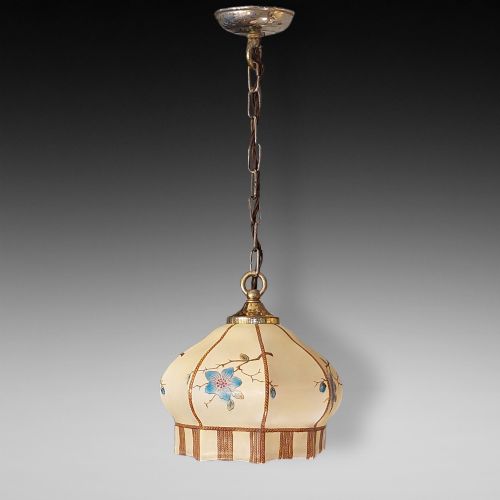
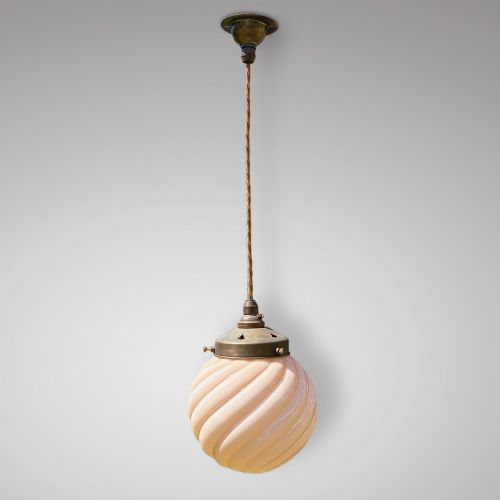
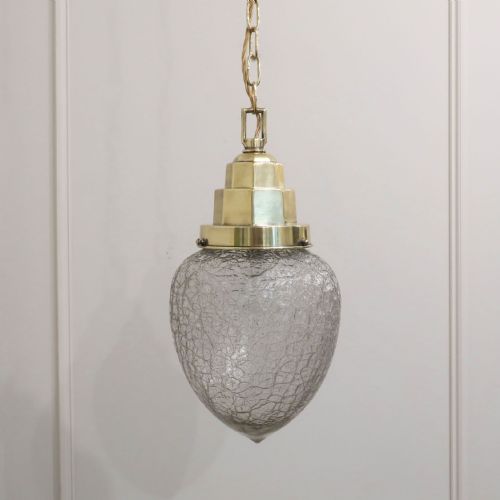


Art Deco Glass Hanging Light
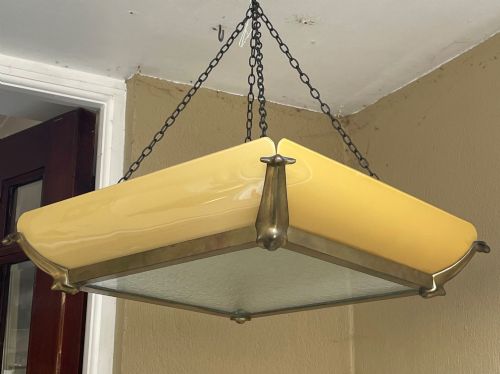
An art deco glass hanging light brings geometric clarity and diffused illumination to a hallway or reception room.
Art Deco Glass Hanging Light
An art deco glass hanging light bridges period interiors and modern spaces through structured forms and clean lines. Buyers seek these fixtures for their characteristic ability to cast warm, even illumination while serving as a distinct architectural focal point in a room.
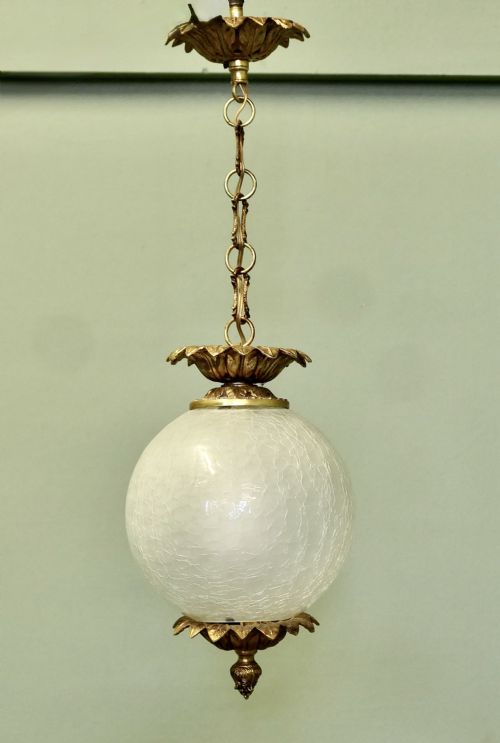
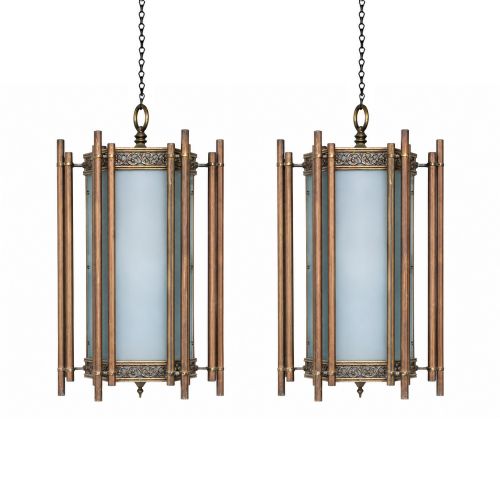
The pieces appearing on this page span several decades, though examples from the nineteen-thirties predominate alongside works from the nineteen-twenties. Forms range from simple globes and pear-shaped pendants to complex multi-tiered slip shade chandeliers and panelled lanterns.
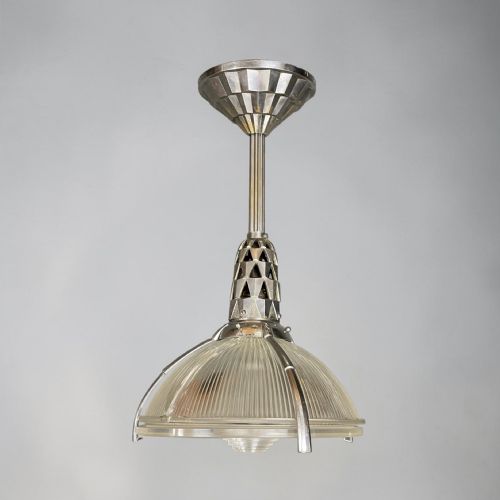
Origins include domestic British output alongside continental workshops, with French production strongly represented in the selection. Whether suspended by brass chains, copper fixings or chrome galleries, each piece reflects the decorative priorities of its era.
Materials and Construction
Glass forms the primary medium, utilising opaline, frosted, cut, crackle and mercury mirrored surfaces to soften the output of internal bulbs. These shades are mouth-blown, pressed into moulds or etched to achieve texture and opacity.
Metal components provide structural support, employing brass, chrome, copper, bronze and wrought iron for galleries, chains and frames. These metals are cast, spun or beaten to hold the glass securely while contributing complementary metallic tones to the design.
Materials recorded across the inventory include brass, chrome, copper, iron, opaline glass, frosted glass, cut glass and mercury mirrored glass.
Judging Quality
Quality reveals itself in the weight and substance of the materials used, particularly the thickness of the glass and the rigidity of the metal framework. Superior examples display crisp moulding in slip shades and refined patination on bronze or brass mounts.
Design integration separates standard production from exceptional pieces. The harmony between the glass diffuser and the metal suspension hardware dictates the overall visual success of the pendant or lantern.
Émile-Jacques Ruhlmann·Schneider·Jean Gauthier
The Art Deco Glass Hanging Light Glossary
- Opaline glass
- A milky, semi-translucent glass that diffuses light evenly without harsh glare. It appears frequently in twentieth-century lighting.
- Plafonnier
- A ceiling-mounted light fixture that sits flush or very close to the ceiling surface. These often feature large moulded glass bowls held by metal clips.
- Slip shade
- A moulded piece of glass that slides into a metal frame as part of a multi-piece shade arrangement. This technique defines many American and European fixtures.
- Gallery
- The metal collar or ring that grips the upper rim of a glass shade and connects it to the suspension rod or chain.
Art Deco Glass Hanging Light: Frequently Asked Questions
How do I hang a heavy art deco glass hanging light safely?
Suspension requires fixing directly into ceiling joists or using a substantial ceiling rose capable of supporting the combined weight of glass and metal. Professional installation ensures the electrical wiring and load-bearing fixings meet current safety standards.
Heavier lanterns and chandeliers often incorporate internal steel cables alongside the decorative chain to take the physical strain. Consulting an electrician before mounting prevents structural damage to older plaster ceilings.
What is the difference between opaline and frosted glass?
Opaline glass contains bone ash or other agents during manufacturing to create a milky, opaque appearance that diffuses light softly. Frosted glass achieves its texture through acid-etching or sandblasting a clear surface to scatter light.
Both materials reduce bulb glare effectively, but opaline glass retains a solid white or tinted body even when unlit. Frosted glass tends to appear more translucent when illuminated from within.
Can I use modern LED bulbs in these vintage fixtures?
Modern LED bulbs work well in vintage pendants provided the wattage and physical dimensions match the interior space of the shade. LEDs generate less heat than traditional incandescent bulbs, which helps protect older wiring and fragile glass.
Selecting warm white LED variants preserves the intended atmosphere of the period illumination. Care must be taken with enclosed globes to ensure the bulb diameter does not exceed the fitter opening.
How do I clean antique glass shades without damaging them?
Cleaning requires removing the shade from its metal gallery and washing it in lukewarm water with mild soap. A soft cloth prevents scratching on delicate opaline or etched surfaces.
Harsh chemical cleaners and abrasive pads must be avoided, especially on mercury mirrored or hand-painted finishes. Ensuring the glass is completely dry before reassembly protects the internal metal components.