





Antique Opaline Light Fixture
An antique opaline light fixture diffuses a soft, milky glow that transforms a room.
Antique Opaline Light Fixture
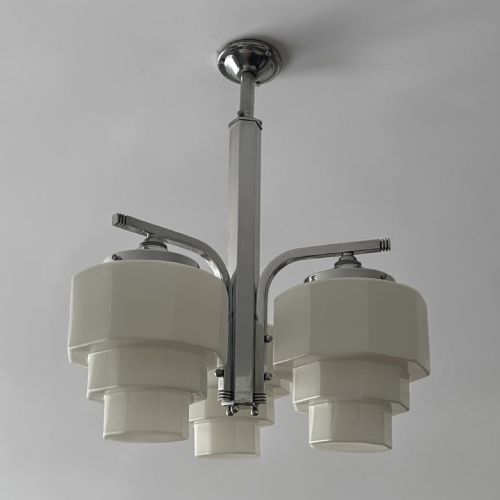
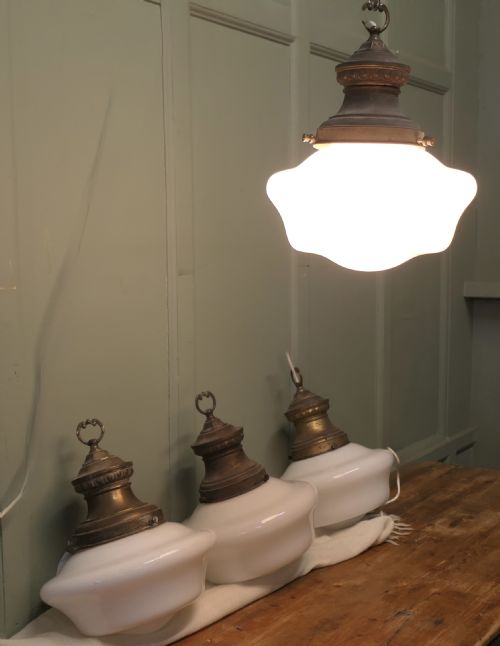
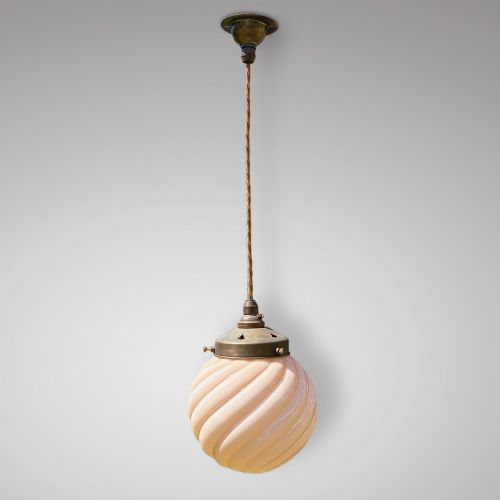
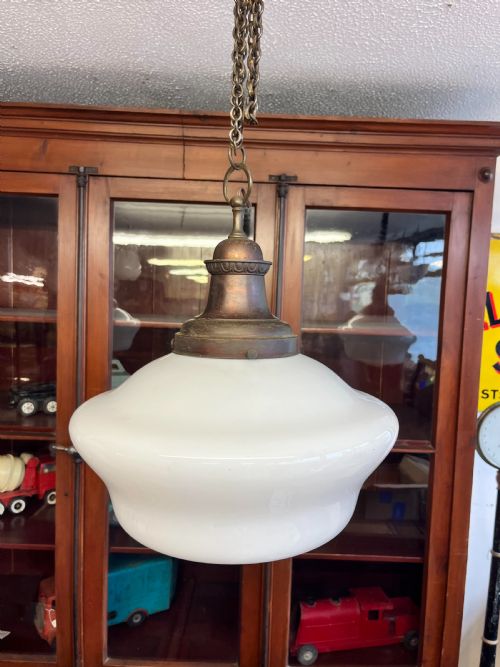
An antique opaline light fixture combines milky opaline glass with brass, bronze, or gilt bronze mounts, spanning periods from the Victorian era through the 1930s. These pieces include pendant lights, ceiling lights, table lamps, and chandeliers shaped in styles ranging from Art Deco and Art Nouveau to Industrial and Gothic Revival.
The most common examples on this page are pendant lights and ceiling lights from the early twentieth century, alongside Victorian table lamps. Makers such as Perry & Co appear in the evidence, offering specialist brass and glass combinations alongside utilitarian chapel and industrial forms.
How they were made
Makers shaped opaline glass into pear-shaped shades, reeded designs, and smooth globes, often pairing the glass with solid brass or bronze. Metal components include cast gilt bronze, turned brass mounts, and fabric flex for wiring.
Techniques range from hand-painted decoration on Victorian oil lamps to industrial casting for early twentieth-century ceiling lights and chapel fixtures.
Antique Opaline Light Fixture Retail Price Guide 2026
Typical asking prices for opaline light fixture among the pieces listed under this phrase on Sellingantiques today, from the lower quarter to the upper quarter. They describe what is for sale here now, not the wider market.
Listings span six distinct decades, ranging from Victorian and 1860s pieces through the Edwardian era, 1910, 1920, and 1930.
What varies in quality
Quality separates simple utilitarian factory lighting from fine decorative pieces through the weight of the metal mounts and the depth of the opaline glass. Superior examples feature cast gilt bronze work, hand-painted details, or complex reeded glass designs rather than plain blown globes.
Attribution to known makers such as Perry & Co elevates a piece, as does originality in the brass and bronze fittings that secure the glass shades.
Perry & Co
The Antique Opaline Light Fixture Glossary
- Opaline Glass
- A translucent, milky white glass popular in nineteenth and early twentieth-century lighting. It diffuses glare while casting a warm, even illumination.
- Gilt Bronze
- Bronze treated with a layer of gold leaf or a gold-coloured mercury finish. It adds a rich, decorative sheen to lamp mounts and lantern frames.
- Reeded Design
- A surface pattern of parallel, raised rounded ridges. This technique adds texture and visual interest to glass shades.
- Gothic Revival
- An architectural and decorative style drawing on medieval forms. It appears in brass chandeliers with pointed or ecclesiastical details.
Antique Opaline Light Fixture: Frequently Asked Questions
How do I hang a heavy pendant?
Pendant lights require secure ceiling fixings that can support the combined weight of the glass shade and metal mounts. Consult a qualified electrician to ensure the wiring and brackets match the weight of the fixture.
Most ceiling lights use standard hooks or threaded brass rods connected to the junction box. Make sure the drop height suits your room proportions before final installation.
How do I clean opaline glass?
Wash opaline glass gently in warm, soapy water using a soft cloth to remove dust and grease. Avoid abrasive scrubbers that might scratch the milky surface.
Dry the glass thoroughly with a lint-free cloth before reattaching it to the brass or bronze mounts. Take care with hand-painted sections to preserve any delicate pigments.
Are table lamps converted from oil?
Some Victorian table lamps begin as paraffin or oil lamps before later conversion to electricity. These pieces retain original brass burners and fonts adapted for modern wiring.
Examine the base and stem for evidence of period assembly and brass mounting. Converted lamps keep their historic character while functioning as practical desk or side table lighting.