



White Opaline Ceiling Light
A white opaline ceiling light brings a soft, diffused glow to a room through milky glass.
White Opaline Ceiling Light
A white opaline ceiling light is a hanging fixture designed to cast an even, glare-free illumination across a space. These fittings combine milky glass shades with metal or brass hanging mechanisms.
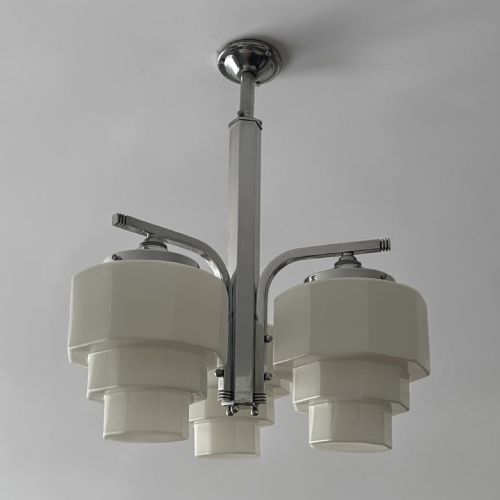
The selections span from the Edwardian period through the 1920s and 1930s, featuring styles such as Art Deco, industrial, and French country designs. Pendant lights and conical shades dominate the available forms.
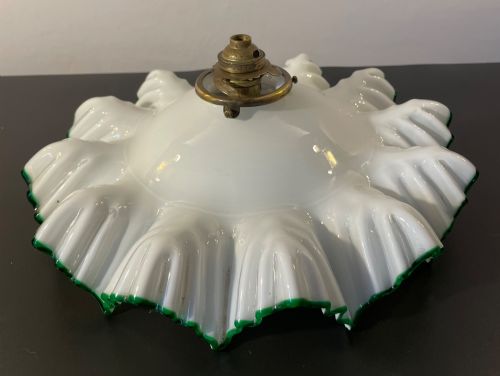
Buyers frequently encounter pear-shaped pendants, reeded designs, and simple dish lights from the early decades of the twentieth century. These pieces serve practical lighting needs while retaining period character.
Materials and Construction
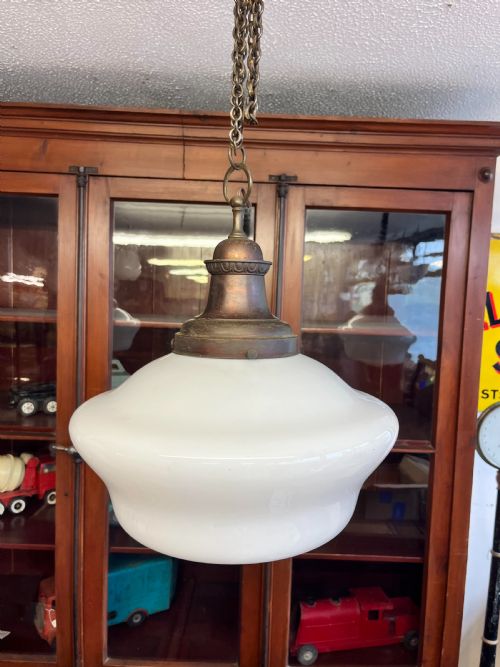
The shades rely on opaline glass, a dense milk-white material achieved by adding opacifiers during production to scatter light smoothly. Metal components like brass, chrome, bronze, and copper galleries provide the structural support and suspension.
Manufacturing methods involve blowing or moulding the glass into conical, spherical, or dish forms, then pairing it with engineered metal fixtures. Copper and brass fittings often secure the glass shades to the ceiling wiring.
White Opaline Ceiling Light Retail Price Guide 2026
Typical asking prices for white opaline ceiling light among the pieces listed under this phrase on Sellingantiques today, from the lower quarter to the upper quarter. They describe what is for sale here now, not the wider market.
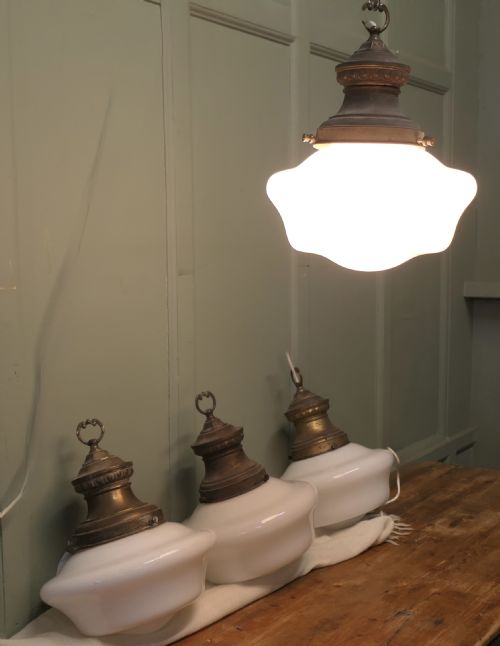
Chapel lights originally cast a pious glow over hymn books before finding new life in modern kitchens.
Evaluating Quality and Finish
Quality rests in the weight and uniformity of the opaline glass, alongside the integrity of the original metal galleries. Finer examples display smooth glass distribution without excessive bubbles or surface distortion.
The sophistication of the period style, from clean Art Deco lines to ornate Edwardian brasswork, distinguishes standard utility pieces from more ambitious decorative examples.
The White Opaline Ceiling Light Glossary
- Opaline glass
- A type of milky-white translucent glass that diffuses light evenly across its surface. It was widely used in European lighting fixtures throughout the nineteenth and early twentieth centuries.
- Pendant light
- A hanging lighting fixture suspended from the ceiling by a cord, chain, or metal rod. These lights direct illumination downward into a specific area of the room.
- Gallery
- The metal collar or ring that grips the upper rim of a glass lampshade to secure it to the suspension hardware. Galleries are often cast in brass, bronze, or copper.
- Plafonnier
- A ceiling-mounted light fixture where the shade sits flush or very close to the ceiling surface rather than hanging on a long drop.
White Opaline Ceiling Light: Frequently Asked Questions
How do I hang a vintage pendant?
These fixtures suspend from standard ceiling wiring using their original or compatible metal chains and rods. Professional installation ensures the weight of the glass and metal gallery is properly supported.
Adjusting the drop height depends on the ceiling clearance and the room function, keeping the shade safely above head height.
What rooms suit an opaline pendant?
The soft diffusion of milk glass makes these lights suitable for kitchens, hallways, and dining spaces where gentle illumination is preferred. Smaller dish and conical lights fit well in compact corridors.
Larger chapel or industrial pendants work effectively over central tables or high-ceilinged rooms.
How do I clean milk glass?
Washing the glass shades in warm soapy water removes dust and kitchen residue without harming the surface. Removing the shade from the metal gallery prevents damage to old screws and fixings.
Allowing the glass to dry thoroughly before reattaching prevents moisture from reaching the electrical components.
How do I date a fixture?
Dating relies on stylistic markers such as geometric Art Deco stepped forms, Edwardian brass detailing, or simpler 1930s industrial profiles. The construction of the metal gallery often provides clues to the manufacturing era.
Comparing the shade shape and glass density against known period pieces helps narrow down the decade.