
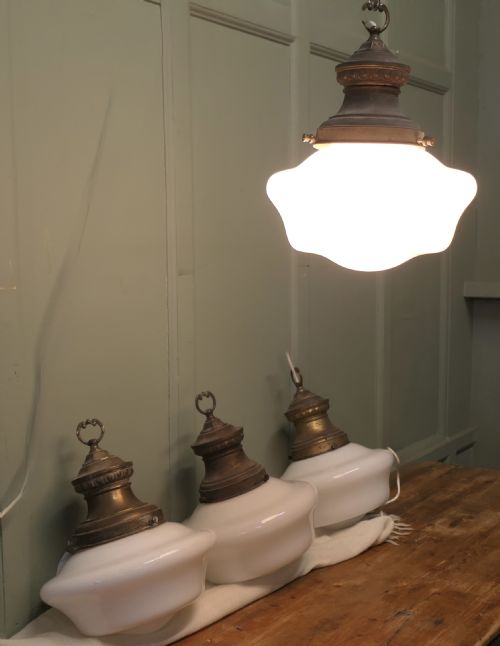
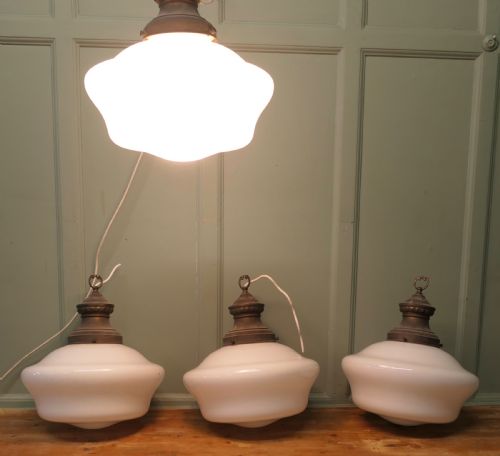
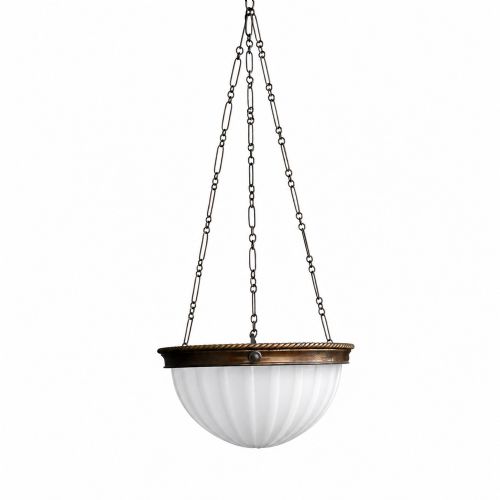


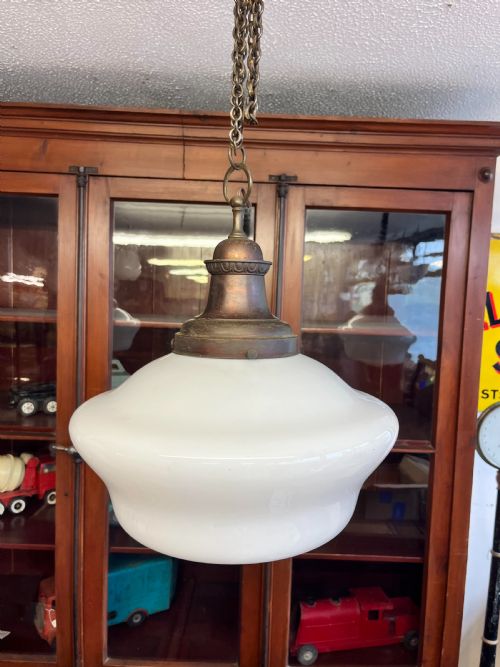
Brass Milk Glass Shade
These brass milk glass shade assemblies combine warm metalwork with softly glowing translucent glass, bringing genuine period character to domestic lighting.
Brass Milk Glass Shade
A brass milk glass shade brings together durable metal components and pale translucent glass diffusers designed for functional interior illumination. These pieces range from traditional domestic oil lamps and later electrified table lamps to large pendant lights and ceiling fixtures.
The selections span distinct periods including the Victorian era, Edwardian period, and the 1930s industrial phase. You will encounter pendant lights, conical hanging shades, chapel lights, and oil lamp globes paired with solid brass mountings and brass rings.
Victorian and Edwardian examples often feature hand-painted decoration, crimped edges, or elaborate oil lamp bases. Later 1930s items lean towards clean opaline conical shapes and industrial ceiling installations.
Materials and Construction
The primary structural components utilise solid brass, shaped into collars, galleries, stands, and suspension rings. This metalwork provides stable support and secure mountings for the heavy glass elements.
Glass production relies on milk glass, opaline glass, moonstone glass, and opaque glass. These specialised glass types diffuse light evenly while concealing internal bulbs or burners.
Dragonflies occasionally sneak onto solid brass lampwork, proving that even heavy industry appreciated a delicate insect.
Assessing Quality and Manufacture
Quality shows in the weight and thickness of the glass, alongside the precision of the brass fittings. Finer examples display smooth, even opacity in the glass and substantial brass components that maintain their structural integrity.
Decorative execution separates standard production from finer work. Hand-painted details, complex mouldings like crimped rims, and intact original brass galleries indicate higher grade execution across Victorian and Edwardian pieces.
The Brass Milk Glass Shade Glossary
- Milk Glass
- Opaque white glass developed during the nineteenth century to mimic porcelain. It diffuses light gently and appears in various pressed and blown forms.
- Opaline Glass
- A translucent pale glass that often shows a subtle fire or opalescence when lit from within. It is frequently found in pendant and chapel lighting.
- Moonstone Glass
- A semi-translucent glass variety with a mottled or cloudy appearance resembling the gemstone. This material creates a soft, diffused glow.
- Brass Gallery
- The metal ring or collar that holds a lampshade in place. It secures the glass globe to the lamp body or pendant fitting.
- Oil Lamp
- A lighting device that burns paraffin or oil via a wick, typically featuring a glass chimney and a decorative shade or globe.
Brass Milk Glass Shade: Frequently Asked Questions
How do I clean a milk glass shade?
Wash the glass gently in warm soapy water using a soft cloth to avoid scratching the surface. Dry thoroughly before reattaching it to the brass fitting.
Keep brass components dry and polish them sparingly with a suitable metal cleaner if necessary, avoiding contact with the glass.
Are these lights ready for modern wiring?
Many surviving fixtures have been adapted for modern electrical standards over time. It is advisable to have a qualified electrician inspect vintage wiring before installation.
Original oil lamps often require conversion components if you intend to use them as electrified table lamps.
How do I tell Victorian shades from later ones?
Victorian and Edwardian examples frequently incorporate decorative elements like hand-painted details, crimped rims, and ceramic bases. They are commonly associated with oil lamps and domestic table lighting.
Later 1930s pieces tend to favour simpler conical or pear-shaped opaline forms designed for industrial or hallway pendant installations.
Can I replace a broken shade safely?
Finding a matching replacement requires careful measurement of the fitter rim diameter that inserts into the brass gallery. Proportions and glass opacity should match the original period style.
Because production methods varied across the nineteenth and twentieth centuries, exact matches for hand-blown or moulded glass can take time to source.