
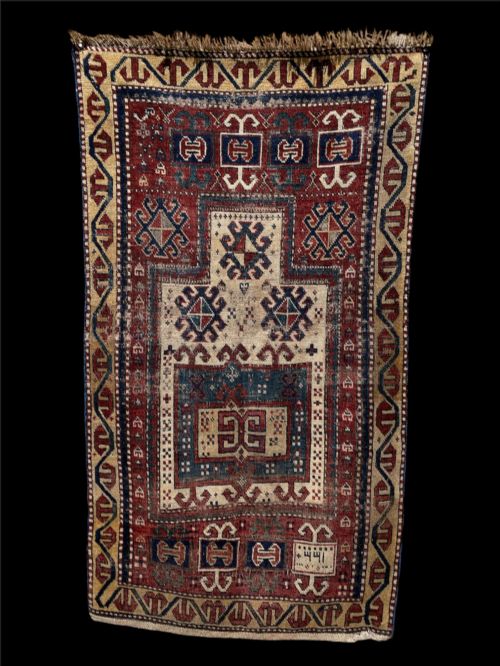
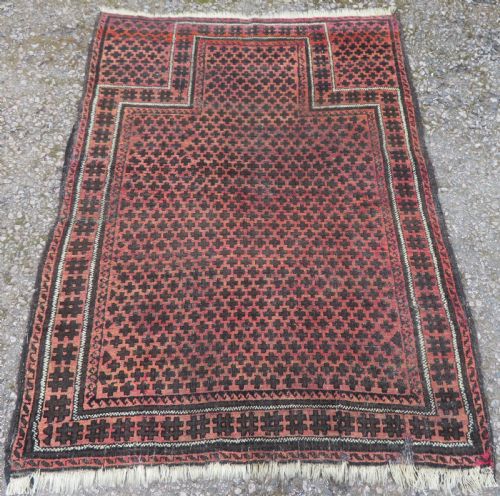


Vintage Mihrab Rug
A vintage mihrab rug brings centuries of woven devotion and architectural arch motifs straight to your floor.
Vintage Mihrab Rug
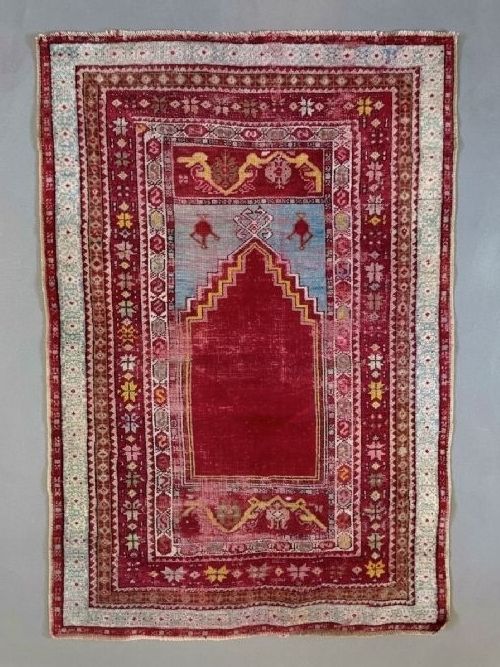
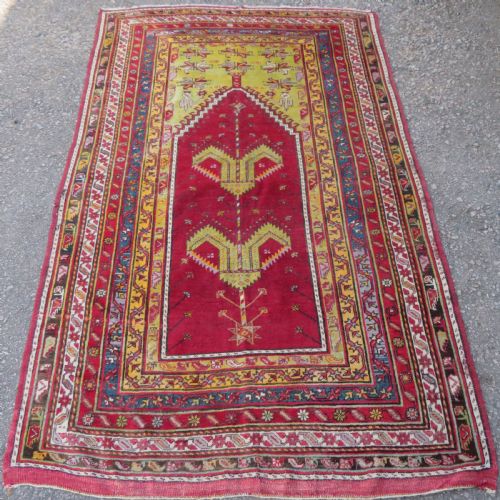
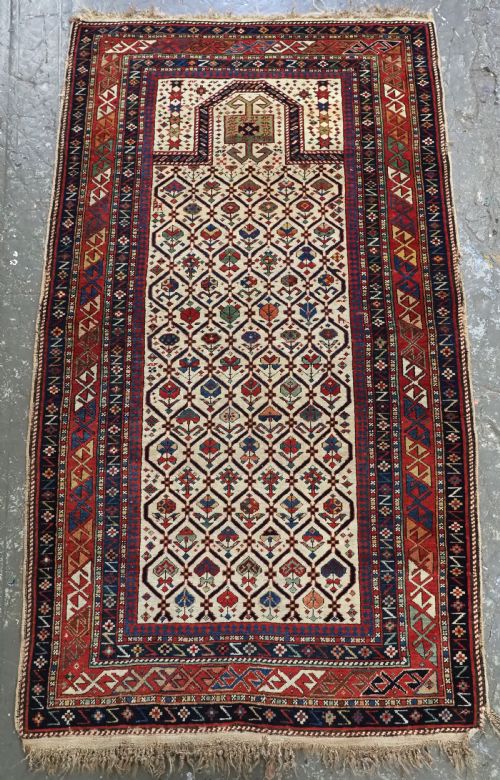
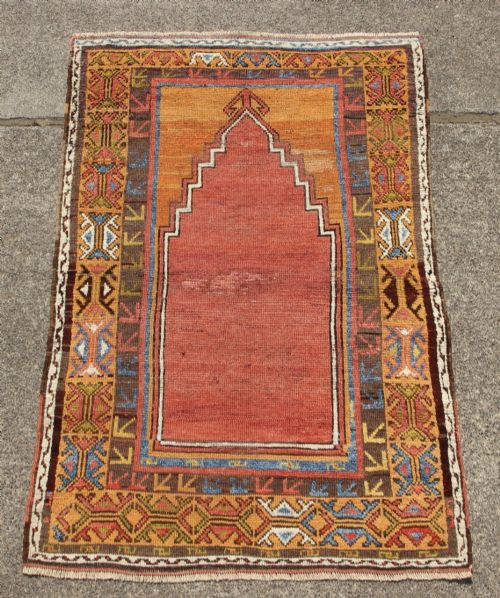
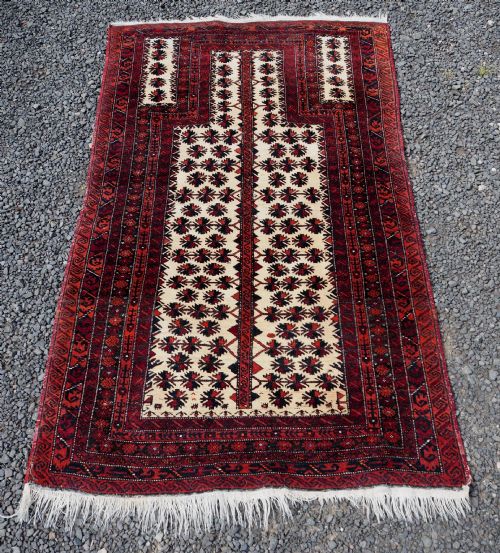
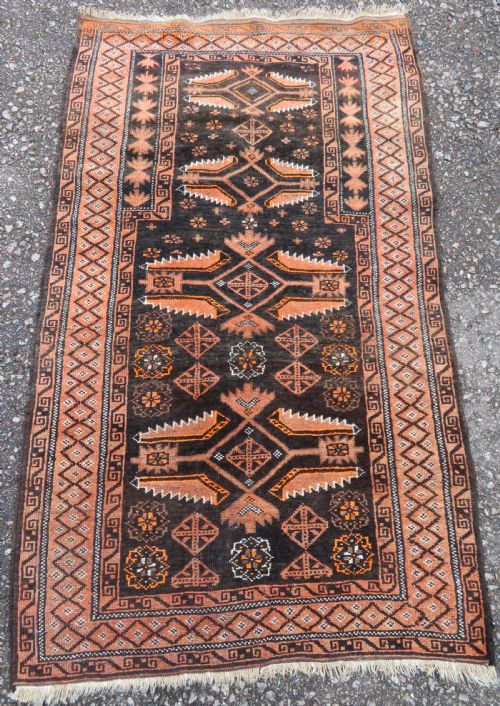
A vintage mihrab rug displays a distinctive pointed arch design that represents the prayer niche found in mosques, directing the user toward Mecca during daily devotions. These textiles take many regional forms, drawing on traditions from Anatolia, the Caucasus, Persia, and Afghanistan.
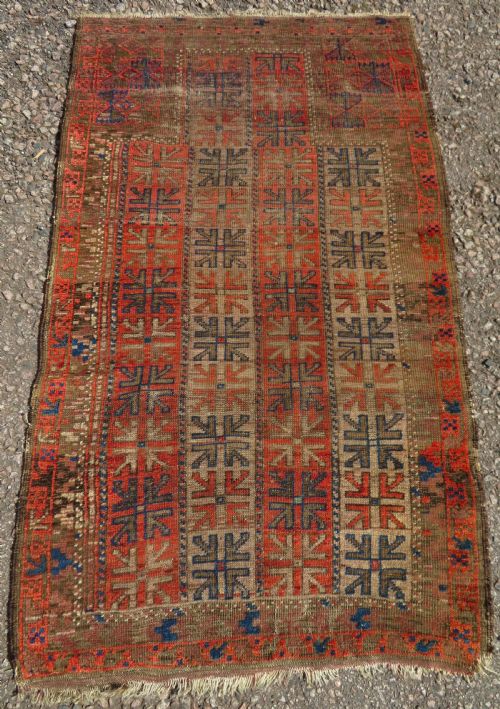
The most common examples encountered here are woven by village and tribal makers, featuring geometric structures, floral lattices, or specific motifs like rams horns and lotus leaves. Many function as portable spaces for contemplation, executed in formats that range from compact Baluch weaves to larger Turkish formats.
Makers often incorporate long kilim ends or distinct border guards that frame the central arch, reflecting the specific heritage of weavers from regions such as Konya, Ghiordes, and Kirsehir. These pieces bridge the gap between utilitarian floor coverings and symbolic textile art.
Materials and construction
Weavers construct these textiles predominantly using wool and hand-spun wool on cotton foundations, occasionally introducing camel wool and silk threads for contrast and fine detail. Natural dyes provide the palette, yielding deep blues, reds, and yellows that soften gracefully over decades of use.
Specific regions employ mixed techniques, such as silk embroidery on cotton grounds seen in Uzbek suzanis, or dense knotted pile structures characteristic of Caucasian and Anatolian workshop pieces. The interplay of warp, weft, and pile creates durable textiles designed to withstand generations of handling.
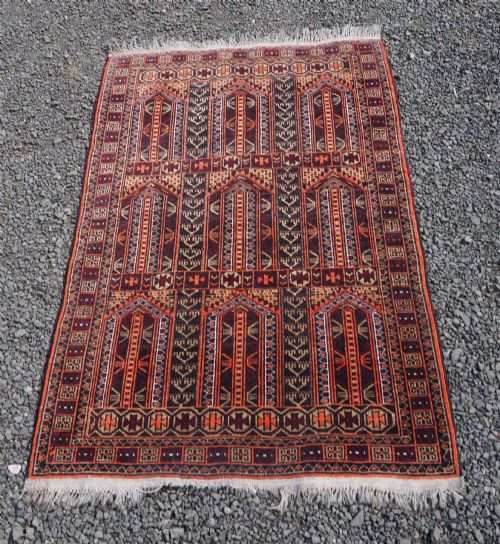
Some Baluch weavers squeezed multiple arches onto a single small rug, just in case one niche was not enough.
Assessing quality
The distinction between ordinary and exceptional examples rests upon the precision of the knotting, the complexity of the border designs, and the depth of the dye work. Tighter foundations and well-balanced proportions within the arch elevate a textile from a standard village utility piece to a remarkable collector item.
Subtleties in regional iconography, such as a scarce blue ground or unusual multi-mihrab layouts, separate standard productions from the most sought-after specimens. The clarity of the motifs and the harmonious ageing of the natural dyes ultimately dictate the standing of the work.
The Vintage Mihrab Rug Glossary
- Mihrab
- The arched niche in a rug design that symbolises the direction of prayer towards Mecca. It forms the visual centrepiece of these textiles.
- Warp
- The vertical threads stretched tightly on the loom before weaving begins. The foundation supports the entire structure of the pile.
- Weft
- The horizontal threads passed alternately over and under the warp threads to bind the knots in place. This contributes to the rigidity and drape of the textile.
- Suzani
- An embroidered textile originating from Central Asia, often worked in silk on a cotton ground. These pieces frequently adopt a prayer format.
- Kilim
- A flat-woven textile or end finish produced without a knotted pile. Weavers extend these sections beyond the main knotted field for protection and decoration.
Vintage Mihrab Rug: Frequently Asked Questions
What is a mihrab design?
The mihrab is the prominent arched shape depicted on the field of the textile, modelled after the architectural prayer niche in a mosque. It serves to orient the user during daily devotions.
Weavers adapt this architectural feature into geometric or floral compositions unique to their specific village or tribal traditions.
How do I style a prayer rug?
These pieces work well as focal points in smaller spaces, hung on walls as textile art, or placed on floors in low-traffic areas to preserve the pile. Their compact proportions allow them to fit into hallways, studies, or beside seating arrangements.
Pairing them with natural wood floors or neutral interiors highlights the rich tones of the wool and the complexity of the central arch.
Are these rugs made from natural materials?
Traditional examples rely on organic materials, primarily featuring wool, hand-spun wool, and cotton foundations, with occasional silk threads or camel wool incorporated into the pile. Natural dyes provide the underlying palette.
These components ensure the textile ages with a rich patina, as the natural fibres respond to light and touch over decades.
How can I tell different regional styles apart?
Regional styles reveal themselves through specific structural habits, colour palettes, and motif selections, such as the geometric precision of Caucasian weaves versus the floral curves of Persian Kashan pieces. Anatolian examples often display distinct prayer arches tied to towns like Ghiordes or Konya.
Examining the border guards, end finishes, and secondary motifs helps pinpoint the geographic origin of the workshop or tribe.