

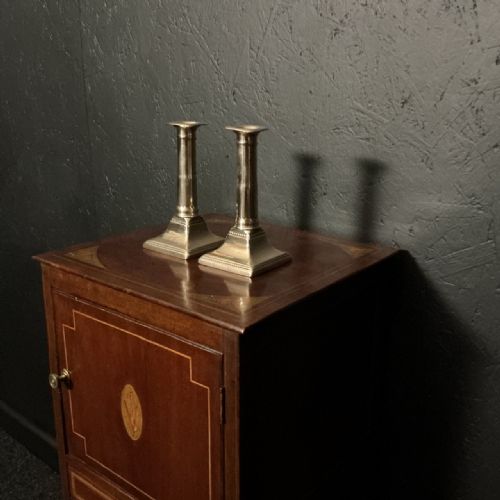


Vintage Metal Taper Holders
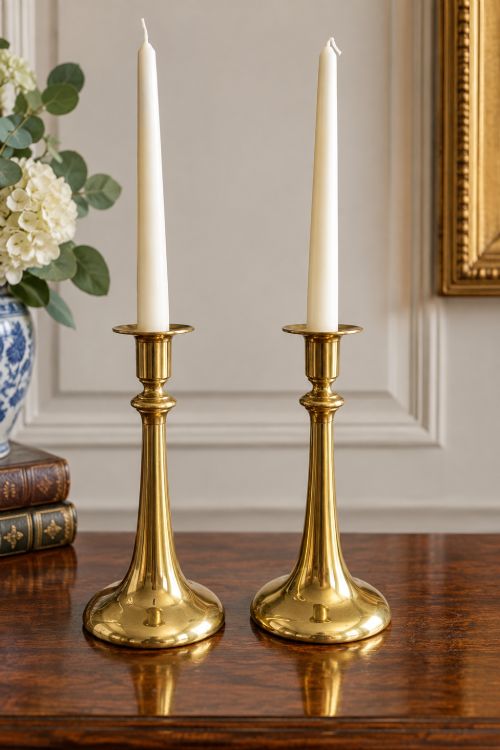
These vintage metal taper holders bring substance and warm reflection to a table, spanning centuries of domestic illumination from Georgian brass to Art Nouveau pewter.
Vintage Metal Taper Holders
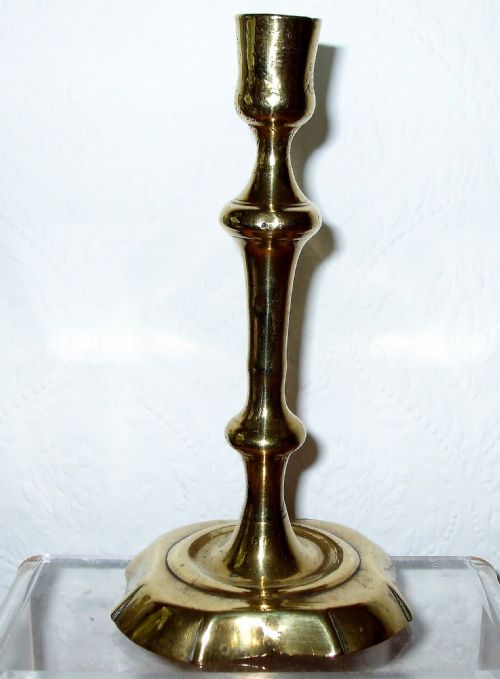
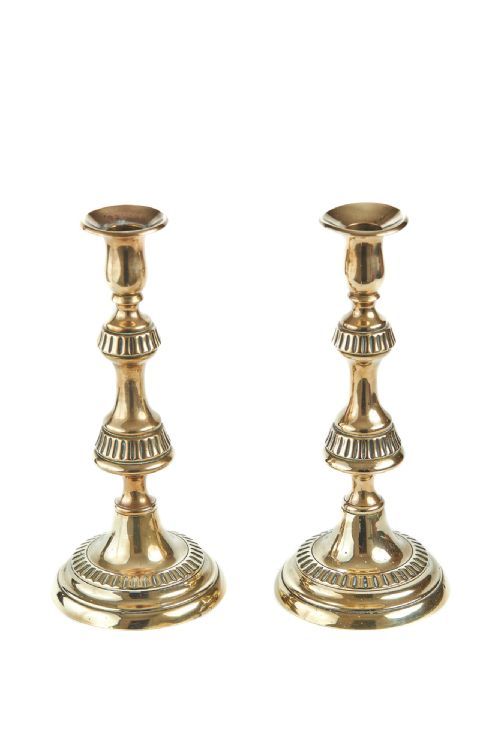
When you search for vintage metal taper holders, you are looking at functional lighting hardware designed to support narrow candles, commonly catalogued as candlesticks, chambersticks, and desk candlesticks. The examples you meet on this page span from the seventeenth century through the Art Deco and Arts and Crafts periods, reflecting changing domestic habits.
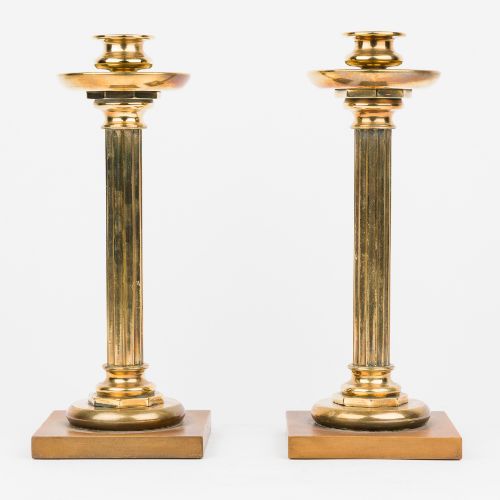
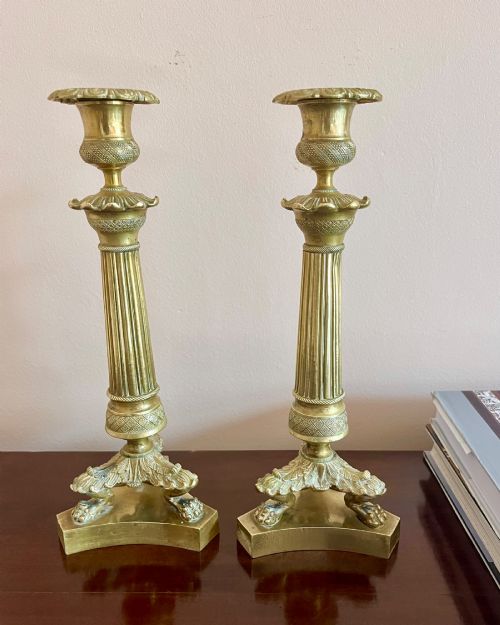
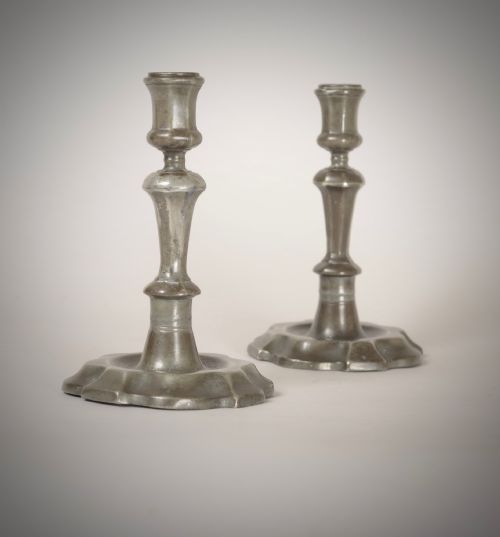
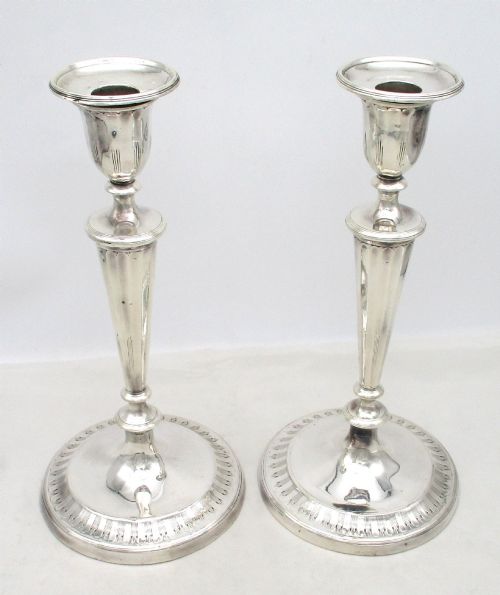
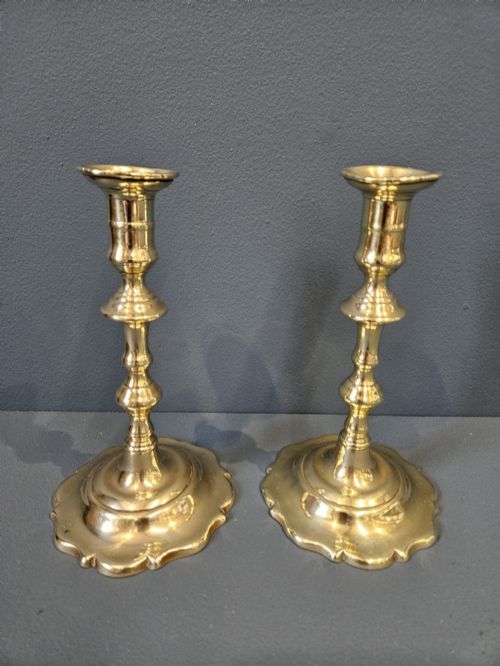
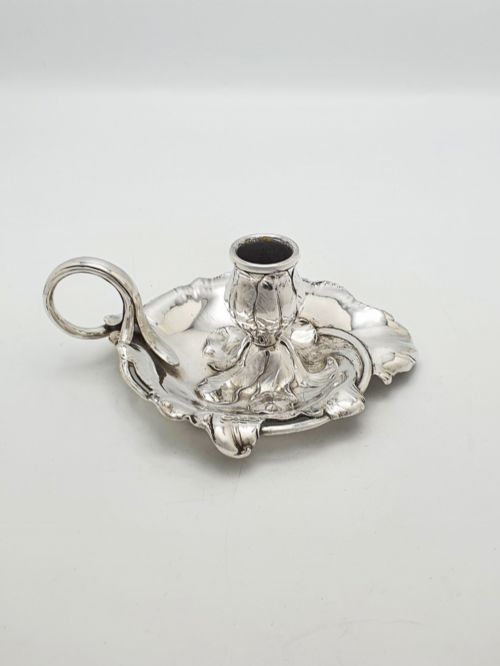
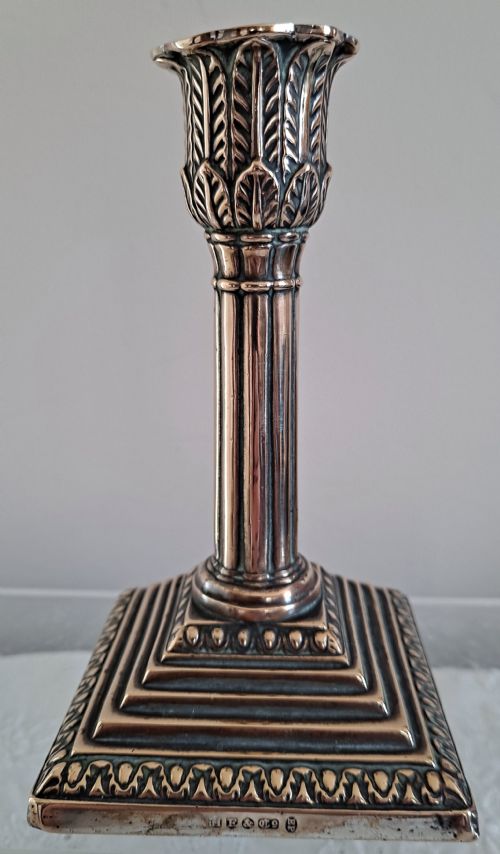
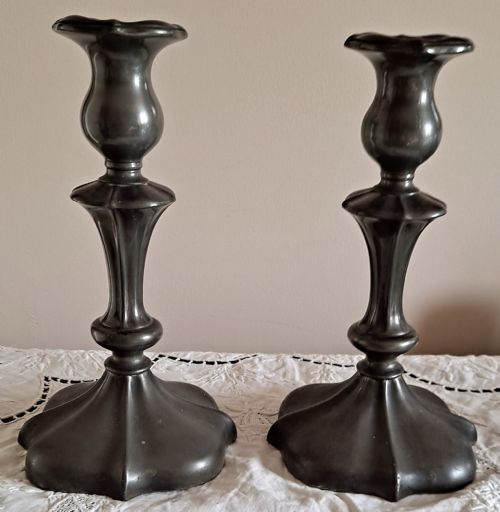
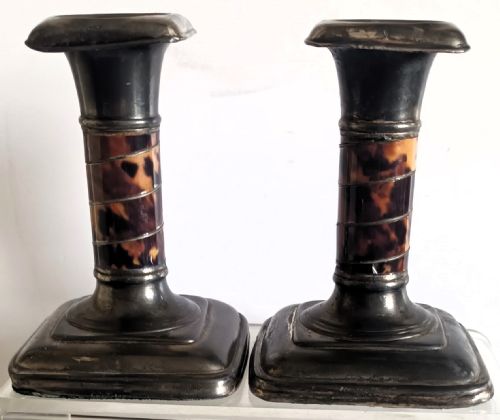
The selection leans heavily toward pairs in brass and silver plate, though individual pieces in pewter, bronze, copper, gun metal, and tortoiseshell also appear. Forms range from plain petal bases and seamed ejector stems to ornate Victorian designs and flowing Art Nouveau leaf motifs.
How they were made
The pieces on this page rely primarily on cast and seamed metal construction, utilising brass, silver plate, pewter, and bronze. Early examples often employ seamed techniques where sheet metal is formed and joined, or heavy casting methods producing solid brass and bronze bodies.
Makers applied silver plating over base metals, occasionally combining pewter with tortoiseshell or copper to achieve textural contrast. Surface finishing includes polished brass, patinated bronze, and detailed ornamentation characteristic of Georgian, Victorian, and Edwardian workshops.
Listings span periods from the 17th century to the 1930s, featuring brass, pewter, silver plate, bronze, copper, and tortoiseshell.
What varies in quality
Quality in these objects rests on the crispness of the casting, the integrity of the joints, and the retention of original surface plating or patina. Superior examples display balanced proportions, clean definition in decorative motifs like Art Nouveau leaves or Georgian petal bases, and substantial weight in the hand.
Pieces that show heavy wear to silver plating, clumsy repairs, or replacement components sit at a different level from intact pairs with clear period characteristics and consistent metal colour.
Barker Ellis·WMF
The Vintage Metal Taper Holders Glossary
- Ejector candlestick
- A candlestick fitted with an internal mechanism to push out the remaining candle stump. This device typically uses a small side thumbpiece linked to an internal disc.
- Chamberstick
- A short, portable candlestick featuring a wide drip pan and a loop handle. It was designed for carrying through a house at night.
- Sheffield plated
- An early method of fusing a thin sheet of silver to a thicker copper core by heat and pressure. It predates electroplating and shows characteristic copper bleed on edges.
- Taper holder
- A small device specifically proportioned for thin wax tapers rather than standard domestic candles. These are often used for sealing letters or lighting pipes.
Vintage Metal Taper Holders: Frequently Asked Questions
What is the difference between a chamberstick and a candlestick?
A chamberstick incorporates a wide saucer base and a loop handle, designed to be carried safely by hand through darkened corridors. A standard candlestick lacks a handle and relies on a heavy weighted foot to stand upright on a table.
Both forms appear across Georgian and Victorian periods in brass, silver plate, and pewter.
How can I tell a Georgian candlestick from a Victorian one?
Georgian candlesticks often display clean architectural lines, such as petal bases and heavy cast brass bodies with simple seamed construction. Victorian examples frequently introduce heavier ornamentation, ornate floral chasing, and wider stylistic influences like Art Nouveau.
Looking at the weight, construction seams, and base profile helps clarify the period of manufacture.
Were these holders made in pairs?
Many metal taper holders were produced as matched pairs to flank a mantelpiece, sideboard, or dining table. Single pieces also survive, particularly chambersticks and earlier seventeenth-century examples intended for individual use.
Matching pairs generally command stronger interest from collectors seeking balanced tabletop arrangements.