


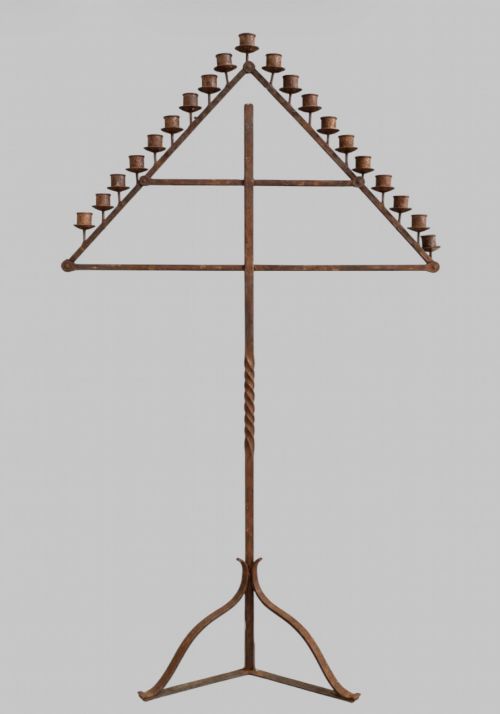


Dark Metal Candlesticks
Dark metal candlesticks bring weight and historic texture to a room, offering enduring utility through centuries of cast and forged forms.
Dark Metal Candlesticks
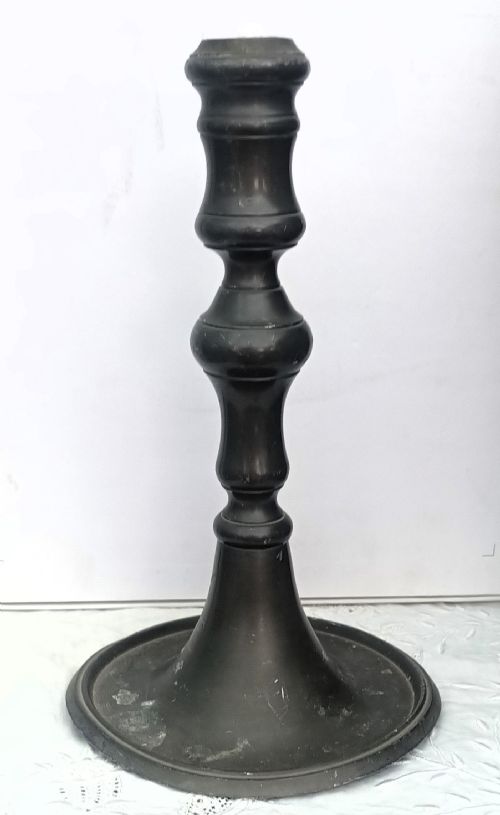
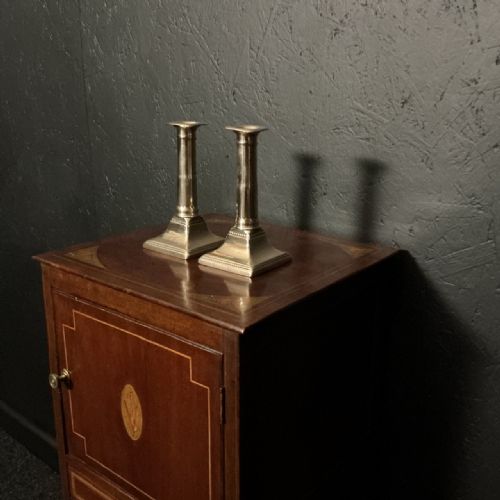
Dark metal candlesticks encompass sturdy lighting supports forged or cast from materials such as bronze, pewter, iron, and steel across periods from the Stuart era through to Art Deco. Buyers seeking dark metal candlesticks most frequently encounter 19th-century and Regency examples, alongside earlier 18th-century forms and later 20th-century decorative pieces.
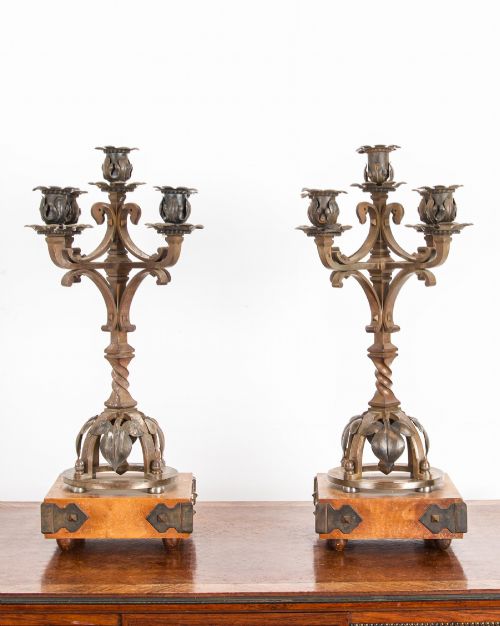
The selection ranges from simple chambersticks and spiral iron designs to elaborate figural pairs modelled as soldiers or cavaliers in Gothic Revival and Victorian Rococo styles. Floor candelabra and multi-branch candelabra also appear, providing substantial architectural presence for mantelpieces and tables.
How they were made
Artisans utilised casting techniques for bronze, brass, and pewter components, often finishing surfaces with dark patination or ormolu highlights. Wrought iron and steel pieces relied on manual forging, bending, and twisting to create spiral shafts and structural pricket supports.
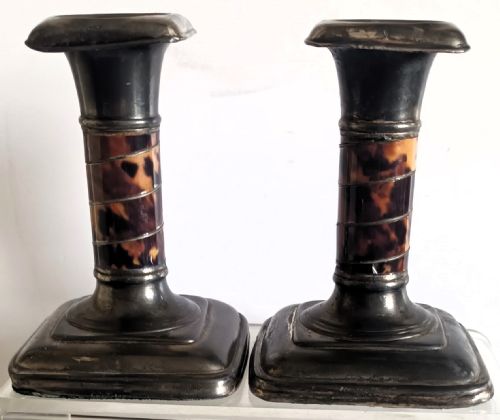
Makers occasionally combined contrasting substances, mounting pewter within tortoiseshell frames or setting bronze figures upon marble bases. Surface treatments such as patinated bronze coatings and dark painted toleware defined the deep visual tone of these items.
Medieval characters balanced precariously on stilts double as bronze patinated spelter candlesticks, proving historical lighting had a sense of humour.
What varies in quality
Quality rests upon the crispness of the casting and the finesse of the manual forging, distinguishing factory-standard items from pieces shaped by skilled hands. The depth and integrity of the original patination dictate visual appeal, while heavier gauge metals ensure structural stability across multi-branch candelabra and figural sculptures.
Hugo Berger Goberg
The Dark Metal Candlesticks Glossary
- Chamberstick
- A low candlestick fitted with a saucer base and a loop handle, designed for carrying a flame through rooms at night. These utilitarian items date across multiple centuries.
- Pricket candlestick
- A lighting device featuring a central spiked metal pin that pushes directly into the base of the candle rather than sliding inside a socket. This form appears frequently in early wrought iron examples.
- Patinated bronze
- Bronze treated with chemical solutions or natural ageing to produce a darkened, weathered surface tone. This finish accentuates the sculptural details of figural pieces.
- Toleware
- Painted or lacquered sheet metal items, often rendered in deep green or dark shades. It provides a smooth, durable surface for desk lamps and bouillotte lighting.
- Spelter
- A zinc alloy frequently used as a cheaper substitute for bronze in decorative figural candlesticks. It accepts patination well to mimic heavier dark metals.
Dark Metal Candlesticks: Frequently Asked Questions
What periods do these candlesticks cover?
The selection spans from 17th-century Stuart and Georgian origins through Regency and Victorian eras, extending into 20th-century Art Deco and modernist designs. Each era brings distinct manufacturing techniques and stylistic preferences.
Buyers encounter everything from utilitarian iron spiral candle holders to ornate French figural bronze and spelter sculptures from the late 19th century.
How do iron spiral candlesticks function?
Iron spiral candlesticks feature a twisted metal shaft that allows the user to adjust the height of the candle as it burns down. A small thumbpiece usually connects to a sliding ring on the central stem.
This practical mechanism ensured efficient use of tallow and wax during earlier centuries before mass production standardised household lighting.
Are these pieces suitable for daily use?
Most solid metal candlesticks, especially heavier bronze and iron examples, remain robust enough to hold standard taper candles securely. Care must be taken with delicate patinated surfaces and mixed media pieces containing tortoiseshell or marble.
Placing them away from drafts and cleaning wax gently preserves the historical finish without stripping the underlying metal character.
How can I distinguish bronze from spelter?
Bronze offers a heavier weight and a sonorous ring when tapped, alongside a stable metallic structure that accepts deep patination naturally. Spelter, a zinc-based alloy, feels lighter, exhibits a duller sound, and can show powdery oxidation beneath surface finishes.
Victorian manufacturers frequently used spelter for detailed figural mantel pieces to achieve the appearance of bronze at a lower cost.