

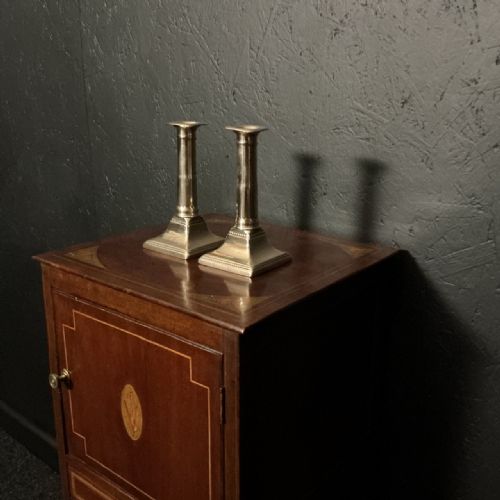


Georgian Period Candlesticks
Georgian period candlesticks bring domestic illumination from the eighteenth and early nineteenth centuries into a room.
Georgian Period Candlesticks
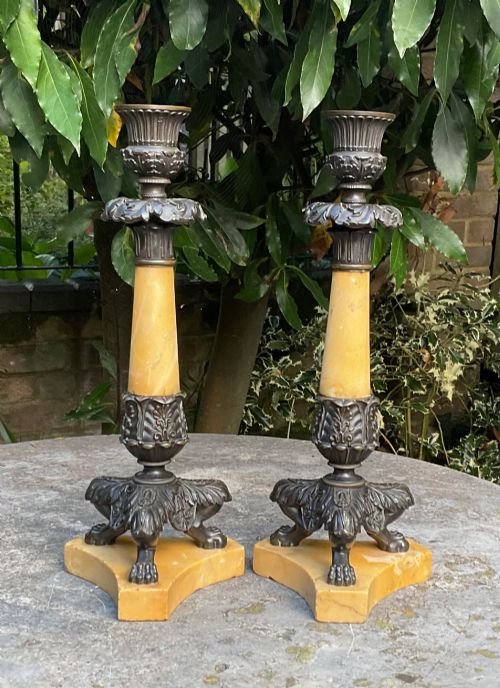
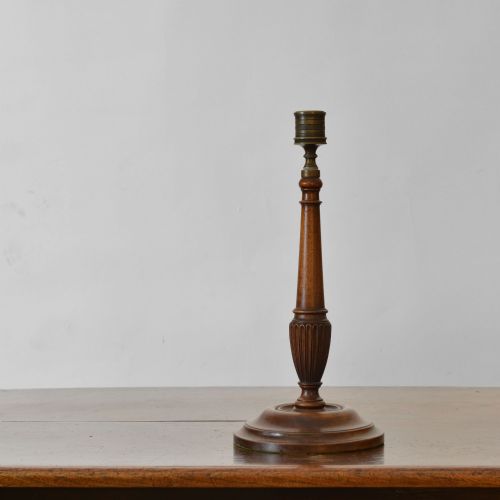
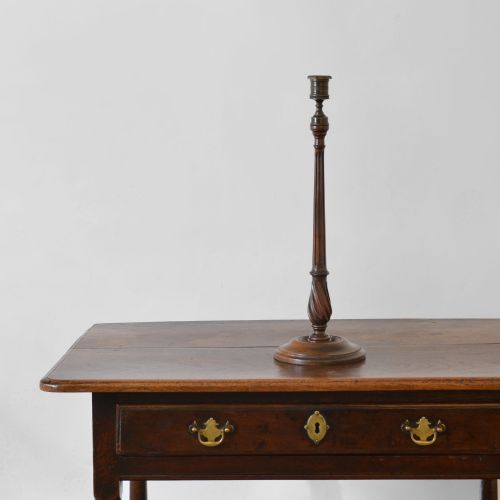
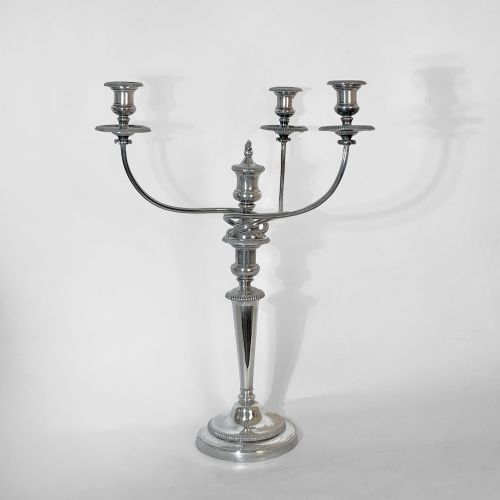
Georgian period candlesticks span the eighteenth century and the Regency era, taking forms from simple domestic holders to grander multi-light candelabra. The selection relies heavily on brass examples from the eighteenth century, alongside bronze, ormolu, porcelain, and mahogany pieces.
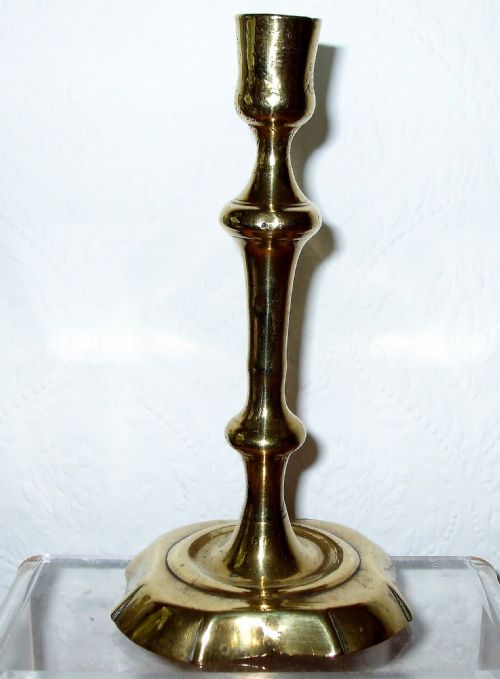
Buyers encounter single sticks, matched pairs, and chamber sticks designed for moving through a house at night. Styles move from early hexagonal and octagonal brass bases through the flourishes of Rococo and Neoclassical designs to later Regency forms.
Most items on this page reflect everyday domestic lighting of the period rather than architectural installations. They emerge in materials ranging from turned timber and cast metal to soft-paste porcelain.
How they were made
Brass examples depend on casting techniques, often utilising seamed construction where components join cleanly together before finishing. Early pieces feature heavy hexagonal or octagonal bases formed by solid casting.
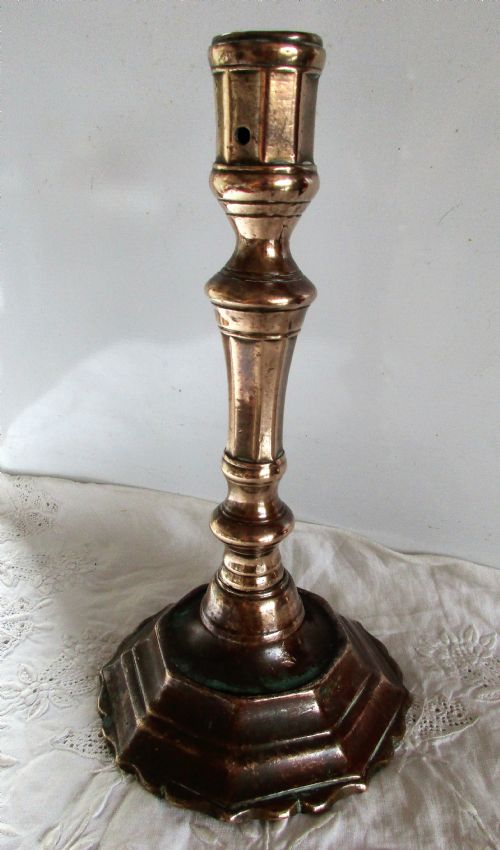
Bronze and ormolu pieces combine cast metal with mercury gilding to create contrasting surfaces of dark patination and bright gold tone. Mahogany versions demonstrate traditional joinery and wood-turning methods suited to the lathe.
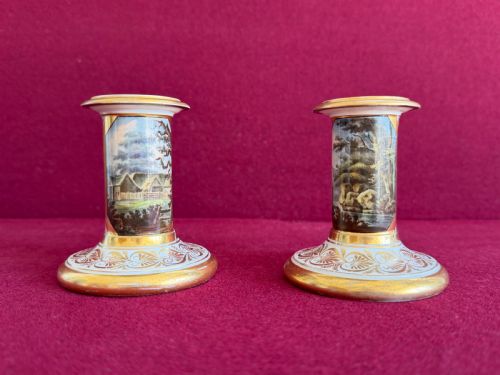
Porcelain variants incorporate hand-painting over glazed bodies, sometimes finished with patch marks from the kiln. Sheffield plate items apply a thin sheet of silver fused to a copper core.
What varies in quality
Quality rests in the crispness of the casting and the weight of the metal utilised in the body. Heavy, solid brass bases with sharp mouldings sit higher in the scale than light, worn castings with smoothed details.
The integrity of matched pairs influences desirability, particularly where original components and ejector mechanisms remain intact. Ormolu and bronze combinations depend on the preservation of the original mercury gilding against the patinated metal.
Barr, Flight and Barr·Derby
The Georgian Period Candlesticks Glossary
- Ejector
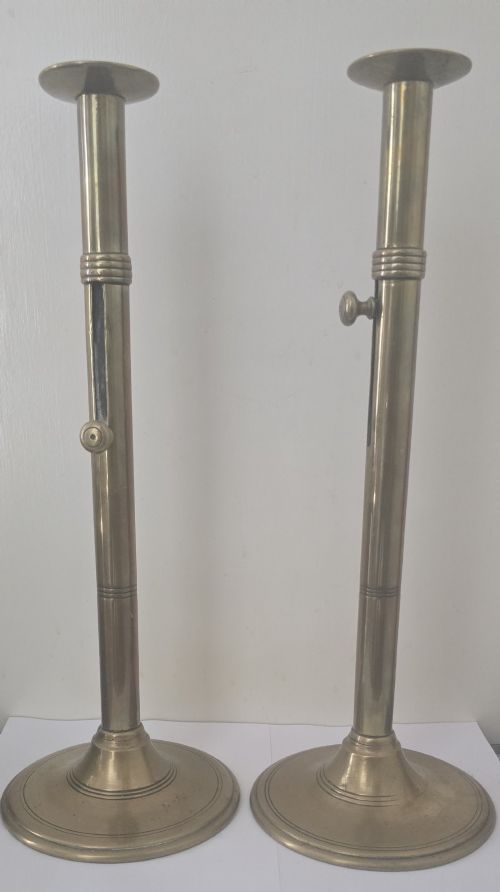
- A concealed internal mechanism with a small side lever designed to push a used candle stump out of the socket. This device appears frequently on eighteenth-century brass examples.
- Ormolu
- Finely ground high-carat gold applied to a bronze base using a mercury amalgamation technique. The method produces a rich, luminous surface finish.
- Old Sheffield Plate
- A composite material formed by fusing a thin layer of silver to a thick copper base under heat. This technique predates modern electroplating.
- Chamber stick
- A low-profile candlestick featuring a wide drip pan and an upright loop handle for carrying room to room. These domestic items often include a conical snuffer resting in the tray.
- Table lustre
- A decorative candelabrum or candlestick hung with cut-glass pendants designed to reflect candlelight. These items became popular during the Regency period.
- Pricket
- A sharp metal spike set in the centre of the drip pan to secure a large candle. This form appears on ecclesiastical pieces and specific ritual lights.
Georgian Period Candlesticks: Frequently Asked Questions
What is an ejector candlestick?
An ejector candlestick incorporates a sliding internal plate connected to a small thumbpiece on the exterior of the socket. Pushing the lever upward raises the remaining wax stub for easy removal.
This practical addition saved time and protected fingers during the eighteenth and nineteenth centuries.
How do I spot a true Georgian stick?
Examine the construction methods, base weights, and patination visible on the metal or timber surfaces. Eighteenth-century pieces frequently display cast seams, heavy proportions, and tooling marks from the lathe.
Compare the style markers, such as hexagonal bases or Neoclassical urn sockets, against known period examples.
Were these items used daily?
Domestic candlesticks served as the primary source of artificial light in homes before the invention of gas and electric lighting. Servants carried chamber sticks to illuminate hallways and bedchambers at night.
Pairs stood on mantelpieces, dining tables, and sideboards to provide ambient illumination for evening gatherings.
What is the difference between brass and bronze?
Brass is an alloy composed primarily of copper and zinc, yielding a bright golden tone when polished. Bronze consists of copper and tin, resulting in a heavier, darker metal that develops a rich patination.
Both materials formed the backbone of Georgian metalwork but served different aesthetic functions in the room.