

Vintage Metal Fire Screen
A vintage metal fire screen protects a room from sparks while anchoring the hearth with brass, copper, or iron.
Vintage Metal Fire Screen
A vintage metal fire screen stands before an open hearth to catch sparks, manage coal embers, and dress a fireplace when the grate is cold. These pieces range from simple wire mesh guards to elaborate folding panels and solid frames.
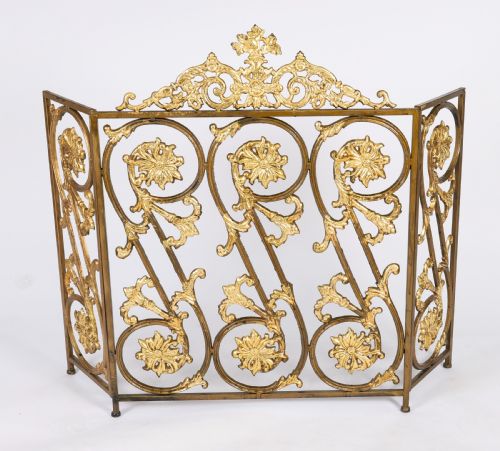
Most examples found here date from the nineteenth century and the early twentieth century, spanning Victorian, Edwardian, and revival aesthetics. Brass dominates the selection, accompanied by wrought iron, copper, and gilt bronze.
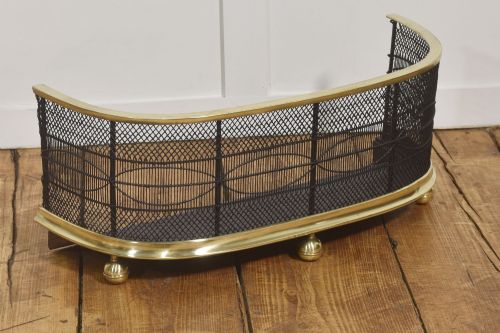
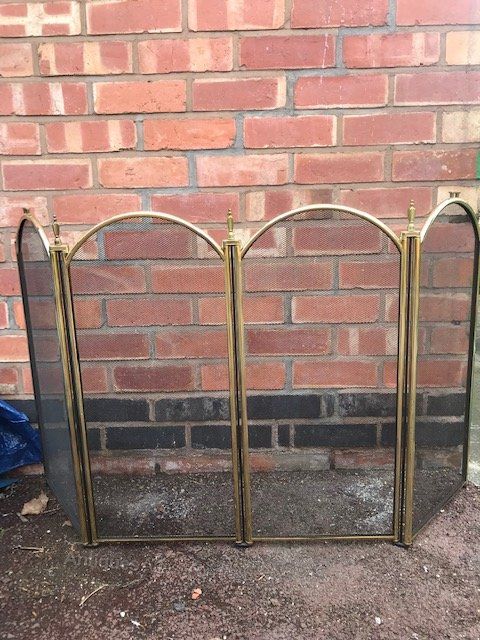
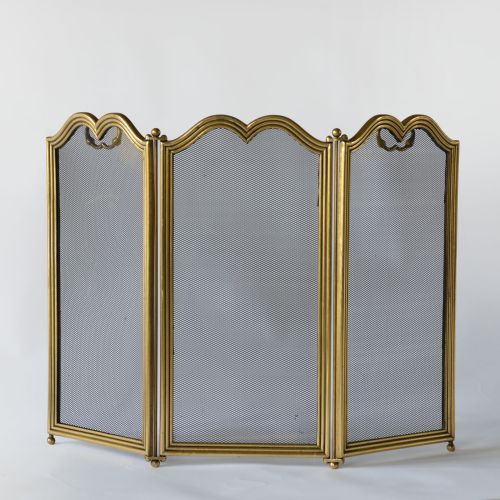
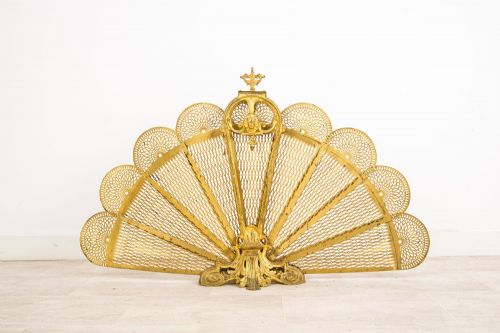
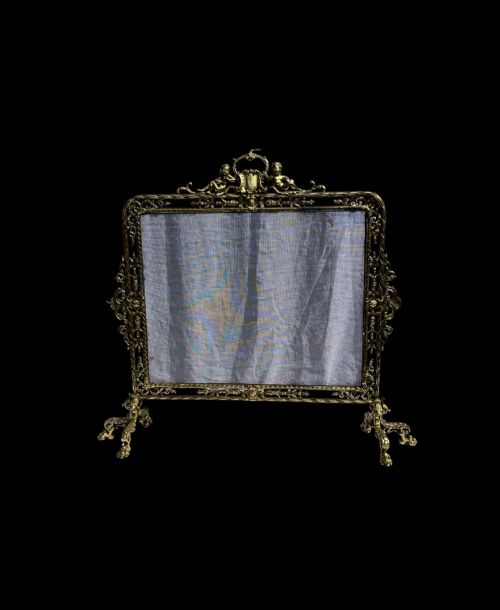
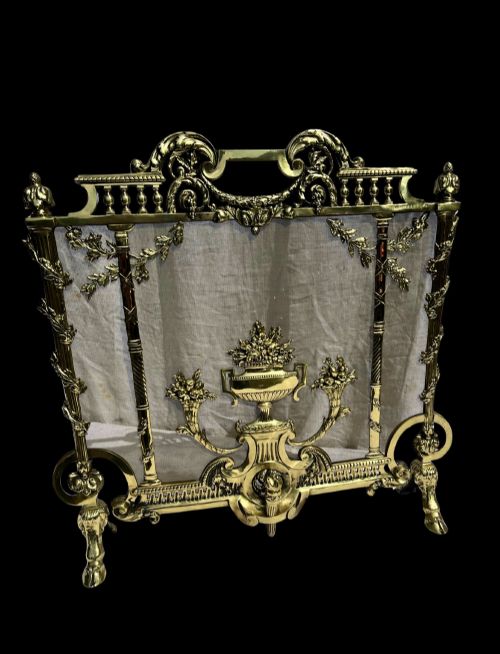
Forms vary from rigid single panels with carrying handles to tripartite folding spark guards and expanding peacock designs. Some double as nursery fenders or incorporate mesh panels for extra safety.
How they were made
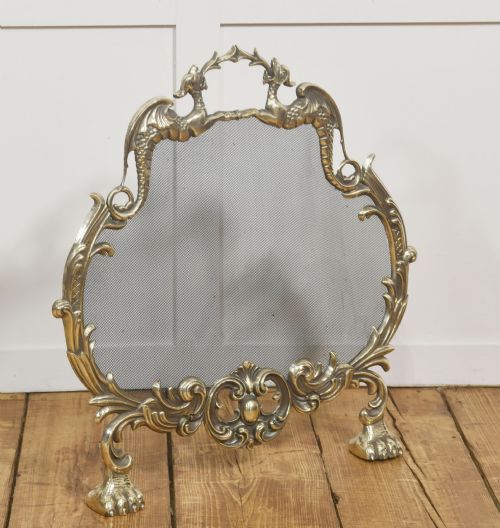
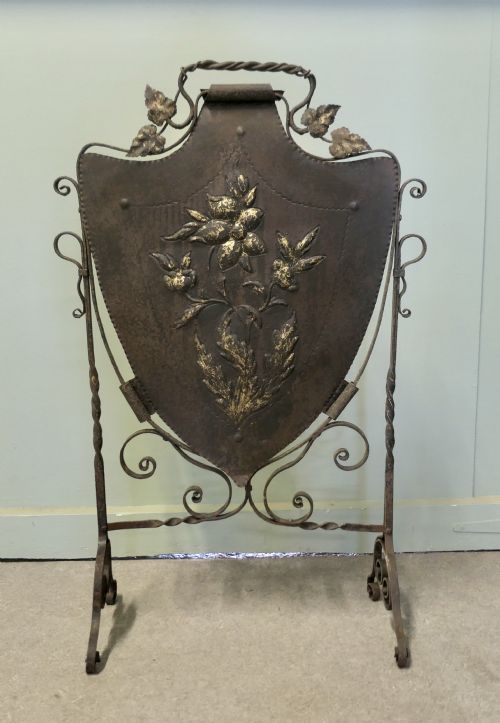
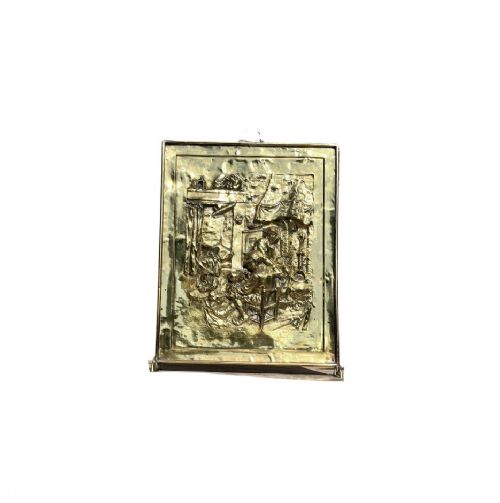
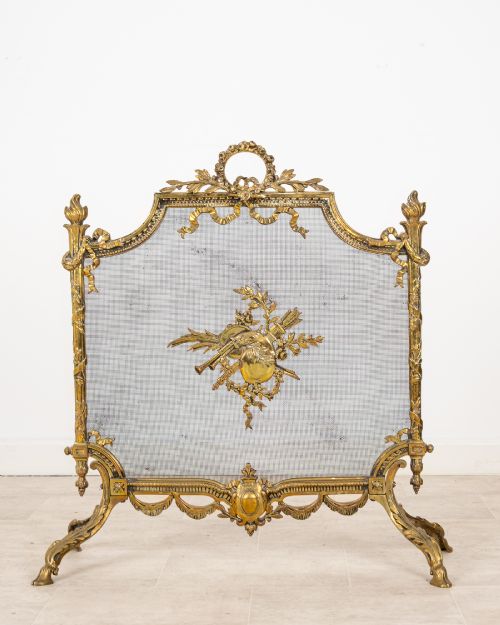
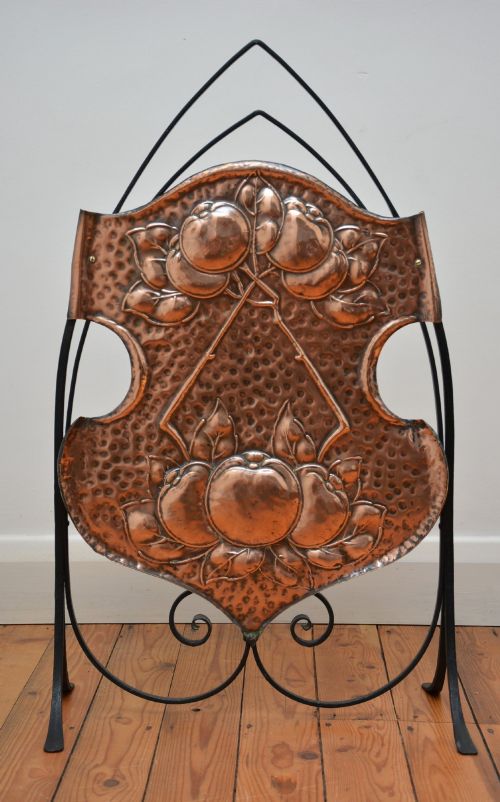
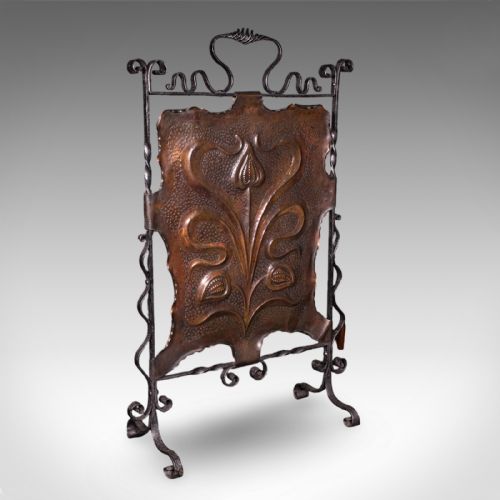
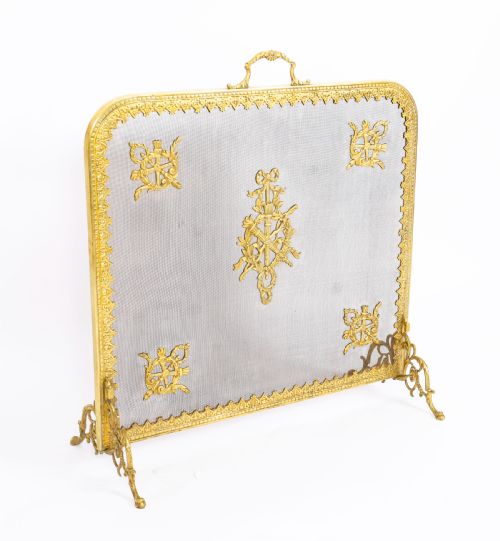
Metals were worked by hand and machine, combining cast brass frames, beaten copper sheets, and forged wrought iron armature. Piercing, embossing, and chasing decorated the solid brass and bronze panels with floral motifs, coats of arms, and musical trophies.
Fine wire mesh and spark guards were woven and riveted securely into heavy metal frames to withstand intense hearth heat. Gilt finishes and black lacquers were applied to protect the underlying metal and catch the flicker of the room's light.
Materials span plain iron and steel alongside decorative gilt bronze, copper, and wire mesh.
What varies in quality
Gauge of metal and weight of the frame separate simple utility guards from grand reception room pieces. Thicker brass castings, heavy wrought iron, and robust hinges endure regular handling without sagging.
Depth of hand-chasing, crispness of cast rococo scrolls, and integration of specialised elements like folding mirror panels or peacock spreading mechanisms mark the distinction between standard production and fine workshop execution.
The Vintage Metal Fire Screen Glossary
- Spark guard
- A fine wire mesh screen designed specifically to contain spitting embers from coal or wood fires. These often feature folding sections for flexible placement around the hearth opening.
- Peacock fan
- A folding fire screen composed of overlapping metal blades that fan outward into a circular display. When closed, the blades slide neatly into a protective metal housing.
- Nursery fender
- A low metal barrier enclosing the hearth to keep small children and fabrics at a safe distance from the fire. Many incorporate raised rails or heavy mesh panels.
- Chasing
- A metalsmithing technique where designs are hammered into the front surface of metal using punches rather than cut away. This raises relief patterns without piercing the sheet.
- Ormolu
- Gilt bronze mounted or cast onto decorative objects, providing a rich golden finish that resists tarnishing. It appears frequently on French revival frames.
Vintage Metal Fire Screen: Frequently Asked Questions
How do I choose the right size fire screen?
Measure the width and height of your fireplace opening to ensure the screen covers the entire hearth safely. Leave clearance for folding side panels or feet if the design requires them.
Consider whether you need a flat screen that sits flush against the brickwork or a folding guard that wraps around protruding grates.
Can I use these screens with a working fire?
Most metal and wire mesh screens are built precisely to contain sparks from active wood or coal fires. Check that mesh panels remain intact and sturdy before exposing them to high heat.
Solid brass and iron frames handle heat well, while mirrored or delicate gilt surfaces suit decorative use when the hearth is unlit.
How do I clean brass and copper screens?
Dust regularly with a soft dry cloth to prevent soot and ash accumulation on the metal surface. Avoid harsh chemical dips that strip away desirable age patinas.
Gentle cleaning with appropriate metal polish restores brightness to brass frames without harming chased or embossed details.
What is the difference between Arts and Crafts and Rococo screens?
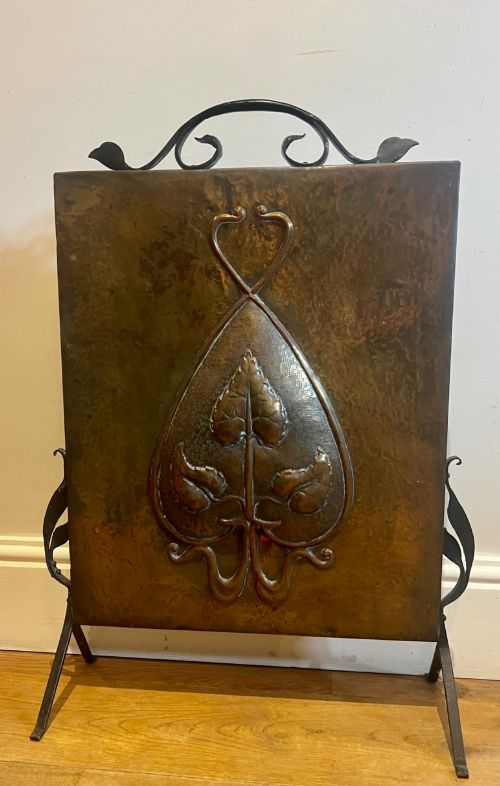
Arts and Crafts screens emphasise hand-beaten copper, exposed rivets, and honest construction inspired by Newlyn workshop traditions. They favor simple geometry and naturalistic plant motifs over excessive ornament.
Rococo revival pieces showcase flamboyant asymmetrical scrolls, shell motifs, and ornate cast brass frames modelled on French eighteenth-century designs.